|
|
|
Weaning the Foal, a Better Way
by Linda Bateman, owner of Horsing Around, LLC.
Most often the foal owner is reluctant to start the weaning process because of the undesirable
symptoms that occur when using the “abrupt separation” method. The heart wrenching whinnying
is very disturbing for the passionate horse owner. If the animals are in close proximity, the mother
and foal will constantly vocalize to each other and pace the fence line or box stall. Separation
causes anxiety (for both animals) and can lead to self-inflicted injuries (veterinarian costs), cause scaring (unsightly blemishes), and even death.
The “Separation Method” has been around for centuries, ever since man captured his first herd of
wild horses. Throughout history competition and money have been the cause for some inhumane procedures to become acceptable. Over time the acceptable practice becomes a standard, with
little or no thought given to its real affect on the animals. What really happens when you chose the “force separation method” to wean your foal?
Weaning a foal by using the least natural method (force separation) has generally been viewed, in
the past, as having little or no harmful affects to the animals. However, researchers have found that to be the contrary. Important internal changes occur when horses are separated from one
another. According to findings of UC Davis School of Veterinary Medicine, a distressed mare and foal experiences a measurable decrease (loss) in the infection fighting T-cells.
Ripping a foal from a mare and moving one or both animals to a new location is so stressful that it
can be life threatening to both. A suppressed immune system is the result of such action.
Incessant vocalization (frantic whinnying), pacing the fence line or stall, biting, and chewing are
high stress symptoms of separation. Both animals become susceptible to colic and various eating
disorders. The mare can experience a serious udder distention. Also your action is causing the
mare foal bond to be broken at the same time your weaning the foal. This is very unnatural. Many negative behavioral patterns and traits may develop, and some may last a lifetime.
Many horse persons believe, a brood mare should be producing a foal annually. This point of view has been held and perpetuated by many breeding operations and/or horse owners. I have
heard farm hands or horse owners state, “they don’t have to worry about weaning because they
sell the foal as soon as it is old enough to be weaned.” Comments of this type indicate to me,
how little the person really understands the nurturing behavior of a mare and the necessity of the mare to continue to be there, as the foal continues to mature.
From a business perspective, an owner/caregiver with little knowledge of the natural behavior of
the horse is missing a major component to producing a finer performing animal. I personally feel
the application of natural horse savvy to a foal will increase the animal’s marketability. Horses
that have been imprinted at birth and with continued natural horse techniques are commanding and obtaining high prices. Implementing imprinting techniques and the use of horse savvy are becoming
more common. Data and statistics resulting from using “natural horse” practices are being
collected. Owners of these animals are expressing a high level of owner satisfaction. The first time
horse owner has a greater chance of having a positive riding experience when natural horse training techniques are understood and practiced. Persons using their animals for competition
have reported a greater improvement, overall, believing the results are directly related to the use of gentle training.
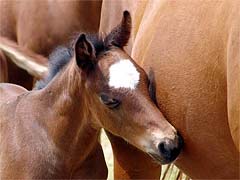
Using a more natural weaning process will have a positive impact on the foal. For years, little
thought and understanding had been given to “natural” behavior of horses and the total mare foal
relationship. The interaction between the mare and foal during and after the weaning process is
vitally important! This is the time when the young foal actually mirrors its mother. Many of the
learned traits are developed at this time. Selecting a mare with the desirable traits is as important
as choosing a brood mare for its excellent conformation. The foal mirrors mother’s body
movement and attitude. With the foal at her side the mare exhibits attitude as she interacts with
the rest of the herd, like pushing her way to the water hole first or backing her butt in first, to be
ready for the first kick if the boys don’t move away when she wants to be first. Mother plays the
protective and supportive roll for her baby. She teaches by demonstration. The tone of the
nickering and whinnying indicates the seriousness of the event and is used to give fair warning.
Circling movement is an indication that something is amidst and the mare is not sure just what is
wrong. Mentoring continues for several months after the weaning process has been completed. The mare is needed to finish teaching life survival skills.
The mare teaches her foal about herd etiquette, submission, aggression and dominance. Often, the true boss of a band of horses is
a domineering mare that displays leadership to the rest.
What happens when you break the mare foal bond to early? I have found the foal could mature
having a personality of either extremely aggressive or extremely timid. As an example, have you ever witnessed a horse being attacked by another horse for no apparent reason while the horse
was moving along peacefully on a trail ride? The horse didn’t make a single wrong move and the
other horse came, ears pinned and bearing teeth. That’s aggressive personality. Have you
experienced a horse you had to hand feed separately? It stayed off to the side and would not
move up to the feeding area with the rest of horses. This is a timed personality. I believe both of
these examples are typical of horses that were forced from their mother to soon. Neither is very
desirable and both types are limited in their dependability and performance capabilities.
There is a much better method and Product for weaning!
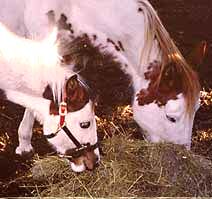 A new way of weaning has been developed to allow the animals to stay together, eliminates separation. The mare actually does the weaning, just like in nature, and the mare
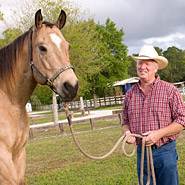
foal bond is not broken. The Product is titled “EZEE WEAN” and is produced by Linda Bateman, owner of Horsing Around, LLC. Linda has a life long passion for
horses and actually developed this method of weaning over twenty years ago. She studied the way mares and foals interacted with each other and did not want to separate her
animals in order to wean.
A new way of weaning has been developed to allow the animals to stay together, eliminates separation. The mare actually does the weaning, just like in nature, and the mare
foal bond is not broken. The Product is titled “EZEE WEAN” and is produced by Linda Bateman, owner of Horsing Around, LLC. Linda has a life long passion for
horses and actually developed this method of weaning over twenty years ago. She studied the way mares and foals interacted with each other and did not want to separate her
animals in order to wean.
The Ezee Wean functions on the principal theory of comfort and discomfort, the same principal theory being used every time we move, or touch our horse.
Each animal has its own level of comfort and discomfort. When the baby attempts to nurse, both
animals are made uncomfortable because there are several soft flexible prongs (blunt ended) that touch the mare in the flanks and it also bumps the baby in the nose. When the baby stops its
attempt there is an immediate rewarded, behavior reward method. Pretty neat, don’t you think?
Mother determines how quickly the weaning process will come to a halt. When mother’s
tolerance limit has been reached, she gives fair warning. She will ring her tail, pin her ears back,
move sideways, stomp her hind foot (horse can’t kick forward) and finally she will nip the baby in
the butt. A mare will not intentionally kick to injure her own baby. If a brood mare exhibits such
a mean spirit, she should not bred back. Generally the weaning process takes six weeks,
depending on the persistent personality of the baby, and the length of time for mare’s bag to dry up.
Ezee Wean comes in two forms, a halter and a strap (that fits on a halter). Halter form retails at
$52 to $60, depending on size. The strap style retails at $36.00 to $42.00.
Product and additional information can be obtained by contacting:
Contact:
Our Friendly Staff
2221 Heimstead Rd.
Eau Claire, Wisconsin 54701
Phone: 1-866-GET-EZEE (438-3933)
Email: info@horsingaroundllc.com
Website: www.horsingaroundllc.com
|
|
|
To advertise your horse product or service, contact Ann
|
|
|
InfoHorse.com, Horse Information Lives Here ® 4/25/2024
Contact Us to Advertise to over a million Horse Owners.
All images and content Copyright© 2012 by InfoHorse.com, Equusite.com.
Horse Owners are Dog Owners; Dog Product Information dognowner.com
|
|
|
Articles, Academic Schools, Arena Maintenance, Animal Communicators, Barns, Barn and Accessories, Barn Equipment and Tractors, Breast Collars, Grooming Products for Horses, Hay Feeders, Horse Blankets, Horse Books, Horse Videos, Horse Breeders, Horse Camping Gear, Career Schools, Carts and Buggies, Horse Training Clinicians, Equestrian Clothing, Dogs and Puppies, Horse Fencing, Western Art & Furniture, Horse Property for Sale, Horse Products For Sale, Fly Control, Foal Care, Horse Footings, Horse Gifts, Horse Health and Nutrition, Hoof and Leg, Horse Insurance, John Lyons Certified Trainers, Equine Lawyers, Leather Care, Links, Horse Property, Horse Photography, Portable Horse Stalls, Arenas and Roundpens, Horse Riding Schools, Horse Schools, Safety Products, Services for Horses, Horse Trailers, Horse Shipping, Horse Skin Coat Care, Horse Software, Specialty Trainers, Horse Summer Camps, Tack, Horse Trainers, Treats and Snacks, Truck Accessories, Trucks, Horse Vacations, Western Lifestyle, jewelry
|
|
|
|