|
|
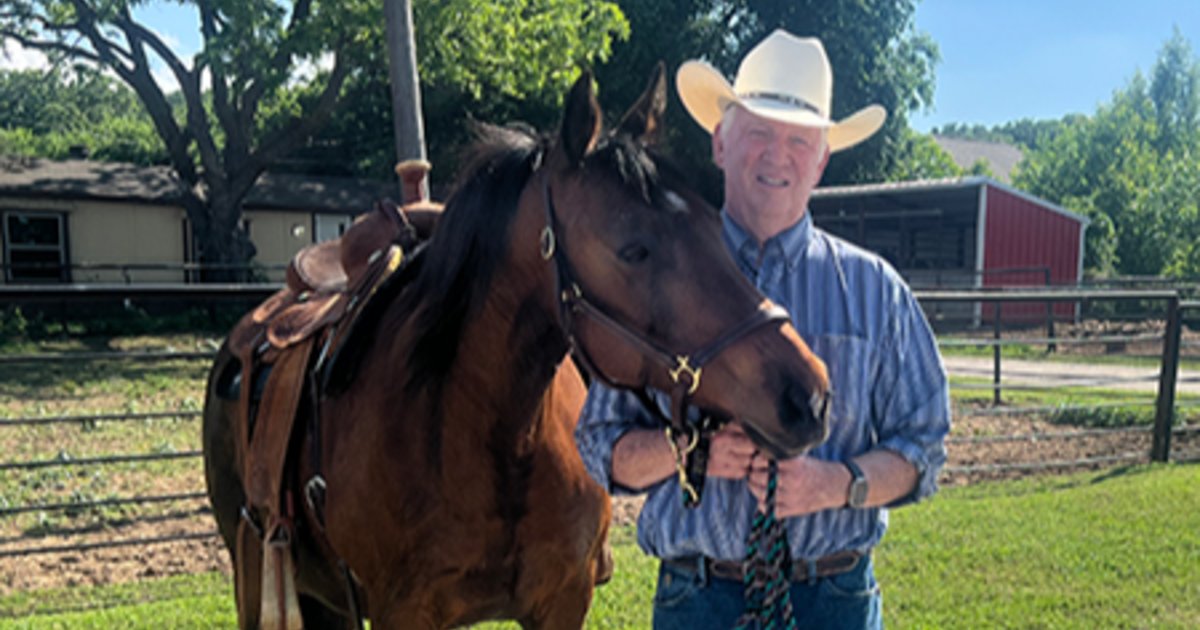
Ground Manners by Raye Lochert
Everyday somebody somewhere has a problem with his or her horse standing still. You want to talk with
friends. You want to watch another competitor in the ring. You just want to enjoy the scenery. Then your horse pulls on you, pushes you around or steps in front of you.
Good ground manners makes it enjoyable to spend time with your horse. If you take a simple approach,
spend some time and be consistent, your horse will learn to stand still. The process is ground manners.
So many horses go through training with this area being neglected. Horses are rushed through groundwork training so that they can be ridden sooner. Although the horse may be an excellent riding
horse the ground manners are atrocious. This can all be fixed very easily.
First
, you need to remember that during the training process you must be very consistent in what you do
and how you do it. This means that any time your horse pulls or pushes, you must respond in the same
manner each time. You can not get angry or punish the horse. You must realize that this behavior is due to a lack of training. In other words, your horse doesn’t know any better.
Next, you must understand the theory of pressure and release. You will apply a cue, which is in some
way pressure. When your horse gives you the desired result you must release or stop the cue. It is important that when teaching your horse a cue that you only release on the desired movement. For
example, if you are asking the horse to go forward but instead the horse backs up and you release your
cue you just taught the horse to back up. Do not worry if this happens, you did not just ruin your horse. Start over and try again. Horses are very forgiving.
It will also help to understand the horse’s learning curve.
When teaching a horse something new they always seem to start out getting better and then get worse. This is where most people will stop and
try something else. I used to. What I have learned is that the horse will always get worse before they get
better. They are just trying to figure out what it is that we are asking them to do. If you just stay
consistent with what you are doing and do not get upset, you will find that the horse will start to improve rapidly.
With this in mind, the lesson you are going to work on in the arena is simply teaching the horse to go
forward, backward, left, right and move the hips over while you are on the ground. The goal is to be
able to have your horse move in all these directions softly while giving to the bit. It is like dancing with
your horse. The idea is that if your horse wants to move when you do not want them to then they will
learn to move on your terms. You can not force your horse to stand still but you can make them move in
the direction and the way you want them to. What happens is that the horse will realize you are in control
and will make the decision to stand still on its own. Sound good? Let’s get started.
Equipment-
1.A good leather headstall. (Preferably without a caveson but you can still use one.) 2.A mild snaffle bit. I use a full cheek snaffle so the bit will not
slide through the mouth. I do not use a curb strap. 3.A cotton lead rope, eight to ten feet long. I use cotton because if the horse pulls the rope through my hand it does not
burn as quickly. 4.A dressage whip. 5.Protective boots for the horses legs. Bell boots in front.
Step 1- Go forward cue.
First, you are going to teach the horse to go forward around you. Clip the lead rope to the left side of the bit. Hold the end of the rope in your left hand and ask the
horse to circle around you to the left. Start by kissing to your horse. If your horse moves off then stop
kissing. If your horse does not move off start tapping the horse high on the hip while continuing to kiss. If
the horse moves off stop kissing and tapping and lower the whip until the end is dragging on the ground.
If the horse does not move still, then increase the force of the tap until they do. Get just a step or two
and build on this. Your horse may stop only after few steps. This is okay. Praise them for going forward
and repeat asking for a little more each time until they continue walking and you ask them to stop.
When the horse moves off you must walk in a forward circle while the horse moves around you. Notice
in which direction your feet are moving, if you are walking in a forward motion, great. If you find yourself
walking in a backward motion you need to correct this because otherwise your horse will start diving in on you.
Keep working on this until your horse calmly, and on a loose lead, walks around you while you walk in a
smaller circle. Your horse should not be diving in on you. Once you have accomplished this start moving
down the lead step by step until you are holding the lead about six inches above the snap. You should be
standing near the shoulder. Hold the rest of your lead in your right hand when you are on the left and vice versa or throw it up over the horse’s neck.
Step 2- Giving to the bit. Now that your horse is walking around you and has accepted you in their space we can progress to the
next step, giving to the bit. Giving to the bit is to gain softness from the horse. It also gives you more
control of the horse because you are asking them to collect their head. It is important again to start with
baby gives and work your way to your horse holding their head in a collected manner. Remember not to start with your goal but to start with what the horse already knows and work your way there.
Starting on the left side, have your horse move off in circle around you while holding the lead rope about
six inches off the snap. Once your horse is moving consistently pick up about one to three pounds of
pressure on your lead. When applying this pressure keep it constant. If your horse lowers their head or
pulls it away do not try to hold it there but keep the pressure constant. In other words, do not increase
the pressure because you are not getting the result you are looking for. Keep the pressure constant as
best you can until your horse gives you the desired result. Direct your left hand up the shoulder as if you
were pulling towards the pommel of the saddle. Your horse will move their head in a variety of different
ways. What you are looking for is the head to come to the left. Ideally you do not want the head to
come any further than twelve inches to one side. Preferably it will be two to six inches off to one side.
When the head comes to the left just a little, release and praise. This is a baby give. After the release
your horse’s head will go back to their normal position. This is okay at first. Keep working on this until
your horse is giving to the left easily and starts to hold it there longer and longer as you walk in a small
circle. You will have to do this in repetitions of about 1500 times per side. Work in sets of 100.
As you work this lesson you will notice that your horse will start giving to the bit from a spot behind the
ears. This exactly what you want. It will looks like your horse is collecting through the head as you pick
up the bit. The nose is coming closer to the chest, the forehead is becoming more vertical and the head is
off to the side about four inches. You will have to ask with less and less pressure and your horse becomes more responsive.
Step 3- Disengaging the hips Once you have your horse giving to the bit softly and consistently you can move on to disengaging the hips.
This exercise will help you in many ways. It will teach your horse to stop as well as back up. It also gives you control over the horses hindquarters. This
exercise will prove invaluable in the saddle.
Start by having your horse move forward and give to the bit. Once you have taken three to four steps while
your horse is giving to the bit apply pressure with the lead in the direction of where the cantle of the saddle would be. If you were in the saddle you would be
directing the lead to your hip. This will cause the horse to bend their head around. You will release
when the left front foot stops and the hips move over to the right just a step or two. When done
correctly the left front foot will stop and pivot as the hips move over. You should end near your horses
shoulder. In the beginning your horse will move their hips over and then walk forward. This is okay. It gives us something to build on.
After a few repetitions your horse will soon be stopping. After more repetitions and adding a little bit of
speed to the hips over your horse will start taking a couple of steps backwards. This is exactly what you
want. Work on this through repetition until your horse does this easily and with very little pressure.
Remember to give praise to your horse every step of the way. Be patient and forgiving. Add speed to
the exercise to raise your horse’s emotions. When your horse does the whole combination quickly and softly then move on to the next step.
Step 4- Shoulder control Now we are going to add the final step to our dance routine. We are going to ask the horse to move
through the shoulders. First you need to understand my description of foot placement. We call it
clockwork. Imagine your horse standing with his front legs in the middle of a large clock face. If they
were walk forward they would step on twelve o’clock. If they stepped backward they would step on 6
o’clock and if they were to side pass to the right or left they would step on 3 or 9 o’clock respectively. Now with that under our belt we can move on.
Starting on the left side of your horse, near the shoulder, pick up the lead and ask the horse to go
forward and give. While the horse is going forward and giving pick up the lead and ask the horse to pick
up their right front foot and place it on 1 o’clock. Do this by picking up the lead and lifting up towards
the withers as if you were trying to pick up the shoulder. At first your horse may disengage their hips,
toss their head and try any number of things. Work through this and try to release as soon as you see the
right front foot lift up and start to step out to the right. Just get one step and then stop and praise. After a
few repetitions of getting only one step try for two. Work your way up to four or five steps.
Once you get four or five steps start asking for your horse to step out to 2 o’clock. After repeating this
several times ask for 3 o’clock. By now you will notice that the hip may be dragging behind. If this
happens you need to ask the hip to catch up to the shoulders. You do this by releasing the shoulders and
disengaging the hips a couple of steps until they are in line with the shoulders. In the beginning the hip may go too far but with practice you will get the hang of it.
Think of it this way. The lead is like a telephone line that has call waiting. You are talking to the
shoulders and then you have to put them on hold and pick up the hips. Once you have the hips in line
you can put them on hold and pick up the shoulders. With practice both the shoulder and the hips will
move in unison. Once this happens you are side passing your horse from the ground. This exercise may be the most difficult but it is the most rewarding.
Work on all the steps on both sides until your horse does each one softly and easily. Doing many repetitions will accomplish this. Repetitions are good practice for both you and your horse.
Step 5- Putting it all together. Once you have all the steps it is time to put them all together and create the dance. Start by asking your
horse to go forward, ask for the give, move the shoulders over, disengage the hips, back up and repeat.
Practice this until you and your horse can do this at least four times in a row on both sides.
Now when your horse pushes or pulls on you, you have an exercise to make them respect your space or
stand still. The only commitment it will take from you now is to drop whatever you are doing anytime
your horse exhibits these unwanted behaviors and put then through these moves in a set of two to four times. Repeat these sets until your horse chooses to stand still.
After your horse has learned this series of moves and you can do it easily the hardest part is dropping
everything and doing it. This means that any time you are in the middle of a conversation with your best
friend or watching a competitor in the ring and your horse starts pulling on you or misbehaving, you must
stop what you were doing immediately and correct your horse using this series of moves. If you are consistent with this you will have a well behaved horse in a short period of time.
Remember to work for no more than 20 minutes at a time without taking a break. You do not have to
get this done in a day, a week or even in month. If you can work with your horse for 20 minutes a day,
three days a week you will have a fantastic horse. Do not worry about ending on a good note. Usually
your horse will be better the next time you start than before you ended no matter what you did. If you
feel yourself getting frustrated or angry, stop. Take a break or just quit for the day. Rome wasn’t built in a day. Enjoy your horse.
Raye Lochert is the fastest rising star in the Horse Training Clinician arena and has just produced two groundwork dvd training videos Groundwork - Starting with the Bridle
Life is about to change for that pushy, won't stand still horse. Raye has
a dvd that will teach you how starting with the bridle will help you gain better control of your horse no matter what age he is or years of experience you both have.
Raye's safe and gentle method will help you make progress with your horses fast. $28.95 each or both $49.95 To order call: Sharon Lochert Raye Lochert Horsemanship
(888) 570-2470 - toll free
Groundwork Advanced Maneuvers
Learn to have the greatest amount of control from the ground and in the
saddle. Raye teaches the fun easy way to side pass, arc, start to spin and more all from the ground. More control of your horse that is fun and to safe to learn. $28.95 each or both $49.95
To order call: Sharon Lochert Raye Lochert Horsemanship (888) 570-2470 - toll free
 Contact:
Sharon Lochert 4275 Arcadia Lane Santa Rosa, California Phone: 888-570-2470 (toll free) Email: CritterCreekRanch@sonic.net
Website: www.RLHorsemanship.com
|
 |
|
To advertise your horse product or service, contact Ann
|
 |
|
InfoHorse.com, Horse Information Lives Here ® 5/18/2013 Contact Us to Advertise to over a million Horse Owners. All images and content Copyright© 2012 by InfoHorse.com, Equusite.com. Horse Owners are Dog Owners; Dog Product Information dognowner.com
|
|
|
Articles, Academic Schools, Arena Maintenance, Animal Communicators, Barns, Barn and Accessories, Barn Equipment and Tractors, Breast Collars, Grooming Products for Horses, Hay Feeders, Horse Blankets, Horse Books, Horse Videos, Horse Breeders, Horse Camping Gear, Career Schools, Carts and Buggies, Horse Training Clinicians, Equestrian Clothing, Dogs and Puppies, Horse Fencing, Western Art & Furniture, Horse Property for Sale, Horse Products For Sale, Fly Control, Foal Care, Horse Footings, Horse Gifts, Horse Health and Nutrition, Hoof and Leg, Horse Insurance, John Lyons Certified Trainers, Equine Lawyers, Leather Care, Links, Horse Property, Horse Photography, Portable Horse Stalls, Arenas and Roundpens, Horse Riding Schools, Horse Schools, Safety Products, Services for Horses, Horse Trailers, Horse Shipping, Horse Skin Coat Care, Horse Software, Specialty Trainers, Horse Summer Camps, Tack, Horse Trainers, Treats and Snacks, Truck Accessories, Trucks, Horse Vacations, Western Lifestyle, jewelry
|
|
|
|