|
|
|
First Aid Kits for the Trail Rider
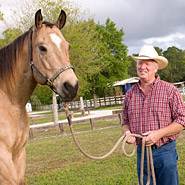
by: Dr. Rick Norton, D.V.M. Equine Practitioner
Be prepared out on the trails this season by planning a First Aid Kit now. When you are miles
away from home or your trailer, anything can happen. Mounted on even the most trail wise horse,
accidents can and do occur. A travesty might find you too far away from medical help to deal with what the elements and mother nature might throw at you.
Never leave camp without a medical kit on your saddle or somewhere in your trail riding group. Being prepared demands that you plan a Trail Riding First Aid Kit ahead of time, taking into
consideration what types of emergencies you might need to deal with. The most important factor to keep in mind is that you need to plan this First Aid Kit around the needs of both horse and
rider.
A medical emergency out on the trail might involve either the horse, rider, or both.
 Your First Aid Kit should be planned with humans and horses in mind.
Some medical supplies can be planned and packed that could be used on either or both. Many trail riders think and plan only for
emergencies involving their horses, a noble and humane gesture. An injured rider might be incapacitated and unable to ride his horse back
to the safety of camp, potentially causing a safety dilemma for the steed. Your First Aid Kit should be planned with humans and horses in mind.
Some medical supplies can be planned and packed that could be used on either or both. Many trail riders think and plan only for
emergencies involving their horses, a noble and humane gesture. An injured rider might be incapacitated and unable to ride his horse back
to the safety of camp, potentially causing a safety dilemma for the steed.
In your trail riding group, be it your family or an organized group of
any size, some one should be the designated mount for carrying an adequate First Aid Kit, filled with fresh supplies, to deal with potential
emergencies along the trail. A few commercial Equine First Aid Kits are on the market, but few are designed to deal with the emergency
needs of large animals, few have enough products for human’s needs, and few are designed especially for the specific needs of the trail.
Now is the time to be planning your Trail Riding Kit.
Before this trail riding season hits: Get Prepared. Consider the type of Trail Riding that you do, the size of the group you normally ride in
, the compatibility of the horses in your trail riding group, the length of time you are normally away
from your camp, barn, or civilization, the severity or difficulty of the terrain you will be riding, and
the wild life in the area that might contribute to the well being of your trail riding experience. Lastly, know what to expect out of the weather during the time you will be on the trail.
Many public lands, forests, parks and horse camp grounds rate their trails by the severity of their
terrain and challenge. Know what you and your favorite trail horse can handle. If at all possible
procure a map of your route, and have a location device of some sort with you: a hand held Global Positioning System (GPS) device, or at least a compass.
Finally, don’t leave that cell phone at the barn or at camp, take it along with you on the trail, fully
charged. Communications is key in planning a trail ride of any duration. In some way, tell some
one where you expect to be on your trip, what route you will take and when you expect to return.
If nothing else, leave a note at your barn, trailer or camp site, so that a search party can know where to organize their efforts if you don’t return due to a trail emergency.
Know not only your own horse’s capabilities and tolerances for trail obstacles such as water
crossings, soft ground, rocky, narrow or steep ground; but have a good general knowledge of how the other horses in your group get along together and handle these same challenges. Possibly
worse than having an emergency yourself, someone else’s well being or their horse’s may become
dependent upon your reactions and ability to administer first aid; it might not even be some one in your group, but some one found along the way.
First Aid supplies for your horse that could also be considered applicable for human injury, illness
or emergency would include in particular wound care. Cleansing products for a dirty trail wound
would include some type of cleansing wipes, disposable sanitizing cloths, or possibly some saline
solution for a larger group or longer ride. A small bottle of Eye Wash can serve to flush a horses eye or wound. Iodine and alcohol wipes are recommended for use on horse or rider for
immediate small wound care and cleaning. An adequate supply of a blood abatement product known commonly as Bloodstop is a must in a trail riding kit and could find use on man or horse.
Antibiotic Ointment can be taken along in small unitized or individual packets to be used on any injured party. These small sizes keep your supply fresh and free from contamination, a major
concern for infection, as well as safe guarding expensive health supplies. By all means, several sizes and types of wound padding and dressings should include: non-adherent gauzes, sterile
gauzes, and an adequate supply of non-sterile gauzes.
Keep in mind, that in an emergency, if you need to, you could use what might be at hand for
temporary wound care if the wound is large, or the bleeding excessive. Coats, clothing, perhaps
even a saddle blanket’s clean side could be plied into use for the short term. Low expense
wound products that even come individually packaged can include such items as baby diapers and feminine products. These items pack and store well.
Every Trail Riding Kit must include a hoof pick, readily available. It will probably be the most
used item in your First Aid Kit. Plan to procure a latex tourniquet and a couple of pairs of latex
gloves, for obvious reasons. Medical towels are handy for a variety of uses, and a small knife or
scalpel should be part of your kit contents. Pack some applicators such as long handled Q-tips and wood tongue depressors for clean application of your antibiotics and ointments.
People’s needs might be more extensive on the trail than what your horse might require. Plan for
the common analgesics such as aspirin, and/or a non aspirin product. People products can be
procured from a reputable first aid supply source in unitized sizes since the human first aid industry
is far more developed. Plan for sun burn, headache, stomach ache, cuts, insect stings and bites,
burn relief, lip balm, muscle analgesic, band-aids and insect repellent products for both horse and rider.
Your Trail Riding First Aid Kit should also be considered to some extent to be a survival kit. In
addition to that compass, have a flashlight packed along with fresh batteries, and perhaps a
backup set; and a dry set of matches could be a life saver as well as signal. At least one instant
cold pack and a bandage wrap can provide immediate pain relief for man or beast. The kit itself
should keep your investment in medical products clean, dry and secure safely to the front or rear of the trail saddle.
If you are one of the many dedicated back country trail horse packers who explore the real off road lands of this great nation, your Trail Riding First Aid Kit planning needs to be more intense
and more complete. You well know how remote and removed you will be from help and rescue
if you encounter an emergency situation. Not only will your supplies need to be larger in quantity, you will need to anticipate more sophisticated items.
As a remote country trail packer, the possibility that you may need to consider closing wounds yourself should be considered. Setting broken bones, and dealing with weather and
environmental related crises will need to be considered. You should probably spend some time at least communicating by telephone with your local veterinarian for his advice in augmenting the
supplies of a daily Trail Riding First Aid Kit.
You’ve probably thought about a Trail Riding First Aid Kit
every time you’ve headed down the path, and told yourself: “Next Time”. Then, might be too late. Plan or buy it now, for the
coming season, before you hit the trails, before you find yourself in dire need of what you don’t have. Your odds are worse when you are not prepared in the face of emergency.
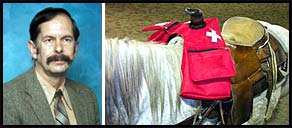
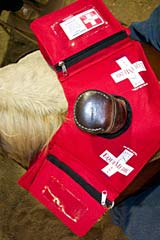
A Trail Riding First Aid Kit should be brightly colored so it can be easily be identified in time of
need. It should be designed to attach to the saddle and have features that allow you to organize
your medical supplies, keeping the most needed, such as your hoof pick, and a flashlight, readily
accessible. A Horn Bag First Aid Kit allows you to put human first aid products on one side and equine on the other.
|
|
|
To advertise your horse product or service, contact Ann
|
|
|
InfoHorse.com, Horse Information Lives Here ® 1/13/2026
Contact Us to Advertise to over a million Horse Owners.
All images and content Copyright© 2012 by InfoHorse.com, Equusite.com.
Horse Owners are Dog Owners; Dog Product Information dognowner.com
|
|
|
Articles, Academic Schools, Arena Maintenance, Animal Communicators, Barns, Barn and Accessories, Barn Equipment and Tractors, Breast Collars, Grooming Products for Horses, Hay Feeders, Horse Blankets, Horse Books, Horse Videos, Horse Breeders, Horse Camping Gear, Career Schools, Carts and Buggies, Horse Training Clinicians, Equestrian Clothing, Dogs and Puppies, Horse Fencing, Western Art & Furniture, Horse Property for Sale, Horse Products For Sale, Fly Control, Foal Care, Horse Footings, Horse Gifts, Horse Health and Nutrition, Hoof and Leg, Horse Insurance, John Lyons Certified Trainers, Equine Lawyers, Leather Care, Links, Horse Property, Horse Photography, Portable Horse Stalls, Arenas and Roundpens, Horse Riding Schools, Horse Schools, Safety Products, Services for Horses, Horse Trailers, Horse Shipping, Horse Skin Coat Care, Horse Software, Specialty Trainers, Horse Summer Camps, Tack, Horse Trainers, Treats and Snacks, Truck Accessories, Trucks, Horse Vacations, Western Lifestyle, jewelry
|
|
|
|