One of the most important aspects of equine management and keeping horses healthy and sound is proper hoof care. It starts to matter very early in life as hoof angles influence the growth and development of the limbs. It is important in the early stages of training as young horses start developing patterns of movement and musculature under saddle. Proper trimming or shoeing is paramount for mature riding horses at all levels of all disciplines for maintaining soundness and optimal performance. As a veterinarian, I see many horses for lameness or poor performance and find that the feet are not optimal. This makes a true diagnosis of the problem difficult, if not impossible. I see a trend in my profession of injecting joints and treating lameness in the limbs when the feet are not correct. This is not to say that injections never help, but I prefer to correct the feet first (and to consider nutrition, body work, tack, training), then see if further work on the limbs is needed.
For horse owners, I think it is important to develop a good eye and a general understanding of what the feet should look like. Also, it is helpful to be aware of signs a horse might show if the feet are problematic. It will allow you to better monitor and care for your horse, and possibly to raise the bar on goals for how the feet should look and function. I often hear people describe their horse's feet with an attitude of "that's just how he/she is" when speaking of things like thin soles, underrun heels, etc. That is rarely the case, the hoof is actually quite malleable and such issues can be solved. I encourage horse owners to really tune in to their horses, to observe their patterns of behavior and movement, and to realize the power in their own attention to detail. I would like to suggest some basic guidelines owners can use to more thoroughly understand and assess the form and function of the hooves. Whether a horse is barefoot or shod, there are 3 things to consider:
1 Appearance of the hoof angles and appearance of the hoof itself 2
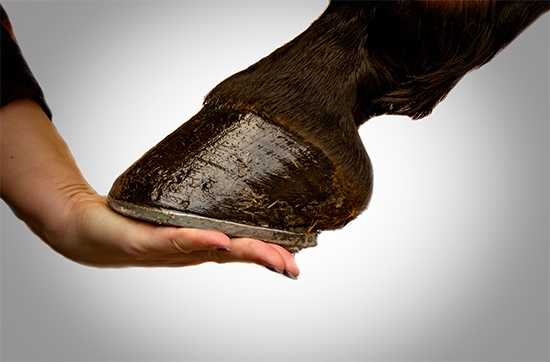
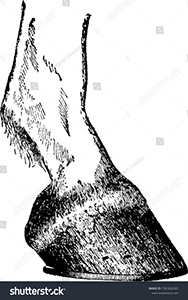
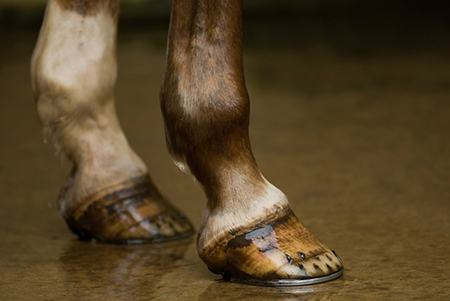
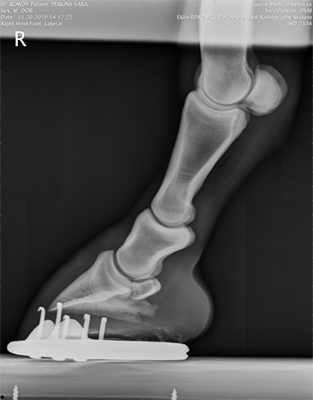
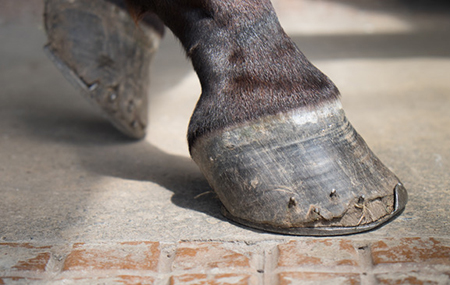
1. The angle of the hoof should flow in alignment with the angle of the pastern. The hoof also affects the angle of the pastern so it should appear supportive from an architectural perspective. (photo #1 shows a balanced foot ) If you get the impression that the fetlock is dropping back and hanging off a cliff or rocking forward and knuckling, these could be signs of incorrect angles. The hoof itself should offer an appearance of symmetry. The feet should seem robust with a fair bit of hoof wall between the hairline and the ground. Hooves should not appear shallow. (photo #2 shows shallow hooves with low heels) The hairline should be straight as it wraps around the leg without bulges or deviations which indicate imbalance and abnormal forces. . The heel bulbs should be of equal size and proportion. The outer (dorsal wall) should form a fairly straight line without dishing or bulging (bull nose appearance). Distortion of the outer wall is a sign of mechanical stress on the hoof, often caused by an incorrect point of breakover, xrays will often show that the coffin bone and hoof capsule are not lined up for ease of movement.(photo #3 is xray showing neg coffin bone and bull nose appearance of a hind foot) In general, if you look from the front, the inner half and the outer half of the foot should be equal in length and shape so that the hoof is not tilted and the walls are symmetrical without flares. Large cracks in the hoof wall are a sign of stress from imbalance and a reason to closely examine the trim. Angles of the hind feet are just as important as the fronts. Crumbling/weak hoof walls can be due to gaps in nutrition and the diet should be reviewed. (Photo #4 shows weak hoof walls, consider nutrition)
2 Noticing how your horse stands when turned loose or tied up can be useful
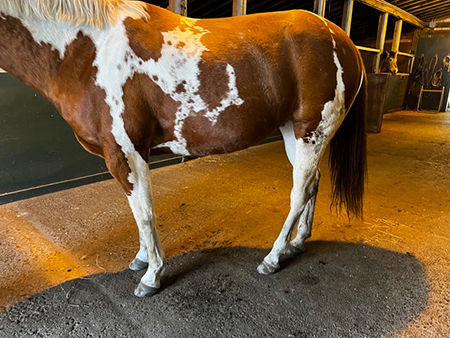
shift weight from side to side to some degree and possibly cock a hip while at rest. They should not rock back off of the front end or continually point a front foot. They should not continually stand with the forelimbs or hindlimbs camped under the body. (Photo #5 shows abnormal stance with front feet held far back under body and not square) Some horses will bank the footing in their stall or paddock to raise their own heels. A constant abnormal stance could be a sign of pain or lack of support from the feet. Sometimes it can be a sign of pain or compensation for an issue elsewhere in the body. Either way, an odd stance is something to pay attention to and may be an opportunity to help a horse before lameness ensues. Aside from traumatic injuries, horses rarely just go lame. There are many things that show up in their physicality and behavior before the actual lameness becomes visible.
3 When in motion, the feet should leave the ground with ease as they break over with straight trajectory
Knowing what is normal for your horse and understanding some general principles about how the feet should look and function is a great management tool for horse owners who are interested in being an advocate for their horses' health and soundness. Observing patterns in how your horse stands and how the hooves look over time provides data and perspective that helps to ensure your horse is on track and developing in a positive direction. A balanced hoof is resilient and can maintain its infrastructure and internal function. It has a correct outer appearance of symmetry and strength, the horse moves with softness and confidence.
Hoof health is one of the single most important factors for the well- being of the horse.
A final thing to consider as part of daily hoof management is nutrition. It is
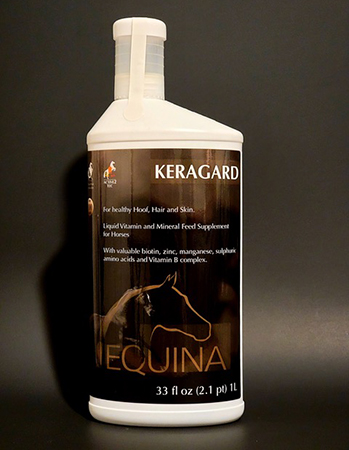
important for horses with poor hoof quality (crumbling walls, poor infrastructure, tendency to bruise or abscess often). It is also important for horses with apparently normal feet. Nutrition affects all aspects of the hoof including wall strength, rate of new growth, thickness and depth of the wall and sole, as well as the quality of the new growth - lending elasticity and resilience. Many things challenge the hoof including weather, ground conditions, riding surfaces, and holding shoes. Supportive nutrition of the feet is a powerful tool for promoting soundness and ease of management in all types of horses. (Photo # 6 Keragard)
Equina USA is a veterinarian-owned company that is dedicated to providing the highest quality nutrition for horses. With a focus on accurate formulations and clean sourcing, the products are guaranteed to be absorbed by the horse and produce visible results. There is a system that starts with fulfilling basic daily requirements of vitamins, minerals, and trace elements backed with yeast and algae for added nutrients, omega 3’s and digestive aid. With basic needs fulfilled, a platform is created to build upon for each individual horse based on the age and activities as well as any physical goals or challenges. Keragard is a hoof supplement designed to optimize hoof quality in all individuals who have their basic nutrient requirements met. Keragard is unique in that it is a liquid, which is the most absorbable form of biotin which builds a higher quality hoof.
Amino acids and organic sulphurs support growth while zinc creates strength and durability. Importantly, vitamin B complex and manganese are added to optimize metabolism of the nutrients. The end result is a stronger hoof with more resilience for barefoot horses and a better capacity to hold a shoe for shod horses. This will eliminate the tendency for bruising and abscessing and increase overall soundness.
💡Key Article Takeaways
Whether a horse is barefoot or shod, there are 3 things to consider: 1.
Appearance of the hoof angles and appearance of the hoof itself 2.
Stance - how the horse tends to place the feet when standing still 3.
How the feet function when the horse is in motion 1.
How do I assess whether my horse's hooves are actually correct?
Per the article (Equina USA): whether a horse is barefoot or shod, three things matter.
Hoof angles and appearance. The hoof should flow in alignment with the pastern. The fetlock should not appear to drop back or rock forward (knuckling). The hoof should look symmetrical and robust, with a fair amount of wall between hairline and ground — never shallow.
Stance. The horse should stand fairly square. Shifting weight or cocking a hip is normal; rocking back off the front end, continually pointing a front foot, or standing camped under is not.
How the feet function in motion. Feet should leave the ground with ease, break over with straight trajectory, and land softly with even concussion.
Per the article: a balanced hoof is resilient and the horse moves with softness and confidence.
What should I do if I think my horse's feet aren't right?
Per the article: the work starts with attention — tune in to your horse, observe patterns of behavior and movement, and trust the power of your own attention to detail.
Resist the “that’s just how he is” framing. Per the article: the hoof is actually quite malleable, and issues like thin soles or underrun heels can be solved.
Document patterns over time. Photograph the feet regularly, note how the horse stands and moves. This data is what tells you whether things are improving or drifting.
Address the feet first, before chasing lameness elsewhere. Per the article: many lameness or poor-performance cases trace to feet that aren’t optimal — correct the feet first, consider nutrition, body work, tack, and training, then see if further work on the limbs is needed.
Per the article: aside from traumatic injuries, horses rarely just go lame — many things show up before visible lameness.
What do specific hoof distortions actually mean?
Per the article: hoof shape is a record of mechanical forces. The common distortions each carry a meaning.
Hairline bulges or deviations — signs of imbalance and abnormal forces wrapping around the leg.
Unequal heel bulb size — the hoof is loading unevenly side-to-side.
Dishing or bull-nose appearance on the dorsal wall — mechanical stress, often from an incorrect point of breakover. X-rays often show coffin bone and hoof capsule are not lined up for ease of movement.
Asymmetric inner vs outer half from the front — tilted hoof with flares on one side.
Large cracks in the hoof wall — stress from imbalance; reason to closely examine the trim.
Crumbling or weak walls — often a nutrition gap; review the diet.
Per the article: hind-foot angles matter as much as the fronts.
What stance or movement signs should make me call my farrier or vet sooner rather than later?
Per the article: a constant abnormal stance or movement pattern is the early signal that something needs attention before frank lameness develops.
Continually pointing a front foot or rocking back off the front end at rest.
Standing camped under with forelimbs or hindlimbs held under the body.
Banking the bedding to raise the heels — the horse is self-treating an angle problem.
Constant stumbling — a sign of incorrect breakover or pain in the limbs.
Reluctance under saddle or shortened gait especially in one front foot.
Per the article: an odd stance is something to pay attention to and may be an opportunity to help a horse before lameness ensues. Sometimes it’s pain in the feet themselves; sometimes it’s compensation for an issue elsewhere in the body. Either way, the time to investigate is when the stance changes — not when the horse goes lame.
How does nutrition actually affect hoof quality?
Per the article: nutrition affects all aspects of the hoof — wall strength, rate of new growth, thickness and depth of wall and sole, and the quality of the new growth, which determines elasticity and resilience. It matters for horses with poor hoof quality and for horses with apparently normal feet.
Per Equina USA: their system starts with fulfilling basic daily requirements of vitamins, minerals, and trace elements (backed with yeast and algae for digestive aid), then builds on that platform with horse-specific support. Keragard, their hoof supplement, uses liquid biotin as the most absorbable form, plus amino acids and organic sulphurs for growth, zinc for strength and durability, and B-complex with manganese to optimize metabolism of those nutrients. The structural rule is more important than the brand: weak walls and crumbling hooves often signal a nutrition gap that supportive feeding addresses over months — confirm a program with your vet based on your horse’s age and workload.