

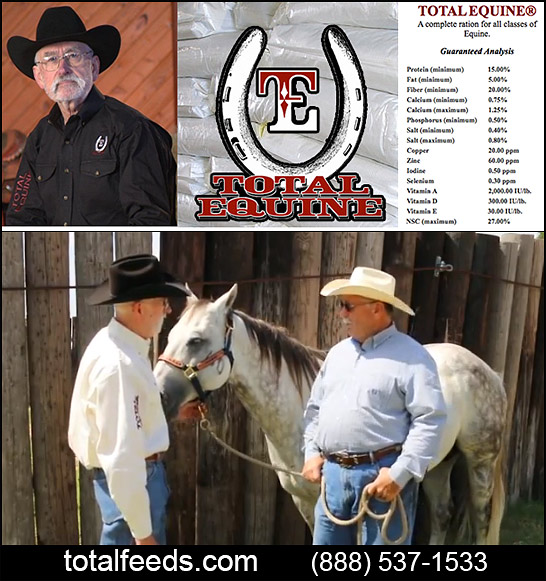
Featured Sponsor: Total Feeds, Inc
Total Feeds, Inc
Total Feeds works because it has an extremely high absorption rate! Total Equine® was developed from science and experience and first produced in 2000. The nutrient levels are based on what has been learned through scientific research over the last 40 years. The physical form of extrusion and the specific ingredients are what horses, mules and donkeys need to maximize health, attitude and performance.
Learn more about Total Feeds, Inc →
See all Feeds for Horses options below
Feeds for Horses Categories
6 product categories
📋
Other Types of Products we Recommend
Curated picks from across InfoHorse.com — most relevant first



Free horse tools
All 7 free tools →
Feeds for Horses — Frequently Asked Questions
What is a complete horse feed and when does my horse need one?
A complete feed supplies both fiber and grain nutrition in one bag, so it can replace hay when a horse can't chew or digest long-stem forage well. Senior horses with worn teeth often rely on them. Because forage is built in, complete feeds are fed in larger amounts than plain grain, so always feed by weight and follow the directions on the bag.
What kind of feed is best for a horse prone to laminitis or metabolic problems?
Horses with insulin resistance, Cushing's, or a history of laminitis usually do best on low-starch, low-sugar feeds paired with tested hay. These formulas keep the sugars and starches down while still providing protein, vitamins, and minerals. Soaking hay can lower sugar further. Because needs vary by individual, plan a metabolic horse's diet with your veterinarian.
How do I feed an easy keeper without shorting it on nutrients?
Easy keepers hold weight on very little feed, so calories are simple to overdo. Instead of a fortified grain, many owners use a low-calorie ration balancer or a vitamin-mineral supplement over mostly forage. That fills nutrient gaps without adding excess energy. Weighing hay and using a grazing muzzle help manage intake, and body condition tells you more than the scoop does.