Helping Horse Owners Make Informed Decisions
Laminitis & Founder Prevention and Treatment

Laminitis & Founder Prevention and Treatment

By Doug Butler · Health

Looking for guidance on laminitis & Founder Prevention and treatment?

Support our Sponsor
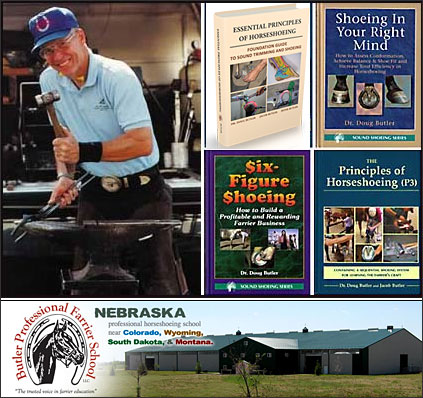
Farrier Books by Doug Butler Enterprises, Inc.
Don't YOU Deserve To Have The Knowledge You Need For A Successful Horseshoeing Career?
View Sponsor Profile →
View Listing →

Laminitis & Founder Prevention and Treatment for the Greatest Chance of Success
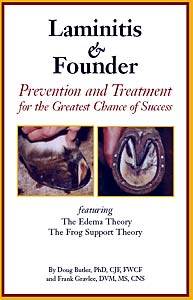
Book Cover

By Doug Butler, PhD, CJF, Fwcf Butler Professional Farrier School, Crawford, Nebraska

Laminitis and founder are the most serious and most common of the horse foot diseases. And, they are often the most frustrating to treat. You need to know what works, what doesn’t and why.

According to Louisiana State University Equine Health Studies Program (Fall 2006) '1.3 million horses are affected by founder over the course of their lifetime. 'Up to 75% of these horses eventually develop severe lameness and chronic debilitation. 'An estimated $13 million annual monetary losses occur as a result of laminitis.

Horse owners must become the equine professionals’ ally when treating founder in order to have the greatest chance for a successful outcome. Since the level of care provided for the horse is ultimately decided by the horse owner, it is crucial that they understand the scientific and practical treatments that have proven most successful for treating laminitis and founder.

Unfortunately, many incorrect and incomplete theories are currently being taught at schools, workshops and seminars across the country. These treatment fads have caused much unnecessary suffering and can permanently harm a horse for life.

The One Theory That Makes Sense

Of all the theories currently embraced regarding these diseases, I believe that only one makes sense. It is called the edema theory.

The edema theory suggests that as laminar tissues swell, blood vessels leak fluid into the space between the vessels until finally this interstitial fluid causes the blood vessels to collapse.

When laminar cells die, the normal hoof bone bond comes apart and the coffin bone rotates or sinks. The sinking causes a deformation of the hoof capsule and a degeneration of the bone due to pressure on its tip and base. Veterinary medical treatment is aimed at preventing this from occurring and restoring health to damaged tissues. Farrier mechanical treatment utilizing frog support is aimed at supporting the bone column so that circulation can be restored and damaged tissues can heal. This generally results in immediate pain relief, but full recovery may take many months.

Professional farriers and veterinarians often don’t agree on the causes and treatments for laminitis and founder. People generally stick with what they learned in school. If the teaching was based on a faulty concept, the results will not be consistent and as effective as they could be. Also, because of the severity of this systemic disease, some horses will die, no matter how they are treated.

The words laminitis and founder are often used interchangeably, yet they refer to different stages of a serious systemic disease. Laminitis progresses to founder in a predictable sequence of events, which are also referred to as the various “forms” of laminitis. These are: mild laminitis, acute laminitis, mild chronic founder, and severe chronic founder.

Laminitis is such a serious problem that it requires strict attention to prevention by constantly monitoring the horse’s diet and environment. Laminitis is often a component or symptom of another disease or condition which must be treated concurrently or simultaneously. Each case must be considered individually, and we recommend that you consult with your veterinarian/farrier team regarding the health and care of your horse.

A new book

called Laminitis & Founder: Prevention and Treatment for the Greatest Chance of Success, co-authored by Dr. Doug Butler and Dr. Frank Gravlee, challenges erroneous theories that are being taught today at many seminars and conferences as well as veterinary and farrier schools across the country. This new 96-page illustrated book is the result of 75 combined years of clinical experience and contains cutting edge information on how to treat and prevent the devastating and sometimes fatal diseases of laminitis and founder. It can be purchased at www.dougbutler.com or by calling 1-800-728-3826 (press 1). The edema theory is the foundation of treatment for laminitis and founder taught at Butler Professional Farrier School.

To view informative Q&A videos about the school, click here.
Key Article Takeaways
  • 'Up to 75% of these horses eventually develop severe lameness and chronic debilitation.
  • 'An estimated $13 million annual monetary losses occur as a result of laminitis.
  • It can be purchased at www.dougbutler.com or by calling 1-800-728-3826 (press 1).
  • According to Louisiana State University Equine Health Studies Program (Fall 2006) '1.3 million horses are affected by founder over the course of their lifetime.
  • And, they are often the most frustrating to treat.
Questions readers commonly ask:
How serious is laminitis really?

Per Doug Butler PhD: laminitis is one of the most serious and common horse foot diseases — and one of the most frustrating to treat. Per Louisiana State University Equine Health Studies (Fall 2006): 1.3 million horses are affected over their lifetimes; up to 75% develop severe lameness and chronic debilitation; estimated $13 million in annual monetary losses. Prevention is dramatically easier than treatment.

What's the difference between laminitis and founder?

Per Doug Butler PhD: laminitis is the inflammation; founder is the structural failure that often follows. Laminitis is the active inflammation of the laminae (tissue connecting hoof wall to coffin bone). Founder is the rotation or sinking of the coffin bone within the hoof capsule that occurs when laminae fail. You can have laminitis without founder if treatment is fast and effective; founder is the worst-case outcome.

What causes laminitis?

Per Doug Butler PhD: multiple causes — metabolic disorders (Cushing's, EMS, insulin resistance), grain overload, mechanical concussion (riding hard on hard ground), grass founder (rich pasture, especially spring), drug reactions, and complications from other illnesses. Many horses have multiple risk factors. Prevention strategy varies by cause: feed restriction for metabolic horses, surface management for concussion-prone horses, careful pasture management for grass-sensitive horses.

What does effective laminitis treatment require?

Per Doug Butler PhD: horse owners must become the equine professionals' ally — the vet alone can't fix laminitis without aggressive owner participation. Treatment requires immediate intervention (icing, NSAIDs, possibly mechanical support), strict dietary management (often grain-free, limited forage), reduced exercise, and possibly supportive shoeing. The horse owner manages the horse 24/7; the vet visits intermittently. Owner buy-in determines outcomes.

Can horses fully recover from founder?

Per Doug Butler PhD: some — depending on severity and how quickly treatment started. Mild rotations (under 6°) often return to riding soundness with appropriate trim, supportive shoeing, and management of underlying causes. Severe rotations or sinker cases may stabilize with significant management but rarely return to full work. Some founder cases reach a 'walking pasture sound' state where the horse is comfortable but not rideable. Catastrophic cases require euthanasia.

Related Products & Services

LaSal Animal Health
InfoHorse Advertiser
LaSal Animal Health
Nebulizer La Sal Animal Health offers the only chelated silver nebulizing solution on the market. Find LaSal Animal Health on InfoHorse.com.
Markie's Choice
InfoHorse Advertiser
Markie's Choice
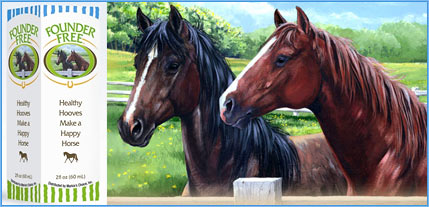
Markie's Choice — Horse Health Products. Find product details, reviews, contact info and more on InfoHorse.com, America's #1 horse product directory.
The Hay-EZ
InfoHorse Advertiser
The Hay-EZ
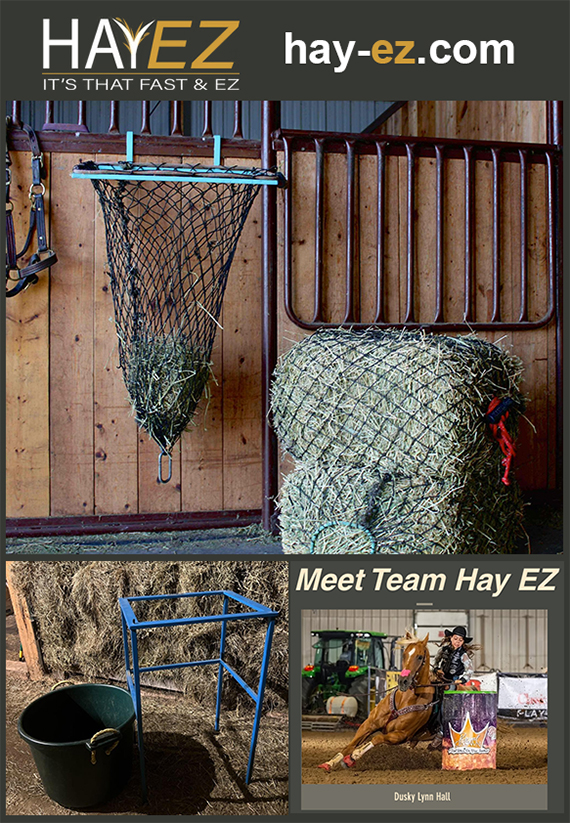
The Hay-EZ Hay Bag Filler — the smart way to fill your slow-feed hay bags or nets. Hold the bag open at the top for easy hay loading. Filling has never been easier.
Article Sponsor
Farrier Books by Doug Butler Enterprises, Inc.
800-728-3826 www.dougbutler.com/products/books jacob@dougbutler.com
View Listing →
Ann Pruitt
Contact Ann Pruitt
InfoHorse.com