

Manure Composting Products Here!
Composting Horse Manure
If you are hauling horse manure off your property, spending a small fortune and getting nothing in return there is an alternative. By Sun State Organics LLC
Composting horse manure works when the microbes driving the process get optimum conditions: a carbon-to-nitrogen ratio between 25:1 and 30:1, adequate moisture and oxygen, and pile temperatures between 120 and 160 F. Because manure with bedding runs closer to 50:1, adding grass clippings, hay, or fertilizer brings the ratio into the optimum range. Composting at proper temperatures kills fly eggs and larvae, pathogens, parasites, and weed seeds, and reduces the volume to a relatively dry product that acts as a slow-release fertilizer when spread on fields and pastures.
Composting horse manure can save you money, provide a healthier environment for your horses and reduce fertilizer costs.
An average 1,000 pound horse produces 730 cubic feet/year of waste materials. Labor, storage and disposal of manure is becoming a significant issue. Horse owners have an increasing responsibility to manage manure with greater sensitivity to its impact on the environment.
Composting manure produces a relatively dry end product that is easily handled and reduces the volume. Composting at proper temperatures can kill fly eggs and larvae, pathogens, parasites and weed seeds. Composted and matured manure acts as a slow release fertilizer when spread on fields and pastures. Compost is an excellent soil conditioner.
Microbes that drive the composting process require optimum conditions of temperature, moisture, oxygen and carbon/nitrogen ratio. The carbon/nitrogen ratio should be between 25:1 and 30:1; horse manure with bedding has an estimated C/N ratio of 50:1. Therefore, N has to be added to the manure for it to compost properly. The manure and bedding particles should be about one-half inch to one and a half inches in size. The addition of grass clippings, hay or fertilizer can bring the C:N ratio into optimum range. When microbes work properly, the compost temperature will be between 120 and 160 F. Cooler temperatures result from a lack of N and oxygen.
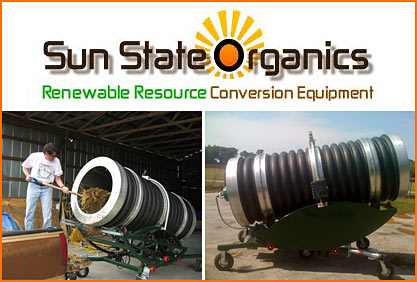
Horse breeders should be aware there is a method to compost horse manure that does not require a permit. Sun State Organics, an Ocala based manufacturing company, manufactures commercial and industrial grade rotary composters that take all the hard work out of making excellent compost . The composters do a pathogen, parasite and weed seed kill in less than a week. The machines are available with built-in computerized temperatures sensors.
The rotary compost machines have a unique tilt feature so loading and unloading is easy. Each machine comes with a compost mix calculator and they can even operate on solar or wind power. The machines can cost 30-60% less to own and operate opposed to having waste hauled off in a dumpster or container.
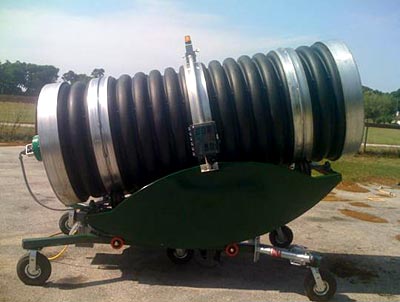
The Sun State Organics in-load/out-load conveyor with built in slow speed shredder makes loading and unloading simple and fast. Being able to quickly calculate what additives must be incorporated into the mix is also easy and fast. Because the machine is programmable, once the waste materials are added everything happens automatically. You can compost in your barn or in the remotest sections of your property with the use of our available solar or wind powered options. In little more than a week you have a pathogen, parasite and weed seed free product satisfying the strictest regulations.
When the waste comes out of the composter you can do one of three things:
1.Land apply it on your pastures without worry of pathogens, parasites and weed seeds. 2.Age it and use it as a fertilizer to reduce your fertilizer costs or sell it. 3.Feed it to worms and make vermicast – a high nitrogen organics fertilizer that can sell for $500/Ton.
Composting horse manure in a Sun State Organics composter is the least expensive, fastest and best method to convert large amounts of renewable resources into useable end products. Why dump your dollars and get nothing back when you can invest in a machine that will reduce your disposal costs? Our rotary compost machines are designed to last a lifetime, dropping hauling cost to almost nothing after a five to six year amortization.
Instead of managing a cost center (waste disposal) wouldn’t you rather be managing a profit center ? Now you can with Sun State Organics line of rotary composters and vermiculture accessories! The machines can be purchased for cash or an equipment loan basis. The USDA offers 75% grants starting in 2011 for the machines to qualified horse farmers. For additional information see SunStateOrganics.com
Contact: Sun State Organics 8903 West Anthony Road Ocala, Florida 34479 Phone: (352) 620 8444 Email: [email protected] Website: SunStateOrganics.com