
Horse Heat Index & Ride-Safety Calculator
Enter today's temperature and humidity for a quick read on whether it's reasonable to ride, work, or haul your horse — in heat or in cold.
Your ride-safety reading
A good starting point — not veterinary advice. These bands are rounded guidance based on the AAEP heat index and general cold-weather recommendations; your horse's fitness, age, coat, acclimation and health all matter. Watch the horse (sweating, breathing, recovery) over any number, and when in doubt, ride lighter or not at all and call your vet.
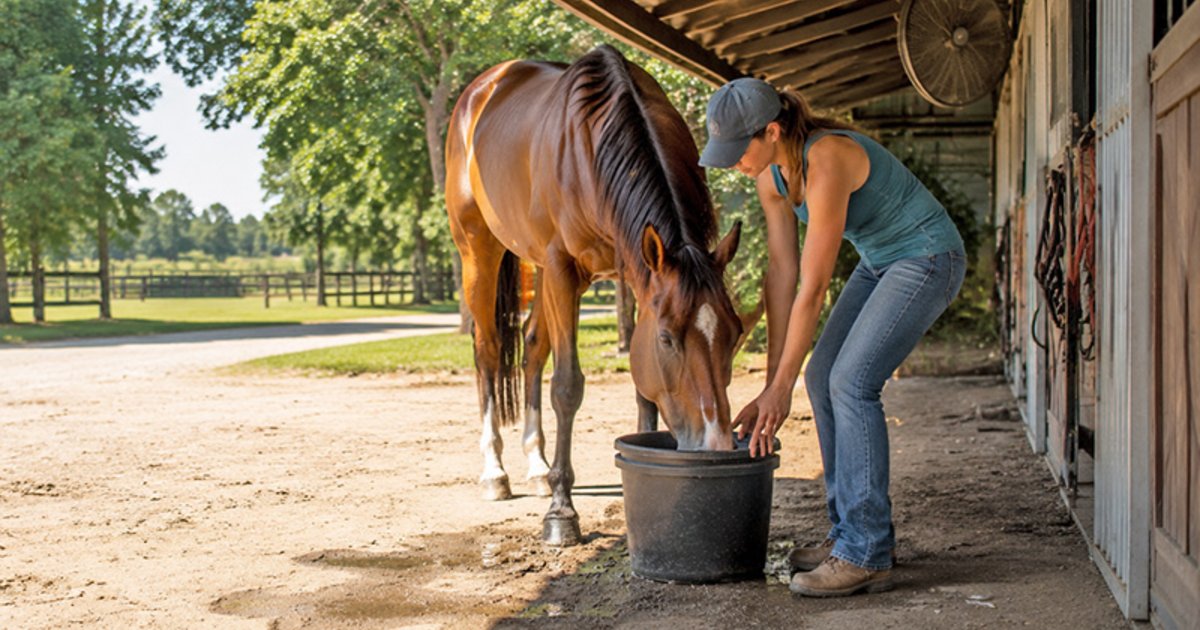
Horse Heat Stress: How to Keep Horses Cool in Summer & Recognize the Warning Signs
Beyond the number — the danger signs of heat stress, how to cool a hot horse fast, water and salt, and exactly when to call the vet. Ann's complete summer-safety guide.
 By Ann Pruitt · Co-Founder & Head of Sales, InfoHorse.com — a horsewoman of 40+ years with 20 years of barn management.
How the equine heat index works
Add the air temperature and the relative humidity (%). The sum is the equine heat index — it estimates how well your horse can shed heat by sweating. The higher the number, the harder it is for sweat to evaporate and cool the horse. You can enter the temperature in °F or °C — the index is Fahrenheit-based, so we convert Celsius for you before adding the humidity. This temperature-plus-humidity guide is the practical field index published by the AAEP (via US Equestrian) and university extension; for competition, the FEI and the Olympics use a more rigorous validated measure called WBGT (wet-bulb globe temperature) that also accounts for sun, wind, and radiant heat.
| Temp + Humidity | What it means |
|---|---|
| Under 130 | Your horse can cool itself normally. Good to ride — cool out as usual. |
| 130–150 | Begin monitoring for heat stress. Ride lighter, offer water and shade, and cool out thoroughly. |
| 150–180 | Cooling is greatly reduced. Light work only, shorten the session, and cool aggressively. |
| 180 and above | Cooling is almost ineffective and heatstroke risk is serious. Do not ride; cool a hot horse and call your vet. |
Why humidity matters. When the humidity number is more than half of the total, your horse is in more danger than the index alone suggests — up to two-thirds of the sweat can roll off before it evaporates and cools the horse. This tool flags that and nudges you up a level.
Cooling a hot horse. Apply lots of cold water continuously over the whole body — cold or even ice water is safe and cools fastest. The old "never put cold water on a hot horse" warning is a myth, and you don't need to scrape between applications. Add airflow and shade, offer cool water with an electrolyte during sweating season, and do hard work or hauling in the cool early morning or evening.
Cold weather. A heat number can't tell you about cold, so this tool also checks the air temperature. Very cold air during fast work can inflame a horse's airways (worse for horses with heaves), wind chill makes it feel colder, and frozen or icy footing is a real injury risk — so the colder it gets, the lighter and shorter the work, and never put a sweaty or clipped horse away wet.
Common heat and riding questions
At what temperature is it too hot to ride a horse?
Use the equine heat index (air temperature in °F plus relative humidity in %). Under 130 a horse cools normally; at 130–150 begin monitoring; at 150–180 do light work only; and at 180 and above it is dangerous to ride, work, or haul because the horse cannot cool itself effectively. Humidity makes it worse — if humidity is more than half the total, treat it as one level hotter.
How do I calculate the horse heat index?
Add the air temperature in degrees Fahrenheit to the relative humidity percentage. For example, 90°F + 60% humidity = 150. This temperature-plus-humidity field index is published by the AAEP and university extension; competition bodies use the more rigorous WBGT (wet-bulb globe temperature).
Is it safe to put cold water on an overheated horse?
Yes. The old warning against cold water is a myth. Applying lots of cold water continuously over the horse's whole body is the safest and fastest way to cool it, and you do not need to scrape the water off between applications. Add airflow and shade, and call your vet for any horse in distress.
How cold is too cold to ride a horse?
Most veterinarians advise against riding once the temperature drops below 0°F. From about 20°F down, keep work easy and warm up slowly; very cold, dry air can inflame the airways (worse for horses with asthma/heaves), and wind chill and icy footing add risk. Never put a sweaty or clipped horse away wet.
Sources & methodology
The heat bands follow the AAEP equine heat index (as published by US Equestrian) and university extension; the cooling and cold-weather guidance is drawn from veterinary research and extension programs. Key references:
- Competition Update: Heat Index — US Equestrian (guidance from the AAEP): the temperature + humidity index and the under-130 / 130–150 / 150–180 / over-180 bands.
- Caring for Horses During Hot Weather — University of Minnesota Extension: the same air-temperature + humidity formula, cooling-efficiency bands, and the "avoid riding over 150" guideline.
- Managing Horses in Hot Weather — University of Georgia Equine Program: cooling a hot horse with continuous cold water — scraping is unnecessary.
- Research Update: Cooling a Hot Horse — Stable Management (research by Dr. Krishona Martinson, Univ. of Minnesota): continuous cold-water application is the fastest, safe cooling method.
- FEI Climate-Mitigation Protocols (WBGT) — Fédération Équestre Internationale: WBGT — the validated competition heat index used since the 1996 Olympics.
- How Cold Is Too Cold to Ride a Horse? — PetMD (veterinary-reviewed): cold-weather riding thresholds — easy work from about 20°F down, and not riding at subzero temperatures.