


Horse Heat Stress: How to Keep Horses Cool in Summer and Recognize Warning Signs
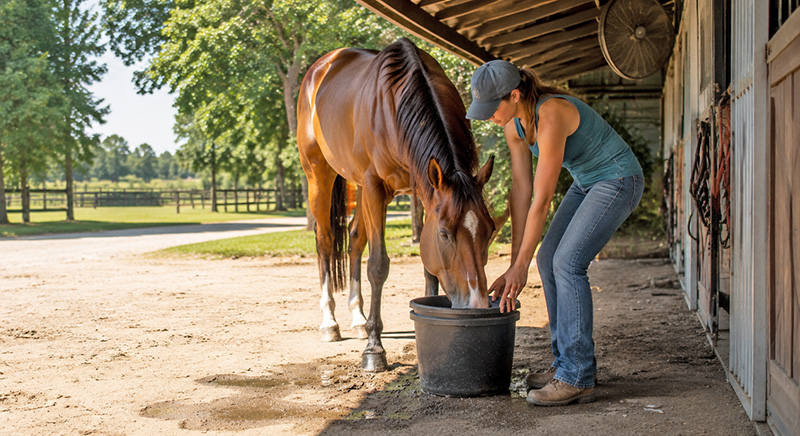
To keep horses cool in summer, provide abundant fresh water—a horse may drink 10–20 gallons a day in hot conditions—along with shade, moving air, and rides scheduled for early morning or near sunset. The fastest way to cool a hot horse is cold water: hose the neck, chest, shoulders, and inside the hind legs, scrape the water off, and repeat until the runoff feels cool, adding a fan while the horse is wet to speed the process. Because sweat must evaporate to cool the horse, humidity matters as much as temperature—when temperature (°F) plus humidity (%) climbs past 180, skip strenuous exercise.
Summer can be hard on horses.
Whether your horse is working, traveling, competing, grazing in a pasture, or simply standing in the afternoon sun, heat and humidity can quickly turn a comfortable day into a dangerous one.
The good news is that most cases of heat stress can be prevented. Horse owners who understand how horses cool themselves, recognize warning signs early, and make a few smart management decisions can help their horses stay comfortable throughout the hottest months of the year.
Here's what every horse owner should know before summer temperatures begin to climb.
Why Summer Heat Is Dangerous for Horses
Horses generate tremendous amounts of body heat.
Digestion creates heat. Exercise creates heat. Standing in direct sunlight creates heat. Even a horse doing very little on a hot day can struggle if the environmental conditions are severe enough.
A horse's primary cooling system is sweat.
As sweat evaporates from the skin, it carries heat away from the body. When temperatures rise or humidity becomes excessive, that cooling system may no longer keep up with the heat being produced.
If a horse cannot effectively dissipate heat, body temperature rises, dehydration develops, and heat stress can quickly become a medical emergency.
The danger isn't always temperature alone.
Humidity often plays an even bigger role.
Why Florida, Texas, and Gulf Coast Summers Can Be So Challenging
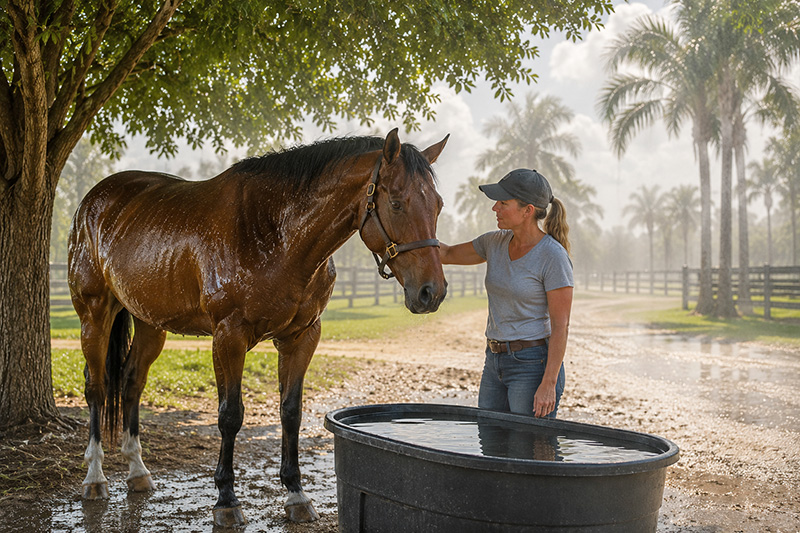
Many horse owners watch the thermometer.
The smart ones also watch the humidity.
A horse cools himself by evaporating sweat. When the air is already saturated with moisture, sweat cannot evaporate efficiently. The horse may be dripping wet and still unable to cool himself.
This is why:
• 95°F with 25% humidity may be manageable
• 88°F with 85% humidity may be dangerous
Horse owners in Florida, Louisiana, Mississippi, Alabama, Georgia, South Carolina, and East Texas often deal with this challenge every summer.
In humid climates, horses may overheat more quickly, recover more slowly, and require additional attention to hydration and airflow.
The horse that appears merely sweaty may actually be struggling to cool himself.
What's the Fastest Way to Cool Down a Hot Horse?
Cold water.
It remains one of the most effective cooling tools available.
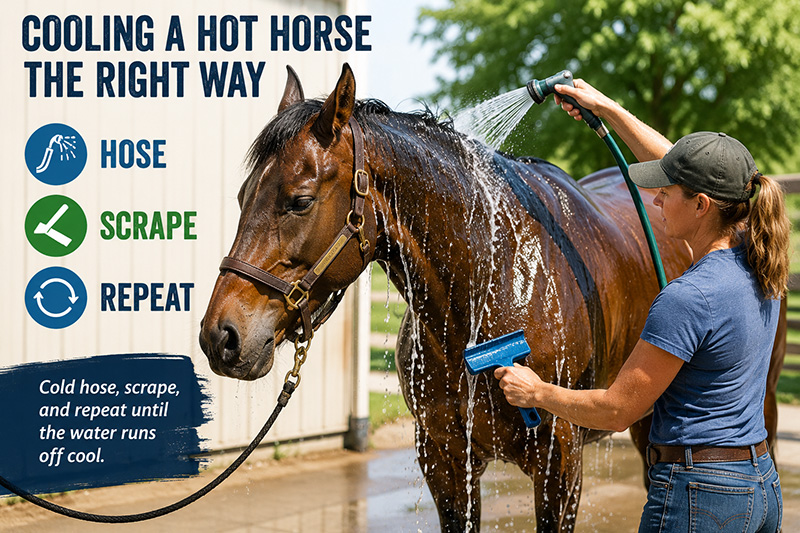
When a horse comes in hot from exercise, hauling, turnout, or competition, begin cold-hosing immediately.
Focus on the major blood-vessel areas:
• Neck
• Chest
• Shoulders
• Inside the hind legs
These areas allow heat to be removed quickly from circulating blood.
The biggest mistake horse owners make is spraying the horse and walking away.
Water sitting on a hot horse quickly warms and acts like an insulating blanket.
Instead:
✓ Hose thoroughly
✓ Scrape water off
✓ Hose again
✓ Scrape again
✓ Repeat until the runoff feels cool to your hand
Research has shown that cold water does not cause muscle cramping or tying-up in healthy hot horses.
If a fan is available, place the horse in front of moving air while wet to accelerate cooling.
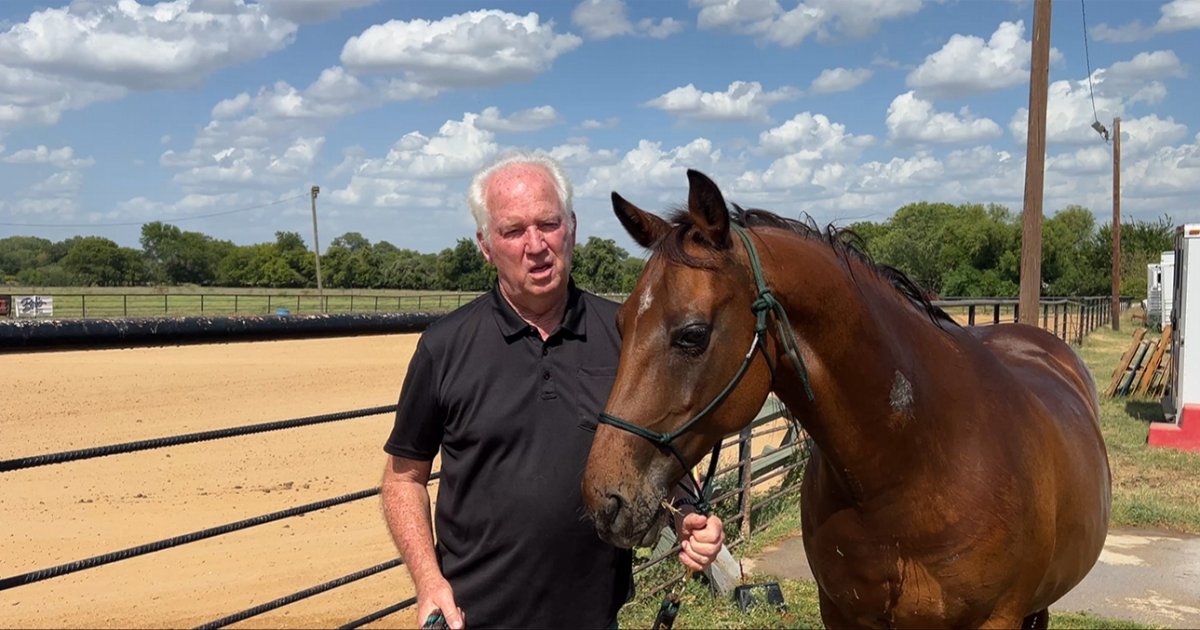
Cold water and a scraper beat every fancy gadget in the tack room. Hose, scrape, repeat until the water comes off cool — that's the whole trick.
— Bob Pruitt, InfoHorse.com
How Much Water Does a Horse Need During Hot Weather?
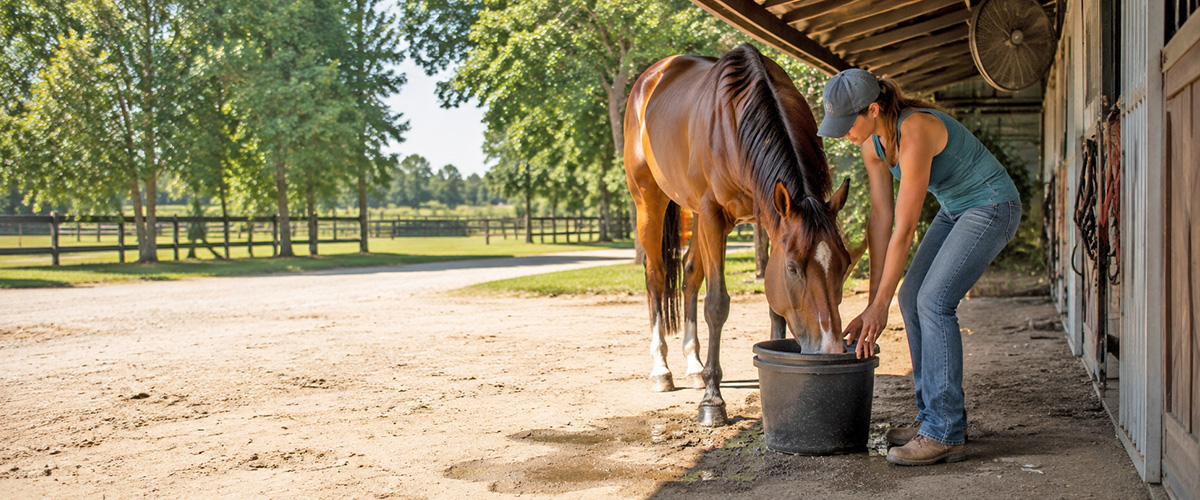
Water is the foundation of summer horse care.
A typical horse may drink:
• 5–10 gallons daily during moderate weather
• 10–20 gallons daily during hot summer conditions
• More when exercising, traveling, competing, or nursing a foal
One of the earliest warning signs of a developing problem is reduced water consumption.
Monitor water intake daily during heat waves.
Fresh, clean water should always be available.
Water Temperature Matters Too
Fresh water is important.
Cool, fresh water is even better.
During summer, buckets and troughs sitting in direct sunlight can become surprisingly warm. Many horses drink more readily when water is clean, cool, and refreshed frequently.
Whenever possible:
✓ Place water sources in the shade
✓ Clean buckets and troughs regularly
✓ Refill water before it becomes warm
✓ Check automatic waterers frequently
A horse that drinks well is far easier to keep cool than a horse that is already becoming dehydrated.
How Can I Tell If My Horse Is Dehydrated?
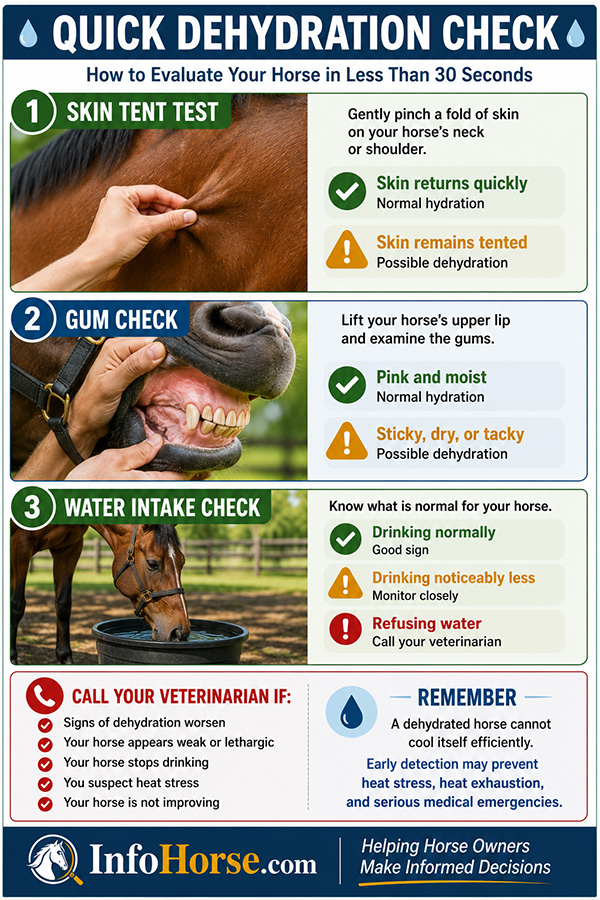
Every horse owner should know two simple checks.
Skin Tent Test
Gently pinch a fold of skin on the neck or shoulder.
Healthy skin returns quickly to normal.
Skin that remains tented may indicate dehydration.
Gum Check
Healthy gums should be:
• Pink
• Moist
• Slick
Dry, sticky, or tacky gums can indicate dehydration.
If dehydration is suspected, contact your veterinarian.
Do Horses Need Electrolytes During Summer?
When horses sweat heavily, they lose more than water.
Horse sweat contains significant amounts of:
• Sodium
• Potassium
• Chloride
These minerals are essential for normal muscle and nerve function.
During periods of heavy sweating, a quality electrolyte can help replace what is lost.
Look for products that contain meaningful levels of sodium, potassium, and chloride rather than products that are mostly sugar.
Most importantly:
Never provide electrolytes without access to fresh water.
Electrolytes require water to function properly.
Always offer plain water alongside any electrolyte product.
Electrolytes Are Not a Medical Treatment
Electrolytes support healthy horses.
They do not treat heat stroke.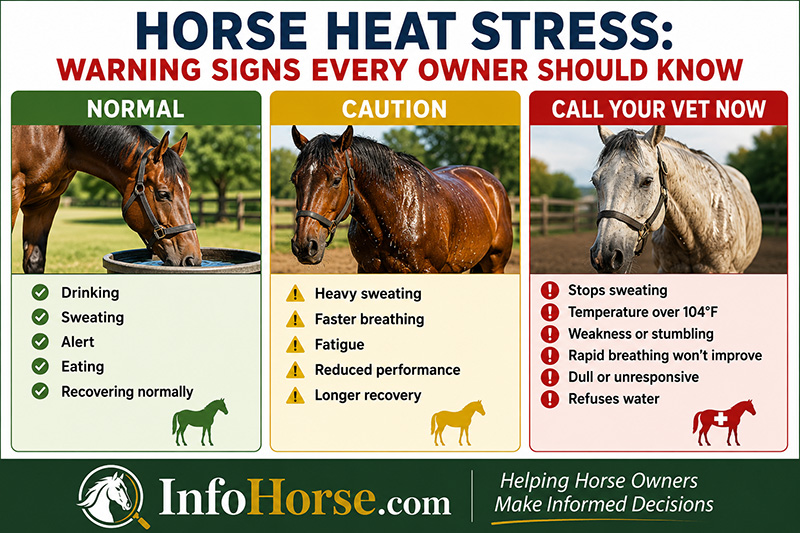
A horse that is:
• Sweating normally
• Drinking normally
• Eating normally
• Recovering normally
may benefit from electrolyte supplementation.
A horse that:
• Stops sweating
• Staggers
• Appears mentally dull
• Cannot cool down
• Develops a temperature above 103–104°F
needs veterinary care immediately.
No supplement can replace medical treatment for heat stroke.
When Is It Too Hot to Ride?
A useful rule of thumb is:
Temperature (°F) + Humidity (%) = Heat Risk Score
Under 130
✓ Generally safe
130–150
✓ Use caution
150–180
⚠ Reduce workload
Over 180
🚫 Avoid strenuous exercise
Humidity matters because sweat must evaporate to cool the horse.
When the air is already saturated, cooling efficiency drops dramatically.
Whenever possible:
✓ Ride early morning
✓ Ride near sunset
✓ Reduce workload during heat waves
✓ Offer frequent breaks
✓ Provide water often
✓ Cool horses thoroughly afterward
Heat Stress Doesn't Only Happen Under Saddle
Many horse owners think of heat stress as a riding problem.
In reality, horses frequently overheat while:
• Standing in pastures
• Waiting at horse shows
• Traveling in trailers
• Standing in poorly ventilated barns
• Living in extremely humid climates
Heat management is an all-day responsibility, not simply a riding concern.
Which Horses Are Most Vulnerable to Heat Stress?
Some horses struggle with heat more than others.
Higher-risk horses include:
• Horses with PPID (Cushing's Disease)
• Horses with anhidrosis
• Overweight horses
• Foals
• Senior horses
• Horses recovering from illness
• Horses recently moved from cooler climates
• Horses in poor physical condition
These horses should be monitored more carefully during hot weather.
Should I Clip My Horse for Summer?
Most horses shed naturally and do not require clipping.
However, clipping can help:
• Horses with unusually heavy coats
• Horses that fail to shed normally
• Horses with PPID (Cushing's Disease)
The long, curly coat often associated with PPID traps heat and makes cooling difficult.
For these horses, clipping often improves comfort considerably.
Remember that clipping removes some natural sun protection, so adequate shade and fly protection become even more important.
What Is Anhidrosis?
Anhidrosis is the inability to sweat normally.
Because sweating is a horse's primary cooling mechanism, anhidrosis can become serious very quickly.
Signs may include:
• Little or no sweating
• Excessive panting
• Elevated temperature
• Poor exercise tolerance
• Slow recovery after exercise
It is most common in hot, humid climates and often returns each summer.
Veterinary evaluation is recommended if anhidrosis is suspected.
Summer Horse Trailer Safety
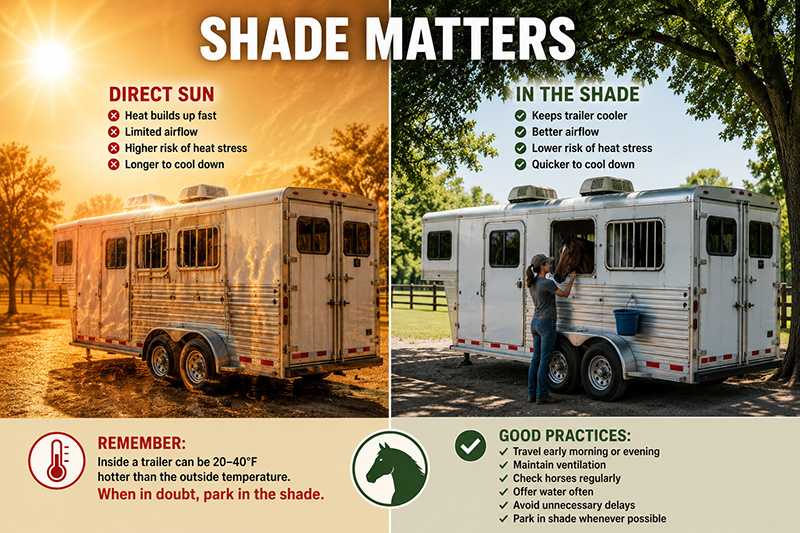
Many owners focus on riding in the heat but overlook transportation.
Horse trailers can become dangerously hot during summer travel.
To reduce risk:
✓ Travel early morning or evening
✓ Maintain proper trailer ventilation
✓ Check horses regularly
✓ Offer water during long trips
✓ Avoid unnecessary delays
✓ Park in shade whenever possible
Many cases of heat stress occur during transportation rather than exercise.
How Should I Set Up My Barn for Summer?
If possible, keep horses outside during cooler nighttime hours and bring them in during the hottest part of the day.
Good airflow is essential.
Open doors and windows to create cross-ventilation.
Use fans to keep air moving.
Consider misting systems where appropriate.
Shade, airflow, and fresh water remain the three most important tools.
Stall Fan Safety
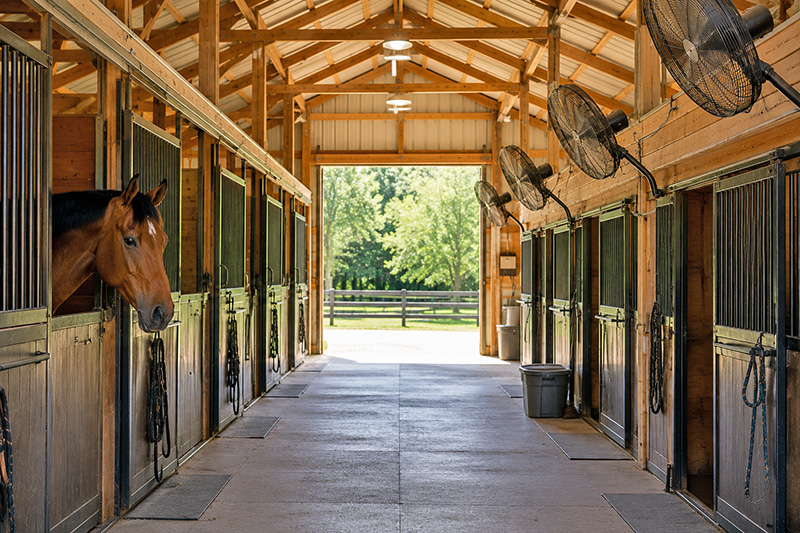
Fans can dramatically improve comfort when installed correctly.
✓ Use fans designed for agricultural use
✓ Secure cords out of reach
✓ Mount fans safely
✓ Clean dust regularly
✓ Inspect wiring frequently
✓ Avoid overloaded circuits
Dust accumulation can create a fire hazard if equipment is not maintained.
Know Your Horse's Normal
Perhaps the most valuable skill a horse owner can develop is learning what is normal for their individual horse.
Notice:
✓ Normal breathing rate
✓ Normal water intake
✓ Normal sweating patterns
✓ Normal attitude
✓ Normal recovery after exercise
Many cases of heat stress are identified early because an owner notices that something simply isn't normal.
When temperatures rise, knowing your horse's normal behavior becomes one of your best diagnostic tools.
What Are the Warning Signs of Heat Stress?
Recognizing problems early can save a horse's life.
Watch for:
• Excessive sweating
• Elevated breathing rate
• Sluggish behavior
• Reduced appetite
• Increased water consumption
More serious warning signs include:
• Stopped sweating
• Rapid breathing that will not improve
• Weakness
• Stumbling
• Dull mental attitude
• Temperature above 103–104°F
These signs require immediate action.
Heat Stroke Emergency Checklist
✓ Stops sweating
✓ Has a temperature above 104°F
✓ Appears weak or uncoordinated
✓ Refuses water
✓ Has rapid breathing that does not improve
✓ Appears mentally dull or unresponsive
While waiting:
✓ Move to shade
✓ Begin cold-hosing
✓ Scrape and repeat
✓ Use fans
✓ Offer fresh water
Heat stroke is a true emergency.
Minutes matter.
Summer Horse Care Checklist
Daily:
✓ Fresh clean water
✓ Check water intake
✓ Free-choice salt
✓ Provide shade
✓ Ensure fans are functioning
✓ Monitor manure production
✓ Observe breathing rate
✓ Watch for excessive sweating
✓ Ride during cooler hours
✓ Pay extra attention to high-risk horses
The Bottom Line
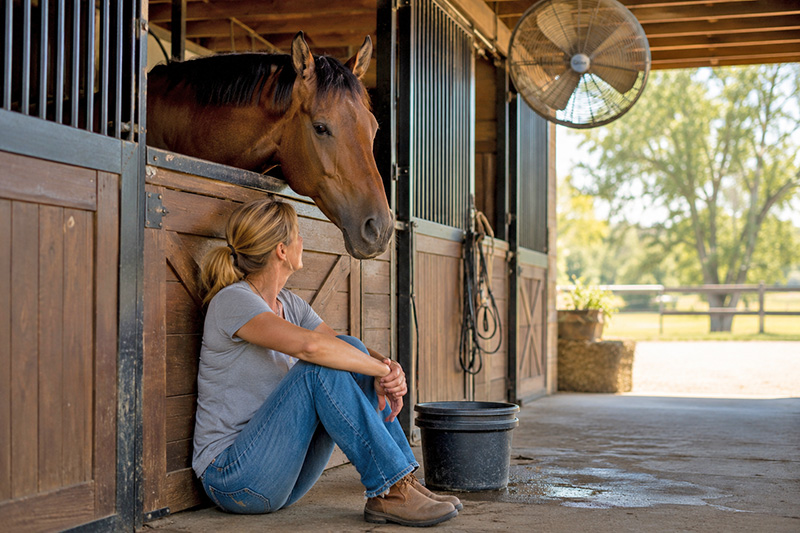
Keeping horses comfortable in summer isn't complicated, but it does require consistency.
Provide abundant fresh water. Offer free-choice salt. Use electrolytes when heavy sweating demands it. Ride during cooler hours. Improve airflow with shade, fans, and proper barn management. Learn the signs of dehydration, anhidrosis, heat stress, and heat stroke before they happen.
Most importantly, know your horse.
A horse owner who notices changes early is often the difference between a minor setback and a serious emergency.
With a little planning, fresh water, good airflow, and daily observation, horses can stay comfortable, healthy, and productive throughout even the hottest months of summer.
Because at the end of the day, a comfortable horse is a happy horse.