Hay Cost Calculator for Horse Owners
Estimate how much hay your horse needs, how much to buy after waste, and what that hay may cost each month.
Want to see what hay may cost for your own horse? Enter your bale type, bale weight, price, and waste factor. The calculator uses pounds, not flakes, because flakes are not a reliable measurement.
Your hay estimate
Find hay, feeders & storage
Vetted forage & feeder brands
InfoHorse sells nothing — these are listed by Ann's vetting, never by who pays.
This calculator is an estimate only. Hay needs vary by horse weight, metabolism, workload, pasture access, weather, age, health, and hay quality. Always consult your veterinarian or equine nutritionist for horses with metabolic issues, Cushing's/PPID, laminitis history, dental problems, or special health needs.
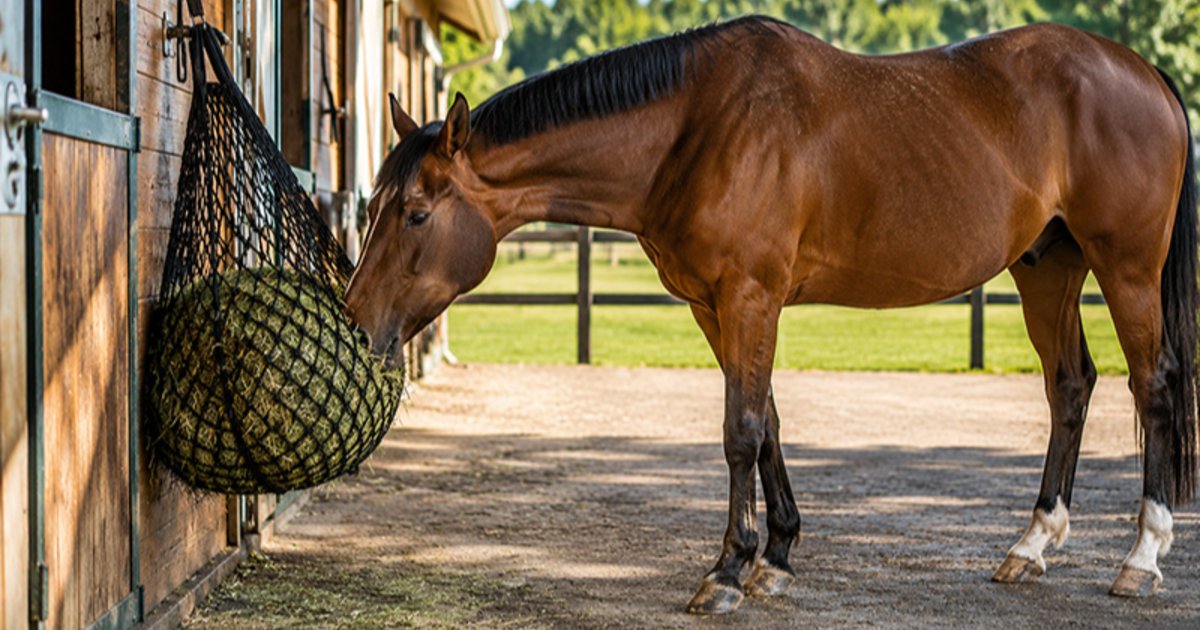
What Do Horses Eat? The Complete Feeding Guide from 40-Year Horse Owners
Forage first — the why behind the numbers. Bob's complete guide covers how much hay, the role of pasture and grain, water, treats, and the feeding mistakes that cost owners the most.
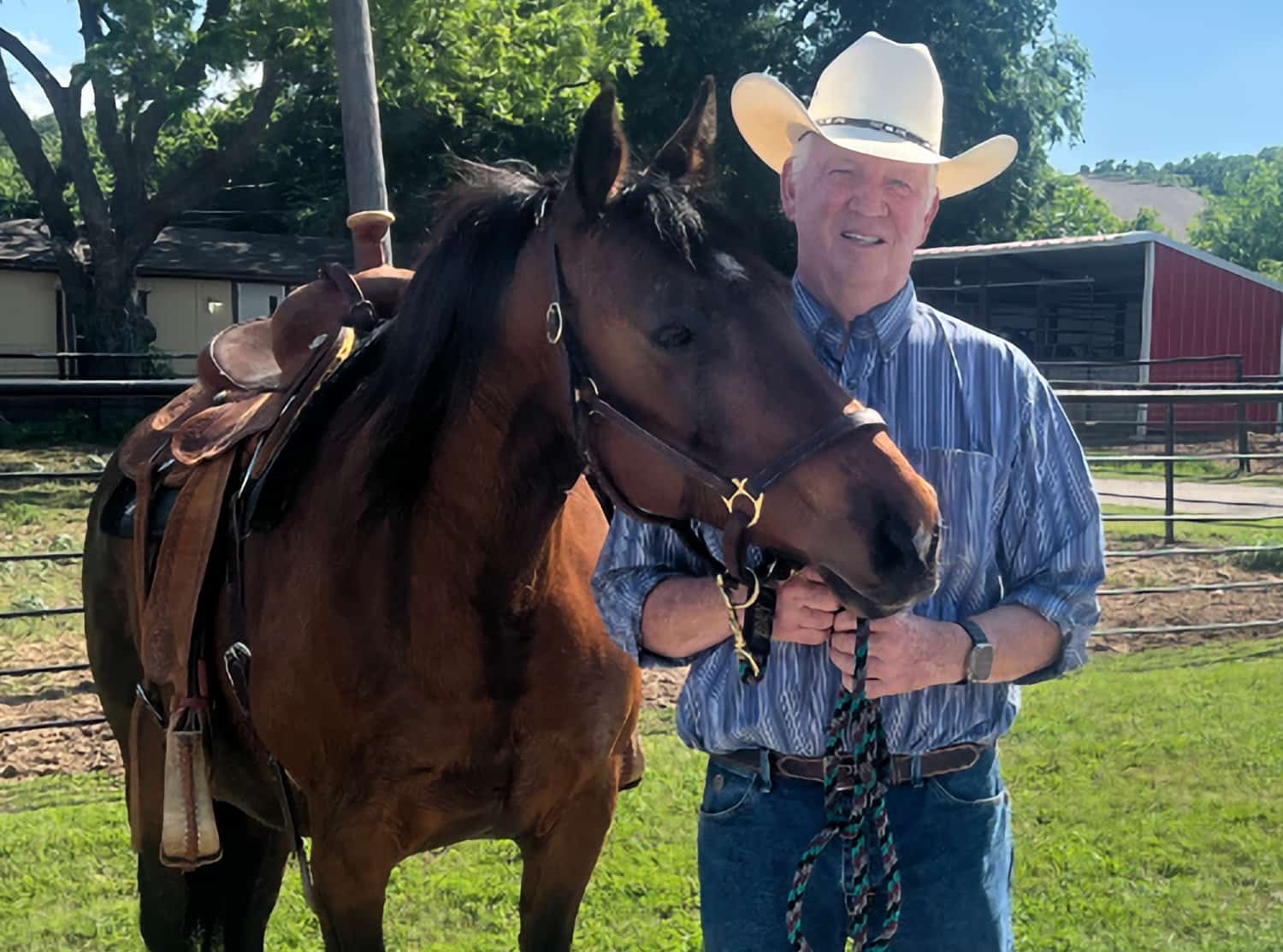 By Bob Pruitt · Co-Founder & Editorial Curator, InfoHorse.com — a lifelong horseman of 50+ years, feeding horses since 1997.
How much hay does a horse really need?
How we calculate it
The daily amount comes from long-standing equine-nutrition guidance: feed forage at roughly 1.5-2% of body weight per day for many horses, with higher needs in cold weather, hard keepers, or horses without pasture. We multiply by your number of horses and 30 days, then divide by 1 minus your waste percentage so the result shows what you may need to buy, not just what the horse eats. Bales needed are monthly hay after waste divided by your editable bale weight. Monthly cost is bales × price per bale, plus optional delivery or stacking. Yearly storage uses the standard estimate of about 250 cubic feet per ton. Buy a little extra to cover weather, waste, delivery delays, and price swings.
Sources & methodology
Our figures come from university Cooperative Extension equine-nutrition programs and the NRC feeding guidelines, with outputs derived from the numbers you enter. Key references:
- Using Hay in Horse Diets — University of Minnesota Extension: forage at ~2% of body weight per day (~20 lb for a 1,000-lb horse).
- How Much Storage Area Is Required for Hay? — Extension Horses (Cooperative Extension): ~250 cubic feet per ton, and ~3–4 tons (100–120 bales) a year with no pasture.
- Feeding Horses with a Round-Bale Feeder — University of Minnesota Extension: round bales without a feeder can waste far more hay; feeders reduce waste substantially.
- Hay Feeding Management Strategies as Cost-Control Measures on Horse Farms — New Mexico State University Extension: forage is often a major annual horse-ownership cost, and storage/feeder management changes real cost.
- Increase Hay Intake for Winter — Iowa State University Extension: cold-weather forage intake rising toward ~3% of body weight.
- Calculating Your Horse's Winter Hay Needs — University of Maryland Extension: daily intake and per-method feeding-waste figures.
Common hay questions
How much hay per day for a 1,000 lb horse?
About 15–20 lb of hay a day (1.5–2% of body weight). Cold weather or hard work can push it higher; good pasture lowers it.
How many bales per month?
At ~18 lb/day, roughly 540 lb a month — about 11 small square (50 lb) bales, or a fraction of a large square or round bale.
Why does the calculator increase hay for waste?
If a horse eats 600 lb in a month and 20% is wasted, you do not buy 600 lb — you buy about 750 lb because only 80% becomes usable feed. That is why the calculator divides by 1 minus the waste percentage.
How much hay per year?
A horse with little or no pasture eats roughly 3–4 tons a year. Plan extra for waste and a buffer against shortages.
How much storage space do I need?
About 250 cubic feet per ton — so a year's supply (3–4 tons) needs roughly 750–1,000 cubic feet, about a 10×12 ft area stacked 8 ft high. Keep hay dry and off the ground.
Does a feeder really save money?
Yes — feeding on the ground can waste 15–20% of your hay. A net, rack or slow feeder typically cuts waste to ~5%, paying for itself quickly and slowing intake for better gut health.