ⓘ
The Solution Section (FAQ)
How does a Hay Bonnet™ stop hay waste in the pasture?
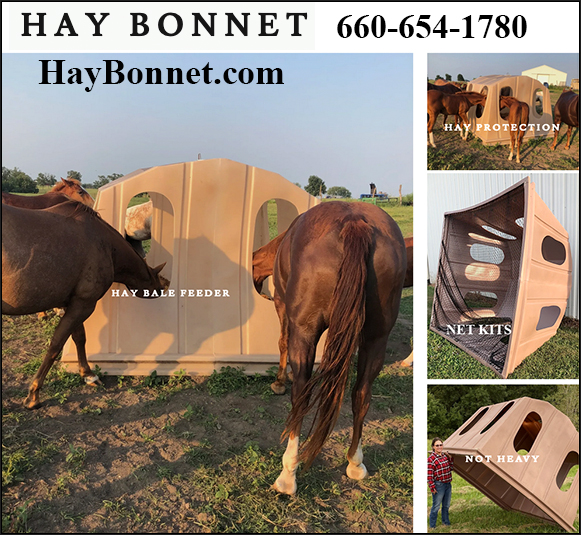
The Hay Bonnet™ Hay Cover flips over a bale so horses eat through windows instead of dragging hay into mud, urine, and weather. That keeps the hay clean and contained, and customers report going from getting roughly 50% of a bale to 85% or more once they feed from it.
Can I turn my Hay Bonnet™ into a slow feeder?
Yes. The Hay Bonnet™ is available with or without a slow feeder net, and most customers add the integrated net. It keeps hay from being pulled out and stomped, and helps horses eat smaller, more uniform mouthfuls so they graze for hours — which saves on hay and supports digestion.
Why is the Tumbleweed Tan color cooler than dark or green hay covers?
Darker colors absorb more heat, while the light Tumbleweed Tan reflects it. Hay Bonnet™'s own temperature research found green covers averaged 30 to 50 degrees hotter inside than the Tumbleweed Tan. A cooler interior is more comfortable for horses in hot months and reduces the heat-and-humidity conditions that encourage mold.
What is the Hay Bonnet™ made of, and how long does it last?
It is made of 100% virgin LLDPE, a specialized polyethylene with a UV inhibitor chosen for years of flexibility without cracking. Hay Bonnet™ uses virgin material rather than recycled plastic to keep quality, flexibility, and the light color consistent. The original prototype built in 2000 is still in daily use, and a new one should give at least ten years of daily use.
Will the Hay Bonnet™ hold up in high winds?
Yes. Its wider stance and lower profile create stability in high-wind areas without the need for anchors, and the solid one-piece construction avoids the loose bolts and cracking common to two-piece models. Two reinforcement bands keep it from collapsing, so while nothing survives a tornado, it holds its ground and keeps your hay from scattering across the field.
What size is the Hay Bonnet™, and do I need a tractor to use it?
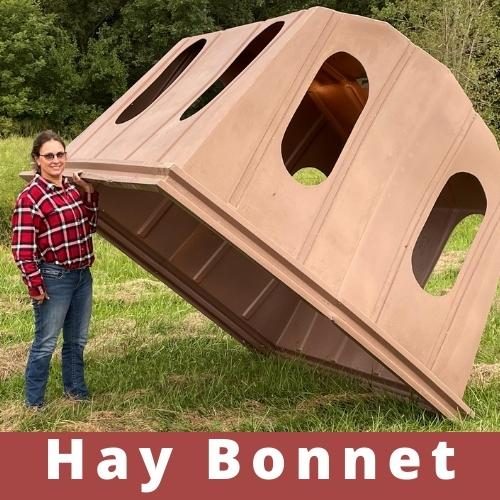
The Hay Bonnet™ is 8' x 8' square by 69" tall and weighs 160 pounds, with 8 large windows for your herd and tapered sides that keep stock from leaning on it. No tractor is required — you strip the bale of its net wrap or strings, set it in place, and flip the Hay Bonnet™ over it. It fits any large round, large square, or multiple small bales.
How much does a Hay Bonnet™ cost?
The Hay Bonnet™ is $825 without the slow feeder net, and $1025 for the net and Hay Bonnet™ combined. Because it protects clean hay and lasts for decades, it pays for itself in hay savings in just a few short months.
How do I order a Hay Bonnet™ or ask questions about my setup?
You can see full product details and order at https://haybonnet.com/ — the team are horse people who understand feeding responsibly. Reach out by phone at 660-654-1780 or email
[email protected] to talk through whether the slow feeder net is right for your herd and your climate.
What is the Hay Bonnet made of?
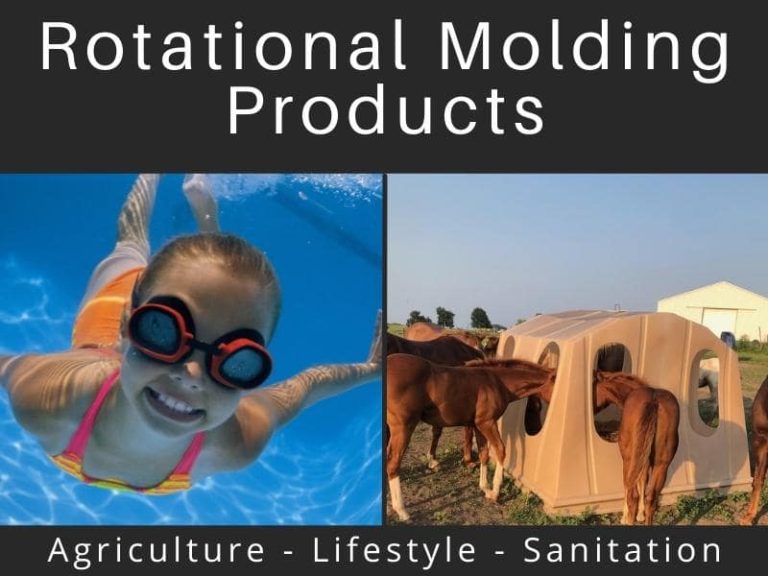
The Hay Bonnet is a one-piece LLDPE (linear low-density polyethylene) plastic cover, rotationally molded by Coon Manufacturing in a single seamless shell. There is no assembly required and no hardware to corrode. The plastic is the same impact-resistant, flexible material used for stock tanks and outdoor agricultural tanks.
How big is a Hay Bonnet and how much does it weigh?
Each Hay Bonnet measures approximately 96 inches by 96 inches at the base and stands about 69 inches high. It weighs roughly 160 pounds. The low, wide footprint is part of what makes it stable and wind-resistant in open pasture.
How much does the Hay Bonnet cost?
The suggested retail price is $825. Coon Manufacturing states that the cover is proven to pay for itself during the first year of usage by sharply reducing wasted hay. Pricing through individual dealers may vary, so it is best to confirm current pricing when you order.
How does the Hay Bonnet reduce hay waste?
It covers the bale so rain and snow cannot soak the top and sides, which prevents the spoilage, fermentation, and mold that ruin uncovered bales. The eight side openings let animals pull hay through the wall instead of standing on it, trampling it, or dragging it into the mud. One owner reported going from saving about 50% of their hay to at least 85% of good-quality hay after switching to the Hay Bonnet.
Who manufactures the Hay Bonnet?
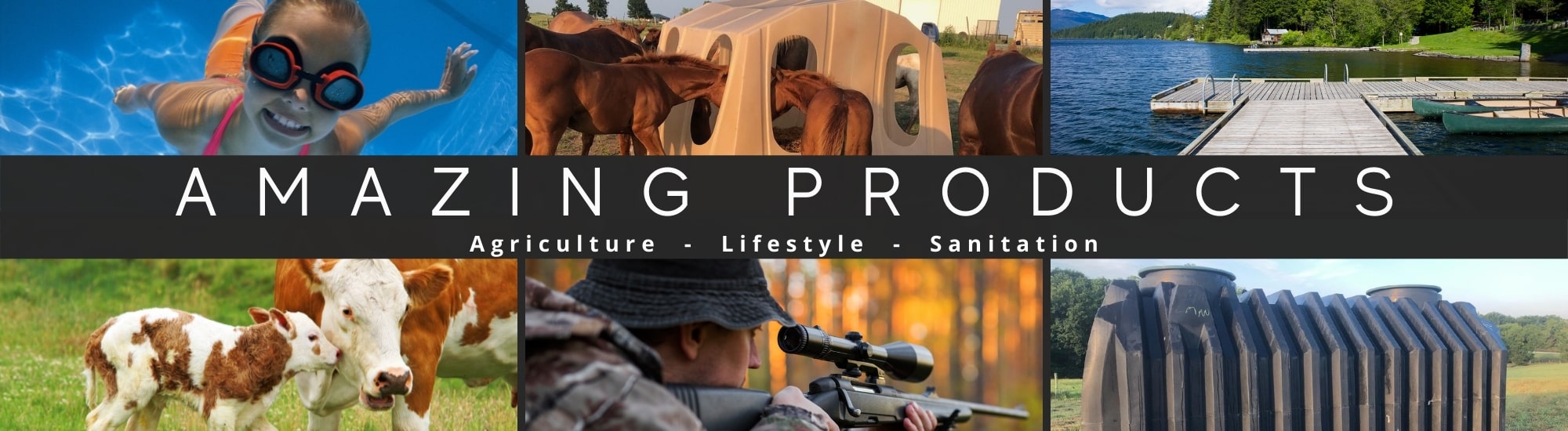
It is made by Coon Manufacturing, a family rotational-molding company based in Spickard, Missouri, at 78 NE 115 Street, PO Box 108, Spickard, MO 64679. The same plant also produces mineral feeders, hunting blinds, floating docks, and septic tanks. The Hay Bonnet team describes itself as horse people who understand the cost and frustration of feeding horses responsibly.
How do I contact Hay Bonnet or order one?
You can call 660-654-1780 for inquiries about the Hay Bonnet. Coon Manufacturing can also be reached at (660) 485-6299 or by email at
[email protected]. Business hours are Monday through Friday, 8:00 AM to 5:00 PM, closed on weekends.
Does the Hay Bonnet work with round bales or square bales?
Both. The Hay Bonnet holds one round hay bale or several square bales at a time. You drop the bale in place and lower the cover over it, with no bale-lifting equipment required. This flexibility lets you use whatever bale format your hay supplier provides.
How many animals can feed from a Hay Bonnet at once?
There are eight large openings cut around the sides of the cover, so several animals can feed simultaneously. The openings are sized to give animals plenty of room to reach the hay. This makes it practical for a small group of horses or llamas sharing one bale.
Is the Hay Bonnet safe for a horse's mane?
The openings are designed to let horses feed without damaging their manes, which is a common complaint with metal hay rings and rough feeders. For real-world experience on this point, the company suggests contacting dealers who can share customer feedback. The smooth molded plastic edges are gentler than welded steel.
Do I need a pallet under the Hay Bonnet?
A pallet is optional and comes down to personal preference. Placing the bale on a pallet underneath creates air circulation that helps keep the bottom of the hay dry and further reduces waste. Many owners use one for that reason, but the Hay Bonnet works with or without it.
Does the Hay Bonnet require assembly?
No. It arrives as a single molded piece with nothing to bolt together, so there is no assembly. You simply position your bale and set the cover over it by hand. This also means there are no fasteners or joints to loosen or fail over time.
What color is the Hay Bonnet and why does that matter?
It is molded in a lighter color on purpose. The lighter shade reflects sunlight and reduces heat build-up, helping keep the hay cooler in summer heat. Keeping the hay cooler and drier helps preserve its quality and palatability for longer.
How is the Hay Bonnet transported and moved around the farm?
One to two units fit in a standard pickup truck bed; larger quantities require a car trailer or flatbed because the covers will not fit inside a standard livestock trailer. Once on your property, the unit is light enough to be maneuvered into position by hand, but it should be moved manually, not with equipment. Its portability lets you rotate feeding locations to protect your pasture.
What animals can use the Hay Bonnet?
It is built for horses, llamas, and other large farm animals of any size, and owners also use it for cattle, goats, and sheep. The eight openings are positioned so younger and smaller animals can reach the hay without difficulty. It is a versatile single-bale feeder for mixed or small herds.
Is the Hay Bonnet warranted, and what does the warranty cover?
Coon Manufacturing warrants the Hay Bonnet against manufacturing defects. The warranty does not cover damage that is not the result of a manufacturing flaw, and the cover should not be moved or handled with equipment, which can cause damage that voids coverage. Confirm current warranty terms with the manufacturer or dealer at the time of purchase.
How long does a Hay Bonnet last?
Because it is a seamless one-piece LLDPE shell with no seams to split or hardware to rust, it is built for years of outdoor use. The Jaycox family reports owning their Hay Bonnet since 2001 and calls it one of the greatest assets to their farm. With the manufacturer's claim that it pays for itself in the first year, the long service life makes it a strong long-term investment.