

Best Fans for Horse Barns & Stalls: Safety, Ventilation & Buying Guide
Read This First — It Could Save Your Barn
The safest fan for a horse barn is an agricultural-rated model with a sealed Tefc (Totally Enclosed Fan Cooled) motor, a sturdy metal safety cage, and proper installation—never a household box fan. Open or vented motors collect airborne hay particles, bedding dust, and cobwebs, which can build up inside and cause excess heat, premature failure, and a potential fire hazard. Mount the fan above horse height and completely out of reach, and clean and inspect it at least once a month during warm weather.
Before we talk about airflow, comfort, flies, or buying advice, let's talk about safety.
That inexpensive household box fan sitting in your garage has no business in a horse barn.
We mean it.
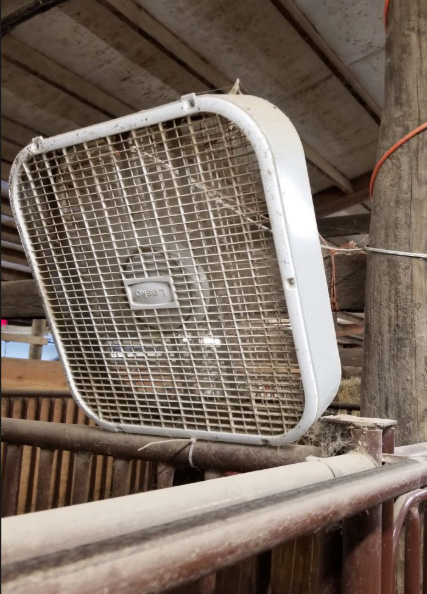 Most household fans are designed for clean indoor environments. Their motors are often open or vented and are not designed to operate in the dusty conditions found in horse barns.
A horse barn contains airborne hay particles, bedding dust, dander, cobwebs, feed dust, and chaff. Over time, these materials can accumulate inside an open motor, causing excess heat, premature failure, and potentially creating a fire hazard.
That's why horse owners should choose fans specifically designed for agricultural or livestock environments whenever possible.
Look for agricultural-rated fans with sealed motors, sturdy metal cages, and proper installation.
Everything else in this guide is about comfort and efficiency.
This first rule is about safety.
A fan doesn't cool a horse the way it cools you. What it really does is move hot air, improve ventilation, and make it harder for flies to settle. That's worth a lot. But I'd rather a horse sweat in a safe barn than stand cool in one that's smoldering.
— Bob Pruitt, InfoHorse.com
Why Airflow Matters For Horses
A properly ventilated barn offers several important benefits.
Air movement helps reduce heat buildup during warm weather.
It discourages flies from landing and biting.
It helps reduce stagnant air, humidity, dust, and ammonia buildup.
Most importantly, it makes the horse more comfortable.
Fans do not replace proper barn ventilation, but they can significantly improve airflow when used correctly.
What Does Tefc Mean?
One of the most important terms horse owners should learn when shopping for a barn fan is:
Tefc
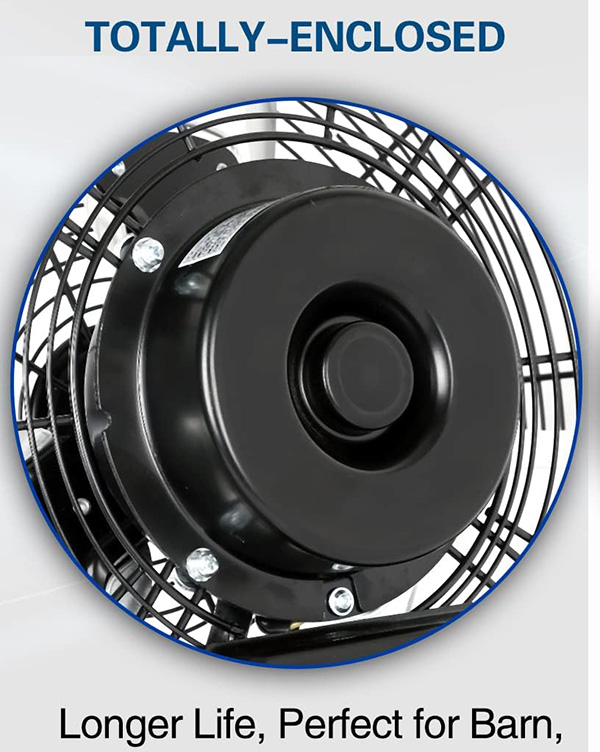 Totally Enclosed Fan Cooled
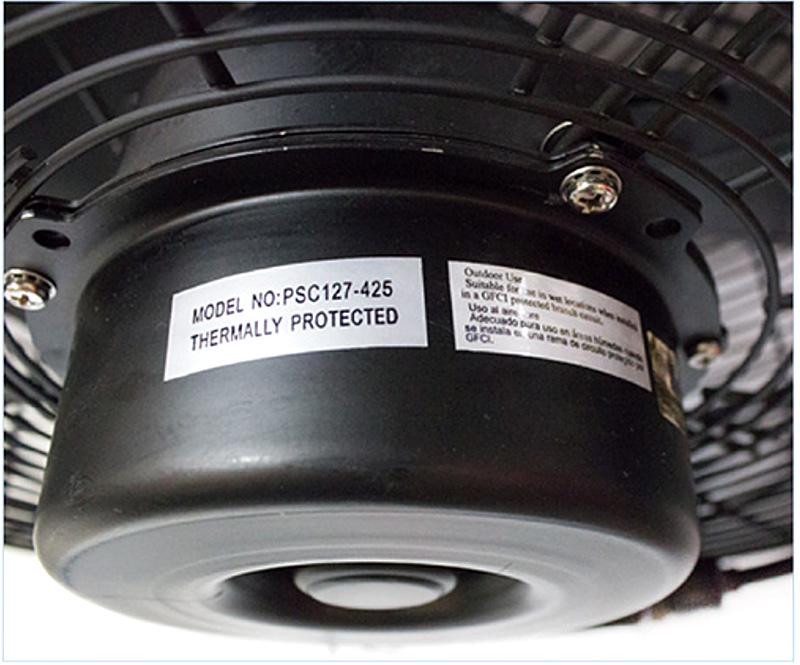
A Tefc motor is designed to keep dust, dirt, and debris out of the motor housing while still allowing the motor to cool itself.
Because horse barns contain airborne dust, bedding particles, hay chaff, and cobwebs, Tefc motors are generally considered far better suited for agricultural environments than open-motor designs.
When comparing fans, this is one of the most important specifications to look for.
Enclosed Motor Fans for Barns: What "Enclosed" Really Buys You
Shoppers often search for enclosed motor fans for barns, and that phrasing gets it exactly right.
An enclosed motor keeps hay chaff, bedding dust, and cobwebs on the outside of the housing, where they belong.
Tefc—Totally Enclosed Fan Cooled—is the most common enclosed-motor design on agricultural fans, and it is the one we recommend for horse barns.
A few things to check when comparing enclosed motor fans:
✓ "Enclosed" should appear in the motor specification, not just the sales copy. Look for Tefc or "totally enclosed" on the spec sheet.
✓ A plastic shroud over a vented household motor is not an enclosed motor. If you can see vent slots in the motor housing, dust can get in.
✓ Enclosed motors run cooler in dusty air because debris never reaches the windings—that is the fire-safety difference you are paying for.
✓ Expect a higher price than a household fan. It is the cheapest fire insurance a barn can buy.
If you remember one phrase while shopping, make it this one: totally enclosed motor, agricultural rated.
How To Tell If A Fan Is NOT Safe For A Horse Barn
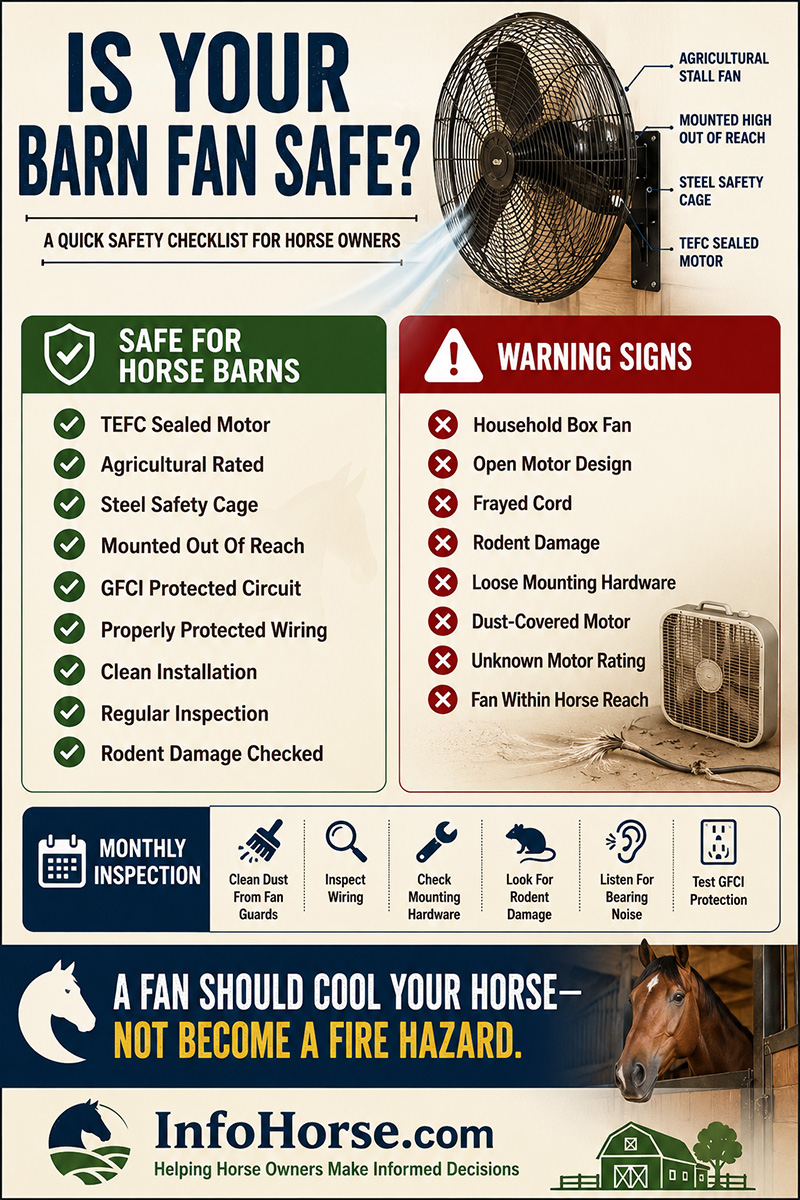
Do NOT use a fan in a horse barn if:
✗ It is marketed primarily for household use
✗ The motor housing is open or vented
✗ The manufacturer does not specify agricultural, livestock, or barn use
✗ The fan lacks a sturdy metal safety cage
✗ The cord is damaged or repaired with tape
✗ The manufacturer cannot identify the motor type
✗ The fan can be reached by a horse
When in doubt, don't install it.
The cost of replacing a questionable fan is tiny compared to the cost of replacing a barn—or losing a horse.
Types of Barn Fans
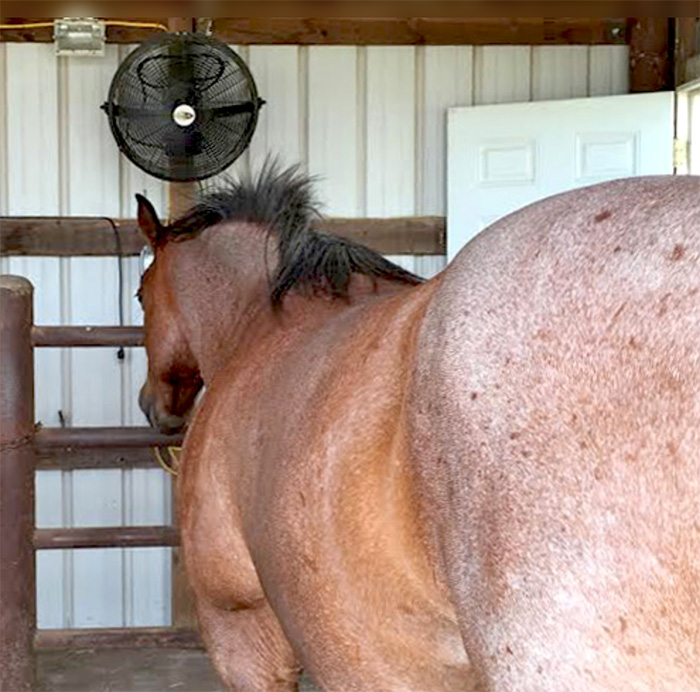
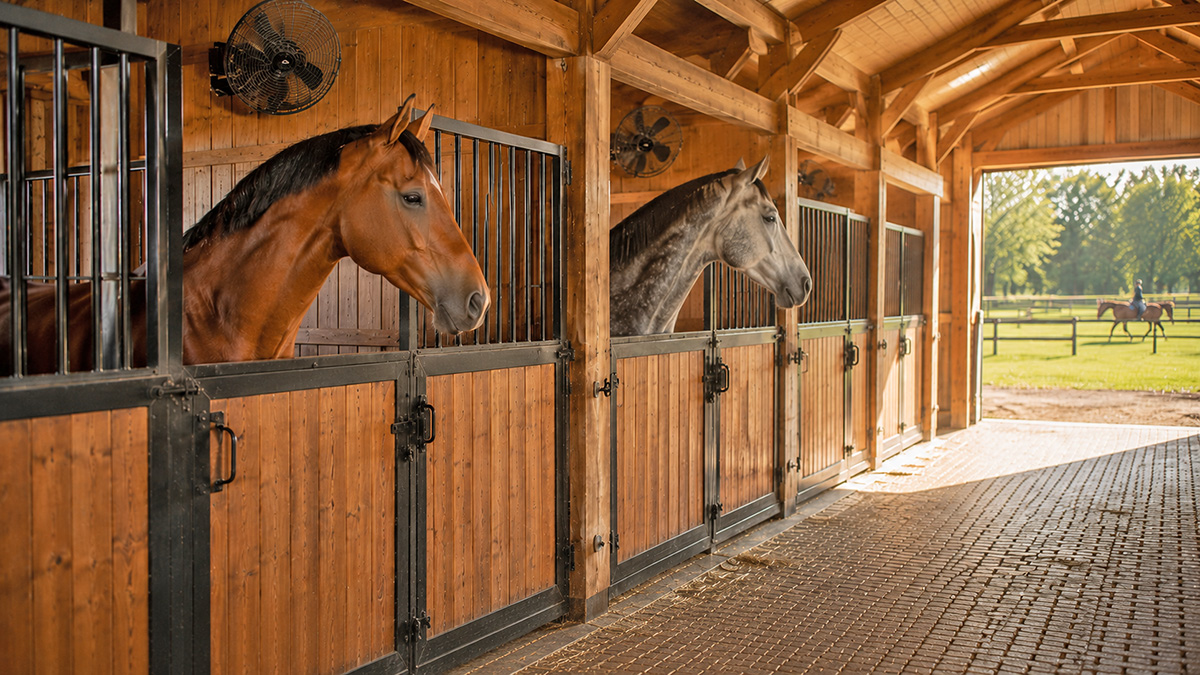
Stall Fans
Best for individual horses.
These are typically mounted high in a stall corner or on the stall front and provide direct airflow where the horse spends most of its time.
Quick Checklist: Is This Fan Safe for a Horse Stall?
Christy Schulthess laid out the stall-fan rules for InfoHorse readers back in 2017, and nothing about barn dust has changed since. Before you mount any fan in front of a stall, run it against this list. If it misses even one, it does not belong in your barn:
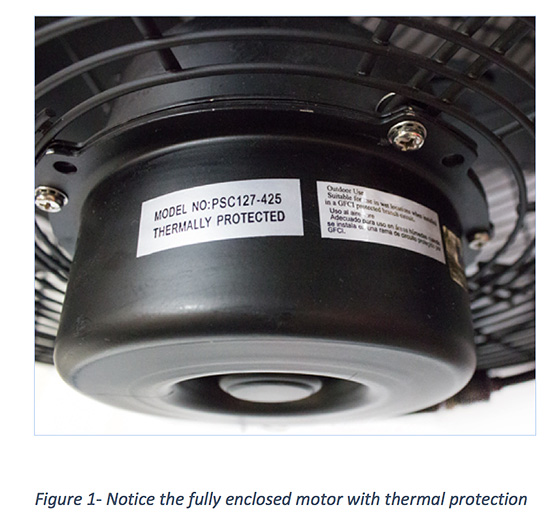
- A fully enclosed motor with sealed ball bearings. Residential fans are vented, so hay chaff and bedding dust reach the windings, build up in the electrical housing, and can start a fire.
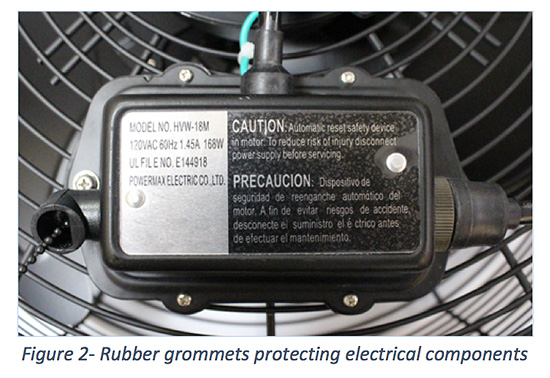
- A thermal overload shut-off. If the motor overheats, it powers itself down before heat can build into a fire. This is motor protection — not the convenience thermostat that switches a fan on when the barn warms up.
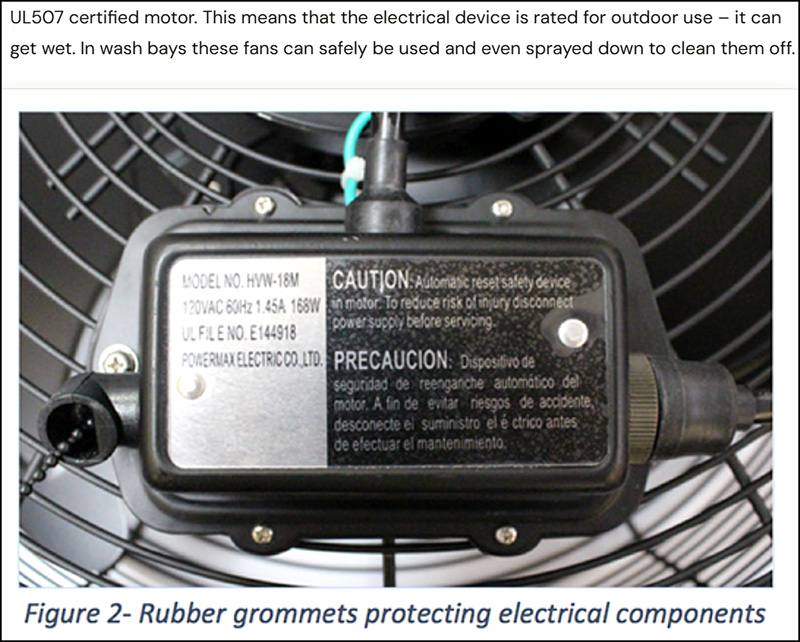
- A UL507 / wet-location rating. The motor is certified for outdoor, wet-location use. That is why a true barn fan can live in a wash bay and even be rinsed down (just keep the pressure washer off the seals).
- Roughly 1,000–2,250 CFM for a stall. Many “industrial” and “high-velocity” fans pass the first three checks and still make poor stall fans because they move too much air — picture a jet engine pointed into a stall. That range is enough breeze to cool a horse and unsettle flies without blasting bedding dust into eyes and airways.
- A secure, dedicated mount. Never balanced on a stall rail, never run off a daisy-chained extension cord.
One more question worth asking your insurance agent: if a fire starts from a fan that was never rated for barn use, will the claim be covered? In 2007, 44 horses were killed in a single barn fire traced to brand-new box fans. The difference that keeps your horses safe is inside the motor, where you cannot see it.
Wall-Mounted Barn Fans
Ideal for aisles, multiple stalls, and general airflow throughout the barn.
These fans often provide greater airflow than typical stall fans.
Drum or Basket Fans
Excellent for large open areas, wash racks, work spaces, and open barns.
They move a tremendous amount of air but require careful placement.
Hvls Fans
Hvls stands for High Volume Low Speed.
These large ceiling fans move tremendous amounts of air quietly and efficiently throughout large barns and indoor arenas.
They are often the most expensive option but can be highly effective in large facilities.
Exhaust Fans
Designed to remove hot, humid, stale air from enclosed barns.
These are sized based on barn volume and ventilation requirements rather than stall comfort.
Are Agricultural Fans Worth The Extra Cost?
In our opinion, yes.
Agricultural fans are designed for:
✓ Dusty environments
✓ Livestock facilities
✓ Longer operating hours
✓ Better durability
✓ Improved safety
A quality agricultural fan often costs more than a household fan, but the cost difference is insignificant compared to the value of the horses and property being protected.
As one reader put it on our Facebook page: “I understand the concern about cost, but I bit the bullet and bought the sealed-motor fans years ago. I was tired of constantly having to replace box fans because they didn’t last. They last 10–15 times longer, even in the deep south under constant use. Given the time and cost savings of always shopping for and replacing them — plus the safety factor — they are well worth the cost.”
What Actually Matters When Buying A Barn Fan?
1. Motor Design
This is the most important consideration.
Look for agricultural-rated or Tefc sealed motors.
2. Safety Cage
A strong steel cage protects both horses and people.
3. Mounting Hardware
Choose fans with solid brackets and secure mounting systems.
4. Wiring
Proper electrical installation is essential.
5. Airflow
Consider the size of the area you are trying to cool.
6. Durability
Barn fans often operate for months at a time.
Quality construction matters.
7. Convenience Features
Oscillation, remotes, and speed controls are nice, but they should never take priority over safety.
Where Should A Stall Fan Be Mounted?
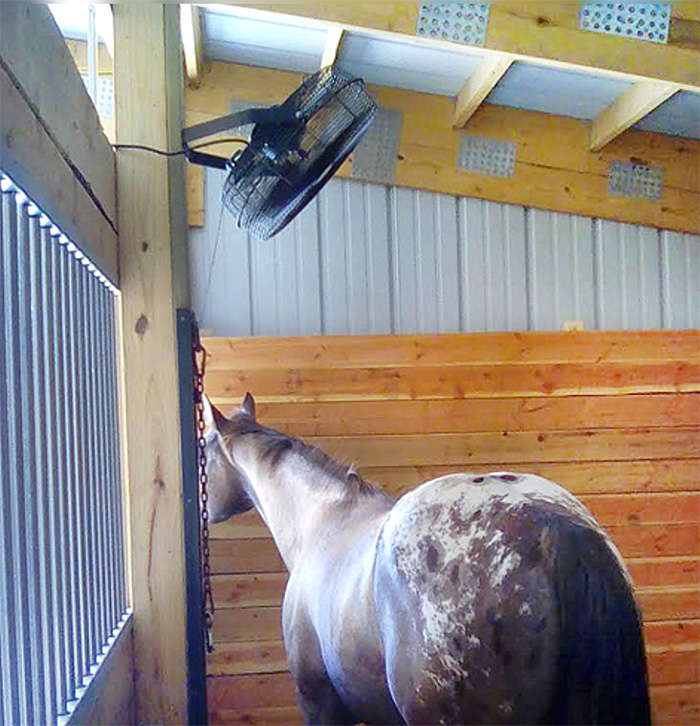 A properly mounted fan should:
✓ Be above horse height
✓ Be completely out of reach
✓ Provide airflow across the stall
✓ Avoid blowing directly into feed tubs
✓ Avoid creating excessive dust
✓ Have protected wiring
The goal is comfortable airflow, not a wind tunne
Using Extension Cords Safely
Extension cords should be considered temporary solutions rather than permanent wiring.
If an extension cord must be used:
✓ Use the correct electrical rating
✓ Keep it completely out of horse reach
✓ Avoid sharp corners and abrasion points
✓ Inspect for rodent damage
✓ Replace damaged cords immediately
✓ Protect from moisture whenever possible
Rodent damage is one of the most overlooked electrical hazards in horse barns.
Every spring and before the hottest part of summer, inspect all cords, outlets, and plugs carefully.
7 Common Barn Fan Mistakes
1. Using Household Box Fans
The biggest mistake horse owners make.
2. Using Extension Cords Improperly
Undersized, damaged, or poorly routed cords create hazards.
3. Mounting Fans Within Reach
Horses are curious and surprisingly talented at finding trouble.
4. Never Cleaning The Fan
Dust buildup reduces efficiency and increases wear.
5. Using Fans Without Ventilation
Moving hot air around a sealed barn accomplishes very little.
6. Ignoring Electrical Inspections
Electrical issues often develop gradually.
7. Assuming Bigger Is Always Better
Choose the fan that fits the space.
Can Horses Be Left With Fans Running Overnight?
Many horse owners safely operate agricultural-rated fans overnight during hot weather.
The fan should:
✓ Be agricultural rated
✓ Be properly mounted
✓ Have protected wiring
✓ Be connected to Gfci protection
✓ Be inspected regularly
The key is using the correct equipment and maintaining it properly.
Monthly Barn Fan Maintenance Checklist
At least once per month during warm weather:
✓ Remove dust from guards
✓ Inspect wiring
✓ Check mounting hardware
✓ Look for rodent damage
✓ Test Gfci protection
✓ Listen for bearing noise
✓ Check for vibration
A fan often gives warning signs before failure.
Pay attention to them.
Barn Fire Prevention and Electrical Safety
Many barn fires originate from electrical problems.
Common causes include:
• Faulty wiring
• Damaged outlets
• Rodent-chewed insulation
• Overheated motors
• Dust accumulation
• Improper extension cord use
Horse owners should inspect electrical systems before every summer season.
Replacing unsafe equipment is far less expensive than rebuilding a barn.
The Bottom Line From Our Porch
A good barn fan is one of the best investments a horse owner can make.
It improves comfort.
It reduces flies.
It improves airflow.
It supports healthier barn conditions.
But never forget what matters most.
Buy the motor first.
Buy the safety second.
Buy the convenience features last.
A fan should cool your horse—not become a fire hazard.
When you're ready to compare options, explore the barn fan and barn accessory providers here on InfoHorse.com. Compare specifications, ask questions about motor design, and choose products built specifically for the demands of horse ownership.
Your horses deserve nothing less.