Fly Control for Horses: The Complete Guide to Sprays, Traps, Feed-Throughs, Fly Predators, Misting Systems, and More
What Works, What Each Method Can—and Cannot—Do, and How to Build a Complete Fly-Control Program
By Bob Pruitt
Fly Control on InfoHorse.com
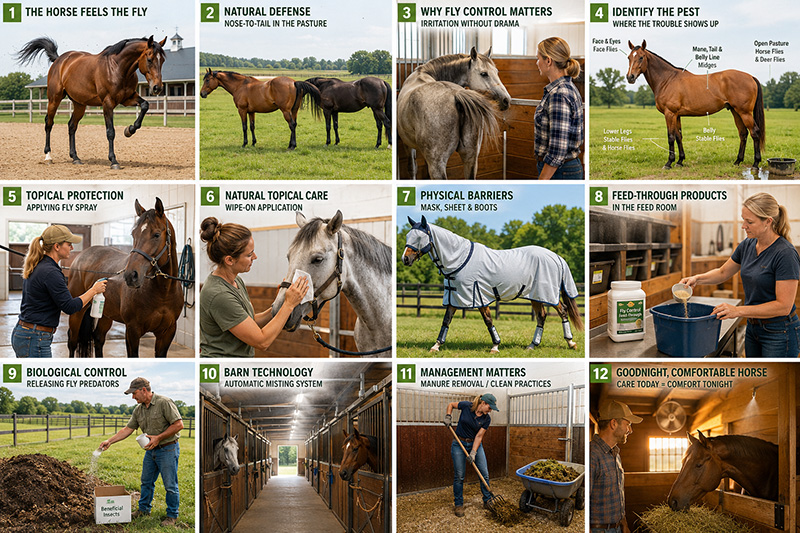
A horse can feel one fly.
Not a swarm. Not a cloud of them rising at dusk beside the pond. One single fly, landing on one square inch of skin—and the horse knows it before you have even seen it land.
The skin twitches. The tail cracks like a whip. A hind foot stamps hard enough to rattle the stall wall.
Watch a horse work through fly season for five minutes and you will see a full-body flyswatter in action. Muscles directly beneath the skin—the panniculus, if you want the technical name—ripple on command to shake a fly loose the instant it touches down.
That sensitivity is not an overreaction. It is a survival tool that helped horses endure biting insects long before anyone put a roof over their heads.
How Horses Fought Flies Before We Got Involved
Turn a horse loose in a natural environment and he is not defenseless.
Horses standing together often arrange themselves nose-to-tail so that each horse’s tail helps swat flies away from the other horse’s face. Left to choose their own ground, they may seek a breezy hilltop or open area where moving air makes it more difficult for insects to land.
They find shade during the worst of the afternoon heat. They walk away from heavily infested areas. They roll in dirt, dust, or mud, coating their skin with a temporary physical barrier that can make landing and biting more difficult for some insects.
Now bring that same horse into a stall for 12 or 16 hours a day, and many of those defenses disappear at once.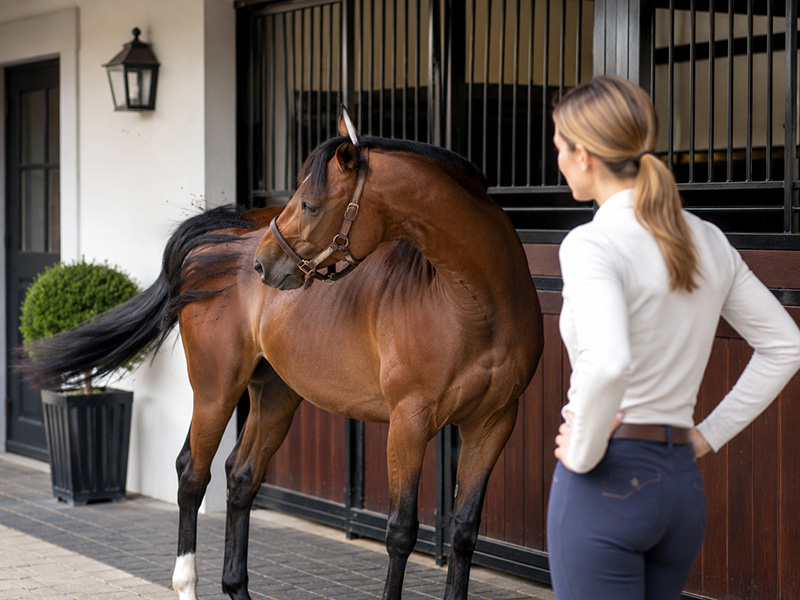
There is no herd mate trading tail-swats with him. No hilltop breeze. No ability to walk half a mile away from the wet spot where flies are breeding. No mud or dust bath over clean stall shavings.
The horse is standing in one place, unable to leave the problem, using little more than his own skin, feet, and tail against an enemy that used to be handled by an entire toolkit of instinct, movement, herd behavior, and geography.
That is the real reason fly control is not optional once we have taken a horse out of the environment that used to help manage the problem for him.
We took away his options, so we owe him ours.
Why Fly Control Is More Than an Annoyance
Flies are not merely irritating. They can become a legitimate health and welfare issue.
Constant biting and landing can contribute to:
- Skin irritation and inflammation
- Hives and allergic reactions
- Hair loss and rubbed areas
- Open sores and secondary infections
- Eye irritation
- Constant stamping and leg injuries
- Interrupted grazing
- Reduced rest and sleep
- Agitation and difficulty concentrating during work
- Weight loss in severely affected horses
Mosquitoes can also transmit serious diseases, including West Nile virus and Eastern and Western equine encephalitis. Fly and mosquito control can reduce exposure, but it does not replace appropriate vaccination. The American Association of Equine Practitioners considers West Nile virus and Eastern and Western equine encephalitis vaccines core vaccines for horses in the United States.
Certain flies may also mechanically carry infectious material from one animal or wound to another. Flies have been implicated in the spread of pigeon fever, particularly when they move between draining abscesses and other horses.
A horse that spends all day stomping, swishing, twitching, biting at his sides, and pacing is burning energy and losing rest that should be used for grazing, healing, growing, performing, or simply being comfortable.
Those effects may not appear on a veterinary bill immediately, but they add up.
Before Choosing a Product, Identify the Pest
One of the biggest mistakes horse owners make is treating every flying insect as though it were the same problem.
It is not.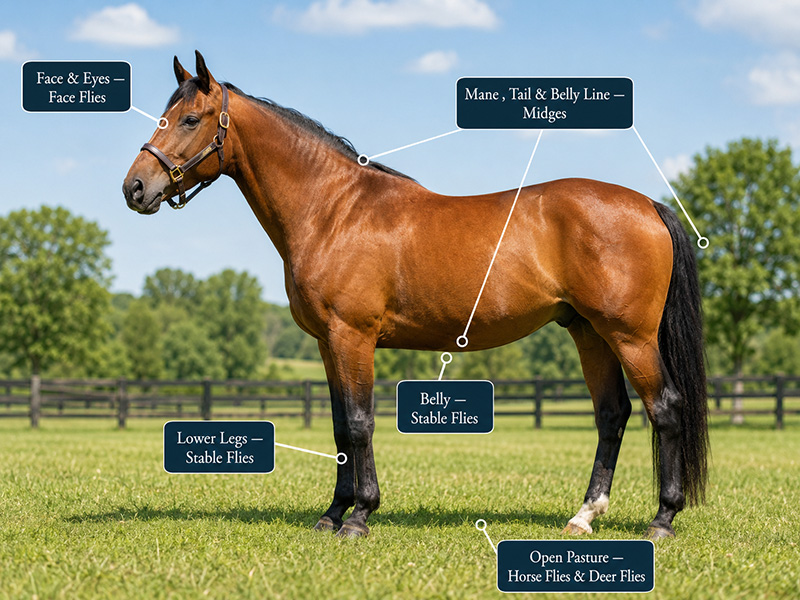
A trap designed for house flies may do very little against horse flies. A feed-through product that acts in manure will not stop mosquitoes breeding in standing water. A fly mask protects the face but cannot stop stable flies from biting the lower legs.
Before buying another product, look at where the insects are gathering, when they are active, and what they are doing.
House Flies
House flies do not bite, but they can become overwhelming around barns. They are attracted to manure, spilled grain, moist bedding, decaying hay, garbage, and other organic material.
They frequently gather around horses’ eyes, noses, mouths, wounds, feed tubs, and manure piles.
Sanitation, moisture control, properly selected traps, fly predators, premise treatments, and automatic systems may all play a role in controlling them.
Stable Flies
Stable flies are painful blood-feeders that often attack a horse’s lower legs and belly.
A horse repeatedly stomping its feet during fly season may be reacting to stable flies. These flies often breed in moist, decaying organic material such as manure mixed with bedding, old hay, spilled feed, and damp vegetation.
Removing breeding material and keeping areas dry are essential. Leg boots, topical products, fans, biological controls, and traps specifically intended for stable flies may also help.
Face Flies
Face flies gather around the eyes, nose, and mouth, feeding on moisture and secretions. They can cause tremendous irritation and may contribute to eye problems.
A well-fitting fly mask is often one of the most useful protections against face flies.
Horse Flies and Deer Flies
Horse flies and deer flies are large, persistent biting flies. They are powerful fliers and can travel onto a horse property from surrounding wetlands, woods, pastures, or neighboring land.
Their immature stages generally do not develop in ordinary barn manure, which means manure management alone will not eliminate them.
Control is difficult. Protective sheets, appropriate topical products, specialized traps, turnout changes, and access to shelter may provide some relief. Penn State Extension notes that horse- and deer-fly control is considerably more difficult than controlling many common barn flies.
Mosquitoes
Mosquitoes breed in standing or slow-moving water. Buckets, discarded tires, clogged gutters, tarps, birdbaths, wheelbarrows, water trough overflows, and low spots can all hold enough water to support them.
Mosquitoes are generally most active during particular times of day, often around dawn and dusk, although activity varies by species.
Removing standing water, maintaining water containers, using fans, screening enclosed areas, changing turnout schedules, and using appropriately labeled repellents can help reduce exposure.
Biting Midges and “No-See-Ums”
Tiny biting midges are often active near water and during calm periods around dawn and dusk. They are associated with insect-bite hypersensitivity, frequently called sweet itch.
Affected horses may rub their manes, tails, belly lines, and other areas until the skin becomes raw.
These horses may need tightly woven protective sheets, shelter during peak insect activity, fans, veterinary treatment, and aggressive environmental management—not merely another bottle of fly spray.
Bot Flies
Bot flies usually do not produce the same swarming irritation as house or stable flies, but they lay visible yellow or cream-colored eggs on the horse’s hair, commonly on the legs, shoulders, and other areas the horse can reach with his mouth.
Removing bot eggs can reduce the number the horse ingests while grooming. Horse owners should also discuss an appropriate parasite-control program with their veterinarian rather than relying on a fixed deworming calendar.
Every Major Fly-Control Method, Honestly
I have used just about every category below over the years—often several at the same time, because that is usually what it actually takes.
Here is what each method does, where it is useful, and where it falls short on its own.
Topical Fly Sprays, Wipe-Ons, Roll-Ons, and Ointments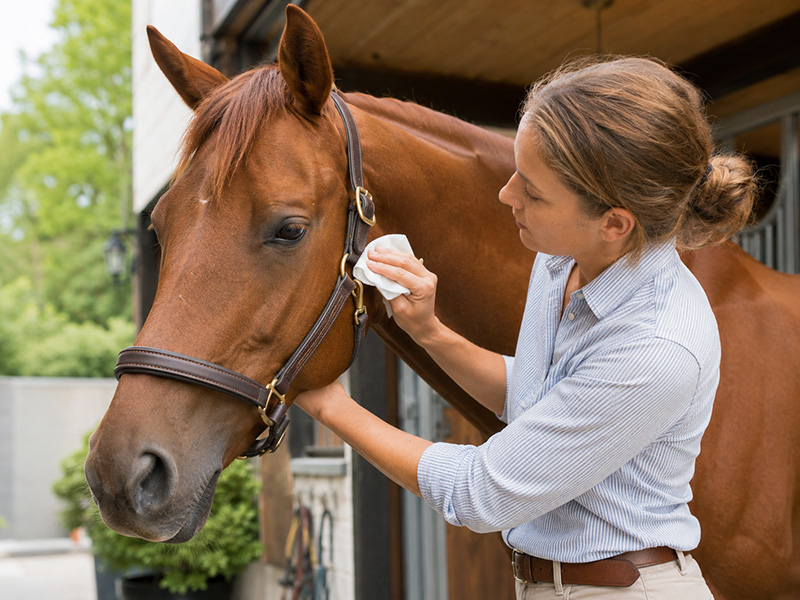
Topical products are the oldest and most familiar fly-control tools.
Some contain insecticides that kill or repel the pests listed on the label. Others rely on botanical ingredients and aromatic oils that may discourage insects from landing.
These products are useful because they begin working quickly and can be applied directly to the areas where a horse needs protection.
They are also temporary.
Sweat, rain, bathing, grooming, sunlight, dust, and the horse’s individual skin and coat can all affect how long a product remains useful. Depending on the formula and conditions, meaningful protection may last anywhere from hours to several days.
Do not assume that one application will protect a horse for the entire week simply because the product remains visible on the coat.
Always read the label for:
- Which insects the product is intended to control
- Whether it kills, repels, or does both
- How much to apply
- How often it may be reapplied
- Whether it can be used on the face
- Whether gloves or other precautions are required
- Whether it is suitable for foals, pregnant mares, or sensitive horses
Avoid spraying chemicals directly into the horse’s eyes, nostrils, mouth, or ears. When the label permits facial use, apply the product to a cloth or grooming mitt first and wipe it on carefully.
Fly ointments and roll-ons can be especially useful around the ears, face, chest, belly line, and other areas where controlled application is preferable to spraying.
What About Natural Fly Sprays?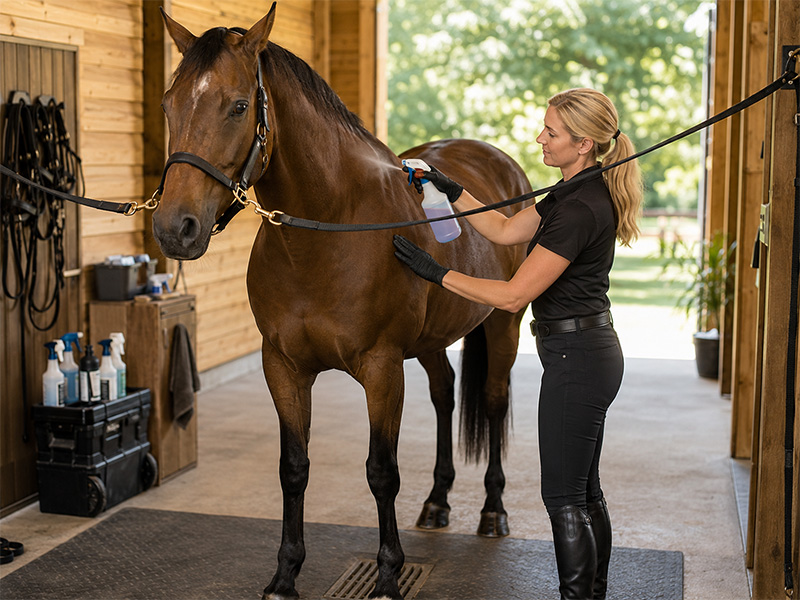
Botanical and essential-oil products can provide useful repellency for some horses, but their effectiveness and duration vary considerably.
“Natural” does not automatically mean harmless.
Concentrated oils can irritate skin, eyes, and respiratory tissue. A natural product may also be unsafe for cats, aquatic life, or other animals living around the barn.
Test a new topical product on a small area before applying it over the entire horse, particularly if the horse has sensitive skin or a history of hives.
Never create a stronger mixture than the manufacturer recommends.
Physical Barriers: Fly Masks, Sheets, Boots, and Wraps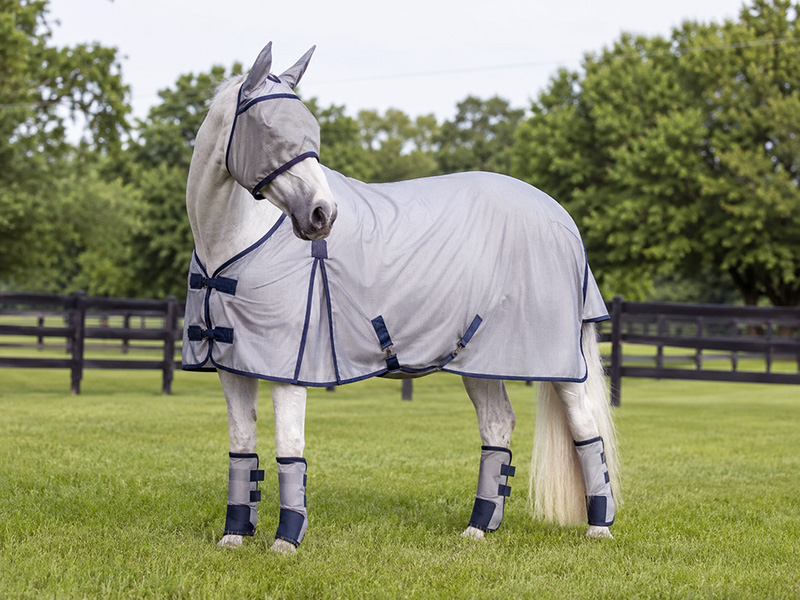
Physical barriers work by simple denial: if the fly cannot reach the skin, it cannot land and bite there.
They do not wash off in the rain, lose strength in sunlight, or require repeated chemical application.
A good fly mask protects the eyes and face while allowing the horse to see clearly. Some include extended nose coverage or ear protection.
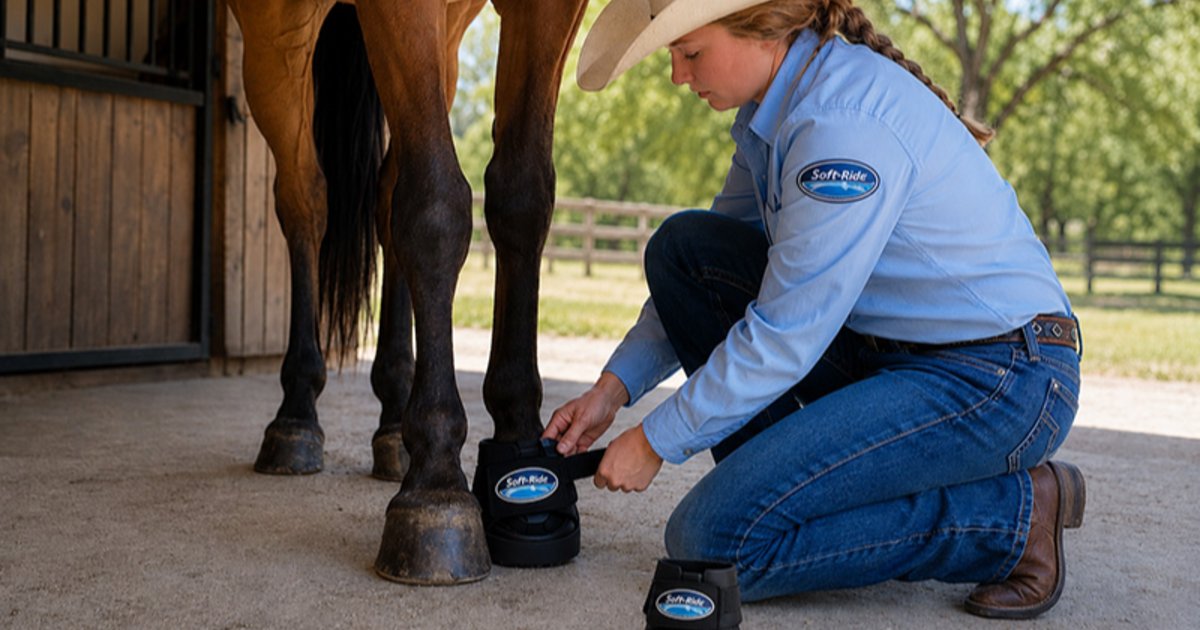
Fly sheets protect large portions of the body. Belly bands can be especially helpful for horses bothered by insects along the midline. Fly boots or leg wraps can reduce lower-leg irritation and stamping caused by stable flies.
The limitations are fit, heat, rubbing, and maintenance.
A poorly fitted mask can rub the face or press against the eyes. A loose sheet can shift, catch on objects, or create friction. A heavy or poorly ventilated sheet may make a horse uncomfortable in extreme heat.
Inspect fly gear daily. Remove dirt, burrs, bedding, and damaged fasteners. Watch for rubs, trapped moisture, and overheating.
The goal is to make the horse more comfortable—not exchange insects for another source of irritation.
Feed-Through Products That Work in Manure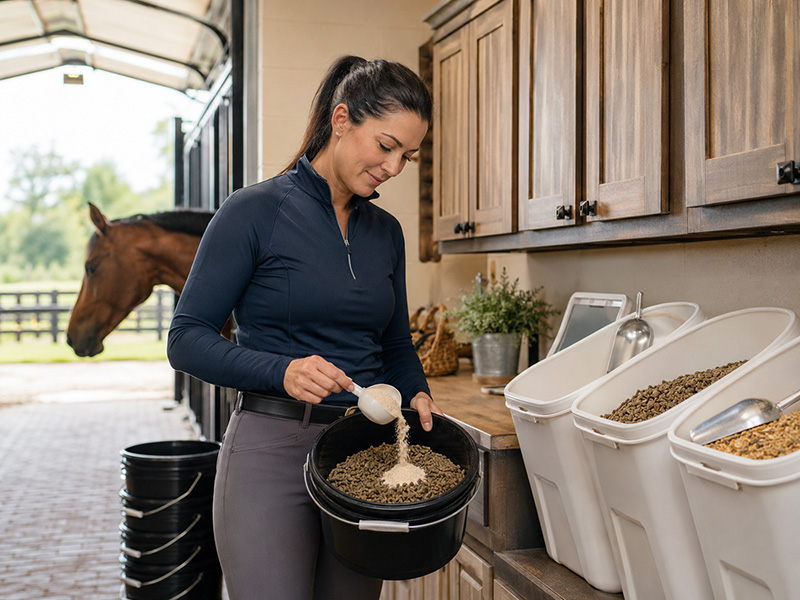
Some feed-through fly-control products contain an insect growth regulator that passes through the horse and enters the manure.
When susceptible fly larvae develop in treated manure, the active ingredient interrupts their development and helps prevent them from becoming adult flies.
These products can be useful against certain flies breeding in manure produced on your property.
They have clear limitations.
They will not control:
- Adult flies already present
- Flies breeding in untreated manure
- Flies arriving from neighboring properties
- Horse flies and deer flies developing in wetland areas
- Mosquitoes breeding in standing water
- Every species of fly found around horses
Feed-through manure products also work best when enough horses on the property receive them consistently. One treated horse in a barn full of untreated manure will have limited effect.
These products should support good manure management, not replace it.
Feed Supplements Claiming Whole-Body Repellency
A different category of feed additive claims to make the horse himself less attractive to flies by altering his odor, sweat, skin, coat, or other characteristics.
Products in this category may contain garlic, vinegar, herbs, sulfur, minerals, plant extracts, or proprietary blends.
Evidence and active ingredients vary widely.
A positive customer testimonial does not establish that every horse will respond or that every ingredient is safe at every feeding level.
Research each product individually. Look for:
- A complete ingredient list
- Clear feeding directions
- Safety information
- Evidence supporting its claims
- Warnings about combining it with other supplements
- Guidance for horses with medical conditions
Garlic, in particular, should not be fed indiscriminately or in unlimited amounts. More is not necessarily better.
Horse owners should discuss questionable ingredients with a veterinarian or qualified equine nutrition professional, especially when the horse already receives several fortified feeds or supplements.
Biological Fly Control: Parasitic Wasps or “Fly Predators”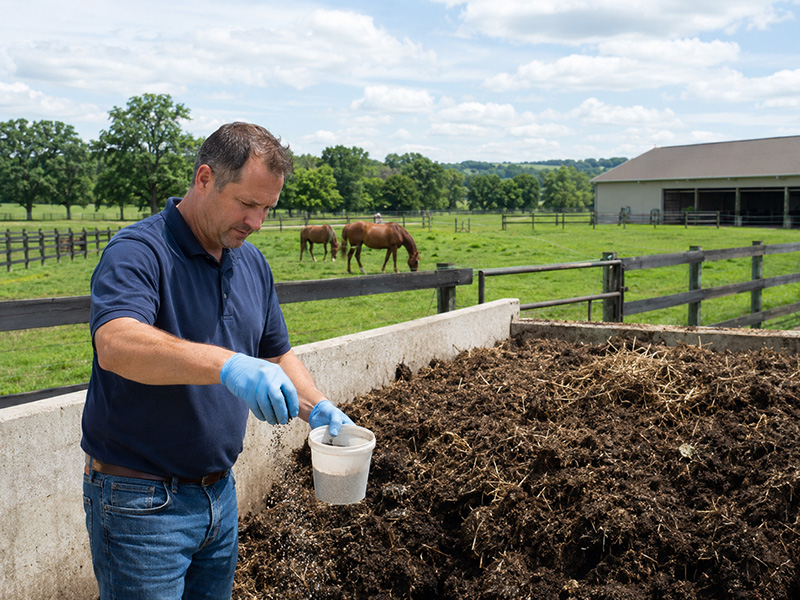
Fly predators are tiny, non-stinging parasitoid wasps released around areas where certain nuisance flies reproduce.
The wasps search for fly pupae and lay eggs in or around them. Their developing offspring prevent the adult flies from emerging. University of Minnesota Extension describes these wasps as harmless to people and animals and useful against filth-fly pupae.
Fly predators are preventive rather than immediate.
They work best when:
- Releases begin before fly numbers become overwhelming
- New wasps are released on a regular schedule
- They are placed near likely breeding areas
- Manure and organic waste are still managed properly
- Broad insecticide applications do not kill the beneficial wasps
- Enough predators are released for the number of animals and breeding sites
They do not control mosquitoes, horse flies, deer flies, or every insect wandering onto the property.
They are one piece of an integrated program—not a rescue squad for a fly population that has already exploded.
Automatic Fly-Spray and Misting Systems
Barn-installed automatic systems release a measured insecticide mist through nozzles positioned in stalls, aisles, loafing areas, or other approved locations.
Their greatest advantage is consistency.
A properly designed system can treat multiple areas on a regular schedule without requiring someone to walk through the barn with a spray bottle several times a day.
That can be valuable in large barns or regions with severe, prolonged fly pressure.
The upfront cost, installation, maintenance, chemical expense, ventilation, and system design must all be considered.
Most importantly, the insecticide must be specifically labeled for:
- The type of automatic system being used
- The location in which it is installed
- Livestock or horse premises, when applicable
- The target insect
- The intended application rate
EPA-registered products exist with directions for automatic misting in livestock housing, but that does not mean every barn insecticide—or every product sold for direct application to horses—can legally or safely be placed in an automatic system.
Never pour an ordinary premise spray or topical horse spray into an automatic system unless the product label expressly permits that use.
Nozzles should not contaminate feed or water. The system must be maintained, checked for leaks, and operated according to its directions and all applicable state and local requirements.
Automatic systems can be extremely effective, but they should be professionally designed and responsibly managed.
Fly Traps, Sticky Tapes, and Attractant Bags
Fly traps can reduce adult fly numbers, but the trap must match the pest.
Odor-baited disposable bags and jugs are often effective against certain nuisance flies. The flies are attracted into the container and cannot escape.
They work—but placement matters.
Hang a strong-smelling attractant trap beside the barn door and you may draw flies toward the horses before catching them. These traps generally belong away from stalls, riding areas, patios, feed rooms, and places where people gather.
They are also, frankly, disgusting to empty or discard once they have done their job.
Other trap types include:
- Sticky tapes and ribbons for enclosed areas
- Window traps
- Light traps approved for suitable indoor locations
- Visual traps designed for stable flies
- Dark-object traps intended for horse flies
- Specialized mosquito traps
No single trap controls every flying insect.
A product that catches hundreds of house flies may do little for stable flies biting the legs. A horse-fly trap may not reduce mosquitoes. A mosquito trap will not correct a manure pile producing house flies.
Use traps to answer a specific problem, not simply because the package says “fly trap.”
Manure and Environmental Management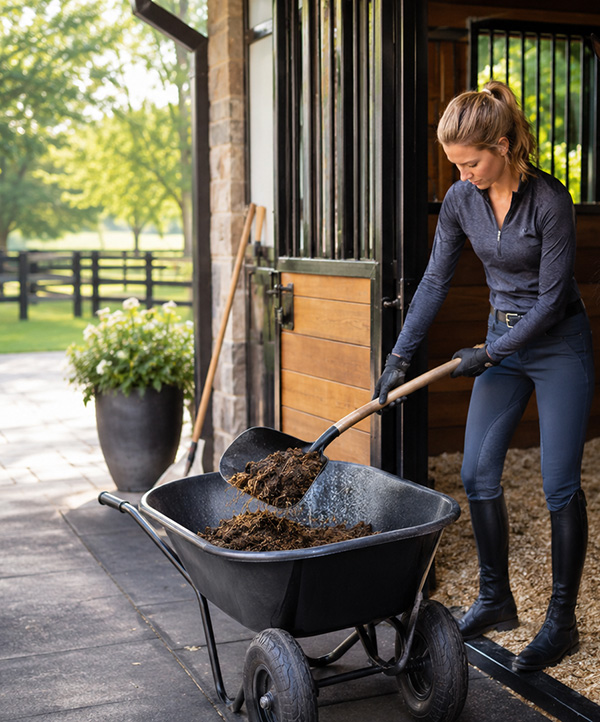
This is the least glamorous fly-control method and often the most important.
Many common barn flies develop in manure, wet bedding, spilled grain, old hay, decaying vegetation, and other damp organic material. Penn State Extension emphasizes that decaying organic material—including spilled feed and manure—must be managed to control filth flies.
Remove manure from stalls, small paddocks, sacrifice areas, and heavily used spaces as frequently as practical.
Do not overlook:
- Wet bedding beneath water buckets
- Hay packed under feeders
- Spilled grain
- Damp material around round bales
- Grass clippings
- Rotting vegetation
- Dirty trash containers
- Manure accumulated in trailers
- Moist organic material beneath fence lines
- Drainage around wash racks and waterers
Move stored manure far enough from the barn to reduce flies and odors around horses, while still following local environmental and property regulations.
Proper composting can generate enough heat to reduce fly development. Manure that is spread should be distributed thinly under appropriate conditions so that it dries rather than remaining in wet piles.
Manure management will not eliminate horse flies coming from wetlands or mosquitoes breeding in standing water, but every other method works uphill when barn sanitation is ignored.
Airflow and Fans
Many common barn flies have difficulty landing and remaining on a horse in steady moving air.
A properly positioned fan can provide meaningful relief in stalls, grooming areas, wash racks, and loafing sheds. It is the mechanical version of the breezy hilltop a loose horse might choose for himself.
Fans are particularly helpful during times when horses must remain inside.
However, barn fans must be installed safely.
Use fans and electrical equipment suitable for dusty agricultural environments whenever possible. Keep cords, plugs, switches, blades, and guards out of the horse’s reach.
Clean dust, cobwebs, hair, and chaff from fan motors and guards. Do not overload outlets or rely on damaged extension cords.
Position fans so they move air around the horse without blowing large amounts of bedding dust continuously into his eyes and airways.
Standing Water and Mosquito Management
Manure control and mosquito control are not the same job.
Mosquitoes develop in water, and some need surprisingly little of it.
At least once a week during mosquito season, inspect:
- Buckets
- Troughs
- Clogged gutters
- Old tires
- Wheelbarrows
- Tarps
- Feed pans
- Plant saucers
- Puddles
- Drainage ditches
- Waterer overflow areas
- Containers stored outdoors
Empty, clean, cover, repair, or remove anything that holds unnecessary water.
Maintain water troughs rather than merely topping them off indefinitely. Keep gutters flowing and correct low areas where practical.
Where water cannot be removed, seek advice about control options that are legal and appropriate for livestock properties. Do not place pesticides in drinking water or natural water sources unless the product is specifically labeled for that exact use.
Reducing mosquito exposure is valuable, but it is not a substitute for vaccination against mosquito-borne equine diseases.
Pasture and Facility Layout
A property’s layout can either support fly control or quietly defeat it.
Muck around gates, wet areas below waterers, poorly drained sacrifice lots, old hay beside feeders, manure stored too close to stalls, and low spots that never dry can all increase insect pressure.
Look at the property after a heavy rain.
Where does water remain after everything else has dried? Where does spilled hay collect? Where do horses stand most often? Which corners hold manure and bedding? Where are the flies visibly resting?
Improving drainage, adding appropriate footing, moving high-traffic areas, cleaning fence lines, repairing leaks, and rotating feeding locations can remove breeding sites that are otherwise easy to miss.
You do not need a perfect property.
You need fewer places where moisture and decaying material remain together long enough for another generation of flies to develop.
A Practical Fly-Control Plan
A complete program does not have to be complicated, but it should address both the horse and the environment.
For One or Two Backyard Horses
Start with:
- Remove manure regularly from stalls and small turnout areas.
- Keep bedding, feeders, and water areas as dry as possible.
- Eliminate unnecessary standing water.
- Use a properly fitted fly mask.
- Add a breathable sheet or fly boots when needed.
- Apply a topical product selected for the insect causing the problem.
- Use fans in stalls or shelters when safe.
- Place species-appropriate traps away from horses and gathering areas.
- Consider fly predators or a manure-targeted feed-through when appropriate.
For Boarding, Training, or Breeding Barns
Larger barns need a written program rather than a collection of unrelated products.
That program may include:
- A daily manure and wet-bedding schedule
- A designated manure-storage or composting area
- Drainage and moisture-control procedures
- Regular fly-predator releases
- Strategic trapping
- Fans in high-use areas
- Horse-level barriers and topical protection
- A clearly supervised feed-through program
- A properly designed automatic system when justified
- Staff instructions for pesticide handling and storage
- Regular review of which fly species remain active
One person should be responsible for overseeing the program. When everybody assumes somebody else emptied the trap, cleaned the water overflow, or ordered the next predator shipment, fly control begins to fail quietly.
For Pasture-Based Horses
Pasture horses still need help, particularly when surrounding conditions create heavy biting-fly pressure.
Provide:
- Shade or shelter
- Access to breezy areas when possible
- Masks, sheets, and boots as needed
- Appropriate topical protection
- Clean water sources
- Reduced standing water around troughs and gates
- Specialized traps where suitable
- Turnout adjustments for horses severely affected at dawn or dusk
- Veterinary attention for insect hypersensitivity
Remember that horse flies, deer flies, mosquitoes, and midges may originate far beyond your own manure pile.
Safety Around the Barn
Never assume a fly-control product is safe for every living thing on the property.
A product labeled for use on horses may have different risks for:
- Cats
- Dogs
- Poultry
- Bees
- Fish
- Aquatic life
- Children
- Pregnant people
- Wildlife
Protect feed, hay, supplements, water, tack, grooming equipment, and food-preparation areas from pesticide contamination.
Keep all concentrates and refills in their original labeled containers. Never transfer insecticide into a beverage bottle, unmarked jug, or container that could be mistaken for something else.
Do not combine products unless their labels permit it.
More chemical does not automatically produce more control. It may only increase the risk to the horse, the applicator, barn animals, beneficial insects, and the surrounding environment.
The label is not merely a suggestion. It tells you how that specific product may legally and safely be used.
When Fly Irritation Needs Veterinary Attention
Ordinary fly irritation can sometimes become a medical problem.
- Raw, bleeding, or infected skin
- Severe hives or swelling
- Persistent hair loss
- Intense mane, tail, or belly-line rubbing
- Eye swelling, discharge, cloudiness, or squinting
- Wounds that will not heal
- Draining abscesses
- Lameness or leg swelling
- Injuries caused by constant stamping
- Fever
- Weakness
- Trembling
- Stumbling
- Abnormal behavior
- Other neurologic signs
A horse with insect-bite hypersensitivity may need medical treatment and a far more aggressive protection plan than an unaffected horse standing in the same pasture.
Build the Program Before the Flies Arrive
Fly control is easier when it begins before fly numbers peak.
Before Fly Season
- Repair screens and damaged fly gear.
- Service barn fans.
- Correct drainage problems.
- Clean manure-storage areas.
- Remove old hay and organic debris.
- Establish a manure-removal schedule.
- Order fly predators early if using them.
- Choose traps based on the flies present.
- Review vaccination needs with your veterinarian.
- Inspect automatic systems and pesticide labels.
During Peak Fly Season
- Continue manure and moisture control.
- Inspect standing water weekly.
- Clean masks, sheets, and boots.
- Reapply topical products according to label directions.
- Replace full traps.
- Continue biological releases on schedule.
- Watch for changes in the species or location of the insects.
- Check horses daily for skin irritation, wounds, and eye problems.
After Fly Season
- Clean and store fly equipment.
- Remove remaining organic buildup.
- Service fans and automatic systems.
- Review which methods worked.
- Identify where the worst pressure occurred.
- Plan improvements before the next season begins.
What Actually Works? All of It, Together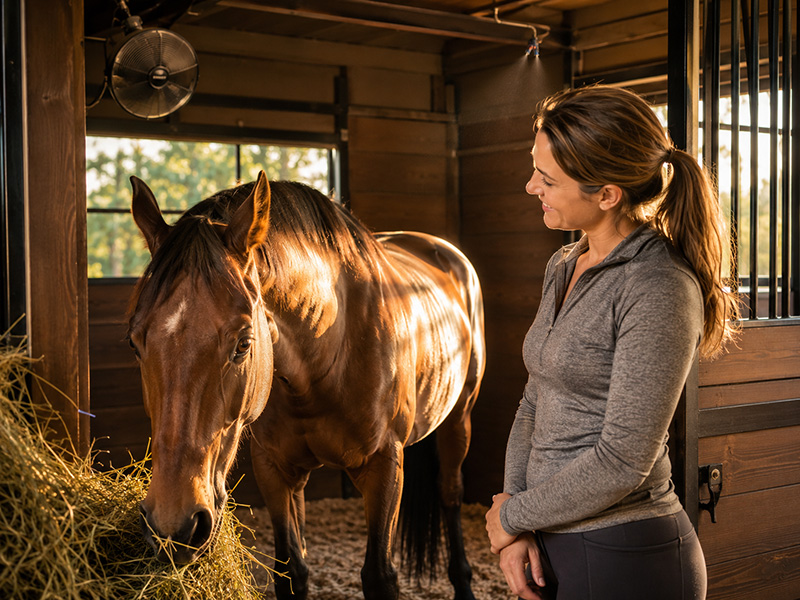
If there is one honest conclusion after years of fighting this fight, it is that no single method wins fly season on its own.
A fly mask does not clean a manure pile.
A feed-through product does not remove standing water.
A fan does not protect a horse standing in a distant pasture.
A trap designed for house flies does not stop every horse fly coming out of a nearby wetland.
A misting system does not replace drainage, sanitation, or proper horse-level protection.
What works is combining the right methods for the flies you actually have.
For many horse owners, that means a physical barrier on the horse, an appropriately chosen topical product, careful manure and moisture management, moving air inside the barn, and one or more methods aimed at interrupting the insect’s life cycle.
That is really just rebuilding, piece by piece, what a loose horse once handled with a herd, a hilltop, room to move, and a mud puddle.
We may not be able to give every horse back the exact environment nature provided.
We can give him the modern equivalent of its protection.
A horse that is not fighting flies all day is a horse that is actually resting, actually grazing, and able to pay attention to something besides defending every square inch of his own skin.
He is safer, healthier, easier to work with, and genuinely more comfortable.
That is worth far more than most of us give this unglamorous subject credit for.