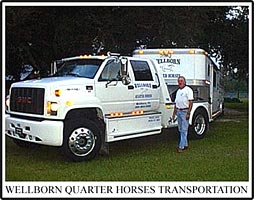
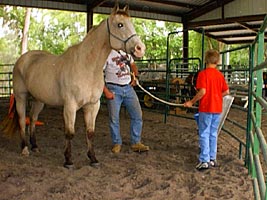
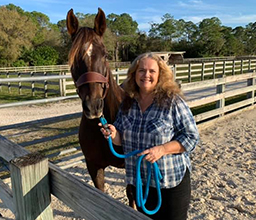
Our rescue TB has been eating coastal hay non-stop since we adopted her on August 1, with no colic, much to the surprise of the Miami ladies who sent her to us.
We feed 12% Tiz Whiz pellets, which , when soaked, turn into a nice thick oatmeal consistency which the horses LOVE.
But in 11-12 years of boarding, training, and breeding horses (we average 25 - 30 per year in our care) we have never had one single colic.
So I thought I would share the secrets of our success: I feed everyone on mats (flakes of hay and grain) so they do not ingest much sand.
However, the mats must be swept almost daily, or hosed off.
Combating Colic And Impactions This Fall And All Year Long
Horse owners can sharply reduce colic and impaction risk by feeding hay and grain on mats to limit sand ingestion, wetting the grain so horses stay hydrated in winter when they drink less, providing salt blocks in pastures and stalls to encourage drinking, and keeping horses turned out with free-choice grass or hay instead of standing in stalls.
Putting round bales out before pasture grass runs out—and having every horse’s teeth checked once or twice a year so hay is properly chewed—guards against the impactions caused by dehydration and unchewed forage. Following this routine, one Florida boarding, training, and breeding farm averaging 25 to 30 horses per year has gone 11 to 12 years without a single colic.
When one of our vets found out we fed coastal, and never have had a colic episode, he was amazed. So I thought I would share the secrets of our success:
I feed everyone on mats (flakes of hay and grain) so they do not ingest much sand. However, the mats must be swept almost daily, or hosed off.
Once or twice a year I use Sand-blast or Sand Clear.
I wet down the grain, especially in the winter, when the horses may not drink as much, and have no grass to eat.
I provide the 50 lb salt blocks in pasture and the smaller ones in stalls, to encourage more water drinking all year round
I provide the 50 lb salt blocks in pasture and the smaller ones in stalls, to encourage more water drinking all year round
I try to limit stall time to a minimum, and most of ours are out 24/7 eating grass and/or hay. When they are in a stall, they have loads of hay in there with them. Our rescue TB has been eating coastal hay non-stop since we adopted her on August 1, with no colic, much to the surprise of the Miami ladies who sent her to us.
In the winter when there is no grass, we put out round bales (yes, coastal!!) so the horses have free choice hay, but again, wetting the grain helps avoid impactions caused by dehydration.
But I do not wait for the last minute, when the grass is totally gone. I put the round bales out Before the grass diminishes so the horses do not gorge themselves on the coastal.
Also, I "wean" the horses onto the hay by feeding a flake of coastal in the morning and another at dinnertime, approx. 2 weeks before the round bales go out.
We feed 12% Tiz Whiz pellets, which , when soaked, turn into a nice thick oatmeal consistency which the horses Love. Wetting Strategy and other "heavy on the molasses" pellets results in a watery brown mess that the horses are reluctant to eat. Clue: if the feed is supposed to be made from oats and corn, then why would it be Brown?
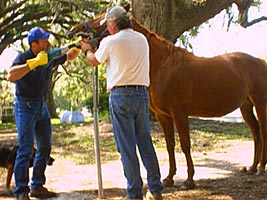
Last but not least, we use Dr. Graden twice a year, he comes and checks every horse's teeth. Horses need a correct "bite" , so they can chew and grind as nature intended, even if it is coastal they are chewing (here is our 24 year old Dancer, has all his teeth, and chews every morsel). Improper dental work (or none at all) is a major culprit causing impactions as the horses must swallow their hay almost un-chewed. And due to coastal's fine consistency and sweet taste, this can easily be accomplished by the enterprising equine. So don't forget your dental care, once or twice a year.
If all of this sounds like a major ordeal, it is. But in 11-12 years of boarding, training, and breeding horses (we average 25 - 30 per year in our care) we have never had one single colic.
Sponsored Content — Contact information provided by the sponsor
💬Questions Readers Commonly Ask (FAQ)
How can I actually prevent colic in my horses year-round?
Per Andrea Haller at Wellborn Quarter Horses: in 11-12 years of boarding, training, and breeding 25-30 horses per year, the operation has had zero colic episodes on a feeding-discipline plan that comes down to four habits.
Feed hay and grain on rubber mats, not bare ground — and sweep or hose the mats almost daily.
Wet the grain, especially in winter when horses drink less and have no grass.
Provide salt blocks (50 lb in pasture, smaller in stalls) to encourage drinking year-round.
Keep horses out 24/7 wherever possible; when stalled, give them loads of hay.
Per Andrea Haller: this regimen is a major ordeal day-to-day, but the result over a decade-plus speaks for itself. Pick whichever of the four habits is most slipping in your barn and fix it first.
What's the connection between sand and colic, and how do I avoid it?
Per Andrea Haller: when horses eat hay or grain off bare ground, they ingest sand along with the feed — and accumulated sand is a leading cause of impaction colic. The Wellborn approach is to feed everything on mats, sweep or hose those mats almost daily, and run a sand purgative once or twice a year.
Body content notes Sand-Blast and Sand Clear by name as the products used; confirm any sand-clearing protocol with your vet before starting. The structural rule is more important than the product brand: sand prevention is mostly a feeding-management problem, not a supplement problem. Mats first, then a periodic purgative pulse, not the reverse.
How do I keep my horse drinking enough water in winter?
Per Andrea Haller: winter dehydration is what tips marginal horses into impaction colic. Three habits move the needle.
Wet the grain. Soaked feed delivers measurable water to a horse that may not drink enough on his own. Per Andrea Haller: 12% Tiz Whiz pellets soaked turn into a thick oatmeal consistency that horses love.
Salt blocks everywhere — 50 lb blocks in pasture, smaller blocks in stalls. Salt drives drinking; drinking prevents impaction.
Quality forage they want to eat. Per Hydration Hay (a current InfoHorse advertiser): pre-soaked hay products give a winter-confined horse something hydrated to actually want at the feeder, which raises total water intake when pasture is gone.
How do I transition my horses onto winter hay without triggering colic?
Per Andrea Haller: gorging is the danger when horses go from grass to a sudden hay-only diet. The Wellborn fix is to start hay before the grass is gone, not after. Approximately two weeks before the round bales go out, feed a flake of coastal in the morning and another at dinnertime. The horses adjust their digestive flora gradually.
Per Andrea Haller: when the round bales finally go out, the horses are already on hay and don't gorge themselves. The wet-grain habit continues through the transition for hydration support. For long-term gut maintenance alongside seasonal feed shifts, supportive products like SUCCEED® Digestive Conditioning Program (a current InfoHorse advertiser) target the broader gut-health environment that abrupt feed changes can disrupt — though the management discipline (early hay introduction, not late) does most of the work.
How does my horse's dental care affect colic risk?
Per Andrea Haller: improper dental work — or none at all — is a major culprit causing impactions. A horse with sharp points, hooks, or missing molars can't grind hay properly, so he swallows it nearly un-chewed. Coastal hay's fine consistency and sweet taste make this even easier for an enterprising horse to do.
The structural recommendation is straightforward: have a qualified equine dentist or vet check every horse's teeth once or twice a year. Per Andrea Haller: the Wellborn 24-year-old gelding Dancer still has all his teeth and chews every morsel because dental work has been routine. Don't wait for symptoms — by the time a horse is dropping feed or losing weight, the dental issue has already been compromising digestion for months. Confirm intervals with your vet based on your horse's age and dental history.
📋
Recommended Products
Curated picks from across InfoHorse.com — most relevant first