

Cushioned hoof boots relieve sore-footed horses in three ways a steel shoe cannot: they absorb concussion instead of transmitting it, they support the entire sole and frog rather than hanging the horse’s weight on the hoof wall alone, and they go on and off in seconds with no nails in a compromised wall. Boots don’t cure laminitis, abscesses, stone bruises, or thin soles—diagnosis and treatment belong to the veterinarian and farrier—but they keep each step comfortable enough that the horse stays willing to move, and that movement supports circulation within the healing foot.
Hoof Boots Can Help Lame Horses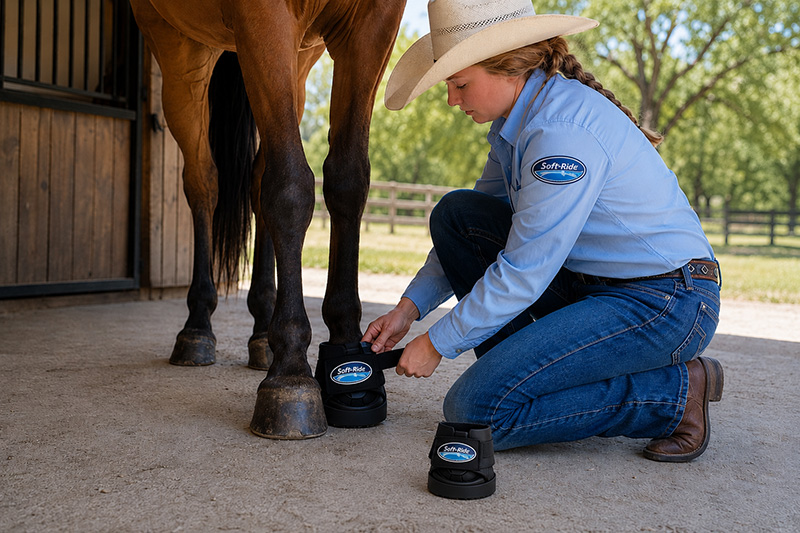
There is a particular misery to a sore-footed horse - the careful, eggshell walk, the weight shifted back, the eye that says everything hurts from the ground up. The old saying is “no hoof, no horse,” and after four decades we would add: no comfort, no healing.
That is the job hoof boots were born for.
What can a boot do that a shoe cannot?
Three things, and they matter:
1. Cushion. A steel shoe protects the wall but transmits concussion. A padded boot absorbs it. For a sore or recovering foot, that difference is the whole game.
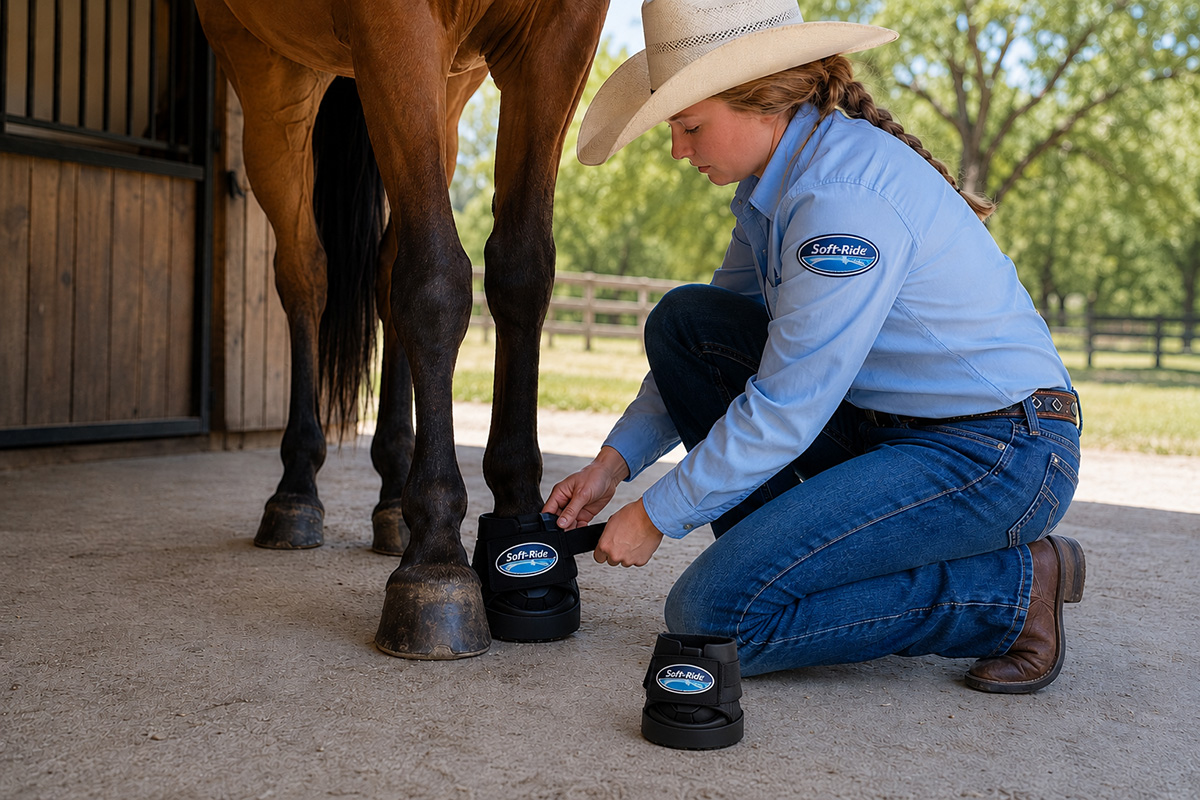
2. Reversibility. Boots go on in seconds and come off the same way. No nails in a compromised wall, no waiting for the farrier when the situation changes tonight.
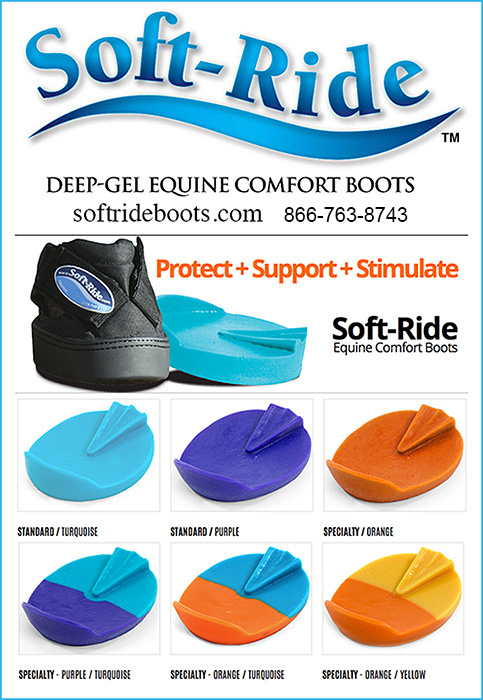
3. Full-sole support. Orthotic insoles load the entire bottom of the foot with frog included instead of hanging the weight on the hoof wall alone.
Recovery is where comfort boots earn their reputation
Ask anyone who has nursed a horse through laminitis or a stubborn abscess what they would not give for a softer first step.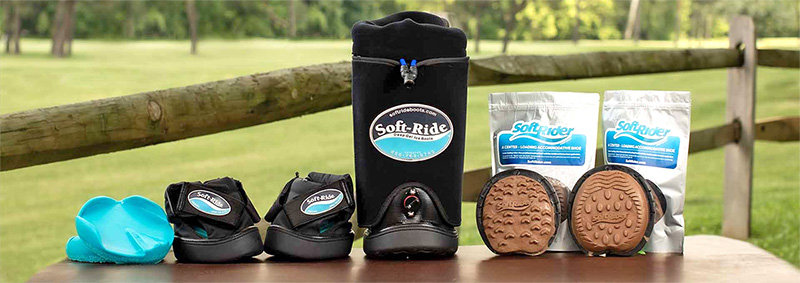
Soft Ride Equine Boots built their name exactly here with deep cushioned orthotics designed for the recovering foot, the post-surgery stall rest, the laminitic mare who needs every step softened while the vet’s plan does its slow work.
The company even builds an Ice Spa boot for cold-therapy on the same principle: comfort is not pampering, it is treatment.
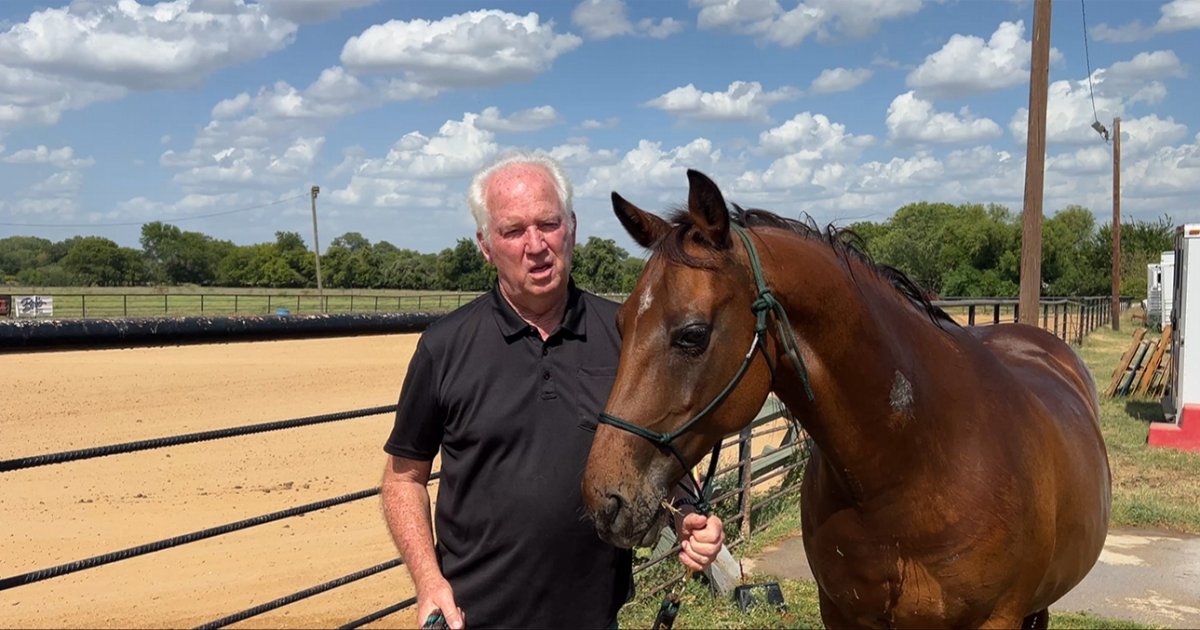
“The first hour in cushioned boots is the first hour some of these horses have stood square in weeks. You can watch the muscles in their back let go.” — Bob Pruitt, CEO InfoHorse.com, horse owner for 40+ years
Everyday protection: the barefoot partner -
For sound horses, boots are the barefoot rider’s best friend. and hoof protection for the rocky miles.
The trailer trick almost nobody uses -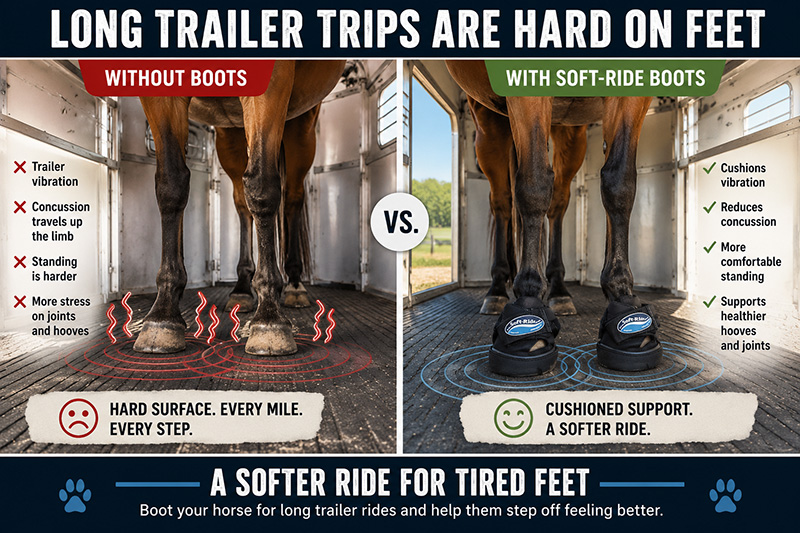
Here is one from our own hauling years: boot the horse for long trailer rides. A trailer floor vibrates every mile, and a horse stands braced on it for hours. Cushioned boots turn that ride into standing on a mattress instead of a drumhead so horses come off the trailer noticeably fresher. Pair them with good trailer setup and with long haul stops.
A boot will not fix what a vet and farrier must fix. But it buys the one thing every healing foot needs and no prescription provides: comfortable steps, starting now.
What boots cost vs what soreness costs Let us do unsentimental barn math. A quality pair of recovery boots runs a few hundred dollars and lasts for years across multiple horses ; most barns end up sharing one set the way they share a stock trailer. Now price the other side of the ledger: a laminitic horse who will not lie down and will not heal, extra vet calls because recovery is stalling, a show season scratched because the feet never got comfortable enough to rebuild. Measured against any one of those, the boots are the cheapest thing in the tack room. And because they are reusable, the second sore horse rides free. Ask around any boarding barn that owns a set of Soft Rides and they will tell you the boots have been on half the horses in the barn at one point or another. That is what a good tool looks like: bought once, earning for a decade. Find more recovery and hoof help in our Horse Health section.
Why Horses Become Sore Footed
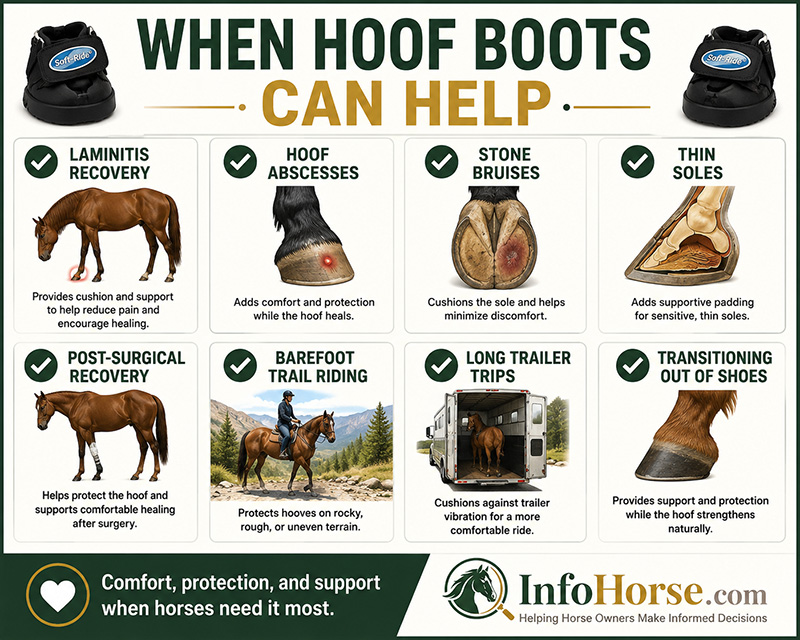
Many horse owners assume soreness only comes from laminitis, but hoof pain can have many causes. Stone bruises, sole sensitivity after trimming, hoof abscesses, thin soles, navicular-related discomfort, sole penetration injuries, and recovery from hoof surgery can all make a horse reluctant to move.
Because movement is essential for circulation within the hoof, helping a horse stay comfortable enough to walk often becomes an important part of the recovery process. Hoof boots can provide temporary protection while the underlying cause is being treated by a veterinarian or farrier.
Hoof Boots and Laminitis
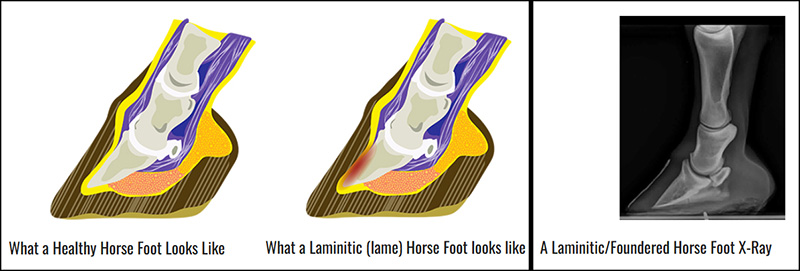
Few conditions challenge horse owners emotionally and financially like laminitis.
Laminitic horses often shift weight from foot to foot, stand rocked back on their heels, and may become reluctant to move at all. Every painful step increases stress throughout the body.
This is where cushioned hoof boots have become one of the most commonly recommended comfort aids in modern equine care. By providing support to the sole and frog while reducing concussion, many horses are able to stand and move more comfortably during treatment and recovery.
Hoof boots do not cure laminitis, but they can help make recovery more tolerable while veterinary treatment addresses the underlying disease process.
Why Cushioning Matters
A horse's foot experiences tremendous forces every time it strikes the ground.
On hard surfaces, those forces travel up through the hoof, pastern, fetlock, and limb. When a foot is already inflamed or compromised, even normal walking can become painful.
Quality hoof boots use shock-absorbing materials designed to reduce impact forces. This cushioning effect may help:
✓ Reduce concussion
✓ Improve comfort during movement
✓ Encourage normal weight bearing
✓ Support circulation within the foot
✓ Improve quality of life during recovery
Sometimes the greatest benefit is simply helping a horse become willing to move again.
Why Some Horses Wear Boots on All Four Feet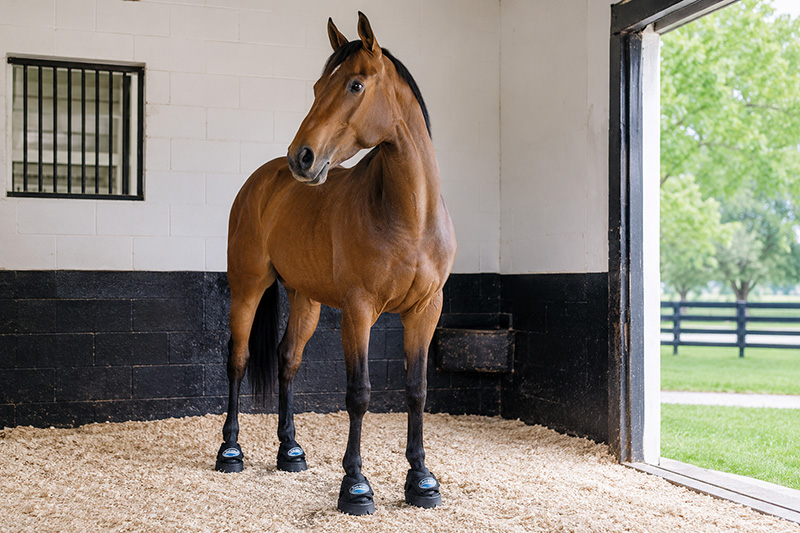
Many horse owners first encounter hoof boots on the front feet because the front feet carry approximately 60 percent of a horse's weight. However, there are situations where veterinarians, farriers, and owners choose to use hoof boots on all four feet.
Horses recovering from laminitis, severe sole sensitivity, founder, post-surgical procedures, metabolic episodes, or extensive hoof trimming may benefit from cushioning and support throughout the entire body. When all four feet are uncomfortable, protecting only the front feet may leave the horse shifting weight onto sore hind feet.
Four-boot support can also be helpful during long trailer rides. Horses constantly adjust their balance during transportation, placing stress on all four limbs as the trailer accelerates, brakes, corners, and travels over uneven roads. Cushioned hoof boots on all four feet can help reduce concussion, absorb vibration, and improve overall comfort during extended travel.
Many rehabilitation facilities routinely use boots on all four feet when comfort and support are the primary goals. The decision should always be based on the horse's individual condition and the recommendations of the attending veterinarian or farrier, but owners should not assume hoof boots are limited to the front feet alone.
Our Experience
Years ago we cared for a Morgan mare named Splendor who battled severe laminitis. Like many owners facing hoof pain, we tried to find ways to make each day a little easier for her.
One of the tools that helped was a set of Soft Ride Equine Boots. They did not cure her condition, and ultimately we lost her to complications of laminitis, but they clearly improved her comfort level and helped soften the concussion on her sore feet.
That experience is one reason we continue to recommend horse owners learn about hoof boots as part of their hoof-care toolbox.
When to Talk With Your Veterinarian
Contact your veterinarian immediately if your horse:
✓ Suddenly becomes lame
✓ Refuses to bear weight on a foot
✓ Develops heat in the hoof
✓ Has a strong digital pulse
✓ Appears to be experiencing laminitis
✓ Shows worsening pain despite treatment
Hoof boots can be an excellent supportive aid, but they should never replace proper diagnosis and treatment.
Conclusion
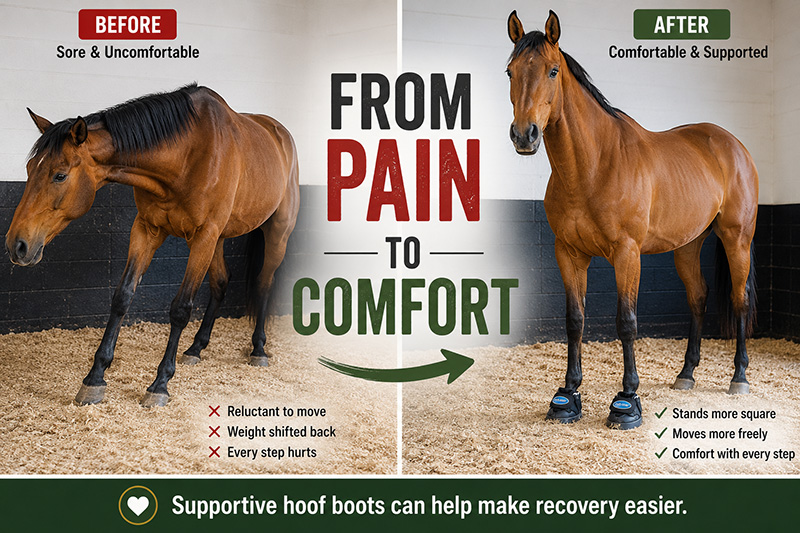
The greatest gift we can give a horse recovering from hoof pain is comfort.
Whether the challenge is laminitis, a stone bruise, an abscess, thin soles, post-surgical recovery, or simply miles of rocky trail, today's hoof boots offer options that did not exist for previous generations of horse owners.
The goal is not merely protection. The goal is to help horses move more comfortably while healing takes place.