


The Deworming Schedule You Learned May Be Working Against You

Why Routine Rotational Deworming Is Being Replaced by Fecal Egg Counts, Targeted Treatment and Proof That the Dewormer Actually Worked
Veterinary parasitologists no longer recommend deworming every horse on a fixed six-to-eight-week rotation—the American Association of Equine Practitioners now advises basing parasite control on fecal egg count testing instead. Under the current approach, adult horses generally receive one or two strategically timed baseline treatments each year, while horses identified as moderate or high shedders (200 or more eggs per gram) may need additional treatment. A fecal egg count reduction test—comparing counts before and about 14 days after treatment—confirms whether the dewormer actually worked, with more than a 95 percent reduction generally expected for strongyles and ascarids.
Somebody taught you how to deworm a horse.
Maybe it was a trainer. Maybe it was the owner of your first boarding barn. Maybe it was simply the instructions printed on the box.
The advice was usually about the same: choose a rotation, deworm every horse every six to eight weeks and switch between drug classes so the worms do not “get used to” any one product.
It made sense. It was also the standard approach for decades.
Today, veterinary parasitologists know that blindly deworming every horse on the same calendar can help select for the very parasites our dewormers can no longer kill.
 That is why the American Association of Equine Practitioners has updated its parasite-control recommendations. The AAEP now advises horse owners to stop deworming every horse at fixed intervals year-round and to stop blindly rotating dewormer classes. Instead, parasite control should be based on testing, the individual horse, the parasites involved and whether the products used on that farm are still effective.
Rotating dewormers according to the calendar does not tell you what your horse is shedding. It does not tell you which horses are contaminating the pasture most heavily. It does not even tell you whether the dewormer you gave actually worked.
You may be treating a horse that does not need another treatment while missing the horse responsible for most of the parasite eggs being deposited around the farm.
Every unnecessary treatment also exposes parasites to a dewormer. The susceptible worms die, while resistant ones may survive and reproduce.
That is how resistance spreads.
What Actually Changed?
Here is the part that surprises many horse owners: no dewormer eliminates every parasite and every life stage inside a horse.
Resistance is now common in certain parasite populations, particularly small strongyles. Roundworm resistance is also a serious concern, especially in foals and young horses.
A tube chosen without testing cannot be assumed to solve every parasite problem.
The resistance pattern may also be different from one farm to another. A product that still works well on one property may perform poorly on another. Even two barns in the same county may not get the same results.
That means the entire premise behind old-fashioned rotational deworming no longer holds up.
You cannot simply assume:
If this product does not work, the next one in the rotation will cover it.
You cannot out-rotate resistance you cannot see.
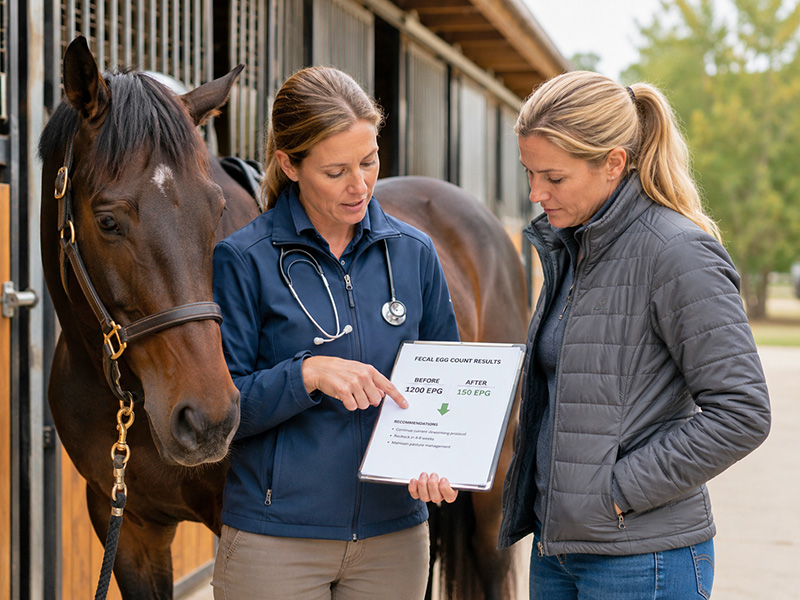
The AAEP now recommends using fecal egg counts to identify low, moderate and high shedders, while performing fecal egg count reduction tests to confirm that the dewormers being used in a particular herd are still effective.
The Fix Is Not More Deworming. It Is Better Information.
A fecal egg count is not a complete inventory of every parasite living inside your horse.
What it does especially well is measure the number of strongyle eggs being shed in a gram of manure. In younger horses, it may also help evaluate roundworm egg shedding.
 That information allows us to identify the horses contributing most heavily to pasture contamination.
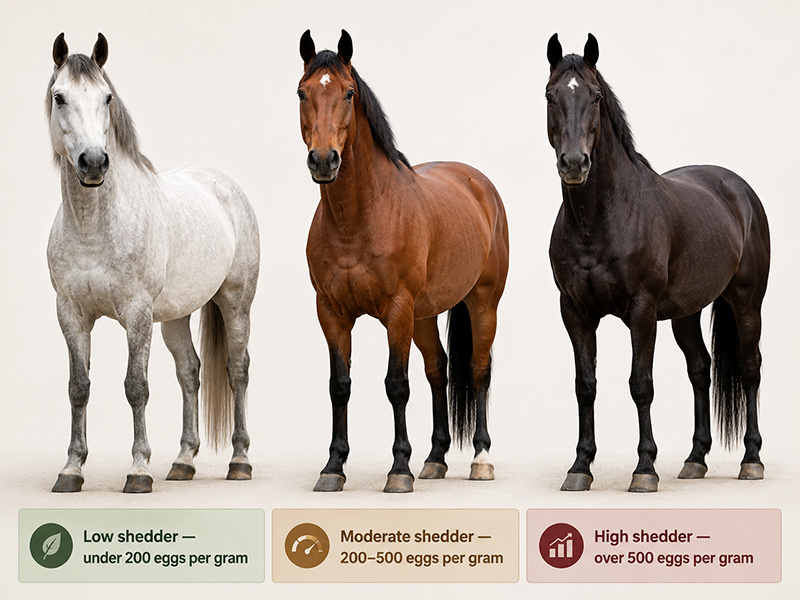
A common method of classifying mature horses is:
Low shedder — fewer than 200 eggs per gram
Moderate shedder — 200 to 500 eggs per gram
High shedder — more than 500 eggs per gram
The cutoff points may vary somewhat among veterinarians and laboratories, but the principle remains the same.
Not every horse in the pasture is contributing equally to the problem.
In many herds, a relatively small number of horses shed most of the parasite eggs. These are often the same horses year after year. Other mature horses consistently remain low shedders.
Under the older system, every horse might have received the same dewormer on the same day, regardless of what each horse was actually shedding.
 The current approach is more selective.
All adult horses generally still receive one or two strategically timed baseline treatments each year. Horses identified as higher shedders may require additional treatment based on their fecal egg counts, age, management, environment and veterinary recommendations.
That is an important distinction.
A low fecal egg count does not mean a horse should never be dewormed. It does not prove that the horse is free of every parasite. It means the horse was shedding relatively few detectable eggs in that particular manure sample.
Testing helps us make better decisions. It does not replace good veterinary judgment.
Did the Dewormer Actually Work?
Testing before treatment tells you which horses may need attention.
Testing after treatment tells you whether the product did its job.
That second test is called a fecal egg count reduction test.
The process is straightforward:
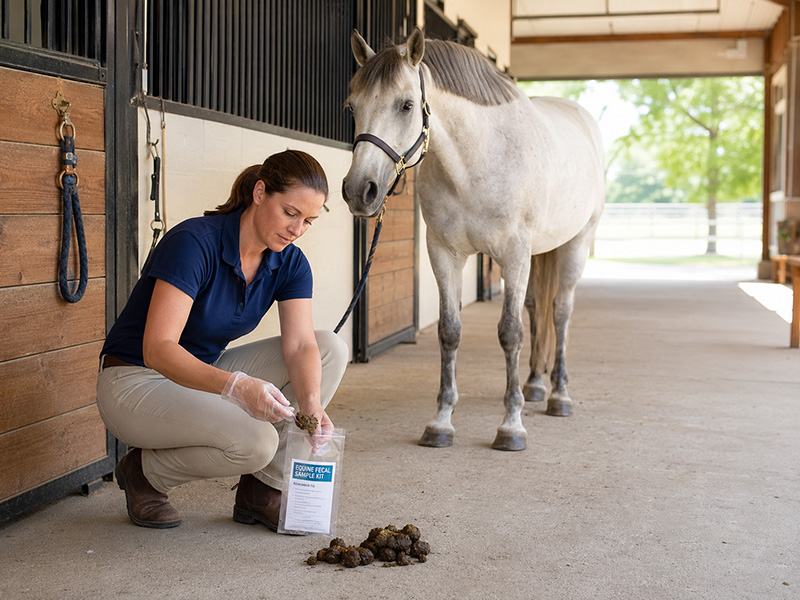 Collect a manure sample and obtain a fecal egg count.
Treat the horse with an appropriate dewormer at the correct dose.
Collect another sample at the recommended time after treatment—commonly about 14 days later, depending on the product and the veterinarian’s instructions.
Compare the two numbers.
As a general rule, veterinarians expect an effective treatment to produce a very substantial reduction in strongyle or roundworm egg counts. The AAEP notes that more than a 95 percent reduction is generally expected for strongyles and ascarids, although the formal interpretation of possible resistance varies according to the drug class, parasite and testing circumstances.
Suppose a horse begins with 1,000 eggs per gram and still has 600 eggs per gram after treatment.
That is not a small detail.
It may mean the product did not work as expected.
Resistance is one possibility, but it is not the only one. Before declaring that a drug has failed, you also need to consider whether the horse’s weight was underestimated, the full dose was swallowed, the product was stored correctly, the medication was expired or there was another problem with administration or testing.
Either way, that is information you need before reaching for another tube.
Without the follow-up count, you may believe the horse has been successfully treated when the pasture is still being contaminated almost as heavily as before.
What a Fecal Egg Count Cannot Tell You
A standard fecal egg count is valuable, but it has limitations.
It does not reliably reveal:
- Encysted small strongyle larvae
- Migrating parasite stages
- Pinworm infections
- Many tapeworm infections
- Every stomach worm
- The total number of adult parasites inside the horse
- Whether parasites are responsible for a horse’s current illness
The AAEP specifically warns that fecal egg counts should not be used by themselves to diagnose parasitic disease. The stages capable of causing illness are not always the stages producing eggs in the manure.
That means a horse can have a low fecal egg count and still require veterinary attention for a parasite-related problem.
A fecal egg count is a management tool—not a guarantee that nothing else is going on.
This Is Not Just a Colic Conversation
Most horse owners think of internal parasites strictly as a digestive problem.
Parasites mean weight loss, a rough hair coat, poor condition, diarrhea or colic.
Those concerns are real, but internal parasites can also be connected to problems showing up in places where you might never think to look.
One of the best examples is the summer sore.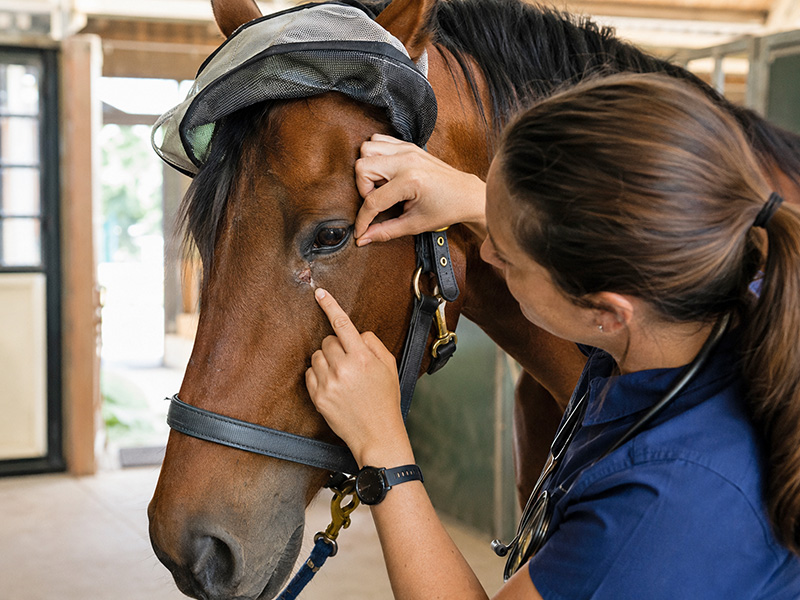
Summer sores are those stubborn, angry, non-healing lesions that frequently appear during warm weather. They may develop near the eyes or mouth, around the genital area, on the legs or in an existing wound.
They often look like proud flesh or an infected injury that simply refuses to heal.
But summer sores are not merely a skin condition.
They are caused when flies carrying the larvae of Habronema or related stomach worms deposit those larvae into a wound or moist tissue instead of around the horse’s mouth, where the larvae would normally be swallowed.
The larvae cannot complete their normal life cycle in the skin. Instead, they provoke an intense inflammatory reaction. The lesion may become itchy, swollen, irritated and increasingly difficult to heal.
That is why applying one wound ointment after another may not solve the underlying problem.
The wound in front of you is part of a parasite life cycle involving adult stomach worms, manure, fly larvae and the flies landing on your horse.
Treating Summer Sores From More Than One Direction
Ivermectin is commonly included in the treatment of summer sores because it can target susceptible stomach worms and parasite larvae.
However, deworming is not the entire treatment.
Depending on the severity and location of the lesion, a veterinarian may need to clean or debride the wound, control the inflammatory reaction, prescribe topical or systemic medication and help protect the area from further fly exposure.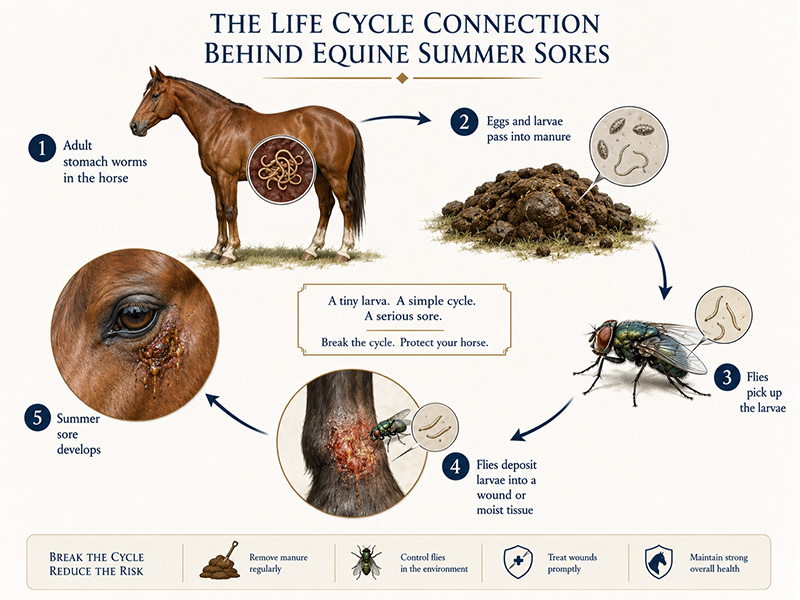
UC Davis notes that effective treatment may involve veterinary debridement, ivermectin, corticosteroids and topical care. Covering the wound when possible and following strict fly-control practices are also important.
Fly control may be the most important long-term defense.
 That means:
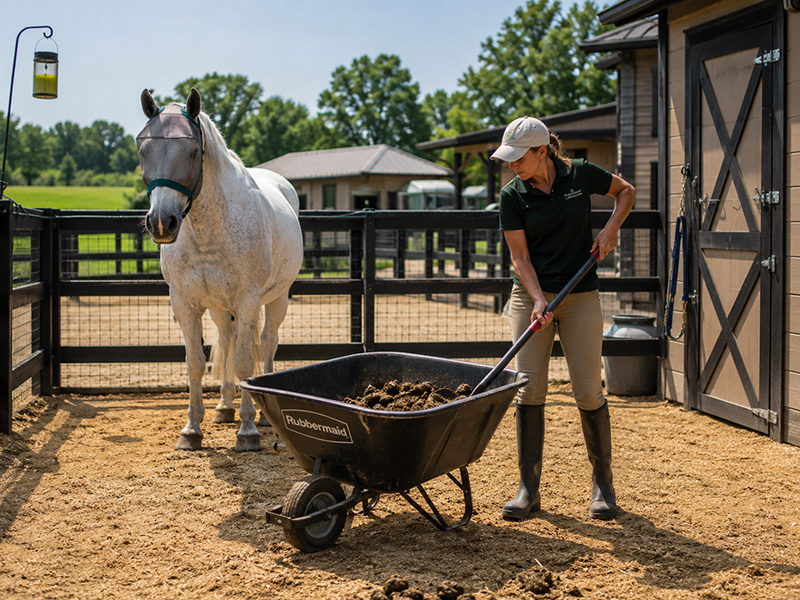
- Removing manure regularly
- Controlling wet bedding and decaying organic matter
- Keeping wounds clean and covered when possible
- Using fly masks, sheets, boots, traps or repellents appropriately
- Protecting the moist areas around the eyes
- Beginning treatment before the lesion becomes large and chronic
Once some horses develop summer sores, the problem may return during later fly seasons.
Internal parasite control, wound management and fly control must work together. Treating only the surface lesion without addressing flies and the parasite cycle can leave you fighting the same problem again the following summer.
This is especially relevant in warm-weather barns where manure, flies, minor wounds and exposed tissue around the eyes and mouth create an easy route for reinfection.
Why Performance-Horse Owners Should Pay Attention

A horse does not have to look obviously sick for parasites to affect him.
A subclinical parasite burden may show up more quietly:
The horse loses a little condition.
His coat does not look as good as it should.
He is slower to recover after work.
He lacks the stamina he had earlier in the season.
His weight becomes more difficult to maintain.
None of those signs proves that parasites are the cause. Many health, nutritional and training problems can look similar.
That is exactly why testing matters.
Whether your horse is campaigning in the hunters, competing in dressage, running cross-country, working cattle, trail riding every weekend or simply living at home as a well-loved companion, you need to know whether your parasite-control program is doing what you think it is doing.
Guessing is not a performance plan.
Testing Without Scheduling Another Farm Call
Mail-in fecal egg count services make it possible to obtain useful information without arranging a separate veterinary visit solely to deliver a manure sample.
Horsemen’s Laboratory has built its business around this type of testing.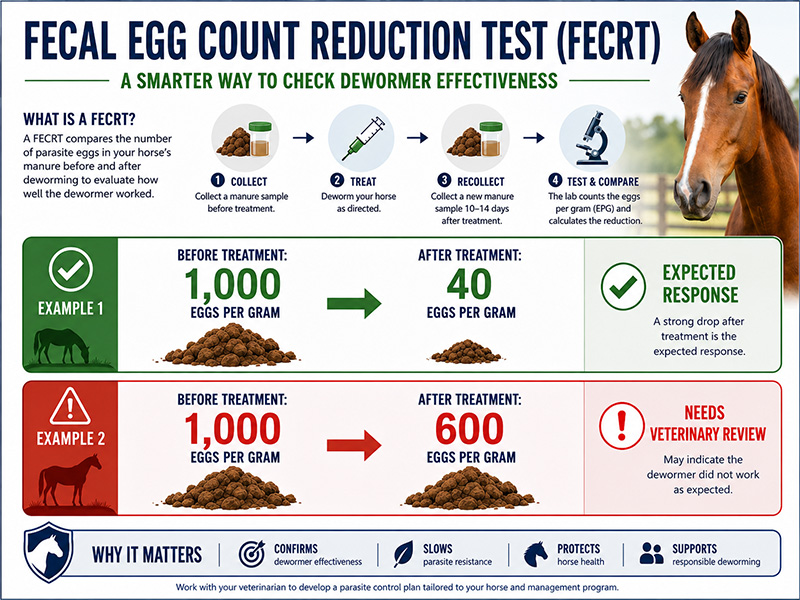
The laboratory was founded in 1993 by veterinarian Dr. John Byrd, a lifelong horseman who showed horses in pleasure and reining before veterinary school. He later became involved with Quarter Horse breeding and racing and practiced equine medicine in California for 13 years. His experience led him to recognize how strongly internal health can affect a horse’s condition and performance.
Ivy Lewis joined Horsemen’s Laboratory in 2014 and purchased the business in 2020. Her background includes pre-veterinary medicine, animal physiology, breeding-farm work and research involving the later performance of young horses.
The laboratory’s approach is simple:
Test before treating whenever possible.
Use the results to help determine the horse’s shedding category.
Treat according to an appropriate parasite-control plan.
Test again when necessary to confirm that the product worked.
The sample is collected at home and mailed to the laboratory. Results are returned to the horse owner, providing a real number that can be discussed with the horse’s veterinarian.
That information may prevent you from unnecessarily treating a consistent low shedder.
More importantly, it may identify the high shedder you did not know was heavily contaminating your pasture—or reveal that the dewormer your barn has relied upon for years is no longer providing the expected result.
What Should You Do Now?
Talk with your veterinarian about building a parasite-control program around your individual horses and your farm.
Ask:
When should fecal egg counts be performed in our climate?
Which horses are low, moderate or high shedders?
Which baseline treatments are still recommended for every adult horse?
Do foals, yearlings, senior horses or new arrivals require a different plan?
When should we perform a fecal egg count reduction test?
Are the products we currently use still effective on this property?
How should manure, pasture and fly management become part of the program?
If you have been deworming every horse according to the same calendar for years without ever testing, you do not actually know whether your program is working.
You are assuming it is.
One fecal egg count can begin replacing that assumption with useful information.
A follow-up test after treatment answers an even more important question:
Did the dewormer work—or did you simply give another tube and hope for the best?
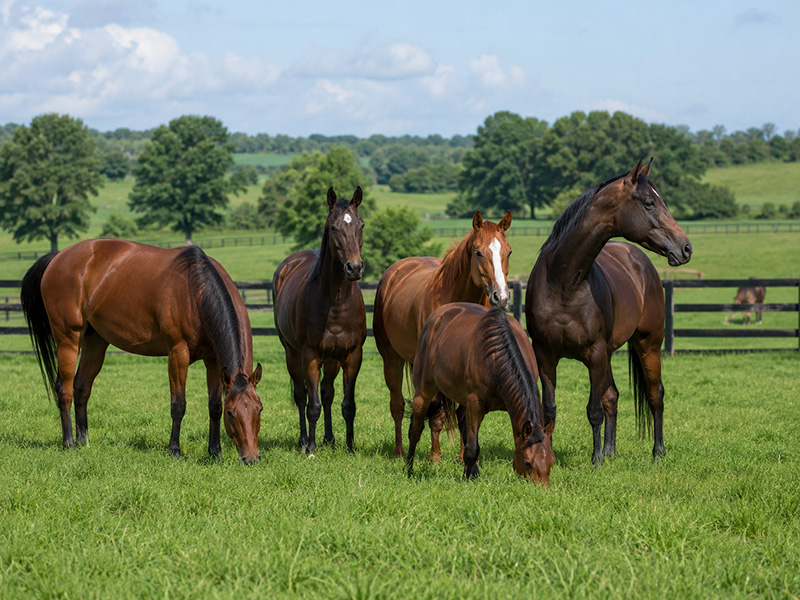
The old calendar was easy.
Test. Treat selectively. Confirm the result.
That takes a little more thought—but it gives our dewormers a better chance of continuing to work when our horses truly need them.
Sources and Further Reading
American Association of Equine Practitioners: Internal Parasite Control Guidelines
American Association of Equine Practitioners: Updated Internal Parasite Control Recommendations
UC Davis School of Veterinary Medicine: Summer Sores
Penn State Extension: Updated Parasite Guidelines for Horses
American Veterinary Medical Association: AAEP Updates Internal Parasite Control Guidelines
Horsemen’s Laboratory: Equine Fecal Egg Count Testing and Company History
Veterinary note: Internal parasite programs should be developed with a veterinarian and adjusted for the horse’s age, health, environment, travel, pasture management and local resistance patterns. Fecal egg counts are important management tools, but they do not detect every parasite or replace veterinary diagnosis.