

Preparing Your Horse For The Real World
With Richard Winters
The best way to get a horse confident in busy arenas and large groups is to recreate those scenarios on your own terms—working with willing friends in a controlled environment, starting at slow speeds and safe distances, then gradually adding speed and narrowing the space as the horse relaxes. Practice horses approaching head-on, coming up from behind, and trotting circles around one another, tailoring each exercise to the individual horse’s insecurities. Being proactive this way means you won’t discover your horse’s reactions for the first time in a crowded warm-up pen or on a big group trail ride.
I recently spent two weeks at the National Reined Cow Horse Association World Championship Snaffle Bit Futurity. With hundreds of horses entered, to compete, the warm-up pens were pretty busy. It was not unusual to have forty or fifty horses warming up in the same arena. Some horses loping to the left and some loping to the right, with others galloping in straight lines from one end of the arena to the other. At any given time there would be a diverse mixture of mares, stallions and geldings. Also, many of the horses were only two and three years of age. How does all this work without collisions, wrecks or dangerous situations? That's what I would like to address in this article.
The horses at the show were not necessarily unique and I don't believe this scenario should be out of the ordinary. But for many people , riding in a situation like this would be in the least, intimidating. And at worst dangerous. It doesn't have to be this way. However, it does take prior preparation for your horse and leadership on your part.
Many stables have strict rules about riding in the arena with other riders. Such as who can be on the rail at any given time. What direction everyone is going and at what speed you will travel. All of this is mandated by rules and regulations. Guidelines and respect for other riders is important, especially when in a mixed group of varied skill levels. However, don't let this become an excuse for you and your horse to be less than confident and controlled regardless of the situation you find yourself.
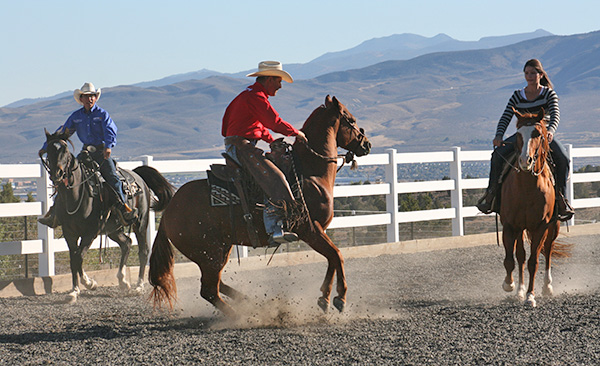
Many years ago I was riding with the famed reined cow horse trainer Ted Robinson at his home place. While I was loping around the arena I looked up and quickly realized that I had just cut-off Ted who was loping in the opposite direction. "Oh, I'm sorry Ted!" I said apologetically. He replied, "That’s alright. How else is he going to get broke? Ted understood that his young horse needed to gain this experience now so that he would have confidence later in the many situations that he would find himself.
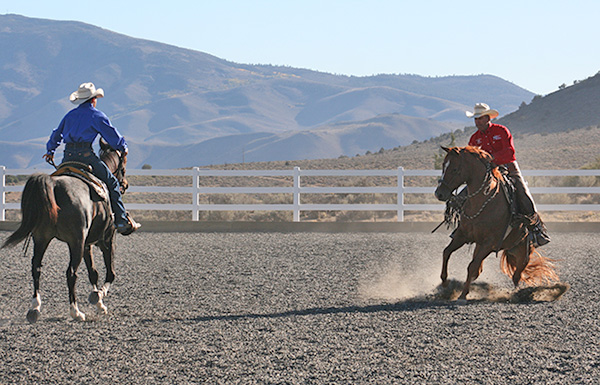
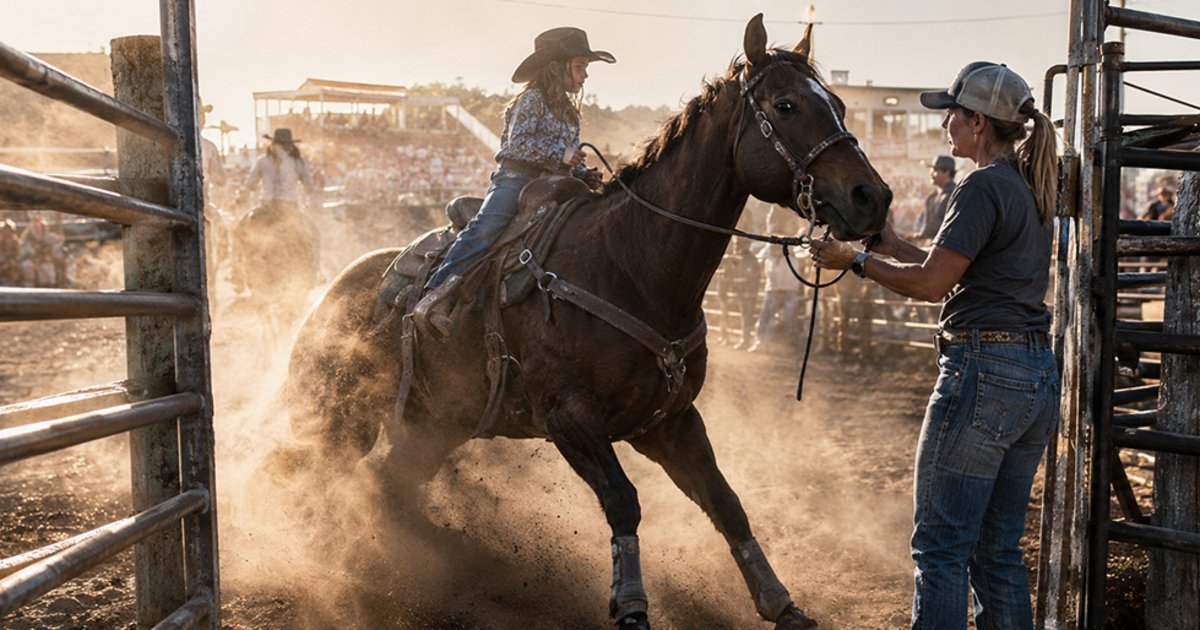
Photos 1 and 2- At first my horse is extremely intimidated by other horses approaching quickly.
You and some willing friends can begin to help your horses gain more confidence by working together in a creative manner and in a controlled environment. By communicating with each other about what type of scenarios you are trying to create, everyone can be on the same page and stay safe and controlled. Every horse is different. Some horses are insecure and fractious while others are laid-back and confident. Set up scenarios that will help each horse make progress with their specific issues.
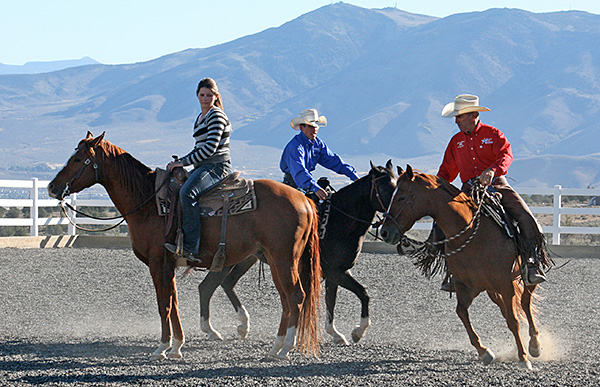
I’m helping my horse relax with a little help from my friends.
If your horse is intimidated with other horses coming straight towards him, have your friends begin at a slower speed and at a safe distance and then begin to increase the speed and narrow the space as your horse gains more confidence. If your horse is more worried about horses coming up from behind, do the same type of exercise with your friends approaching from the rear.
If your horse is worried about his own personal space, spend some time with your friends trotting circles around each other and chasing each other’s tail. Always start at a safe distance and then begin to ride closer. You can also pretend like you are barrel racing or pole bending and use other riders as a substitute for the barrel or pole. This works well if the stationary horse has just been working quite a bit and is ready to catch his breath. After you have trotted or loped around your friends in a lot of different patterns, you can switch and allow your horse to catch his breath while your friends travel around you.
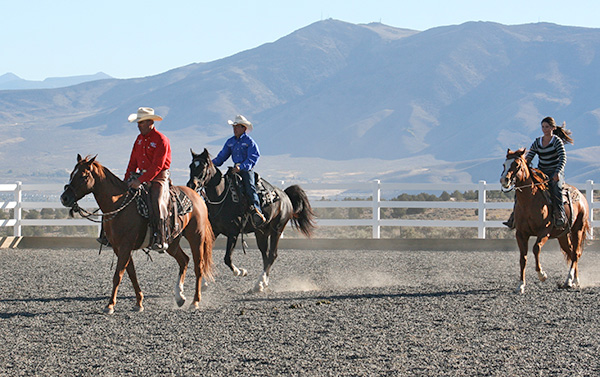
Now my horse is feeling more confident with horses approaching at different speed.
Begin to add more speed to these games as your horse builds confidence. Horses often become more excited when they see other horses approaching at faster speeds. If you do not try to re-create some of these scenarios on your own terms, it will come back to bite you later on.
Use your imagination and think of creative ways to better prepare your horse for large group settings. You do not have to be the victim in a situation that you and your horse are not prepared for. Don't wait to be in the warm up pen at a big horse show or out on a trail ride with a huge group of riders to find out how your horse will handle all of the activity. Being pro-active in a situation that you can control will allow you to safely and confidently enjoy your horse when you are out in the real world.
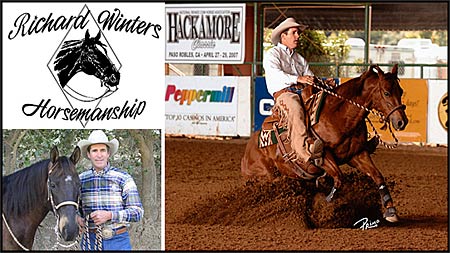
Richard Winters Horsemanship WintersRanch.com