

A Little More Leg Horsemanship
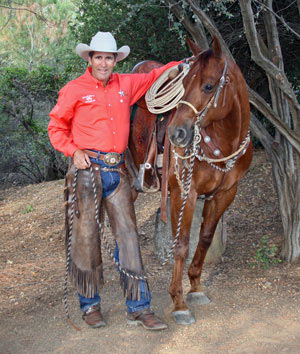
By incorporating your legs, it will lessen the need to pull harder on the reins to develop the desired response. With Richard Winters
Using your legs in conjunction with your hands—rather than relying on the reins alone—creates added softness and responsiveness in a horse, because hands-only riding tends to leave horses stiff and bracy. Clinician Richard Winters recommends a press-and-release spur cue, never poking or jabbing: pick up the reins as if to back up, press with your heel until the horse takes a backward step, and release the moment it responds. Ridden this way, the horse’s back comes up, its face softens, and it moves in a more collected frame.
When I teach advancing clinics, it's centered on refinement, softness, collection and performance. To obtain these goals, I encourage participants to begin using their legs in conjunction with their hands to create added softness and responsiveness in their horse’s body. If you are only using your hands, there is a tendency for horses to get stiff and bracy. Eventually you can run out of brakes! It's then we resort to a harsher or severe bit in hopes of regaining the suppleness that we once had with our horse. Your legs might be an untapped resource that can help create the feel that you are looking for with your equine partner.
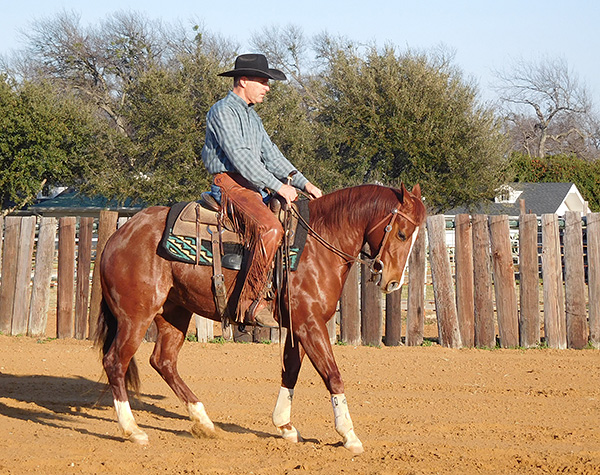
Incorporating your legs along with your hands in the back-up creates a softer and energetic response.
Here's a simple way to get started. Pick up on the reins as if you were going to begin to back up. Now press with your heel, or spur, until your horse takes some type of backward step. Don't pull harder on the reins. Simply block forward movement. It is possible your horse will be confused at first. Set it up and wait. When you get some kind of movement in the reverse direction, release. As one horseman put it, "Put them in a bind and then show them a way out." Now your legs will start to have some meaning as they work in conjunction with your hands.
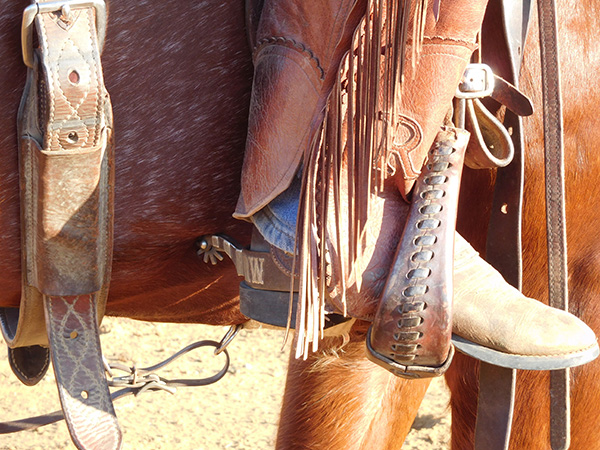
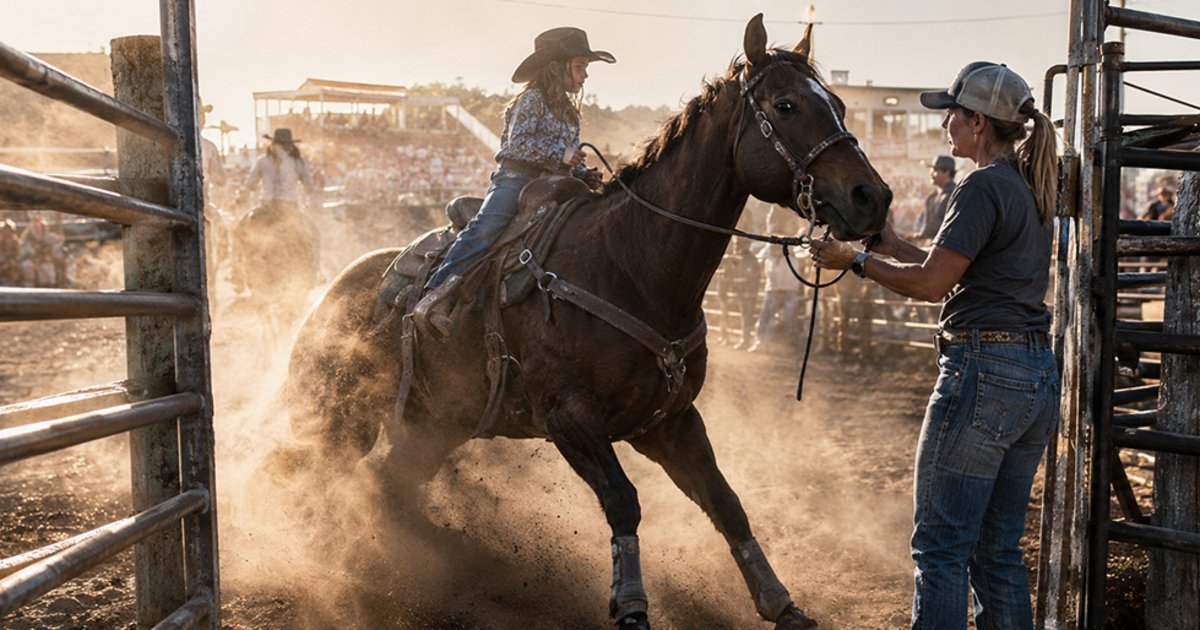
Your horse safe spur should press and release.
By incorporating your legs, it will lessen the need to pull harder on the reins to develop the desired response. Using this method can lighten a horse that moves backwards with sluggishness and resistance. The movement that should be used with your spurs is not poking or jabbing. Rather, it is a press and release technique. Poking and jabbing at your horse’s belly will likely cause negative reactions and crankiness rather than the response that you are hoping to obtain.
With a young or green horse, I will be very smooth and gentle with these cues. If you begin with extreme intensity with your spurs, at best you’re going to scare and confuse your horse. At worst you might get bucked off! With an older horse that is extremely bracy I can be firmer with my cues and get his attention. The principle of being firm as necessary yet gentle as possible always holds true.
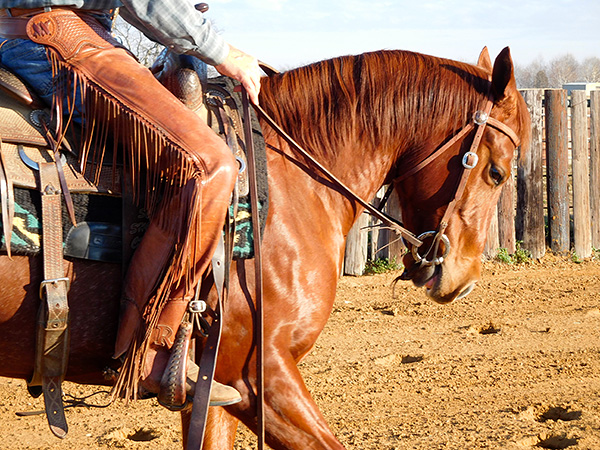
Using your leg will help your horse pick up their back and soften in the pole.
When incorporating your legs, you are also encouraging your horse’s back or top-line to come up. A hollow backed horse is not in an athletic frame and is not prepared for any kind of performance. A horse’s back must come up to attain good posture and be in a position to perform higher-level maneuvers. You are also likely to experience the added benefit of a horse getting softer in his face. As the back comes up and his feet free up with impulsion, your horse will have a tendency to break at the pole and be in a more collected frame.
If we communicate clearly and consistently, our horses have the ability to separate and distinguish between even the most similar subtle cues. Just like learning to speak English, some words sound a lot like other words. However, as we get more understanding about the language, we begin to separate their meaning in the context in which they are used. We all use our legs to ask our horse to go forward. Yet, we can also use our legs to ask them to back up. Much of the differentiation comes from the shift in your body weight. When going forward the life comes up and forward in your body. When you’re thinking about backing up, shift your weight back, rotating your pelvis down into your saddle.
More life, greater impulsion, vertical flexion and a soft feel in your horse’s face. These are just a few of the benefits to be gained as you begin to incorporate your legs in these various maneuvers.
Cheryl and Richard Winters WintersRanch.com