

Understanding Two of America's Greatest Horse Breeds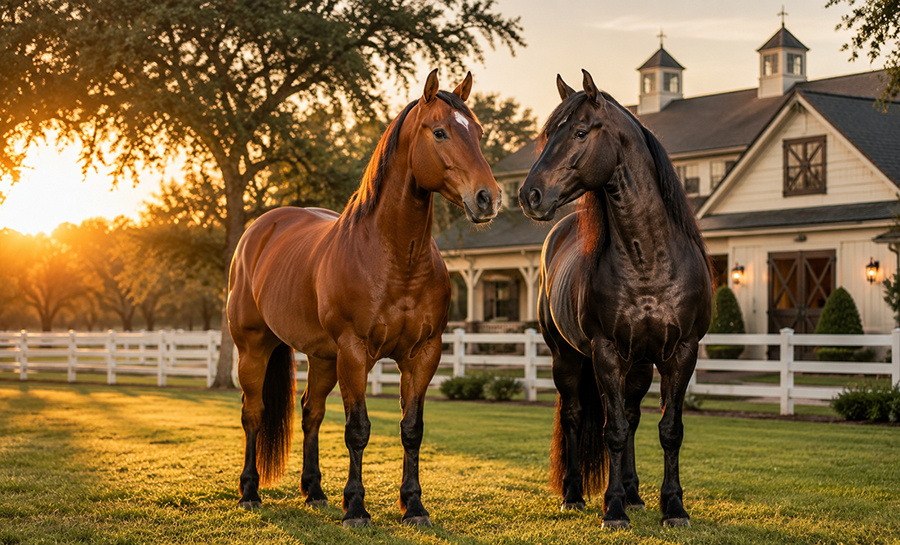
The main difference comes down to temperament and specialization: the Quarter Horse—America’s most popular breed—is prized for practicality, athletic ability, calm dispositions, and highly specialized performance bloodlines, while the Morgan—one of America’s foundational breeds—is known for intelligence, strong human bonds, and versatility across both Western and English disciplines. Both breeds excel as trail, family, and all-around horses, and neither is better than the other; individual temperament, training, experience, and soundness usually matter far more than breed.
Walk into almost any barn in America and chances are good you'll find a Quarter Horse. They are America's most popular horse breed for good reason. Dependable, versatile, athletic, and practical, Quarter Horses have earned a reputation as the horse that can do just about anything.
Yet there is another American breed that has inspired a level of loyalty that is difficult to describe until you've spent time around one. The Morgan Horse may not have the numbers of the Quarter Horse, but ask a Morgan owner about their horse and you may quickly discover a level of enthusiasm that borders on passion. I have both Quarter Horses and Morgan Horses and I write this article from a deeply held appreciation and love for both.
So which breed is better?
The truth is that this is the wrong question.
After spending many years around both breeds, I don't believe one is better than the other. I believe they are different. Both breeds helped build America. Both breeds have carried families down trails, worked cattle, competed in the show ring, pulled wagons, served in military roles, and become trusted companions.
As InfoHorse, a Horse Industry authority since 1997, has just launched its completely redesigned website, we thought it would be fitting to begin a new breed comparison series by exploring two of America's most beloved horses: the Quarter Horse and the Morgan Horse.
What makes them unique? Why do some horse owners swear by Quarter Horses while others become lifelong Morgan enthusiasts? And perhaps most importantly, what can prospective horse owners learn from understanding both breeds?
Let's take a closer look.
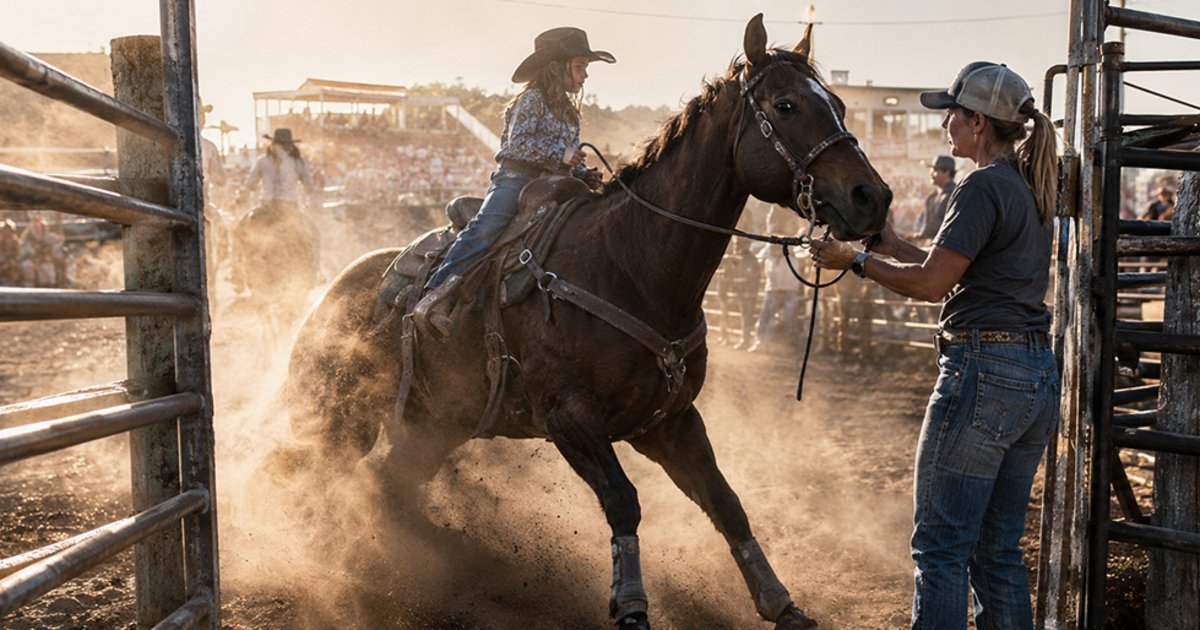
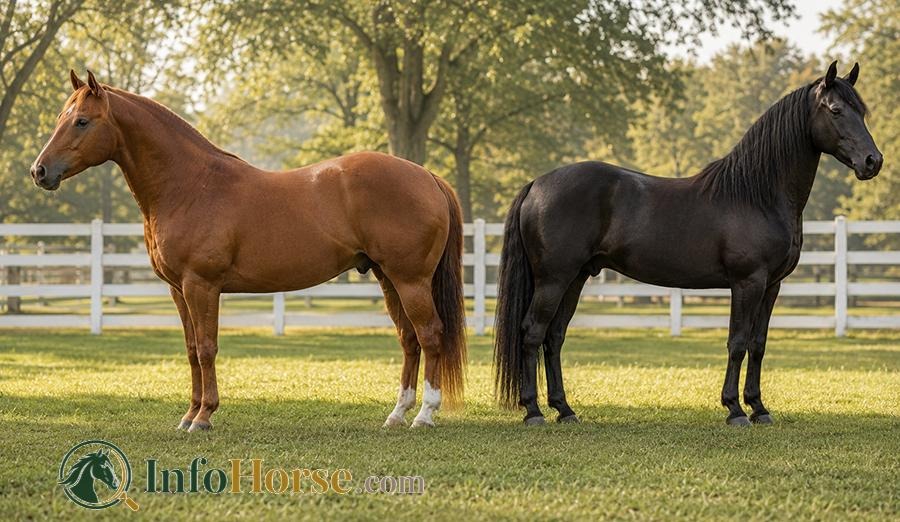
Quarter Horse
America's most popular breed — athletic, sensible, and endlessly versatile. The all-purpose working horse often called the pickup truck of the horse world.
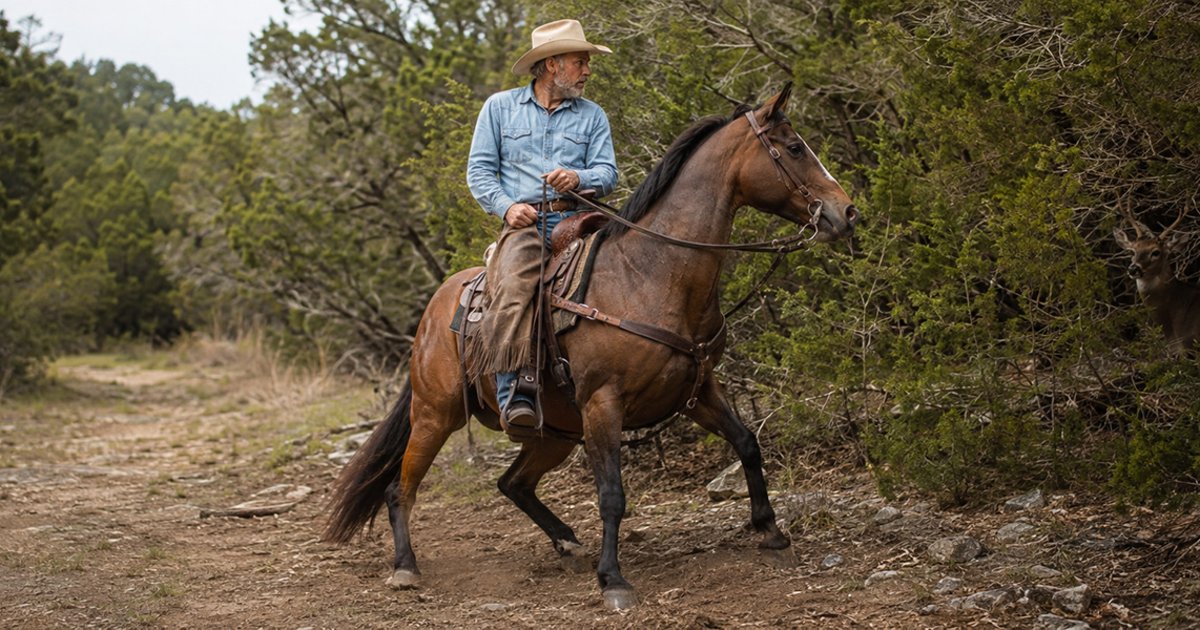
Morgan Horse
America's original breed — compact, hardy, and intensely people-oriented, inspiring a loyalty that borders on passion.
A Breed Is Not Always Just A Breed
One of the biggest surprises for new horse owners
is learning that a breed can contain very different types of horses.
Many people think of the Quarter Horse as a single type of horse. In reality, the modern Quarter Horses have become highly specialized over the years. A cutting horse, a race-bred Quarter Horse, and a ranch-bred Quarter Horse may all carry Quarter Horse registration papers yet they look and perform very differently.
Morgan Horses have different types as well, although the differences are often more subtle.
A foundation-bred Morgan, a working ranch Morgan, and a modern show Morgan may have different appearances and strengths, but they still tend to retain the unmistakable characteristics that Morgan owners recognize immediately.
Understanding these differences helps explain why two owners of the same breed may have completely different experiences.
The Quarter Horse: America's Utility Horse
If one breed could be called the pickup truck of the horse world, the Quarter Horse would be a strong candidate.
Quarter Horses are practical horses.
They tend to be sensible, adaptable, and willing to work. Whether the job involves gathering cattle, carrying a rider down a mountain trail, competing in a reining pattern, racing down a straightaway, or teaching a child how to ride, the Quarter Horse often approaches the task with the same attitude:
"Show me the job and let's get it done."
This practical nature is one of the reasons the breed became so popular throughout the United States.
The Quarter Horse is known for:
-
Athletic ability
-
Strong hindquarters
-
Calm disposition
-
Versatility
-
Natural cow sense
-
Explosive acceleration
-
Trainability
These traits made the breed a favorite of ranchers, competitors, families, and trail riders alike.
The Morgan Horse: America's Original Horse
The Morgan Horse occupies a unique place in American history.
Long before most modern American breeds existed, Morgans were helping shape the nation's horse industry.
Many horse historians consider the Morgan one of America's foundational breeds. Descendants of the original Morgan bloodlines influenced numerous breeds that followed.
But history is only part of the story.
What continues to attract people to Morgans today is not simply their heritage. It is their versatility, intelligence, and often remarkable connection with people.
Many Morgan owners will tell you that their horse seems genuinely interested in whatever they are doing.
The breed has earned a reputation for:
-
Intelligence
-
Versatility
-
Endurance
-
Strong human bonds
-
Longevity
-
Comfort under saddle
-
Presence and style
While the Quarter Horse is often described as practical, many Morgan owners describe their horses as interactive.
A phrase I've heard many times over the years is:
"My Morgan always knows what's going on."
— A Morgan ownerWhether that's completely true or not, it certainly reflects how many Morgan owners feel about their horses.
Different Types of Quarter Horses
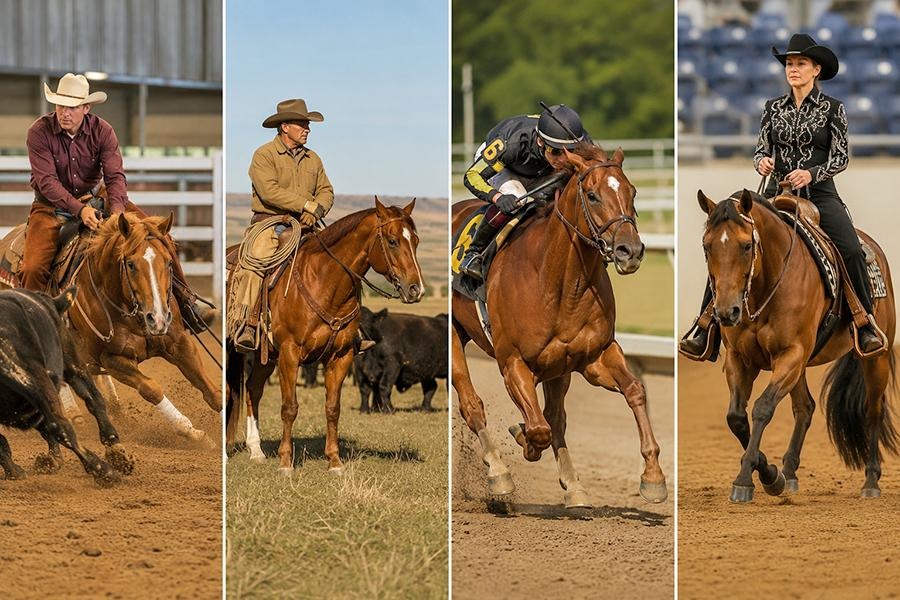
One reason the Quarter Horse has become so successful is that breeders have developed specialized bloodlines for specific disciplines.
Cutting Horses
Cutting horses are often compact, athletic, and incredibly quick.
Many stand between 14.1 and 15 hands.
They are built for:
-
Explosive turns
-
Instant acceleration
-
Quick stops
-
Working cattle
Their low center of gravity and powerful hindquarters allow them to mirror cattle movements with astonishing speed.
Reining Horses
Reining horses combine athletic ability with precision.
They are bred for:
-
Sliding stops
-
Spins
-
Lead changes
-
Maneuverability
Many reining horses are slightly taller and more refined than cutting horses while still maintaining tremendous athleticism.
Ranch Horses
Many people consider the ranch horse the ultimate all-around Quarter Horse.
These horses are typically:
-
Larger framed
-
Strong boned
-
Durable
-
Athletic
-
Practical
They are expected to work all day and remain sound while doing it.
The ranch-bred Quarter Horses associated with large western operations such as the famous Four Sixes Ranch represent this type extremely well.
Racing Quarter Horses
These horses are built for speed.
Compared to many other Quarter Horse types they often have:
-
Longer bodies
-
Larger frames
-
More muscle
-
Tremendous power
Watching a Quarter Horse race is one of the fastest demonstrations of equine acceleration you'll ever see.
Appendix Quarter Horses
Appendix Quarter Horses combine Quarter Horse and Thoroughbred bloodlines.
They often possess:
-
Longer legs
-
Greater height
-
Longer stride
-
More refinement
Many excel in English disciplines, jumping, eventing, and racing.
Western Pleasure Horses
Western Pleasure horses are bred for smooth movement and relaxed presentation.
Their appearance often reflects generations of selective breeding for show-ring performance.
Halter Horses
Halter horses emphasize conformation and muscle.
Some display extraordinary muscling and physical presence, creating a look that is very different from many working Quarter Horses.
One of the fascinating things about the Quarter Horse breed is that if you lined up elite examples of each type, many casual horse owners would struggle to believe they were all Quarter Horses.
Different Types of Morgan Horses
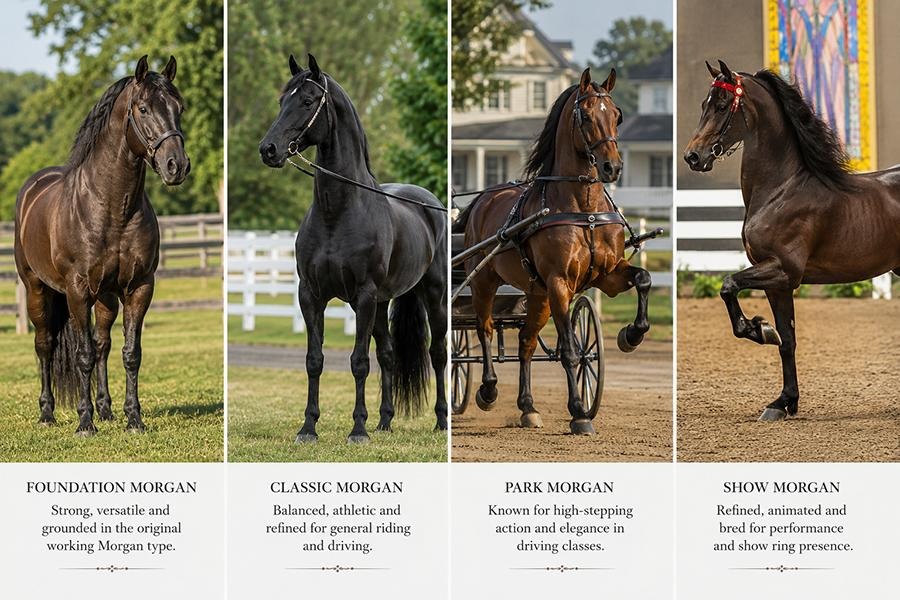
While Quarter Horses have diversified dramatically over the years, Morgan Horses have generally remained closer to their original identity.
That doesn't mean there aren't different types of Morgans. There certainly are. However, the differences are often more subtle.
A foundation Morgan, a ranch Morgan, and a show Morgan usually still look like members of the same family.
Foundation and Working Morgans
Many Morgan enthusiasts consider the foundation or working Morgan to be closest to the original horses that helped establish the breed.
These horses are often:
-
14.1 to 15 hands
-
Strong boned
-
Deep bodied
-
Muscular
-
Compact
-
Efficient keepers
They tend to possess the practical qualities that made Morgans valuable throughout American history.
Many excel as:
-
Trail horses
-
Ranch horses
-
Driving horses
-
Family horses
-
Endurance horses
These horses often project an image of strength, usefulness, and durability.
Show-Type Morgans
Show Morgans are often slightly taller and more refined.
Characteristics frequently include:
-
Longer necks
-
More animation
-
Elegant movement
-
Refined heads
-
Greater presence in the show ring
Many people are drawn to these horses because they combine athletic ability with beauty and style.
When a quality show Morgan enters an arena, people notice.
Not because the horse is necessarily the biggest horse present, but because Morgans have long been known for possessing what horse people often call "presence."
Sport Morgans
Sport Morgans represent a growing segment of the breed.
These horses are often selected for:
-
Dressage
-
Eventing
-
Combined driving
-
Working equitation
-
Competitive trail
Many sport Morgans are slightly taller and possess longer strides while still retaining unmistakable Morgan characteristics.
One Important Difference
One observation I've made over the years is that Quarter Horse types often become highly specialized.
A race-bred Quarter Horse may look dramatically different from a cutting horse.
A halter horse may look dramatically different from a ranch horse.
Morgans seem different.
A foundation Morgan and a show Morgan may have different strengths, but they still tend to feel like members of the same family.
Perhaps that's one reason Morgan owners become so attached to the breed.
Physical Characteristics: Similar Yet Different
At first glance, Quarter Horses and Morgans share many similarities.
Both are generally:
-
Strong
-
Athletic
-
Versatile
-
Balanced
-
Comfortable to ride
However, closer examination reveals important differences.
Quarter Horse Build
Quarter Horses are known for:
-
Powerful hindquarters
-
Broad chests
-
Muscular frames
-
Strong shoulders
-
Athletic movement
Many possess a lower center of gravity that contributes to their ability to stop, turn, and accelerate.
The overall impression is often one of strength and practicality.
Morgan Build
Morgan Horses are known for:
-
Well-shaped necks
-
Strong toplines
-
Balanced proportions
-
Expressive eyes
-
Proud carriage
Many riders immediately notice the way a Morgan carries itself.
There is often a sense of confidence and self-awareness that is difficult to describe but easy to recognize.
While not as heavily muscled as some Quarter Horses, Morgans often display tremendous strength for their size.
Personality: Where Things Get Interesting
This is the section where breed discussions become both fascinating and dangerous.
Every horse is an individual.
There are lazy Morgans.
There are sensitive Quarter Horses.
There are exceptions to every rule.
Still, after talking with hundreds of horse owners over the years, certain themes emerge.
Quarter Horse Personality
Quarter Horse owners often describe their horses as:
-
Dependable
-
Practical
-
Sensible
-
Willing
-
Steady
Many Quarter Horses seem perfectly happy performing the task at hand without requiring constant interaction.
That trait makes them wonderful partners for a wide range of riders.
Morgan Personality
Morgan owners often describe their horses as:
-
Intelligent
-
Curious
-
Interactive
-
Engaged
-
People-oriented
Many Morgan owners feel their horses actively participate in the relationship.
Whether that's entirely accurate or not, it certainly reflects how many owners perceive them.
One way I've heard it described is this:
A Quarter Horse often says:
Show me the job." A Morgan often says: "Let's do a job together.
Neither attitude is better.
They're simply different.
Versatility: Both Breeds Shine
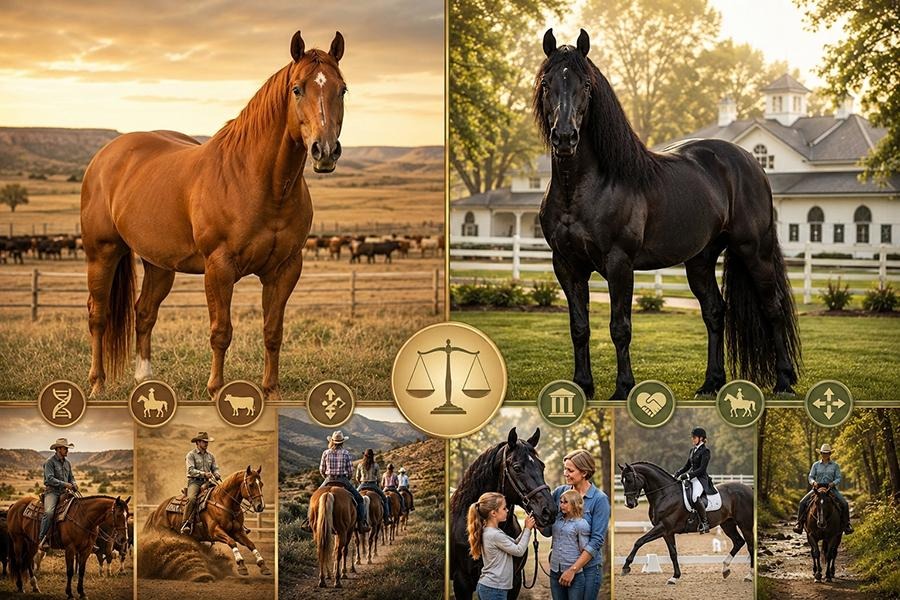
One reason these two breeds remain so popular is because both can do far more than many people realize.
Quarter Horse Versatility
Quarter Horses dominate many disciplines:
-
Ranch work
-
Reining
-
Cutting
-
Team penning
-
Roping
-
Trail riding
-
Western pleasure
Yet many also succeed in:
-
Dressage
Which breed is better?" The better question is: "Which individual horse is better?
-
Jumping
-
Eventing
-
Competitive trail
Their versatility is one of the primary reasons they became America's most popular breed.
Morgan Versatility
What sometimes surprises horse owners is how versatile the Morgan truly is.
Morgan Horses regularly compete in:
-
Western disciplines
-
Saddle seat
-
Dressage
-
Driving
-
Endurance
-
Working equitation
-
Trail riding
-
Ranch work
Many horse owners associate Morgans primarily with driving or saddle seat competition.
The reality is that Morgans are welcomed in virtually every corner of the horse world.
You can find them at western events.
You can find them at English shows.
You can find them on mountain trails.
You can find them pulling carriages.
Very few breeds have maintained that level of versatility for so many generations.
Trail Riding: Two Outstanding Choices
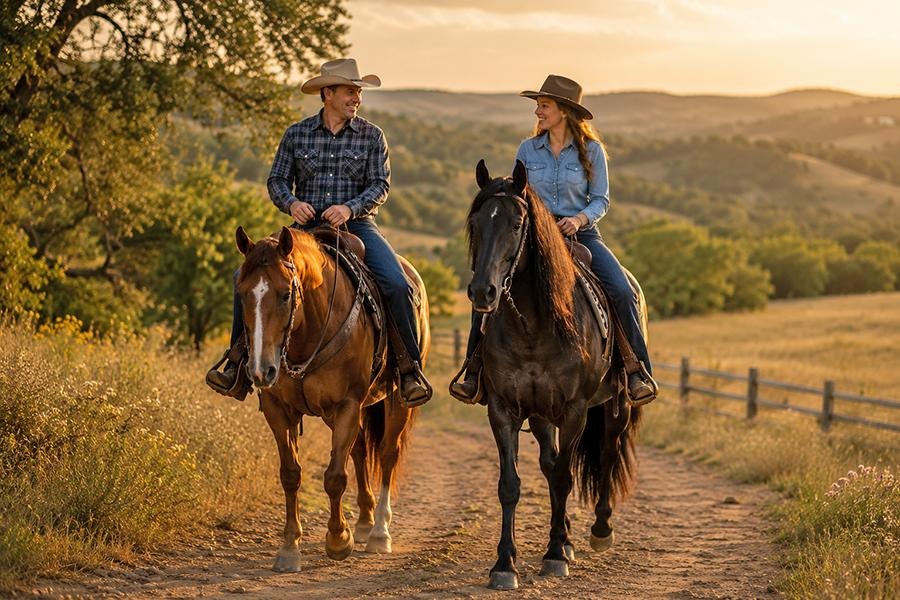
If your primary goal is trail riding, both breeds deserve serious consideration.
Quarter Horses on the Trail
Quarter Horses often bring:
-
Calm attitudes
-
Practical minds
-
Sure-footedness
-
Confidence
Many riders appreciate their steady nature and willingness to simply go down the trail.
Morgans on the Trail
Morgan owners frequently praise:
-
Endurance
-
Comfort
-
Intelligence
-
Sure-footedness
Many Morgans seem to enjoy having a job and often remain enthusiastic about trail riding well into their senior years.
For riders who enjoy spending long hours in the saddle, both breeds offer tremendous advantages.
Feed Efficiency and Easy Keepers
This may be one of the most important sections for prospective owners.
Quarter Horses are often considered easy keepers.
Morgan Horses take that reputation to another level.
Many Morgan owners quickly learn that their horses can maintain weight on remarkably modest feed programs.
This efficiency is one of the breed's strengths.
Unfortunately, it can also create challenges.
Many Morgan owners spend considerable time managing:
-
Grazing
-
Sugar intake
-
Metabolic concerns
A Morgan's ability to thrive on relatively little feed is both a blessing and a responsibility.
Quarter Horses can certainly experience similar issues, but many horse owners feel Morgans are among the most efficient horses they have ever owned.
Why Quarter Horses Became America's Most Popular Breed
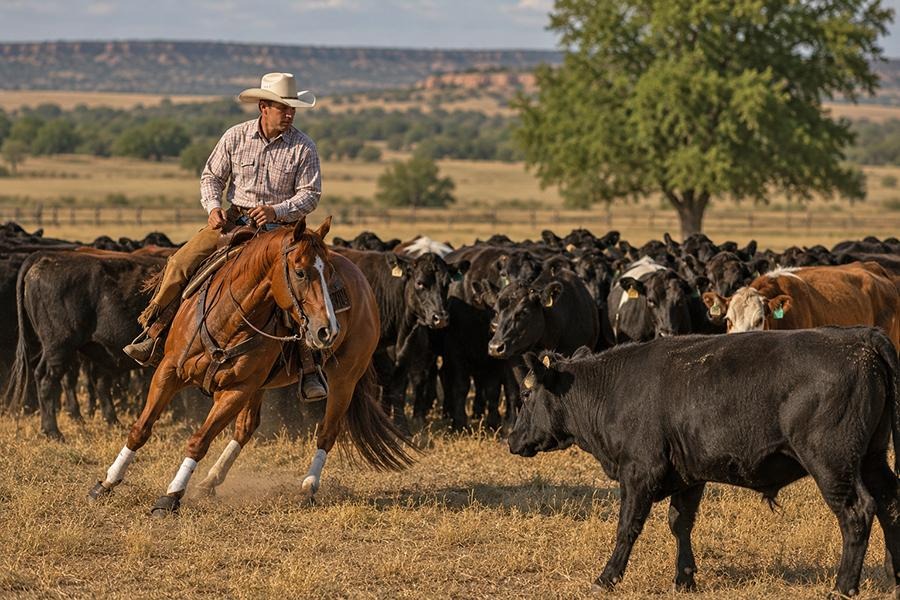
There are many excellent horse breeds in the world, but no breed has achieved the popularity of the Quarter Horse in the United States.
That popularity didn't happen by accident.
The Quarter Horse developed alongside ranching, farming, and western expansion. The breed was practical, dependable, athletic, and adaptable. It could work cattle in the morning, carry the family in the afternoon, and compete on the weekend.
For generations, horse owners discovered something that remains true today:
Quarter Horses fit comfortably into a wide variety of lifestyles.
Need a ranch horse?
The Quarter Horse excels.
Need a trail horse?
The Quarter Horse excels.
Need a family horse?
The Quarter Horse excels.
Need a competition horse?
The Quarter Horse excels.
The breed's ability to perform so many different jobs made it the horse of choice for millions of Americans.
Perhaps more importantly, Quarter Horses are available in tremendous numbers.
A prospective buyer can choose from bloodlines developed specifically for:
-
Ranch work
-
Reining
-
Cutting
-
Racing
-
Roping
-
Western pleasure
-
Trail riding
-
English competition
That level of specialization is difficult for most breeds to match.
The Quarter Horse became America's most popular horse because it consistently proved itself useful, dependable, and versatile.
Why Morgan Owners Become Lifelong Fans
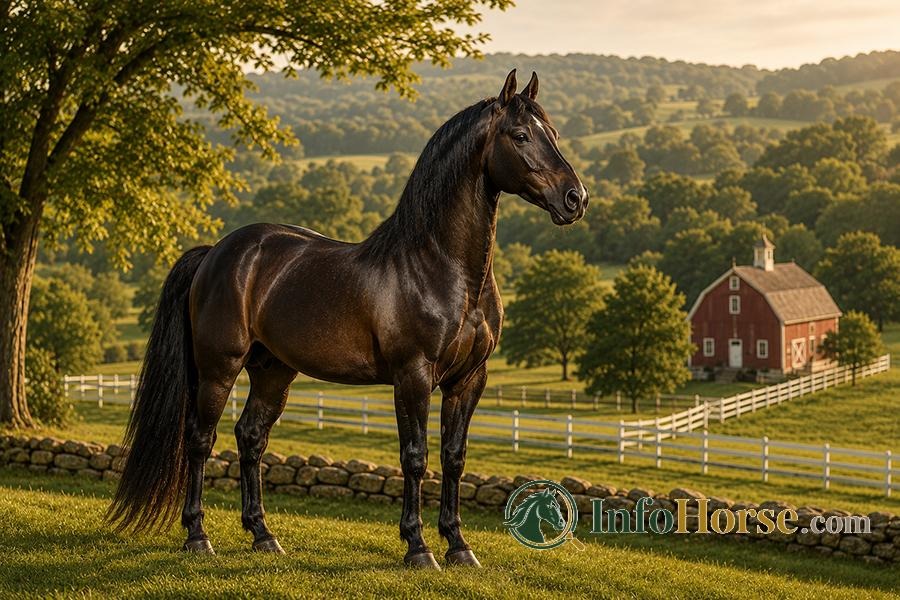
While Quarter Horse owners often praise practicality, Morgan owners frequently talk about something different.
They talk about connection.
Talk to enough Morgan owners and you'll begin hearing similar comments.
My Morgan follows me around like a friend.
My Morgan always knows what's going on." "My Morgan wants to be involved.
Whether these statements are literally true is less important than what they reveal about the owner-horse relationship.
Morgan owners often form exceptionally strong bonds with their horses.
Part of that may be the breed's intelligence.
Part of it may be their versatility.
Part of it may be their willingness to participate in almost any activity their owner enjoys.
Whatever the reason, many Morgan owners become passionate ambassadors for the breed.
It is not uncommon to meet horse owners who have owned one Morgan after another throughout their lives.
Many will tell you:
I bought my first Morgan almost by accident.
The next sentence is often:
"And I've been hooked ever since."
Family Horses: Which Breed Is Better?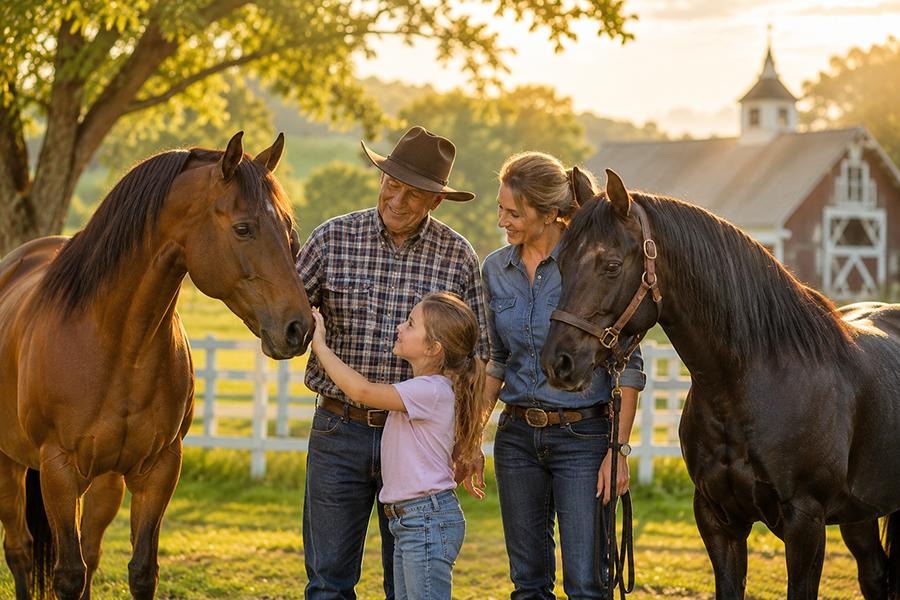
The honest answer is that both breeds can make outstanding family horses.
A well-trained Quarter Horse can be a wonderful choice for:
-
Beginners
-
Youth riders
-
Trail riders
-
Families
Likewise, a well-trained Morgan can be a wonderful choice for:
-
Beginners
-
Youth riders
-
Adult amateurs
-
Families
The more important question is not:
Temperament, training, experience, and soundness often matter far more than breed.
Still, both breeds have earned reputations as trustworthy horses capable of carrying multiple generations of the same family.
That's a remarkable accomplishment.
English or Western? Why Choose?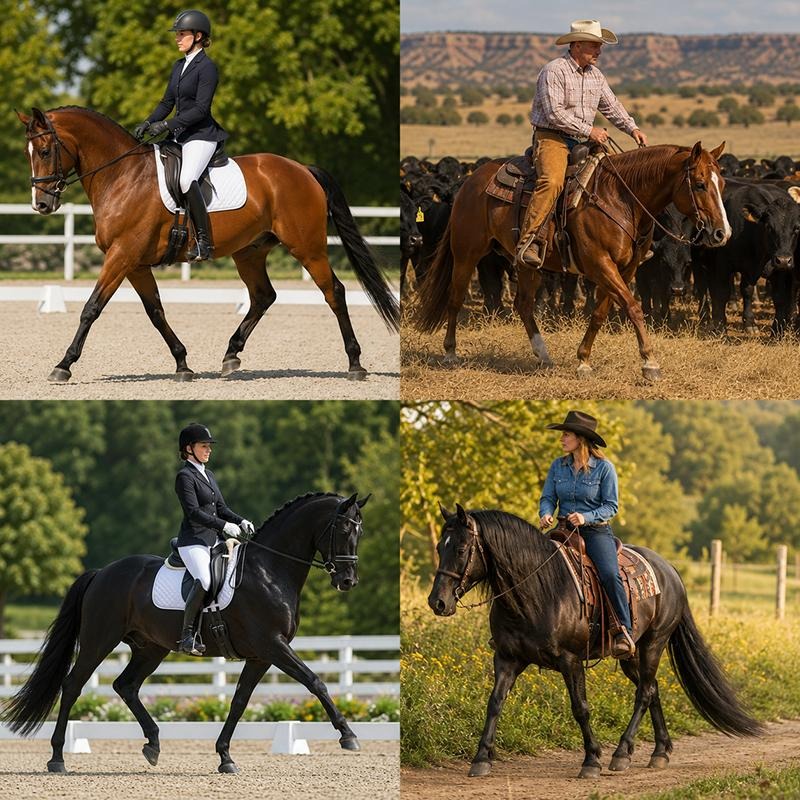
One of the things I admire most about both breeds is that neither one accepts limitations very well.
Quarter Horses are often associated with western disciplines.
Yet today they compete successfully in:
-
Hunters
-
Jumpers
-
Dressage
-
Eventing
-
Combined training
Morgans are often associated with saddle seat and driving.
Yet they regularly appear in:
-
Dressage
-
Western dressage
-
Ranch classes
-
Working equitation
-
Trail competitions
-
Endurance events
Perhaps one of the greatest compliments that can be paid to either breed is this:
Neither breed seems particularly concerned with labels.
Both simply show up and do the job.
Longevity and Durability
Another trait these breeds often share is longevity.
Many Quarter Horses remain useful well into their twenties.
Morgan owners frequently report the same thing.
It is not unusual to find senior Morgans still carrying riders, enjoying trail rides, and remaining active long after many people would expect retirement.
Of course, proper management, nutrition, veterinary care, and genetics all play important roles.
Still, both breeds have earned reputations for durability.
That durability helps explain why families often remain loyal to them for generations.
What Owners Love Most
Quarter Horse Owners Often Say:
-
They're dependable.
-
They're practical.
-
They're easy to ride.
-
They're versatile.
-
They always seem willing.
Morgan Owners Often Say:
-
They're intelligent.
-
They're always paying attention.
-
They form strong bonds.
-
They're versatile.
-
They have so much personality.
Interestingly, both groups often use the word versatile.
That alone says something important.
If I Were Looking For My First Horse
People frequently ask:
Should I buy a Quarter Horse or a Morgan?
The answer depends on what you want from the relationship.
A Quarter Horse may be ideal if you value:
-
Practicality
-
Ranch heritage
-
Western disciplines
-
Specialized performance bloodlines
-
Tremendous availability
A Morgan may be ideal if you value:
-
A close partnership
-
Versatility across English and Western disciplines
-
Historic American bloodlines
-
Intelligence
-
Longevity
The truth is that horse ownership is rarely about statistics.
It's about finding the horse that speaks to you.
Sometimes that's a Quarter Horse.
Sometimes it's a Morgan.
Sometimes the horse makes the decision for you.
Why America Is Better Because We Have Both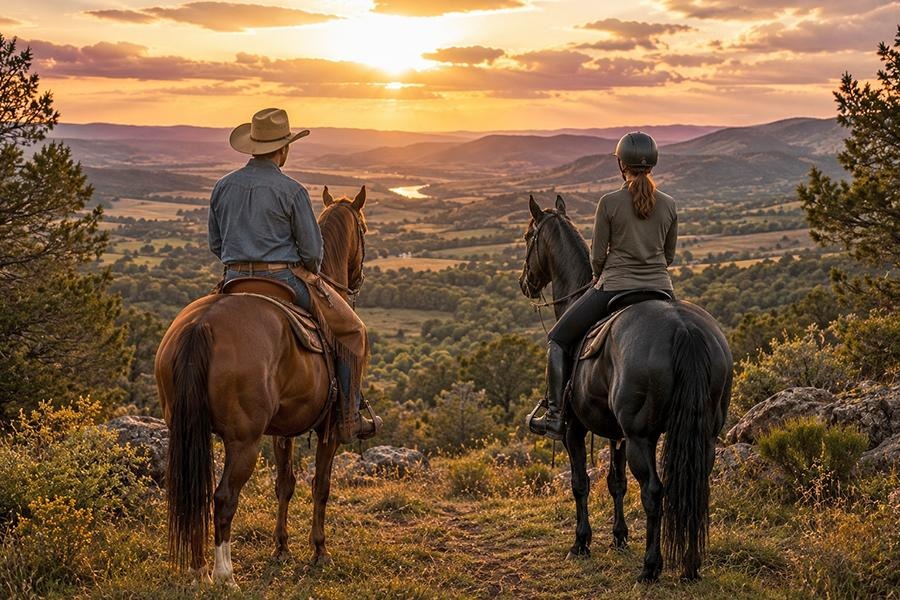
If the Quarter Horse had never existed, American ranching, western competition, and much of the horse industry would look very different today.
If the Morgan Horse had never existed, America would have lost one of its foundational breeds and one of the most versatile horses ever developed.
Fortunately, horse owners don't have to choose between preserving one breed or the other.
We have both.
The Quarter Horse became America's most popular horse because it could do almost anything.
The Morgan Horse became one of America's most treasured breeds because it could do almost anything while often developing an extraordinary partnership with its owner.
Different histories.
Different strengths.
Different personalities.
Yet both have earned their place among the greatest horse breeds America has ever produced.
As InfoHorse continues expanding its educational resources on our completely redesigned website, we'll be exploring more breeds, more comparisons, and more information designed to help horse owners make informed decisions.
Because the goal isn't to decide which breed is best.
The goal is to better understand the horses we love.
And few horses deserve that understanding more than the Quarter Horse and the Morgan Horse.
For nearly three decades, InfoHorse.com has been dedicated to helping horse owners make informed decisions. Our completely updated website combines trusted educational information, horse product resources, articles, videos, and expert insights designed to support horse owners of every discipline and experience level.
Whether you ride a Quarter Horse, Morgan Horse, Arabian, Tennessee Walking Horse, Paint Horse, or any other breed, our mission remains the same:
Article by Robert Pruitt CEO InfoHorse.com
Helping Horse Owners Make Informed Decisions.
Quick Reference Guide: Quarter Horse vs Morgan Horse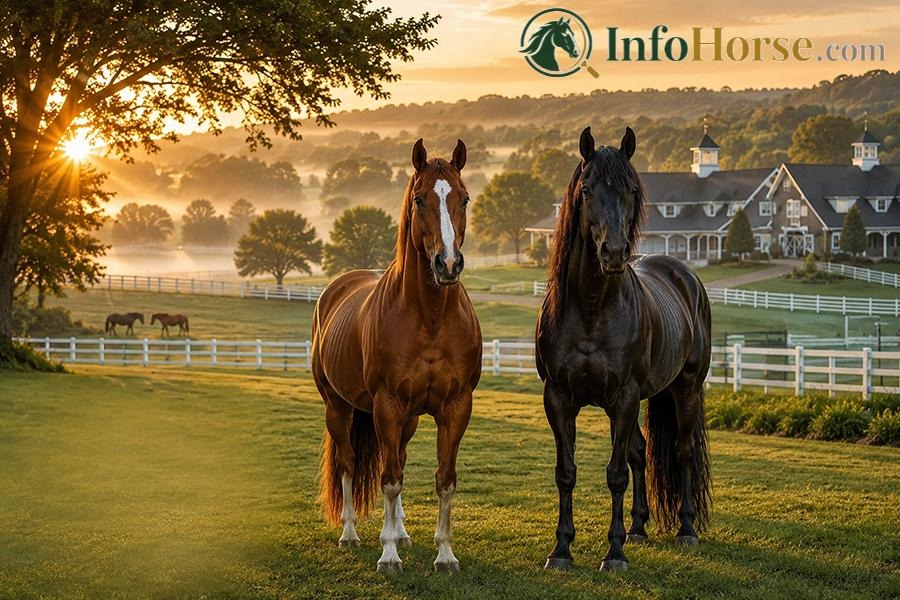
What is the main difference between a Quarter Horse and a Morgan Horse?
Quarter Horses are often known for practicality, versatility, and specialized performance bloodlines. Morgan Horses are known for versatility, intelligence, strong human bonds, and the ability to compete successfully in both Western and English disciplines.
Are Morgan Horses good trail horses?
Yes. Morgan Horses are widely respected as excellent trail horses due to their endurance, intelligence, comfort under saddle, sure-footedness, and willingness to work with their riders.
Are Quarter Horses good trail horses?
Yes. Quarter Horses are among the most popular trail horses in America because they are dependable, athletic, practical, and generally possess calm dispositions.
Which breed is better for beginners?
Both breeds can make excellent beginner horses when properly trained. Individual temperament and training are usually more important than breed alone.
Are Morgan Horses good family horses?
Yes. Morgan Horses are often chosen as family horses because of their intelligence, versatility, longevity, and strong relationships with their owners.
Are Quarter Horses good family horses?
Yes. Quarter Horses have earned a reputation as dependable family horses due to their versatility, trainability, and calm nature.
What are the different types of Quarter Horses?
Common Quarter Horse types include cutting horses, reining horses, ranch horses, racing Quarter Horses, Appendix Quarter Horses, Western Pleasure horses, and halter horses.
What are the different types of Morgan Horses?
Many horse owners recognize foundation Morgans, working or ranch Morgans, show Morgans, and sport Morgans. While these types vary somewhat in appearance and specialization, they typically retain the breed's core Morgan characteristics.
Are Morgan Horses easy keepers?
Many Morgan Horses are considered easy keepers and often maintain body condition on relatively modest feed programs. Owners should carefully monitor weight and pasture access.
Are Quarter Horses easy keepers?
Many Quarter Horses are also easy keepers, although feeding requirements can vary significantly depending on bloodlines, activity level, and discipline.
Can Morgan Horses compete in Western events?
Absolutely. Morgan Horses regularly compete in ranch classes, Western dressage, trail competitions, working equitation, and other Western disciplines.
Can Morgan Horses compete in English events?
Yes. Morgan Horses compete successfully in dressage, saddle seat, driving, hunter classes, and numerous English disciplines.
Which breed is more versatile?
Both breeds are considered among the most versatile horse breeds in America. Quarter Horses dominate many Western disciplines while Morgan Horses are known for their ability to succeed in both Western and English competition.
Why are Quarter Horses so popular?
Quarter Horses became America's most popular horse breed because of their versatility, athletic ability, practical nature, ranch heritage, and ability to excel in many different disciplines.
Why do Morgan owners become so passionate about the breed?
Many Morgan owners cite the breed's intelligence, versatility, longevity, and strong human connections as reasons for their loyalty to the breed.
Quarter Horses and Morgan Horses are two of America's most versatile and respected horse breeds. Quarter Horses are known for practicality, specialization, and widespread popularity. Morgan Horses are known for versatility, intelligence, and strong partnerships with their owners. Both breeds excel as family horses, trail horses, and all-around companions.