

Overcoming Horse Riding Fears by Faith Meredith Director, Meredith Manor International Equestrian Centre
The best way to overcome fear of riding is to develop a completely independent seat—the security that lets you ride through just about anything a horse might do—along with habits like rhythmic breathing that keep you mentally and emotionally centered when a horse becomes excited or frightened. Suppressing fear or being told to just get back on seldom works; instead, find a competent instructor who backs up to the point where you’re comfortable and rebuilds your confidence in a logical progression. The right horse matters too, since trying to work through fear on the same animal that caused it can be very difficult.
Anyone who has ridden for any length of time would be dishonest if they told you they have never felt fear.
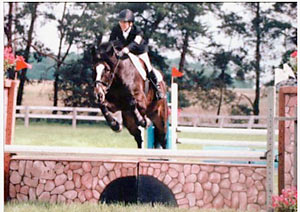
If you have any common sense at all, you should have a certain level of healthy fear whenever you get on a new horse. Call it respect if you prefer, but there is always an awareness that the 1000-pounds or so of bone and muscle you are sitting on is, physically, more powerful than you are. Horses can jump sideways in the blink of an eye, rear, buck, or reach speeds over 25 miles per hour in a matter of seconds. They are also capable of using that physical power to perform incredible athletic feats like jumping, dressage, cutting, or reining.
Our desire to become partners with our horses in those athletic endeavors makes us willing to take the risk of being thrown off or finding ourselves on a panicked runaway.
Having a bad experience, usually something that could not have been avoided no matter what the rider did, can turn healthy respect to fear. Once a rider has been physically hurt in an accident or even just really frightened, it can take a while to rebuild confidence. The old rough-and-ready, cavalry-style philosophy promised that if you just got right back on again, everything would be fine.
However, suppressing fear seldom works. Neither does it help to tell someone to just get over it. Fear is usually related to the rider's skill level. The best way to overcome riding fears is to work on developing a completely independent seat. An independent seat gives the rider the confidence the he or she has the ability to ride through just about anything the horse might do. Riders also need to develop habits that allow them to stay mentally and emotionally centered in a rhythmic and relaxed way when their horse becomes excited or frightened. One of the partners has to stay calm in order to bring the other back to that state.
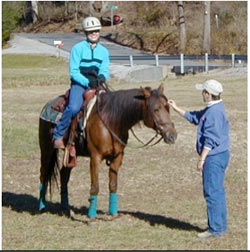
Fear around horses is not limited to riding. Many people feel intimidated when they have to catch, lead or groom an unruly, ill-mannered horse. Even if they manage to dominate the horse using a chain lead shank or other artificial means, they may still have a queasy feeling because they know they are not really in charge of the situation. Here, again, a good instructor should be able to help a fearful student learn how to confidently and safely work around and re-school a spoiled horse with bad ground manners.
Training methods aimed at making the trainer dominant work only as long as nothing scarier or more dominant than the trainer is in the horse's immediate environment. Handling techniques that depend on chain shanks or war bridles do not result in permanent changes in the horse's attitude or true confidence on the part of his handler. We use a groundwork system we call heeding because it teaches the students to pay attention to their horses at all times and teaches the horse to pay attention to its handler at all times.
Through consistent handling with rhythm and relaxation from the moment they enter a horse's stall until they put him away, they learn how to develop a rapport with their horses. The goal is to make the horse feel like the trainer or rider is always the safest place to be whenever exciting or unusual things happen.
Learning how to approach and work with horses on the ground in a rhythmic and relaxed way not only keeps the horses calm, but also teaches the students how to relax and stay calm. Using rhythmic breathing and rhythmic movements while they groom or lead their horses becomes a habit they can carry into their riding. The habit of staying rhythmic with their breathing, their seat, or their reins when things start falling apart helps both rider and horse relax and become calm again more readily.
Every rider must eventually face fear and overcome it. Fear is not something to be ashamed of or to hide. When it happens to you, find an instructor with the right attitude, the right program of progressive skill training, and the right horses to get you back on track again.
Meredith Manor International Equestrian Centre
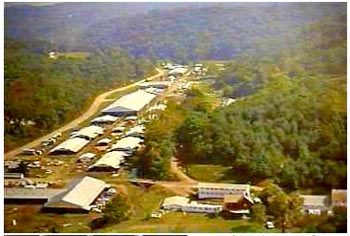
Meredith Manor is an equestrian vocational school dedicated entirely to producing professional riders, trainers, instructors, and farriers for the horse industry. All programs and courses are designed specifically to prepare you for a successful equine career. Our programs range in length from 3 to 18 months, and our students spend 6 hours a day in primarily hands-on, skill based classes with additional time spent in the barns and with the horses. Students don't have to excel in academic, classroom based classes to be successful in our programs, but they must have a passion for horses and a dedication to having a successful equestrian career.
Meredith Manor's name and reputation are known by serious horse people throughout the world. Students from the ages of seventeen to sixty-three have attended the School from every state and many foreign countries. Meredith Manor strives to provide a climate of learning in which each student may identify and accomplish his or her goals. We have continuously researched the horse industry, designed the facilities, and developed the educational programs that will give our students the training, experience, and confidence needed to have successful, life-long careers with horses!
Faith Meredith has successfully trained and competed through FEI levels of dressage during her more than 30 years as a horse professional. She currently coaches riders in dressage, reining, and eventing in her capacity as the Director of Meredith Manor International Equestrian Centre.