

Watch That Eye to keep Your Horse in Frame
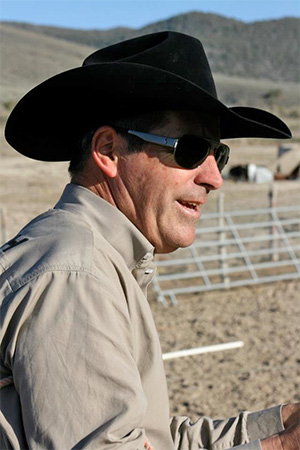
With Richard Winters
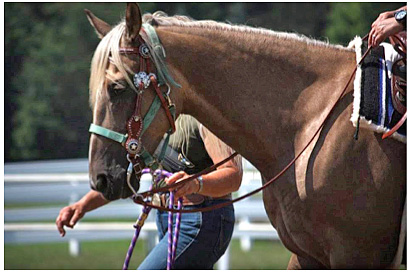
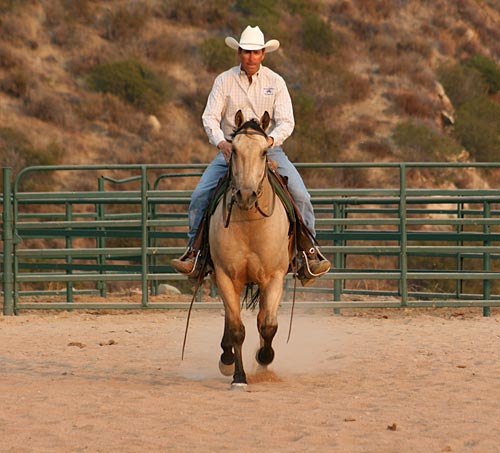
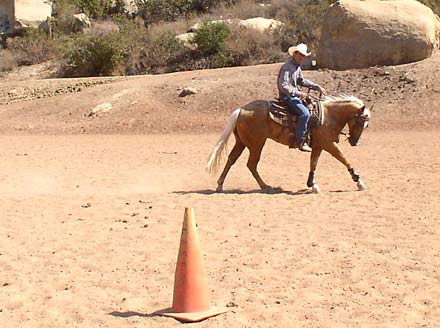
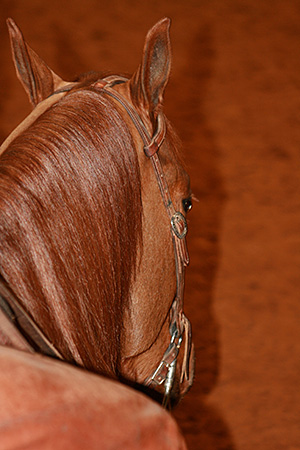
The quickest gauge of whether a horse is traveling in frame is which eye the rider can see from the saddle. When walking, trotting, or loping in a direction, you should just be able to see the corner of the horse’s eye on that same side—a very subtle bend, since over-bending pulls the horse out of balance and can cause a loping horse to lose his hind lead and cross canter. On a straight line, neither eye should be visible, a sign the horse is traveling in a narrow hallway between the rider’s hands and legs.
When riding we are continually trying to keep our equine partner in frame and in the proper posture for the maneuver we are asking. Becoming aware of which eye you can see while sitting in the saddle can be a clear indicator of how your horse’s body is shaped. If you have not considered this concept, below is a simple exercise to enhance your awareness.
While mounted, and standing still, lift your right rein until you can just see the corner of your horse’s right eye. Then lift the left rein until your horse shows you his left eye. It doesn't take much of a bend in your horse’s neck to make this visual contact. Now, hold your reins evenly until your horse’s head is perfectly straight and you’re unable to see either eye. Regardless of the speed, or maneuver, this is the awareness you need to develop.
Many people neck rein their horse and this can be a positive technique. However, when neck reining you need to continually be able to see the eye in the direction in which you are traveling. It is very easy for a horse to get counter bent while neck reining. When you lay the rein against your horse's neck, with even slight pressure, there's a tendency for his nose to tip in that direction.
If this starts to happen you need to reach down with your inside or direct rein and reestablish the correct direction until you can just see the corner of the inside eye. Remember, you need to see the eye on the same side in which you are traveling. Reinforcing neck reining with more pressure will counter bend your horse and further deteriorate his posture.
When teaching a horse to spin or turn on the hindquarters, it's important that a horse maintain good direction as well. That means when he is spinning to the left you are able to see the corner of that left eye. Some horses develop a style of spinning with a lot of direction and inside bend. Others spin or turn around with more straightness. Regardless of their style, every horse should be looking in the same direction they are traveling. If you can see the horse's left eye while spinning to the right, your horse is not balanced correctly. You need to see that right eye, known as inside eye.
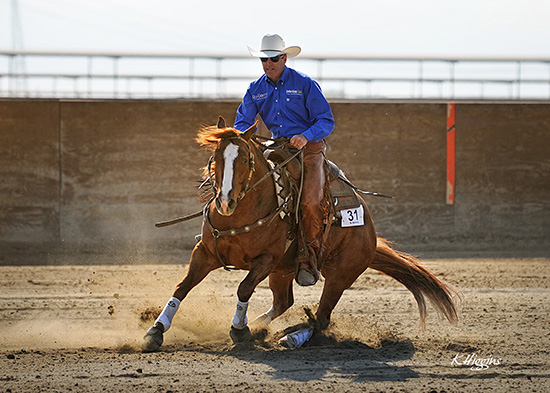
Try this exercise to help develop more straightness; Start at one end of the arena and pick up a trot and ride to a fencepost at the other end. Stop square at that post and rest for a few moments. Now turn around and trot to the opposite end. Your horse will soon begin to realize that a straight line is the best direct route to the point where he gets to rest. The idea is for your horse to travel in a narrow "hallway" between your hands and legs. The easiest indicator of a well-executed straight line is making sure that you cannot see either eye when you look down at your horse's head.
As you strive to improve your horsemanship and take your horse to the next level, attention to every detail is vital. Feeling and knowing your horse's body posture can be confusing at first. Paying attention to which eye you can see is a quick and easy gauge to evaluate whether you and your horse are on the right track. Keep an eye on your horse's eyes!
Richard Winters Horsemanship WintersRanch.com