

Staying Safe Around Horses Might Start With One Phone Call
The insurance conversation most horse owners never have — until something goes wrong
By Bob Pruitt

Do not assume that because your house, automobiles, dog, and personal liability are insured, your horse is too. Some homeowners policies may provide limited liability protection involving personally owned horses, others restrict horse-related incidents or exclude them altogether, and boarding, training, lessons, breeding, leasing, or clinics can move the situation into business activity that a standard homeowners policy was never designed to handle.
The practical step is a conversation with an agent or broker who genuinely specializes in equine coverage, because mortality, major medical and surgical, Loss of Use, personal horse owner liability, commercial equine liability, care, custody, and control, farm and ranch, and property coverage each answer a different problem, and state farm-animal liability statutes differ in their definitions, exceptions, and required warning language.
I've lived in California. Washington State. Utah. Florida. Now Texas. Somewhere in between all of that, I've hauled my own horses across a good part of this country.
And for most of that time, I never once called an insurance agent to ask what would actually happen if something went wrong.
Here in Texas, we post the required warning sign. You've probably seen one just like it nailed to a barn or arena fence somewhere. Under Texas law, that sign is supposed to mean something — and it does.
But after actually sitting down and reading the statute behind that sign word for word, I realized I'd been carrying an assumption for years that wasn't quite right.
And once I started asking questions about what that sign really covers, a second question followed right behind it:
What am I actually covered for if the law doesn't protect me?
That's what led to this article.
Not because I have bad news for you.
Because I think most horse owners — English or Western, backyard owner or show barn — may be one honest conversation with the right insurance specialist away from sleeping a lot easier.
The Gap Almost Nobody Expects
Here's the one that catches people off guard.
A homeowners policy may provide liability protection if a household pet injures somebody, although even dog coverage can have exclusions and restrictions.
Horses are a much less safe assumption.
Some homeowners policies may provide limited liability protection involving personally owned horses. Others restrict horse-related incidents or exclude them altogether. Things can become even more complicated when boarding, training, lessons, breeding, leasing, clinics, or other business activities are involved.
The same caution applies to personal umbrella policies. An umbrella policy sounds wonderfully reassuring — and it can be — but it doesn't automatically mean every horse-related liability situation is covered.
In other words:
Don't assume that because your house, automobiles, dog, and personal liability are insured, your horse is too.
Imagine a horse gets through a gate and onto a road.
Or kicks a visitor.
Or damages somebody else's property.
Or a friend comes over to ride and gets hurt.
Those are exactly the kinds of situations where you don't want to discover afterward that the policy you assumed covered you either excludes horses, limits the circumstances under which they are covered, or considers what you were doing a business activity.
That isn't a scare tactic.
It's simply a very good reason to ask the question before something happens.
What Texas Law Actually Does — and Doesn't Do
Texas has what is now called the Farm Animal Liability Act, found in Chapter 87 of the Texas Civil Practice and Remedies Code.
The law originally focused on equine activities and was later expanded to cover farm animals more broadly.
Here's the plain-English version of what it is intended to protect against:
Horses are unpredictable animals.
They can spook.
They can react suddenly to sound, movement, other animals, vehicles, weather, footing, or something you and I never even noticed.
Riders can lose control.
Horses can collide with another horse, a person, a fence, or an obstacle.
And sometimes people get hurt even when nobody did anything particularly wrong.
Those are the kinds of inherent risks of being around horses that farm-animal liability laws are designed to recognize.
That is real protection.
And in Texas, it is worth having the proper warning sign posted where the law requires it.
But there is something else worth knowing.
The wording on that sign matters.
Texas law has changed over the years, including significant amendments in 2021, and the current statutory language refers not only to farm animal professionals but also to farm owners and lessees.
That means if the warning sign hanging on your barn has been there for fifteen or twenty years, it might be worth taking five minutes to make sure it still contains the wording currently required by Texas law.
The same goes for release forms, boarding agreements, lesson contracts, clinic agreements, and other documents.
Don't assume the sign you bought years ago says exactly what today's law requires.
A Warning Sign Is Protection — Not a Magic Shield
This is where things get especially important.
The Texas statute also contains exceptions.
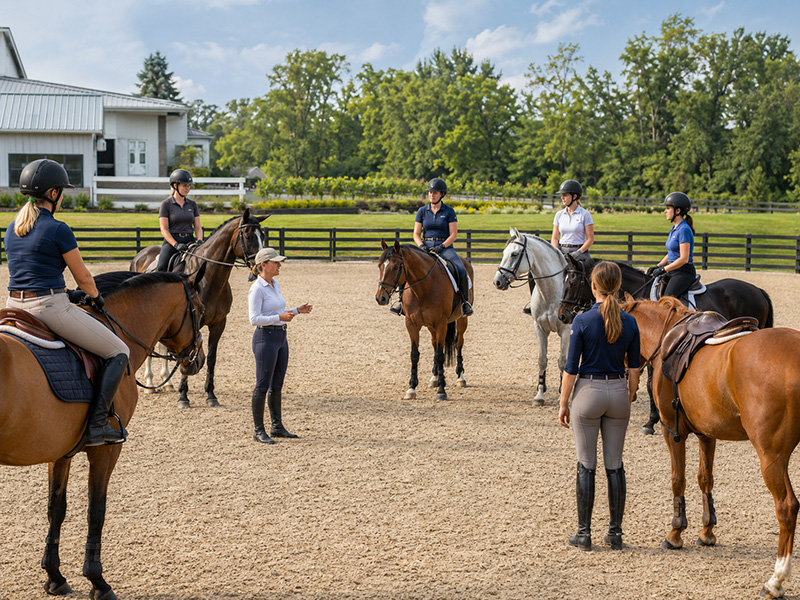
Protection can be lost in certain situations, including circumstances involving faulty equipment that someone knew or reasonably should have known was dangerous; failure to make a reasonable effort to determine whether a participant could safely handle the horse; certain known dangerous conditions on the property that were not properly disclosed or warned about; willful or wanton disregard for someone's safety; or intentional injury.
Put that into everyday horse language.
"The horse spooked at a plastic bag" is one conversation.
"We knew that horse didn't belong with a beginner, but we put the beginner on him anyway" is an entirely different conversation.
So is handing someone tack you already know is broken.
Or knowing there is a dangerous hole beside the arena and never warning anyone about it.
The warning sign does not mean you can stop thinking about safety.
It means the law recognizes that horses come with unavoidable risks even when responsible people are doing their best.
That distinction matters.
Don't Assume Your Home-State Protection Travels With You
This is the part of my own history that made all of this real for me.
I've had horses in five different states, and I've hauled them across a good stretch of the country in between.
For years, I assumed that "the law" protecting horse owners was probably more or less the same everywhere.
It isn't.
Almost every state has some form of equine or farm-animal activity liability statute, but the laws aren't identical.
As of 2026, California and Maryland are generally identified as the two states without a specific equine-activity liability statute of this type.
Among the states that do have these laws, the differences can be significant.
Definitions differ.
Exceptions differ.
Who qualifies for protection can differ.
Required warning language can differ.
Where signs must be posted can differ.
Contract language can differ.
And when an accident crosses state lines, determining which state's law applies can become a lot more complicated than simply asking where you live or where your horse normally stays.
If you regularly haul to clinics, horse shows, trail rides, sales, breeding farms, training barns, or events in another state, don't assume the liability protection you're familiar with at home will automatically control what happens somewhere else.
That's another question worth asking before you load the trailer.
Why This Matters Just as Much for English Riders
This isn't just a backyard-horse-owner or trail-rider conversation.
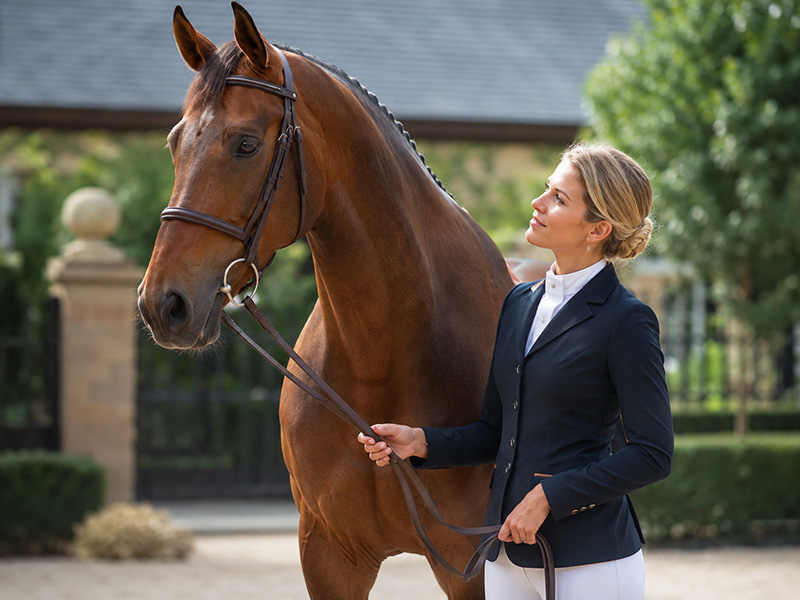
If you're leasing out a made hunter, operating a boarding and training program, hosting clinics, teaching lessons, or sitting on a six-figure jumper or dressage horse, the financial stakes may be higher, not lower.
A leased show horse raises its own set of questions.
Who is responsible if the horse is injured?
Who pays the veterinary bill?
Who is responsible if the leased horse injures somebody?
What happens if the horse can no longer compete at the level for which it was purchased or leased?
Those are questions that should be answered in writing before the horse ever leaves the barn.
The same is true for trainers and boarding facilities.
Once people are paying you to board, train, teach, transport, breed, care for, or otherwise work with horses, you are no longer talking about a simple personal horse-owning situation.
You're operating a business.
And business activity can create insurance needs that a standard homeowners policy was never designed to handle.
What About That Expensive Show Horse?
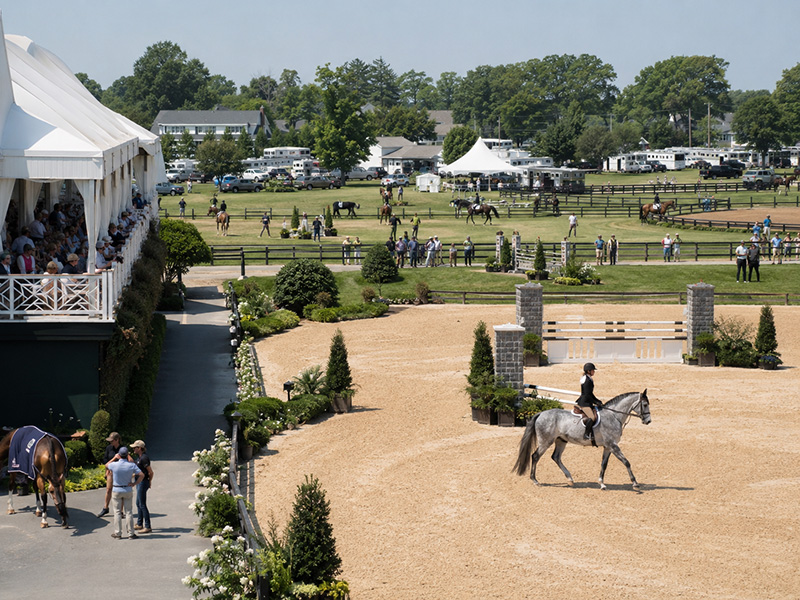
Then there is the horse itself.
A valuable hunter, jumper, dressage horse, reining horse, barrel horse, breeding animal, or other performance horse may represent a substantial financial investment.
But value isn't always just about whether the horse is alive.
Suppose a horse survives an injury but can never again perform the job for which it was purchased.
A mortality policy by itself generally isn't designed to compensate you simply because a living horse can no longer perform at its former level.
That's where some owners begin asking about Loss of Use coverage.
And that leads to another important point:
There isn't one single "horse insurance policy" that covers everything.
Different policies answer different problems.
The Types of Equine Insurance Worth Knowing About
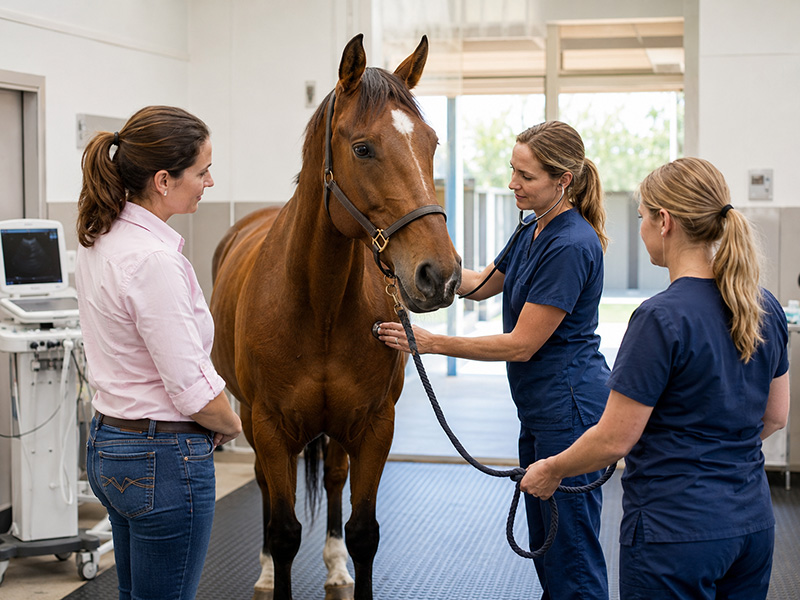
You don't need to become an insurance expert.
But you should at least know the vocabulary before you call one.
Mortality Insurance
Mortality insurance is roughly the horse-world equivalent of life insurance.
Depending on the policy, it may provide coverage if an insured horse dies because of a covered accident, injury, illness, or other qualifying event.
Policies can differ substantially, so owners should understand exclusions, required veterinary care, reporting requirements, and how the horse's insured value is established.
Major Medical and Surgical Insurance
This coverage can help with eligible veterinary expenses resulting from covered accidents, illnesses, diagnostics, treatment, hospitalization, or surgery.
For many owners, this is the coverage that can make the financial side of something like a serious colic case much less frightening.
But limits, deductibles, exclusions, waiting periods, and pre-existing-condition rules matter.
Ask about them.
Loss of Use Insurance
Loss of Use coverage may provide compensation when an insured horse becomes permanently unable to perform its intended use even though the horse survives.
That might involve a jumper that can no longer jump, a dressage horse that can no longer compete at its insured level, or another performance horse whose value depended heavily upon doing a particular job.
This coverage is not available for every horse, every discipline, or every situation.
If it matters to you, ask specifically.
Personal Horse Owner Liability
This is the type of coverage every private horse owner should at least know exists.
It is designed to protect an individual horse owner against certain liability claims if their personally owned horse injures someone or damages somebody else's property.
For the owner who doesn't operate a boarding, training, breeding, or lesson business, this may be one of the most important questions to ask an equine insurance specialist.
Commercial Equine Liability
Commercial Equine Liability is intended for horse businesses.
That can include boarding facilities, trainers, riding instructors, breeding operations, clinics, camps, horse sales operations, and other compensated equine activities.
Once you are being paid to provide horse-related services, you need to have a very different insurance conversation than someone who simply owns two horses behind the house.
Care, Custody, and Control Insurance
This one matters enormously to anyone responsible for horses they do not own.
Trainers.
Boarding barns.
Transporters.
Breeding farms.
Other equine professionals.
Care, Custody, and Control coverage can protect against certain claims alleging that a non-owned horse was injured or killed while in your care, custody, or control.
The exact protection depends upon the policy, its limits, exclusions, and the circumstances involved.
Farm and Ranch Owner's Insurance
A farm or ranch policy can combine property and liability coverage in ways better suited to people who actually keep horses and livestock.
It may address things that a standard suburban homeowners policy never contemplated — barns, outbuildings, fencing, farm equipment, livestock exposures, and various farm activities.
But don't make the mistake of assuming that simply having a "farm policy" means every horse activity is automatically covered.
Ask.
Property Insurance
Barns burn.
Roofs are damaged.
Storms happen.
Tack disappears.
Equipment is stolen.
Property coverage can help protect barns, arenas, farm structures, tack, equipment, and other physical assets, depending upon the policy.
Again, the details matter.
There Is One More Question Horse Owners Should Ask
Most of us naturally ask:
Is my horse insured?
But there may be a better first question:
Am I insured?
If my horse gets loose and causes an accident, what happens?
If someone rides my horse and gets hurt, what happens?
If I'm hauling a friend's horse and something goes wrong, what happens?
If somebody pays me to care for their horse, does that change my coverage?
If I occasionally give lessons, am I now operating a business in the eyes of my insurance company?
If I lease my horse to someone else, whose policy responds?
If I travel out of state, does anything change?
Those aren't questions you need to know the answers to today.
They're questions your insurance specialist needs to be able to answer.
One Piece of Advice, and It's the Whole Point of This Article
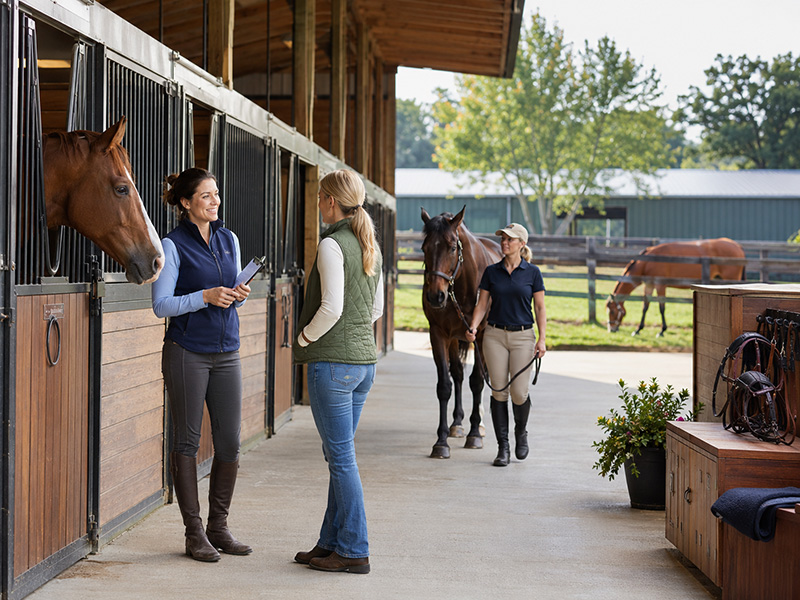
Talk to an insurance agent or broker who genuinely specializes in equine coverage.
Not simply someone who happens to sell your homeowners and automobile insurance, however good that person may be at what they do.
Horse insurance is its own specialty inside the insurance world.
It has its own carriers.
Its own exclusions.
Its own underwriting questions.
Its own terminology.
And its own situations that someone who spends most of the day insuring houses and cars may simply never think to ask you about.
Don't just say, "I own horses."
The quality of the answer depends an awful lot on the quality of the information you give them.
And on the legal side, neither this article nor I am a substitute for an attorney.
Equine liability statutes, contracts, waivers, leases, boarding agreements, and insurance disputes can become highly state-specific.
If you have a serious question about how the law applies to your property, your horses, your business, or your particular situation, talk with a licensed attorney in your state.
Make the Phone Call Before You Need It
I've spent fifty-plus years around horses and nearly thirty running InfoHorse.
The older I get, the more I realize that being a responsible horse owner isn't just knowing how to feed one, shoe one, trailer one, or recognize when something isn't right.
Sometimes it means asking a question you never thought you needed to ask.
Insurance is one of those questions.
You don't need to become an expert.
You don't need to buy every type of policy anybody offers.
And you certainly don't need to lie awake worrying about everything that could possibly go wrong.
You just need to know whether the protection you think you have is actually there.
Because the conversation that changes an outcome is rarely the one you have after something has already happened.
It's the one you have with the right specialist, on an ordinary Tuesday, before you ever need to test whether your coverage does what you assumed it did.
Editor's note: Equine liability laws and insurance policies vary by state and can change over time. Horse owners should verify current statutory warning language and legal requirements in their own state and discuss their specific activities and coverage with a qualified equine insurance professional and, when appropriate, a licensed attorney.