


The Hidden Costs of Owning a Horse Nobody Budgets For
By Bob Pruitt · Updated June 29, 2026 · Horse Care
The horse expenses that catch owners off guard are emergency veterinary care—a colic surgery can run $7,000 to $12,000—plus routine dental, vaccine and deworming bills of $300 to $800 a year, supplement costs that creep to $25 to $75 or more a month, and tack that wears out or never fit right. A Synchrony study pegged the lifetime cost of a horse at $300,000 to nearly $924,000, three to four times what most owners expect. Experienced owners keep at least $5,000 in reserve or carry equine insurance, and add 20% on top of their known annual budget.
Written from 40+ years of horse ownership and more surprise bills than I'd care to count.
The short answer: Beyond board and feed, the costs that ambush horse owners are emergency vet care (a colic surgery runs $7,000–$12,000), routine dental, vaccines and deworming ($300–$800/year), creeping supplement bills, tack that wears out or never fit right, and the cost of cheap decisions made early. A Synchrony study pegged the lifetime cost of a horse at $300,000 to nearly $924,000 — three to four times what most owners expect. The fix is simple: build a buffer before you need it.
Forty years has taught me one thing about horse budgets: the bill that breaks you is never the one you saw coming. Board, feed, the farrier — those you plan for. It's the 11 p.m. phone call. The supplement shelf that tripled when you weren't looking. The saddle that fit nobody. That's what gets people.
A Synchrony survey found 85% of horse owners feel real anxiety about what their horses cost.
“The same survey reported that many owners should expect recurring medical expenses and occasional costly medical events over a horse’s lifetime.”
So let's drag these hidden costs out into the daylight where you can plan for them. A surprise you've budgeted for isn't an emergency. It's just a Tuesday.
Emergency fund or insurance — which makes more sense?
Some owners sleep better with equine insurance. Others would rather keep a dedicated emergency account. Either way, the mistake is having neither. Insurance can help with major medical surprises, but it may have exclusions, deductibles, waiting periods, and limits. A cash reserve is more flexible but only works if you build it before the emergency happens.
The big one: emergencies that arrive without warning
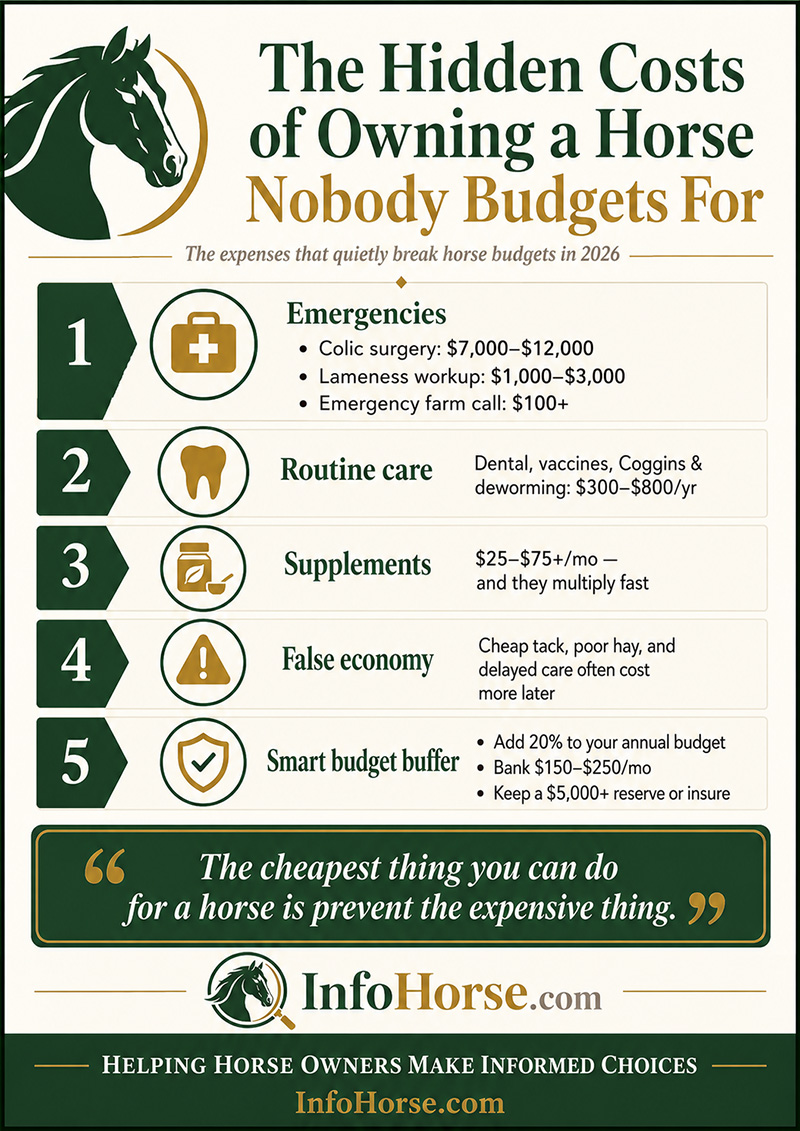 A healthy horse can still find trouble. Finding trouble is practically what they do. And these are the numbers that hurt: a colic surgery can run $7,000 to $12,000. A serious lameness workup with imaging, $1,000 to $3,000. Even a cut that needs stitches turns into a $500 to $1,000 call once the vet drives out, and the emergency farm call alone can run $100 before anybody touches the horse.
This is the one to prepare for above all the others, because it's the cost that forces people into the worst decision of their horse-owning life at the worst possible moment. Keep a reserve — a lot of experienced owners hold at least $5,000 set aside for exactly this — or carry equine insurance at $1,000 to $3,000 a year. Either way, you're buying one thing: the ability to say "do the surgery" without doing the math first.
The cheapest thing you can do for a horse is prevent the expensive thing. Skipped dental floats and bargain hay don't save money. They just defer it — with interest.
The cost of getting the horse there
Sometimes the bill is not just the vet — it is getting the horse to the vet. If you do not own a trailer, an emergency haul to a clinic can become another surprise expense. Even if you do own one, tires, brakes, inspections, fuel, and truck wear belong somewhere in the real horse budget.
The quiet routine costs that add up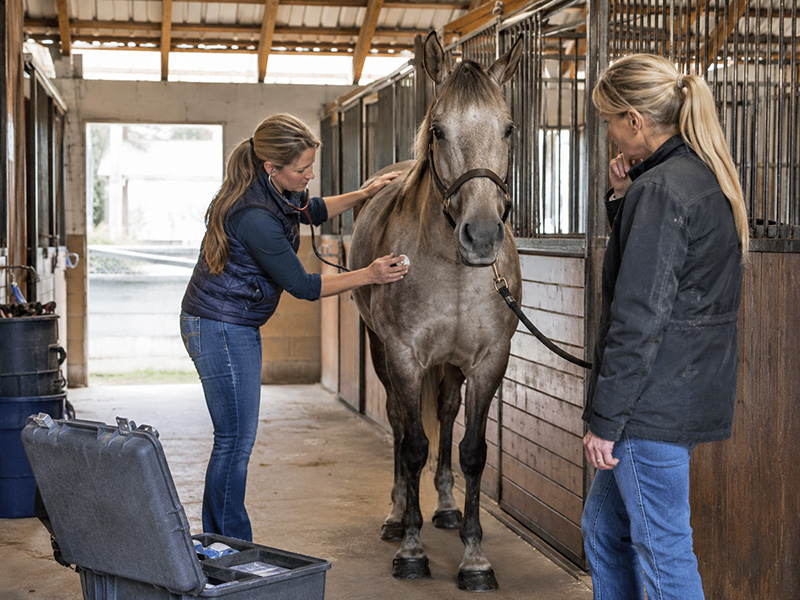
Then there's the steady drip of "normal" care that first-timers forget to add up. None of it is dramatic on its own. Together, it's a real line on your monthly budget.
Hidden routine cost |
Typical 2026 figure |
Dental floats (once a year, twice for horses over 15) |
Part of $300–$800/yr routine vet |
Vaccines & Coggins |
~$35+ per shot, semi-annual |
Deworming + fecal egg counts |
$80–$150/yr |
Supplements (joint, hoof, gut, calming...) |
$25–$75+/mo and climbing |
Sheath cleaning, routine farm calls |
Varies, easy to forget |
Watch that supplement line in particular. It starts with one joint powder. Then a probiotic. Then something for the hooves, a calming scoop, a vitamin mix somebody swore by in the tack room. Supplements multiply like rabbits. Pick them with your vet, not with barn gossip — your horse does better and your wallet does too.
The right nutrition program can replace a shelf full of guesswork supplements — and your horse does better for it.
The "cheap now, expensive later" trap
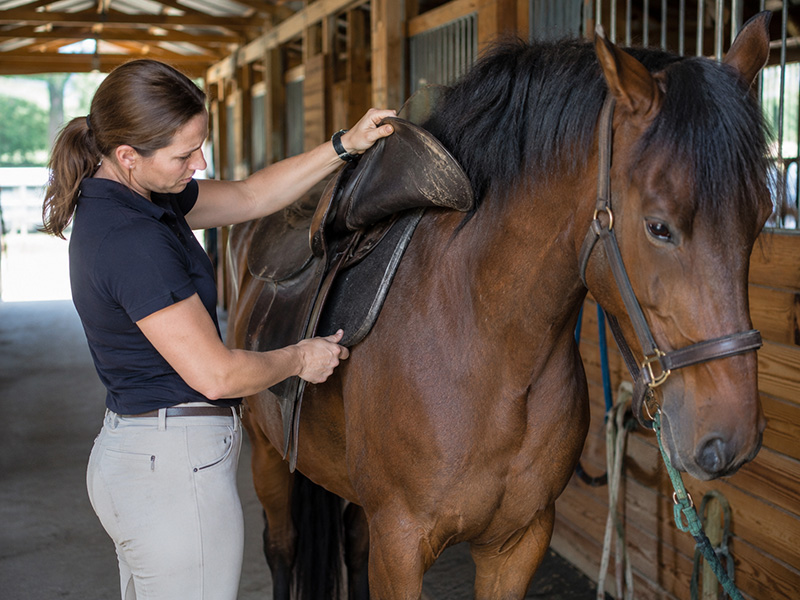
This is the hidden cost I most want a first-timer to understand, because it's the one you can avoid completely. That $100 saddle off the internet doesn't save you $900. It buys you a sore-backed horse, a behavior problem, and a vet bill — and then you buy the good saddle anyway. Same story with dusty bargain hay, the dental float you put off, the hoof care you stretched another two weeks. Horses don't forgive a false economy. Good tack and steady, fussy preventive care are the real money-savers over a horse's life, because they head off the very emergencies that cutting corners creates. Buy it once. Buy it right.
So how do you budget for the unbudgetable?
The little things horses destroy
Nobody buys one halter, one fly mask, one blanket, and one bucket for the life of a horse. Horses step on things, rub on things, chew things, lose things, and break things. These are not huge bills one at a time, but they quietly become part of the true cost of ownership.
Older horses are often worth it — but they are not always cheaper
A steady older horse can be the best teacher in the world, but senior horses often need more dental care, more joint support, more careful nutrition, and more frequent vet attention. The purchase price may be lower, but the maintenance budget may be higher.
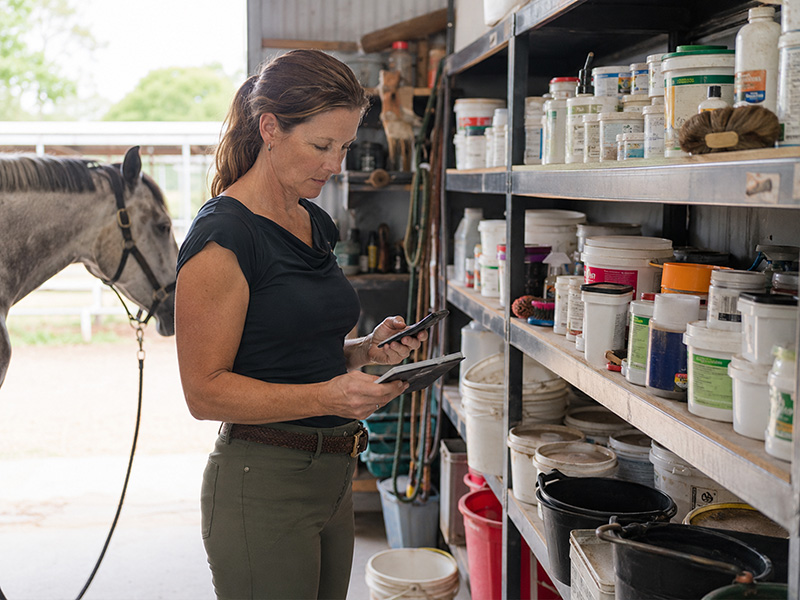
You can't know which surprise hits this year. You can know one will. A shoe pulled mid-cycle, an eye that needs the vet, a hay spike in a dry summer - something always comes. So here's what experienced owners do, and what I'd tell my own family: total up your known costs for the year, then add 20% on top. That 20% isn't padding. Over the 25 years you may share with a horse, it's the line between an inconvenience and a crisis. Pair it with a dedicated reserve — a lot of folks bank $150 to $250 a month into a separate account -and the surprise bills stop being emergencies. They become things you just handle.
About the author — Bob Pruitt
Bob co-founded InfoHorse.com in 1997 and has more than 40 years of hands-on horse ownership, from a PMU foal rescue named Dream to a lifetime of trail and pleasure horses. Alongside Ann Pruitt, he has spent nearly three decades connecting horse owners with trusted, verified equine professionals and products. More about InfoHorse →
💡 Key Takeaways
- Emergencies are the budget-breaker: colic surgery runs $7,000–$12,000; keep a $5,000+ reserve or insure.
- Routine vet care is $300–$800/year — dental floats, vaccines, Coggins, and deworming that owners forget to total.
- Supplements multiply: one joint powder becomes $25–$75+/mo. Choose them with your vet, not barn rumor.
- Cheap tack and bargain hay cost more later — false economies turn into vet bills.
- Add 20% to your known annual budget and bank $150–$250/mo for emergencies — every year brings one surprise.
This is one piece of the bigger picture
The full cost-of-ownership breakdown: what a horse really costs →
How much does horse boarding actually cost? Pasture, full and self-care prices →
Keeping a horse at home vs boarding: the real cost comparison →
Frequently Asked Questions
What are the hidden costs of owning a horse?
The costs that surprise owners most are emergency vet care, routine dental floats, vaccines and deworming, steadily growing supplement bills, tack that wears out or never fit, and the long-term cost of cheap early decisions. Board and feed are predictable; these are the ones that get overlooked.
How much should I keep in an emergency fund for a horse?
Many experienced owners keep at least $5,000 set aside specifically for unexpected veterinary expenses. A colic surgery alone can run $7,000 to $12,000, so some owners also carry equine insurance at $1,000 to $3,000 a year.
How much does routine veterinary care cost per year?
Routine care including vaccinations, dental floats, and deworming averages about $300 to $800 per year for a healthy horse. Horses over 15 often need dental work twice a year rather than once.
Before You Buy a Horse, Have This in Place
- A monthly horse budget you can actually afford
- A $5,000 emergency reserve or insurance plan
- A trusted vet, farrier, and dentist
- A realistic board/feed/tack estimate
- A trailer plan for emergencies
- Permission from your family that surprise bills are part of the deal
Why do experienced owners say to add 20% to a horse budget?
Because every year tends to bring at least one cost that was not in the plan, such as a pulled shoe replaced mid-cycle or a hay-price spike. A 20% buffer on top of your known annual costs turns those surprises from crises into manageable expenses.
Is it worth buying cheap tack to save money?
Usually not. A poorly fitting bargain saddle can cause back soreness, bad behavior, and vet bills, and you often end up buying the quality version anyway. Good tack and consistent preventive care tend to save money over a horse's life.
Sources & Further Reading
Synchrony / CareCredit — Equine Lifetime of Care Study →
American Association of Equine Practitioners — horse owner resources →
Cost figures are typical 2026 ranges drawn from owner surveys, veterinary sources, and direct experience — not quotes. Actual costs vary widely by region, the horse's age and health, and your management choices. This article is educational and not a substitute for veterinary or financial advice.