


How Much Does a Horse Cost?
The Real Numbers Most New Owners Never See Coming
A safe, sound, well-trained pleasure horse typically costs $4,000 to $15,000 to buy—and the purchase price is the cheap part. With startup equipment running $1,000 to $5,000 or more and first-year care adding $6,000 to $15,000+, a realistic first-year total lands between $11,000 and $35,000 or higher. After that, most owners can expect $6,000 to $15,000 or more annually, depending on location, boarding arrangements, and the horse’s needs.
Somebody in your family has fallen in love with horses.
Maybe it's your daughter, who spends every spare minute watching horse videos and dreaming about the day she finally gets one of her own. Maybe it's you. Maybe you've wanted a horse for years and are finally in a position to make it happen.
Before you start shopping, there is one question that deserves an honest answer:
How much does a horse really cost?
After more than forty years of horse ownership, we can tell you something that surprises almost every first-time buyer:
The purchase price is the cheap part.
The real cost of horse ownership isn't the day you buy the horse. It's the months and years that follow. Horses are not a one-time purchase. They are an ongoing commitment of time, money, responsibility, and care.
That isn't meant to discourage anyone. Quite the opposite.
The goal of this article is to help you go into horse ownership with your eyes open, because horses thrive when their owners are prepared for the long haul.
What Does a Horse Cost to Buy?
For most families, a safe, sound, well-trained pleasure horse suitable for trail riding, lessons, or general enjoyment will typically cost between:
$4,000 to $15,000
Can you find cheaper horses?
Absolutely.
Can you find horses for hundreds of thousands of dollars?
Absolutely.
Neither group is who this article is about.
The horse most families should be shopping for is the horse with a good mind, solid training, and a history of soundness. Those qualities are usually far more important than breed, color, pedigree, or show record.
One piece of advice we have never regretted:
Spend the money on a pre-purchase veterinary exam.
Expect to spend roughly $300 to $600, sometimes more depending on your area and how extensive the exam is.
It may be the best money you spend during the entire buying process.
A horse that appears inexpensive can become very expensive if hidden health or soundness problems emerge after the sale.
The Monthly Cost of Horse Ownership
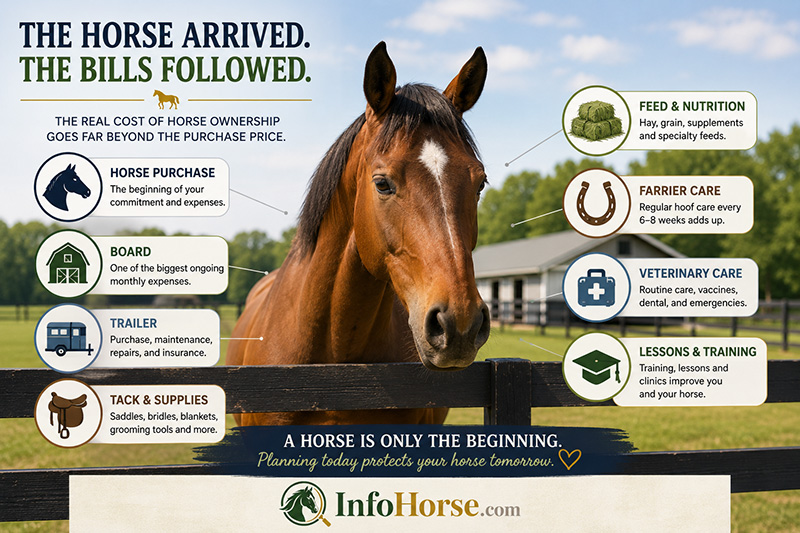
This is where most first-time buyers underestimate the true cost.
Let's look at the major categories.
Board
If you do not keep your horse on your own property, board will likely be your largest monthly expense.
Typical ranges today:
Pasture board: $250–$600 per month
Full board: $600–$1,500+ per month
In some rural areas, costs may be lower. Near major cities, costs can be considerably higher.
Keeping a horse at home can reduce cash expenses, but it also means every feeding, every water trough, every fence repair, and every emergency becomes your responsibility.
Horses do not take weekends off.
Feed and Nutrition
Most horses consume 1.5% to 2.5% of their body weight in forage every day.
That means a 1,000-pound horse may eat 15 to 25 pounds of hay or pasture daily.
If hay is included in board, feed costs may be:
$50–$200 per month
If you provide your own hay and feed:
$150–$500+ per month
Good nutrition is one area where experienced horse owners learn to spend wisely rather than cheaply.
Quality forage, balanced nutrition, and proper feeding often help prevent some of the most expensive problems horses can develop later.
Farrier Care
The old saying remains true:
"No hoof, no horse."
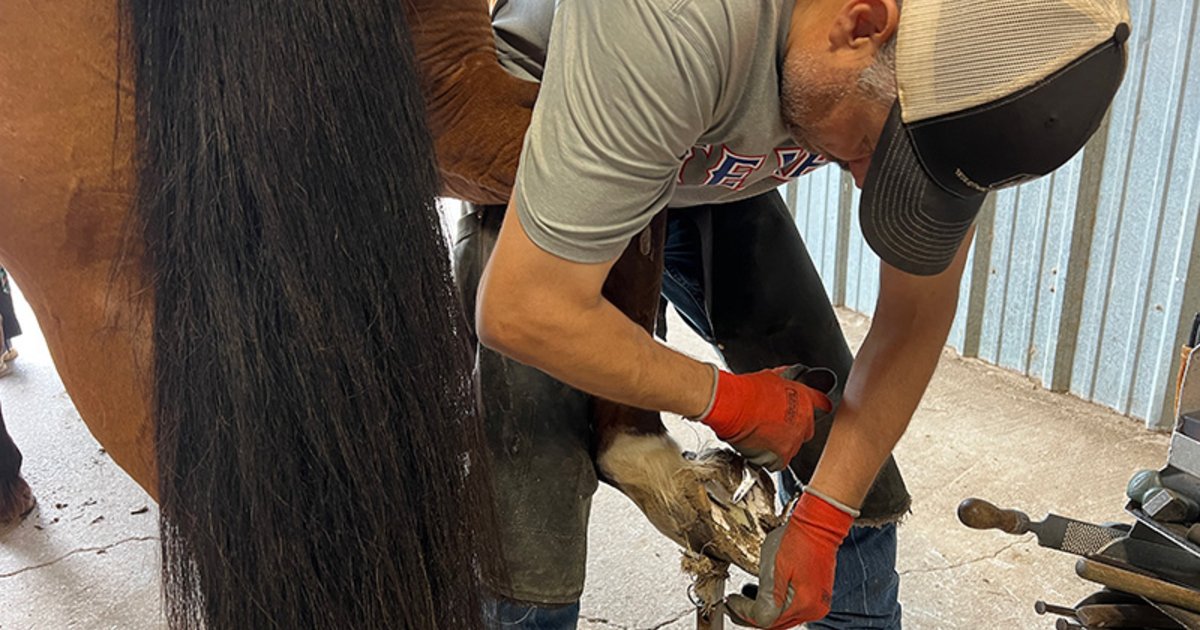
Most horses require farrier care every six to eight weeks.
Typical costs:
Trim: $50–$100
Shoeing: $150–$350+
Specialty or therapeutic shoeing can cost considerably more.
Hoof care is one of the expenses that should never be postponed to save money.
Routine Veterinary Care
Even healthy horses require ongoing veterinary care.
Typical annual expenses include:
• Vaccinations
• Dental care
• Fecal testing and deworming
• Wellness exams
• Coggins testing
Most horse owners can expect:
$600–$1,500 annually
or approximately
$50–$125 per month when averaged throughout the year.
The Expenses Nobody Thinks About
Then there are the dozens of smaller expenses that quietly appear throughout the year:
• Fly spray
• Salt and minerals
• Halters and lead ropes
• Blanket repairs and cleaning
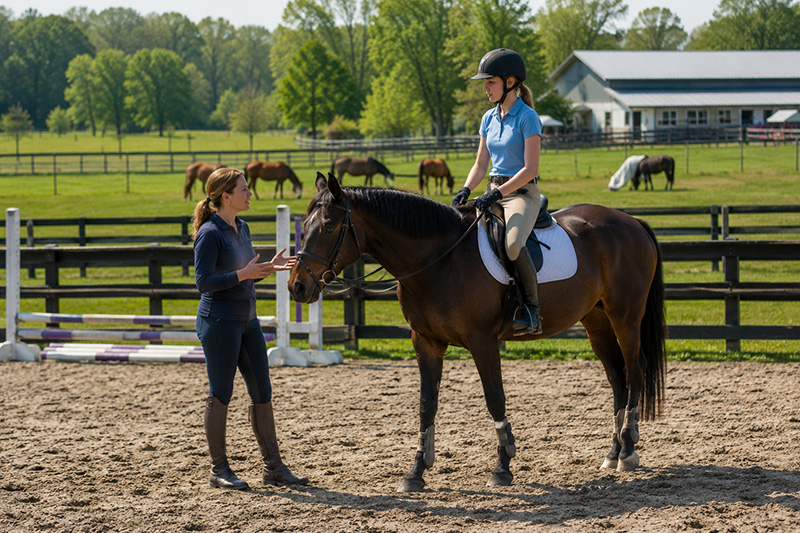
• Lessons
• Show fees
• Supplements
• Tack repairs
• Trailer maintenance
None of these expenses seem large by themselves.
Together, they often add:
$50–$200+ per month
to the ownership budget.
The First-Year Startup Costs
Many first-time owners focus entirely on buying the horse and forget they also need equipment.
Depending on what is included with the horse, you may need:
• Saddle
• Bridle
• Saddle pads
• Grooming supplies
• Fly-control products
• Blankets
• Buckets and feeding equipment
• Riding helmet and personal gear
A realistic startup budget is often:
$1,000–$5,000+
before the horse ever takes its first ride with you.
The Number Nobody Budgets For: Emergencies
This is the section we hope you never need.
But every horse owner should read it.
A late-night colic call can cost hundreds of dollars before treatment even begins.
You will never have to worry again. You're my horse now.
A serious injury can require months of veterinary care and rehabilitation.
A medical emergency never arrives at a convenient financial moment.
That is why we strongly encourage every horse owner to have either:
A dedicated emergency fund of $2,000–$5,000 or more
and/or
Major medical insurance
The goal is not to prepare for disaster.
The goal is to prepare for life.
Owners who have a financial cushion can make decisions calmly and thoughtfully. Owners without one often find themselves facing difficult choices under tremendous emotional stress.
Not Sure? Lease a Horse First
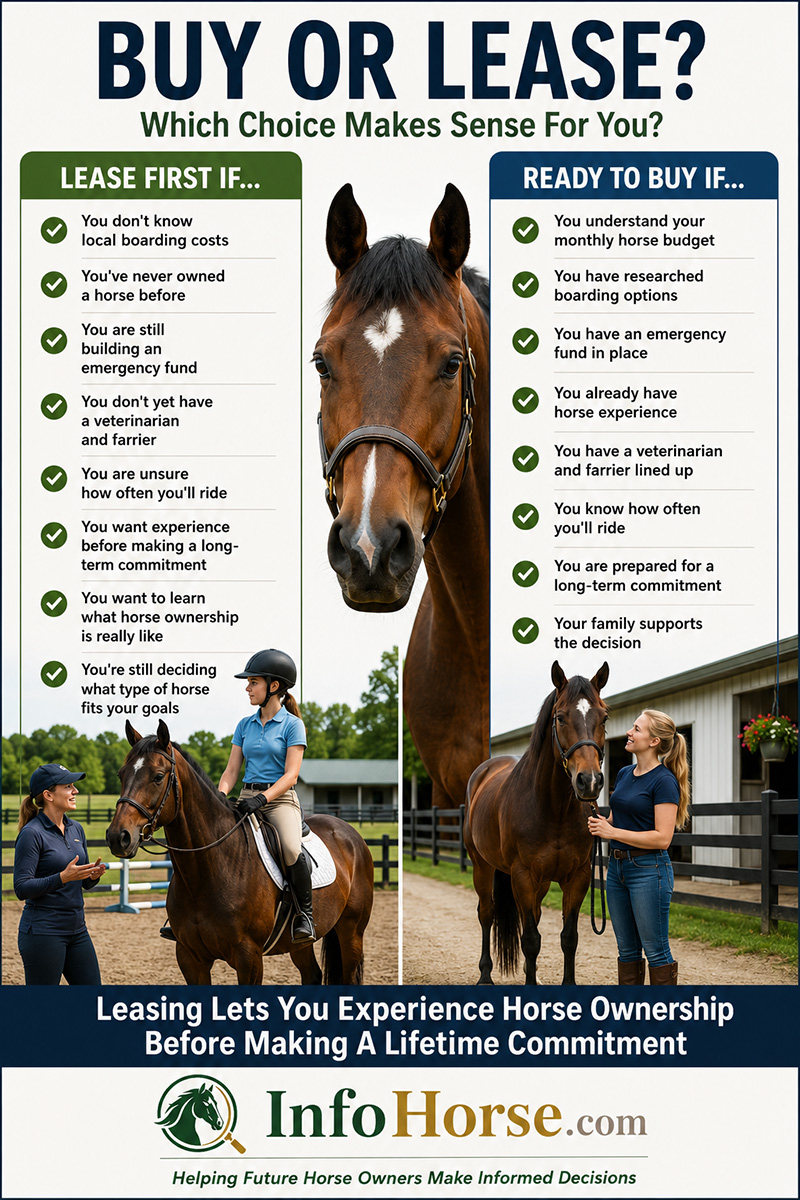
This may be the smartest advice in the entire article.
Before purchasing a horse, consider leasing one for six months to a year.
A lease allows you to experience:
• Board bills
• Farrier visits
• Veterinary expenses
• Lessons
• Scheduling
• Daily responsibilities
• Weather-related challenges
In short, it lets you experience horse ownership before making a long-term commitment.
Some families discover they are not ready for ownership.
Others discover they absolutely are.
Both outcomes are valuable.
Is the Commitment There?
This may be the most important question of all.
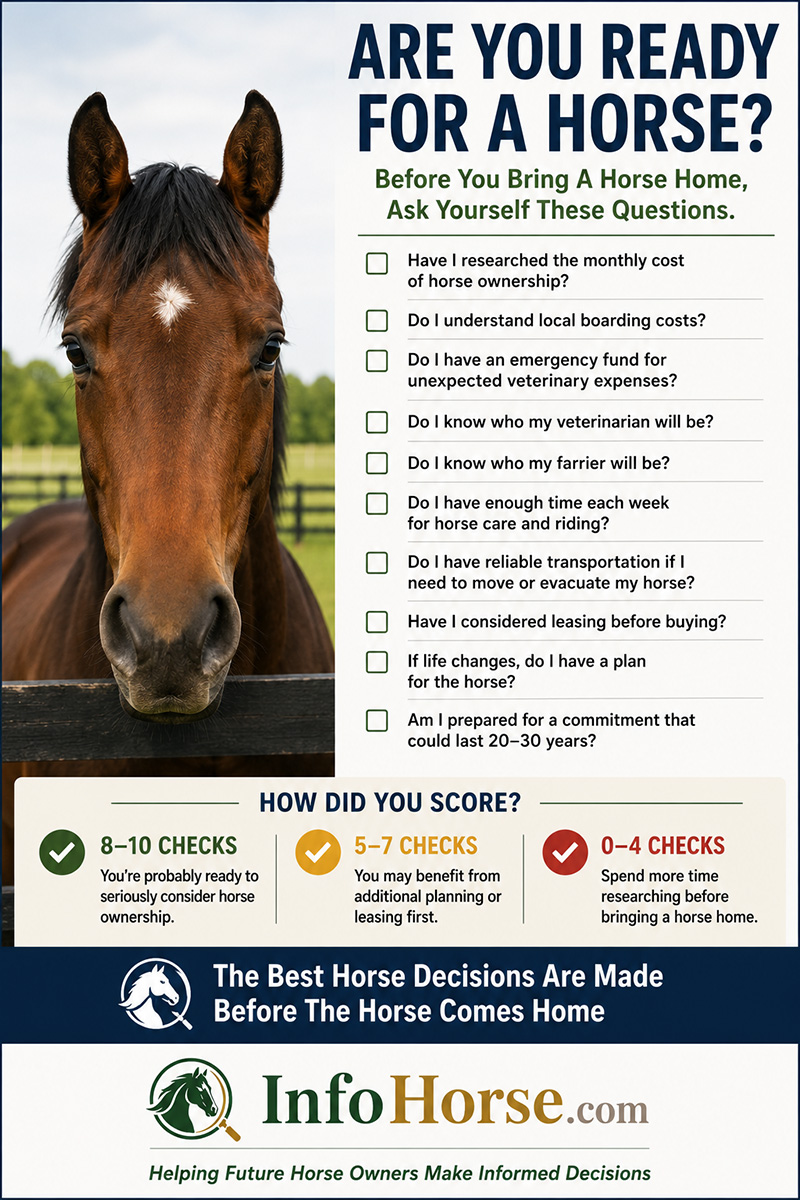
Before You Buy A Horse, Have This Conversation
Who will pay the bills?
Who will ride the horse?
Who will care for the horse during vacations?
Who will care for the horse if interests change?
Who will care for the horse during college years?
There are no wrong answers.
But every family should discuss them before bringing a horse home.
Horses Need Time, Not Just Money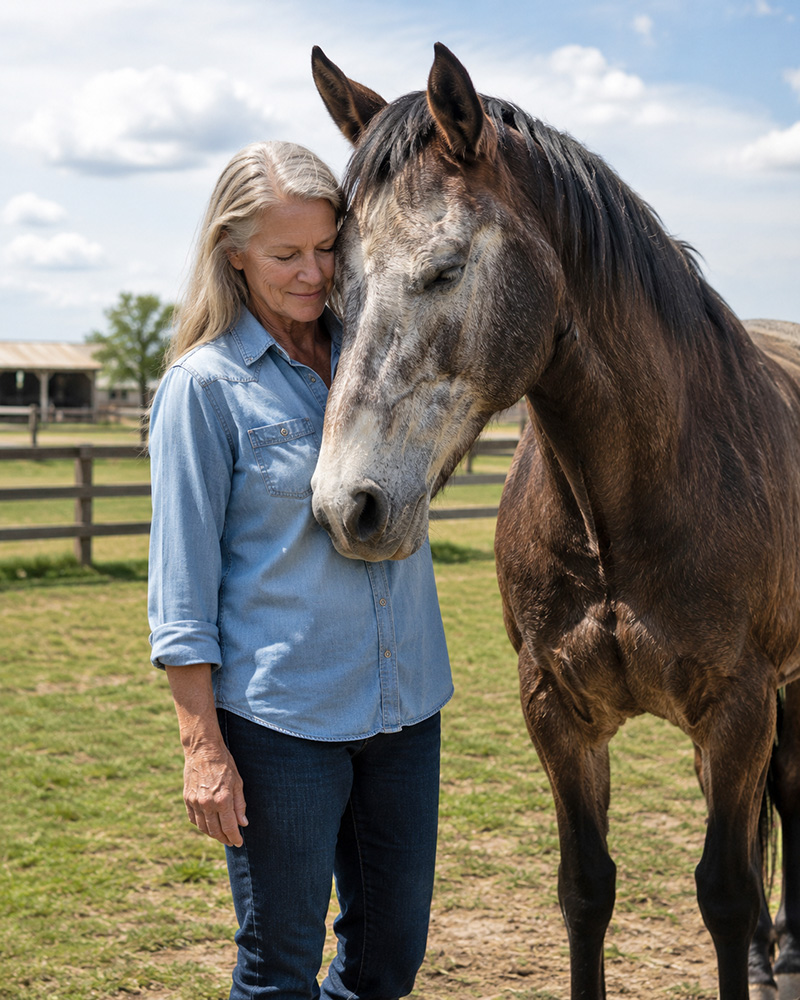
A horse doesn't know you're busy.
He doesn't know you had a difficult day at work.
He doesn't know soccer season started, college applications are due, or vacation plans changed.
Horses need care every day.
Even if you board your horse, ownership still requires time for riding, training, veterinary appointments, farrier visits, and simply being present.
Before buying a horse, ask yourself:
Do I have room in my schedule for this horse not just today, but next year?
Many horses are purchased during a season of life when horses are everything.
We've seen it for decades.
A young girl falls in love with horses at twelve or thirteen years old. She spends every free moment at the barn. Horse books fill her room. Every conversation somehow comes back to horses.
For many people, that love lasts a lifetime.
For others, life changes.
A few years later there may be sports, jobs, dating, college, careers, marriage, children, or a move across the country.
None of those things are wrong.
They are simply part of growing up.
The question is what happens to the horse.
Horses continue needing feed, farrier care, veterinary attention, and responsible management regardless of what is happening in our lives.
A horse purchased when someone is ten years old may still be alive when that person turns thirty.
That doesn't mean every horse must stay with the same owner forever. Horses are sold, leased, and rehomed every day. Sometimes those decisions are absolutely the right thing to do.
What matters is having a plan.
The horse's future deserves as much thought as the purchase itself.
Our hope is simple: that every horse spends its life in a safe place with responsible people who will continue to care for it, regardless of how life changes for the humans involved.
So... How Much Does a Horse Really Cost?
For many horse owners today:
First Year
Horse Purchase:
$4,000–$15,000
Startup Equipment:
$1,000–$5,000+
Care and Maintenance:
$6,000–$15,000+
Typical First-Year Total: $11,000–$35,000+
After the First Year
Most horse owners can expect:
$6,000–$15,000+ annually
depending on location, boarding arrangements, and the horse's needs.
Some spend less.
Many spend considerably more.
The important thing is understanding the commitment before the horse comes home.
Is It Worth It?
After forty years of horse ownership, our answer is still yes.
Not because horses are inexpensive.
Not because they are convenient.
And certainly not because they fit neatly into a family budget.
They are worth it because of the things that cannot be measured on a spreadsheet.
The early morning nickers.
The quiet rides.
The confidence they build in children.
The responsibility they teach.
The friendships formed at barns and horse shows.
The peace found in a pasture after a difficult day.
A horse will never care what you paid for him.
He won't know whether his stall costs $300 a month or $1,300.
What he will know is whether he has hay when he's hungry, clean water when he's thirsty, shelter when the weather turns bad, and an owner who keeps showing up.
That is why understanding the real cost of horse ownership matters.
Not to discourage you from buying a horse.
To help ensure that when you finally say yes, you can keep saying yes for years to come.
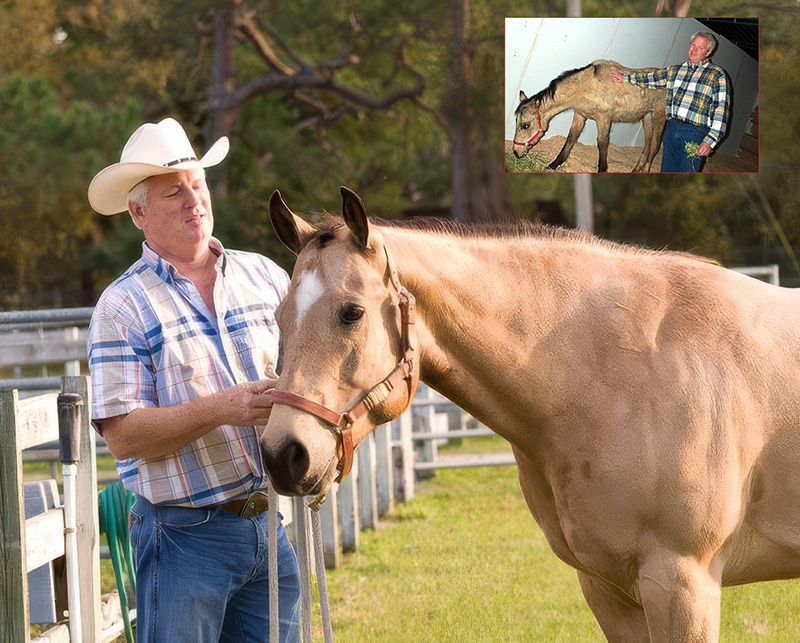
Many years ago, I became involved in a PMU foal rescue effort. Homes were found for nearly three hundred foals, but one little foal remained.
When he stepped off the trailer, his legs were shaking and an old halter had begun cutting into his face. Looking at that frightened youngster, I made a promise:
His name was Dream.
What started as a temporary stop became a twenty-four-year commitment.
"Looking back, I don't remember the feed bills, farrier bills, or veterinary invoices.
I remember the promise." Bob Pruitt
That's what horse ownership really is. Not a purchase. A promise.