

How Much Does Horse Boarding Cost? Pasture, Full & Self-Care Prices in 2026
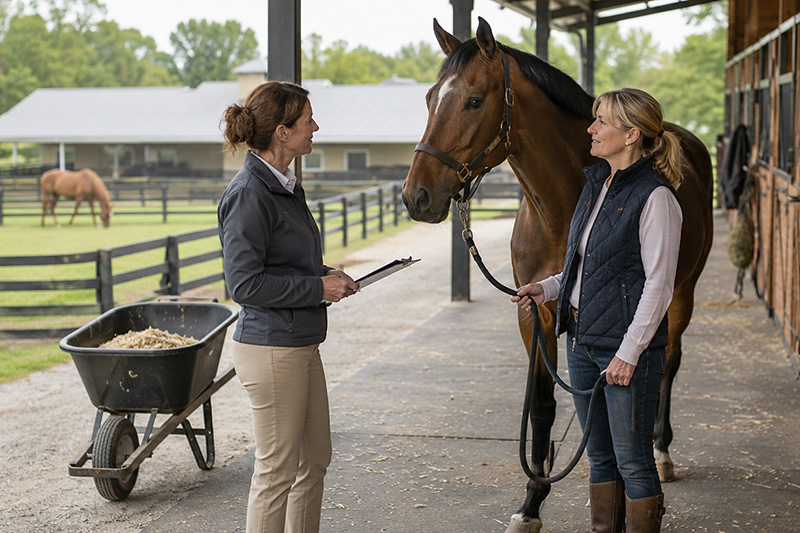
If you don't have your own land, board is going to be the single biggest line in your horse budget — bigger than feed, bigger than the farrier, usually bigger than your truck payment. So it's worth understanding before you ever sign a boarding agreement.
I've kept horses at home and I've kept them at boarding barns. I've sat across the kitchen table from barn owners going over what's included and what isn't. And I've watched too many first-time owners get quoted a number, budget for exactly that number, and then get blindsided three months later. Let's make sure that doesn't happen to you.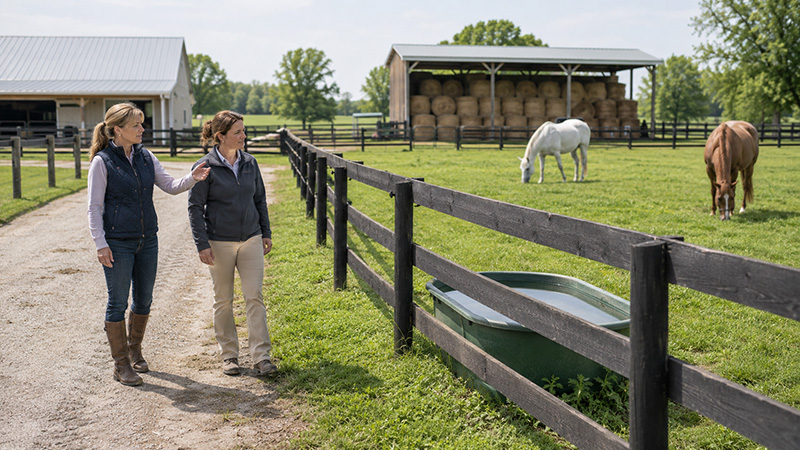
The three types of board — and what each really costs
Almost every boarding arrangement falls into one of three buckets. The price gap between them is huge, but so is the gap in how much work lands on you.
| Board type | Typical 2026 cost/mo | What you get | Who does the work |
|---|---|---|---|
| Pasture board | $150–$450 | Horse lives outdoors in a group, with a run-in shelter, water, and hay | Barn handles feed & water; minimal individual attention |
| Self-care / partial | $300–$650 | You rent a stall or paddock and facilities | You do daily feeding, mucking, turnout |
| Full board | $650–$1,600+ | Stall, daily turnout, hay, grain, mucking, blanketing, vet/farrier coordination | Barn staff handle nearly everything |
In rural areas, you'll live at the bottom of these ranges. Within an hour of a major city — or anywhere with a fancy indoor arena and a show program — full board commonly runs $950–$1,250, and in coastal hunter/jumper country it can pass $2,000 without anyone blinking.
"Cheap board that neglects your horse isn't cheap. It's the most expensive board there is, you just pay the vet instead of the barn." Bob
Pasture board: the natural (and affordable) option
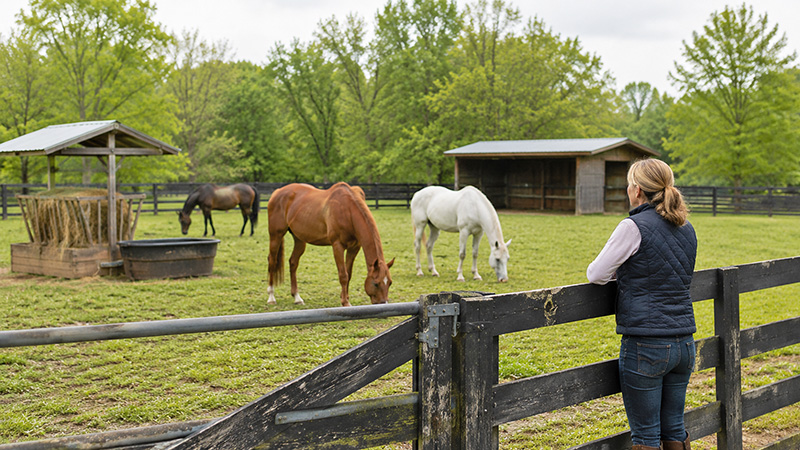
Horses evolved to move and graze and live in a herd, so for a lot of horses pasture board is genuinely the healthiest setup, not just the cheapest. A good pasture-board barn gives you safe fencing, real shelter from weather, clean year-round water, and hay put out when the grass runs short. The trade-off is less individual attention — if your horse needs daily medication or a careful eye, that's harder in a big group.
Self-care board: cheaper rent, real labor
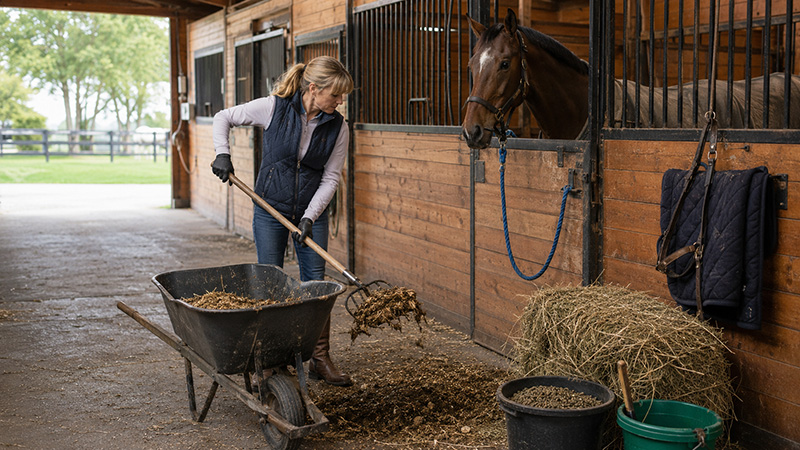
Self-care looks like a bargain on paper. You're essentially renting space. But you are now driving to the barn every single day and in the dark, in the rain, on Christmas morning to feed and muck. Horses don't take weekends off, and neither will you. I tell new owners to be brutally honest about their schedule before choosing this one. And ask yourself one more question: what happens the day you're sick, traveling, or stuck late at work? Self-care only works if you have a reliable backup person or a paid emergency-care option lined up before you need it.
Full board: the most expensive line, and often the smartest
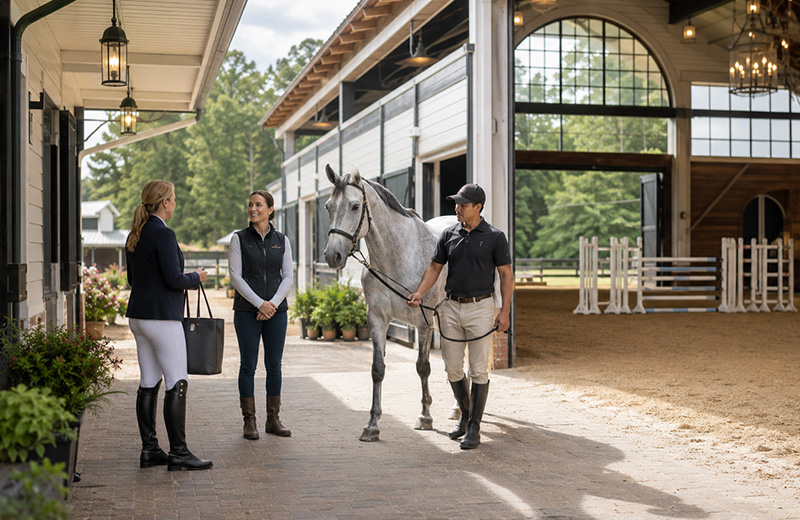
Full board is what most first-time owners end up choosing, and for good reason: professional eyes on your horse every day catch problems early. The price reflects today's reality - hay, shavings, feed, and especially labor have all jumped sharply in the last few years. When you see board rates climbing, that's why.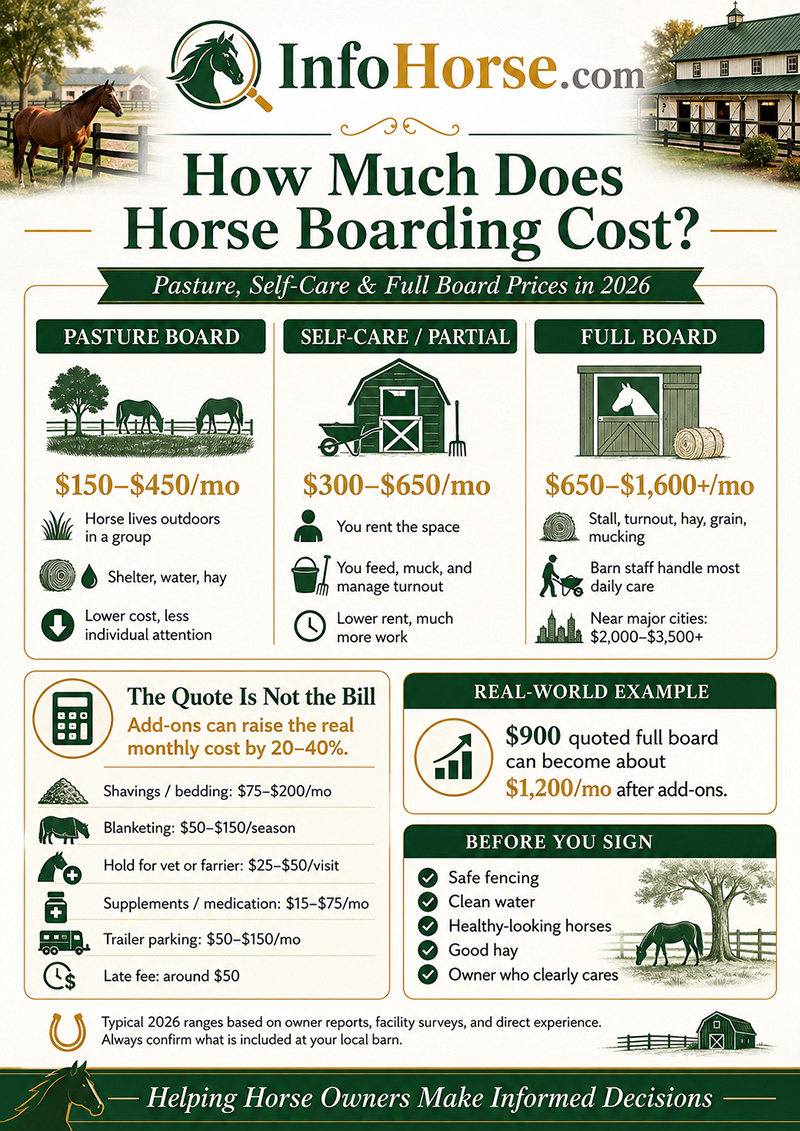
The costs that aren't in the board quote
Here's the part that catches everyone. The number on the boarding agreement is the base. Most barns now itemize a list of add-ons that quietly inflate the bill by 20–40%. Ask about every one of these before you sign:
| Add-on | Typical 2026 charge |
|---|---|
| Shavings / bedding (often billed separately now) | $8–$14 per bag, or $75–$200/mo |
| Blanketing service | $50–$150 per season |
| Holding for vet or farrier | $25–$50 per visit |
| Supplement / medication administration | $15–$75/mo |
| Trailer parking | $50–$150/mo |
| Late payment fee | $50 (now standard at many barns) |
A board rate quoted at $900 can easily become a $1,200 monthly reality once these are added. That $300 gap is exactly where most owners get caught. There's nothing shady about it — it's just how barns cope with their own rising costs — but you need the full number to budget honestly.
And ask one more question that sounds simple but isn't: how much hay is actually included? "Hay included" can mean two flakes a day, free-choice round bales, or no hay at all when the barn decides the pasture is "good enough." That difference matters enormously, both to your monthly cost and to your horse's health. Get the specific amount in writing.
Whether you board or build at home, the quality of the stall is the quality of your horse's day.
Before You Sign: What Must Be in Writing
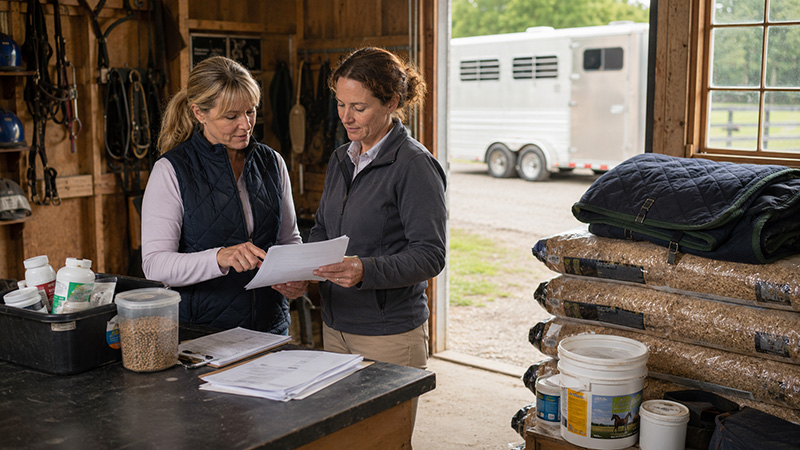
Board isn't just a monthly fee. It's a care relationship and a legal one, and the time to sort out the details is before your horse moves in - not during an emergency at 2 a.m. Get all of this in writing:
What feed is included and how much hay is fed; the turnout and stall-cleaning schedules; blanketing, medication, and late-fee charges; how much notice you must give before leaving; and the ones new owners forget, who authorizes a vet in an emergency, and who is responsible if the horse is injured, damages property, or needs after-hours care.
A few specific points are worth singling out, because I've seen each one cause real heartache:
- Emergency veterinary authorization. If the barn can't reach you and your horse is colicking, can they call the vet? Spell out who decides, up to what dollar amount, and which vet to call. Emergencies move fast; the paperwork has to already exist.
- Quarantine and new-horse policy. A good barn protects the horses already there. Ask whether incoming horses need current Coggins and vaccination records, and whether there's an isolation plan for new or sick animals. This isn't overcaution: Colorado State University's equine biosecurity program advises that a new horse go directly to a quarantine area on arrival, kept separate from resident horses and temperature-checked every 12 hours for anywhere from one to four weeks depending on risk — guidance that mirrors the American Association of Equine Practitioners (AAEP) standard that new arrivals be isolated for two to three weeks.
You can read CSU's owner-facing overview here: Selecting a Farm, Arrival & Quarantine Procedures for Owners. A barn with no policy at all is a red flag for your horse's health. - Liability and risk of loss. Not a scary legal lecture — just one practical question. The agreement should make clear who carries the risk if the horse is hurt or causes damage, and whether you're expected to carry your own insurance. Know the answer before you sign, not after.
- Turnout, defined. "Daily turnout" can mean two hours or all day, group or individual, "weather permitting" or rain-or-shine. Ask exactly how many hours your horse will be out and under what conditions horses get kept in. It affects your horse's body, mind, and health every single day.
A good barn will not be offended by any of these questions. A good barn already has the answers.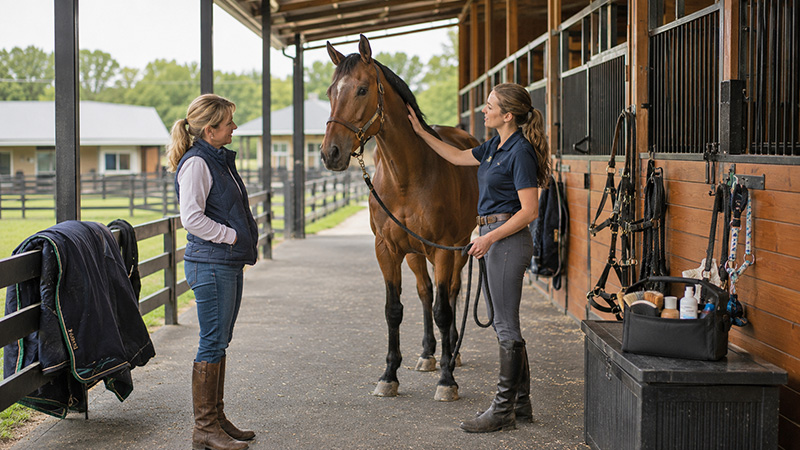
Questions to Ask Before Choosing a Boarding Barn
Bring this list with you on the tour:
| Ask the barn owner |
|---|
| What exactly is included in the monthly board? |
| How much hay is fed, and how often? |
| What costs extra — shavings, blanketing, holding, supplements? |
| What is the turnout schedule, and when are horses kept in? |
| What happens in a veterinary emergency if you can't reach me? |
| What are your vaccine, Coggins, and quarantine rules for new horses? |
| How much notice is required before I leave? |
What you should walk the property to check
Price tells you what a barn costs. A walk-through tells you what it's worth. Before you commit, look at the things a quote can never show you:
"Is the fencing safe and well-maintained, or is it sagging wire and broken boards? Is there clean, fresh water in every field and stall? Do the horses already there look content, with good weight and clean coats? Is the hay green and stored dry, or dusty and weather-beaten? Does the barn owner light up when they talk about the horses, or just about the rates? After forty years, I trust that last one more than almost anything on the contract." Bob Pruitt
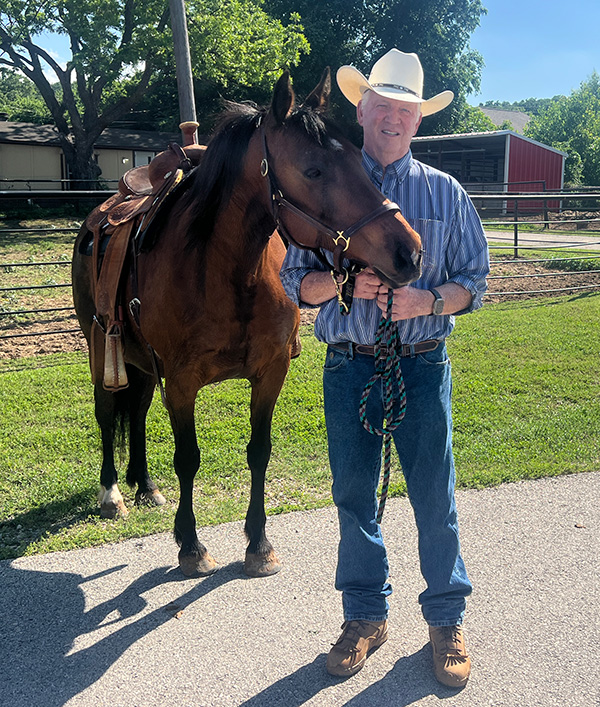 About the author — Bob Pruitt
Bob co-founded InfoHorse.com in 1997 and has more than 40 years of hands-on horse ownership, from a PMU foal rescue named Dream to a lifetime of trail and pleasure horses. Alongside Ann Pruitt, he has spent nearly three decades connecting horse owners with trusted, verified equine professionals and products. More about InfoHorse →
💡 Key Takeaways
- Pasture board: $150–$450/mo — most affordable, often the healthiest option for sound horses.
- Self-care / partial: $300–$650/mo — cheaper rent, but daily labor falls on you, every day.
- Full board: $650–$1,600+/mo, and $2,000–$3,500+ near major cities.
- The quote is not the bill. Add-ons routinely raise the real cost 20–40% — ask about every one before signing.
- Get it in writing. Feed, hay amount, turnout, emergency vet authorization, quarantine rules, and liability all belong in the agreement — before move-in day.
- Walk the property. Safe fencing, clean water, healthy horses, and a caring owner matter more than the rate.
This is one piece of the bigger picture
→ The full cost-of-ownership breakdown: what a horse really costs→ First Time Horse Owner Guide
- How much does it cost to board a horse per month?
- In 2026, pasture board typically costs $150–$450 per month, self-care or partial board $300–$650, and full board $650–$1,600 or more. Near major cities, full board can reach $2,000–$3,500+ per month.
- What's the difference between full board and pasture board?
- Full board means the barn staff handle nearly all daily care — feeding, mucking, turnout, blanketing. Pasture board means your horse lives outdoors in a group with shelter, water, and hay provided, but with less individual attention. Full board costs more because labor is the largest expense.
- Why is horse board so expensive in 2026?
- Board prices have risen roughly 12–18% in many areas since 2023, driven by higher hay, shavings, feed, and labor costs. Barns near cities and in show regions saw the steepest increases.
- What hidden costs come with horse boarding?
- Common add-ons include separately billed shavings ($75–$200/mo), blanketing ($50–$150/season), holding fees for vet or farrier ($25–$50/visit), supplement administration ($15–$75/mo), and trailer parking. These can raise the real bill 20–40% above the quoted base rate.
- What should I ask before signing a horse boarding agreement?
- Get everything in writing: what feed and how much hay is included, the turnout and stall-cleaning schedules, all extra charges (shavings, blanketing, medication, late fees), the notice required before leaving, and — critically — emergency veterinary authorization, the barn's Coggins/vaccine/quarantine rules for new horses, and who is liable if the horse is injured or causes damage. A good barn will already have clear answers to all of these.
- Is it cheaper to keep a horse at home than to board?
- It can reduce monthly cash costs, but keeping a horse at home means every feeding, water trough, fence repair, and emergency becomes your responsibility and your labor. The savings are real only if you have suitable land and the time to do the daily work.
Sources & Further Reading
→ Colorado State University — Selecting a Farm, Arrival & Quarantine Procedures for Owners
→ American Association of Equine Practitioners — General Biosecurity Guidelines