
How Did Fibar Come To Be?
Fibar started with an idea: Wouldn't shredded wood fibers be a better horse training surface than dirt or sand? The question occurred to company founder Robert Heath, because, as an avid horseman, he saw that conventional surfaces were hard on horses' legs.
Wood fiber, on the other hand, was naturally springy, good to look at, and never turned to mud. The next step was development work that eventually resulted in Engineered Wood Fiber (EWF), which he called "Fibar." That was in 1979. Fibar was readily accepted by horse owners, professionals, and veterinarians from Kentucky horse country to British Columbia. Within five years, the company turned Heath's idea into a thriving business, which has supplied the surfacing for over 2,000 horse facilities in the United States and Canada. Today, there still is no more superior riding surface than Fibar.
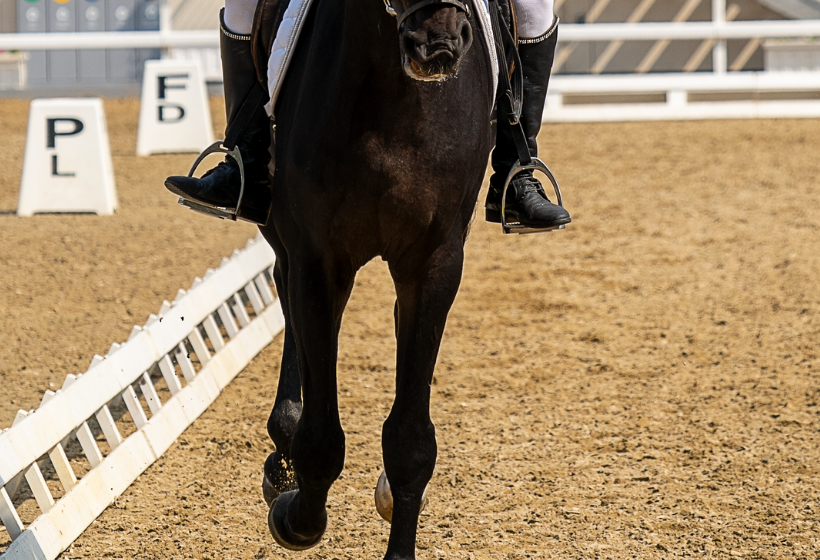
Poor footing’s a sore point with most horses. Working a horse on suboptimal footing riding surface can hurt more than his performance. It can also do irreparable damage to his legs, feet or attitude.
A hard, rocky surface can give a horse splints, stone bruises, and bucked shins. A deep, cuppy surface could make a horse bow a tendon, strain a suspensory, or slip a stifle. And training every day on a surface that makes him uncomfortable may make a horse resent his job. After all, would you like to run, jump or dance if it hurt?
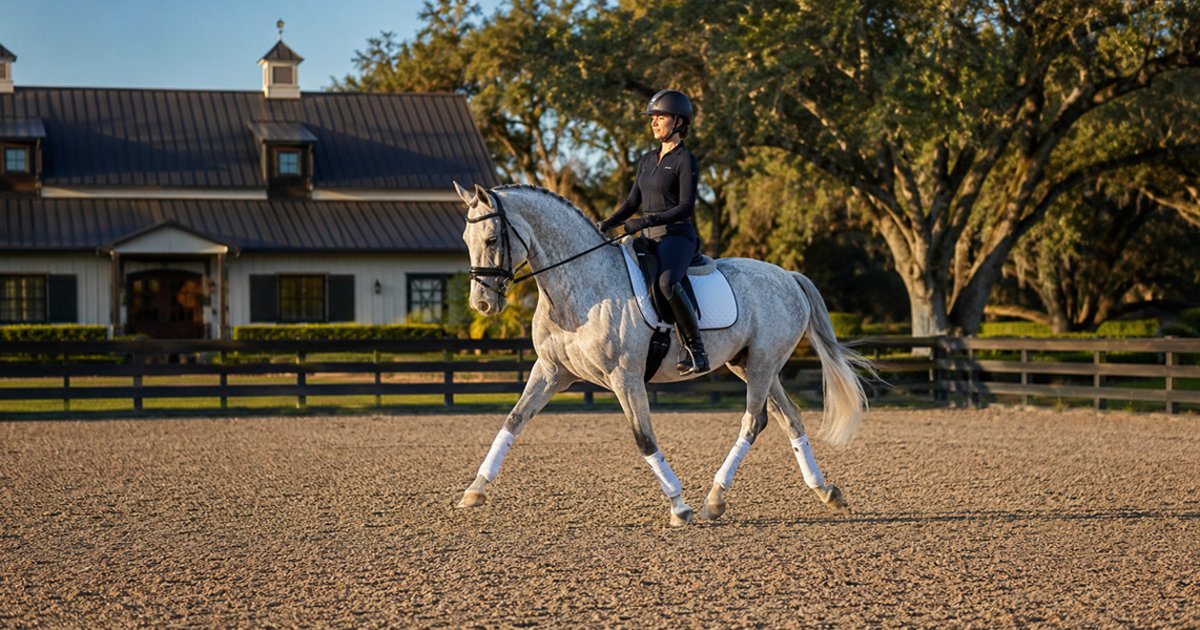
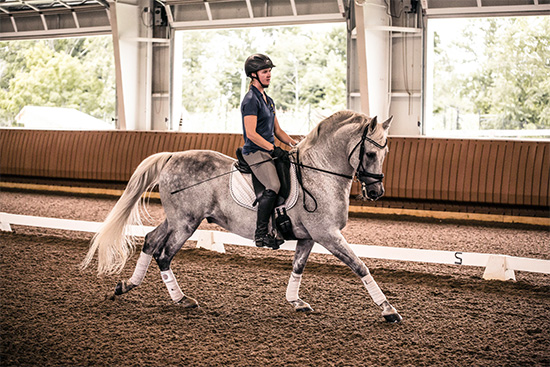
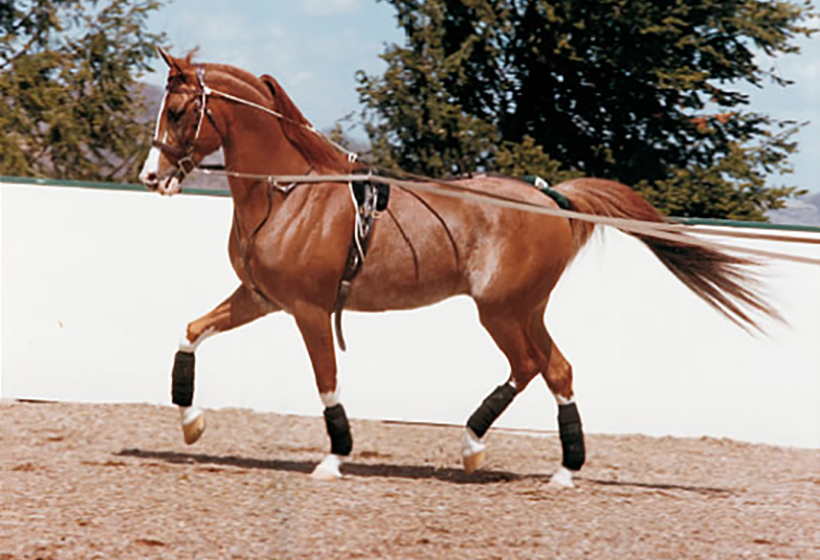
The Spanish Riding School recently selected Fibar for it’s recent U.S. Tour and several Olympic Riders use Fibar. In addition, performance-oriented owners and trainers through out the USA and Canada are switching to Fibar riding surfaces. Fibar is engineered to provide resilient, rock-free footing that stays useful under all weather conditions. Veterinarians report that racehorses that train on Fibar surfaces suffer fewer injuries than on other surfaces. And training track managers say that even sore horses can train comfortably on Fibar. Whether your horses are sound and trying to stay that way or sore and trying to get better, they’ll put their best foot forward on Fibar.
We guarantee it. No more mud! If there wasn’t something special about our product, our name might be Clay’s Dirt or The Hard Way Crushed Stone Company. But the name Fibar stands for something very special: selected wood fibers that have been scientifically engineered and manufactured to provide a soft, dust-free footing horse people can count on in all kinds of weather.
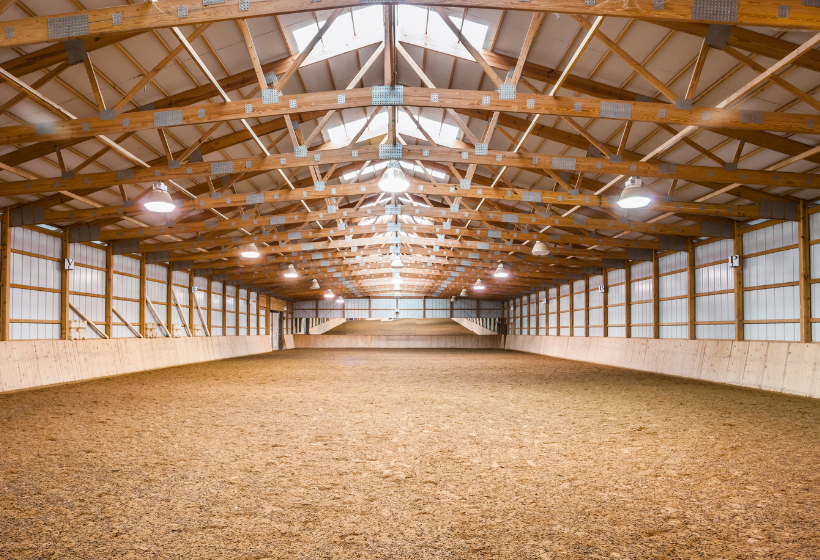
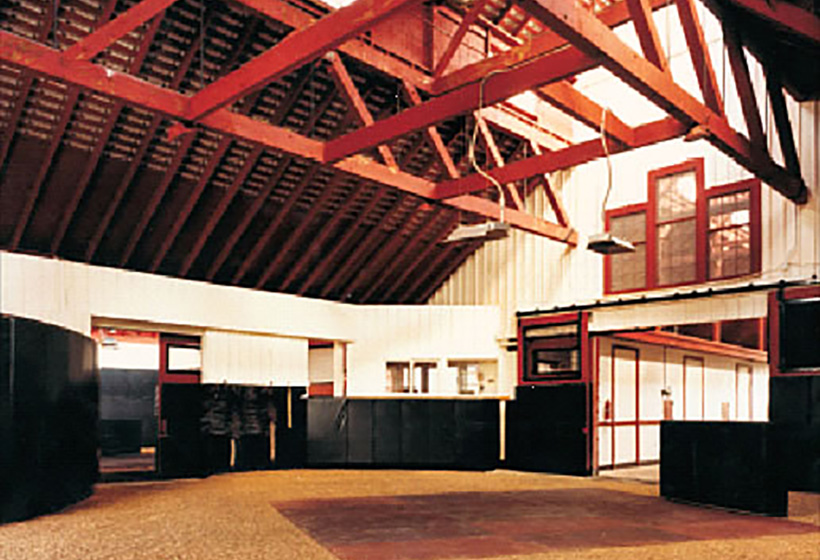
Its unsurpassed reliability has made Fibar the footing of choice for performance-oriented owners and trainers who depend on it to keep their training tracks, riding rings, shed rows, gallops, hot walkers and breeding sheds in full-time operation.
What matters to these experts is not the Fibar name. They care about Fibar’s results. Rain or shine, wind, sleet or snow, a Fibar surface means no rocks, no puddles, no ice, no dust and no slop. A footing by any other name would not stay so sweet.
Yes, it is just that safe and cushioning! See our video below:
Fibar uses an integrated drainage system under the entire arena or track. No matter how severe the rainstorm, the riding surface will be totally unaffected. In fact, many customers say the more rain it gets, the better the Fibar surface.
Indoor arenas surfaced in Fibar should be watered as conditions dictate. Fibar requires far less watering than any other indoor materials. Outdoors, most arenas never require watering. Tracks that get a lot of use find watering helps keep the track “tight.”
Under prolonged sub-zero conditions, Fibar will freeze, but much later than sand and other conventional surfaces. It also thaws much more quickly, and there is none of the undesirable mud typical of dirt arenas. Snow can be plowed off a Fibar arena, and salt can be worked into the surface to prolong winter use.
This is a difficult question to answer because each installation is subject to different amounts of usage. As a rule of thumb, arenas and tracks will need a top-off after the first three years, and thereafter a top-off every two or three. Fibar does not rot, but is broken down mechanically by the pounding of the horses’ hooves. Lightly used private arenas and tracks can last longer between top-offs.
Absolutely not! Fibar is manufactured from specially selected woods that exhibit unique fibrous qualities. Due to the drainage design, the wood fibers never become waterlogged.
Fibar provides simple guidelines to be given to a local contractor. Indoor arenas and breeding sheds are generally installed in just a few hours. Our staff is happy to answer your questions and welcomes your calls.
Says Renowned Dressage Trainer, Gunner Ostergaard:Horses are comfortable on Fibar. The springy surface- in combination with the lack of dust- is what I like most about Fibar.
Sharon Stewart of Cedar Hills Farm in California says:Reducing wear and tear- that’s why Fibar was installed 10 years ago. We have no training injuries on this surface. It is very easy on horse’s legs!
Read more Testimonials.
Our friendly representatives understand the needs of horse owners and their properties. Fibar is one of the most affordable and dependable footing you can have for your indoor or outdoor arena! We are happy to talk to you about Fibar and will work hard to ensure your complete satisfaction! Please give us a call today and let us help you on your way to the best footing at the best prices for your arena!
Fibar’s selected wood fibers have been scientifically engineered and manufactured to provide a
Per The Fibar Group, LLC: founder Robert Heath wondered as an avid horseman whether shredded wood fibers would be a better horse training surface than dirt or sand. He saw conventional surfaces were hard on horses' legs.
Per the company: development work resulted in Engineered Wood Fiber (EWF) — "Fibar" — in 1979. Within five years, the company turned Heath's idea into a thriving business that has supplied surfacing for over 2,000 horse facilities in the United States and Canada.
Per Fibar: poor footing is a sore point with most horses. Working a horse on suboptimal footing can hurt more than performance — it can cause irreparable damage:
Per Fibar: the Spanish Riding School recently selected Fibar for its U.S. Tour, and several Olympic riders use Fibar. Performance-oriented owners and trainers throughout USA and Canada are switching.
Per Fibar: veterinarians report that racehorses that train on Fibar surfaces suffer fewer injuries than on other surfaces. Training-track managers say similar.
Per Fibar: engineered to provide resilient, rock-free footing that stays useful under all weather conditions. Wood fiber is naturally springy, good to look at, and never turns to mud.
Per The Fibar Group, LLC: Phone (800) 342-2721, email [email protected], website http://fibar.com/horses/index.htm. Pricing varies by arena size and installation; pricing as quoted is subject to change due to economic factors.
Explore more from the InfoHorse.com directory


Explore expert guides on topics related to your business
By Bob Pruitt
By Teri Clark
By Bob Pruitt
By Karen Elizabeth Baril
By Footing First
By Bob Pruitt