

How to Build an Equestrian Arena
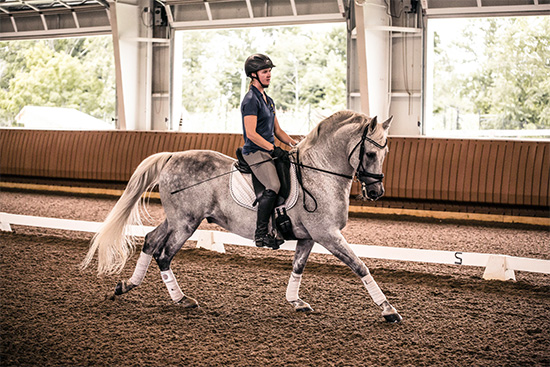
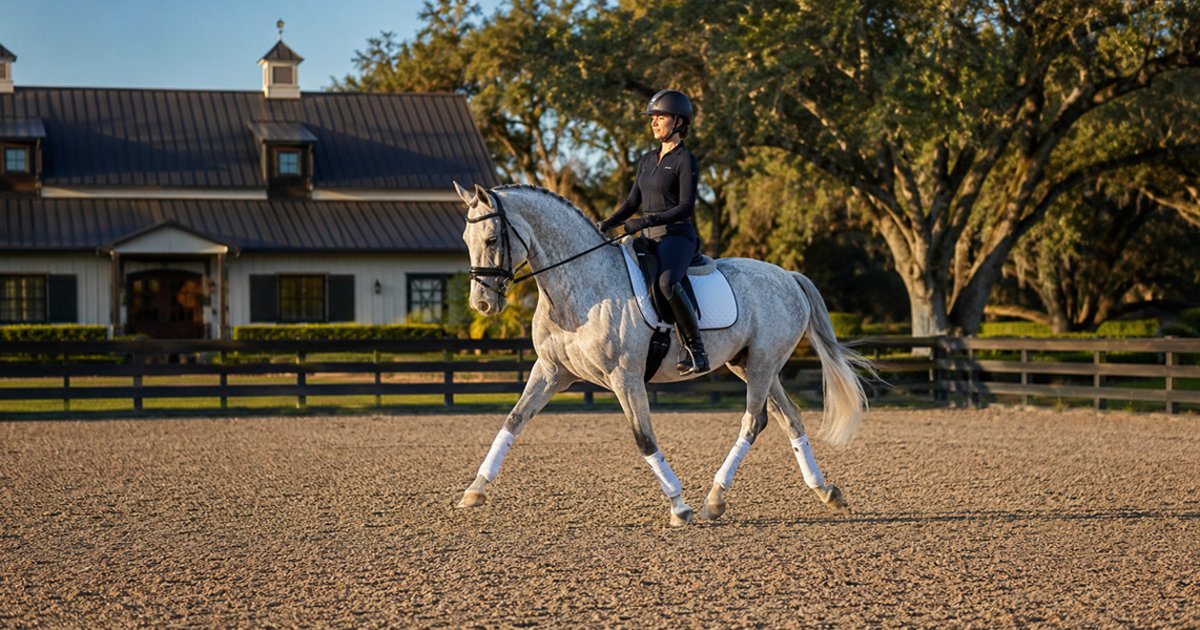
Building a horse riding arena starts with finding an experienced arena builder who can pick the right site—a gently sloped spot allows a cut-and-fill approach, and the finished arena should always sit higher than the surrounding ground so water drains away. Outdoor arenas can be built on a traditional compacted stone base, the most cost-effective option, or on a free-draining base of clean stone that lets water pass straight through. Indoor and covered arenas do best with a traditional compacted base paired with a dust-free footing blend, which reduces maintenance and eliminates the need to water the surface.
There are many myths and misconceptions regarding the construction of an equine arena. The most important first step, is to find an experienced arena builder with proper knowledge of materials and methods. This will ensure that the project is completed properly from start to finish. They will help you to determine the best area for the arena which can help keep costs down, and make the process as efficient as possible.
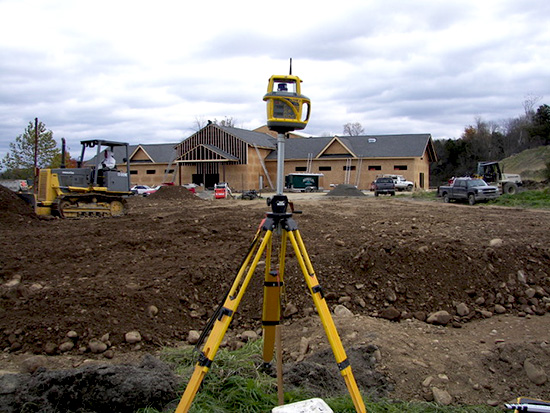
For example, some slope is often good as this creates a cut and fill scenario so you are utilizing your land to the best of your ability, without bringing in unnecessary material. Often people like to look at the field and suggest a flat area, but that is a misconception because by the time the soil has been removed, you now have to bring in fill to raise the arena up. The arena should always be higher than the surrounding ground, as this will encourage water out of the arena and to the lowest point on the property. An essential part of arena is drainage and pitch, so that water is sent away from the arena.
When you have found the correct contractor for you and a good spot for the arena to be built, you can begin exploring your options for the type of arena that you want. There are many different ways to build an arena and the build will depend on cost and expectations.
Questions that should be asked: Will this be an Indoor, Covered or Outdoor Arena? Is this the only arena that you will have to work your horses? How many horses will be using the arena? What discipline do you ride? Are you planning on installing irrigation, and if so, do you have a good water source for the irrigation?
Once these questions are addressed, your arena builder should be able to advise about the best base and surface for your needs.
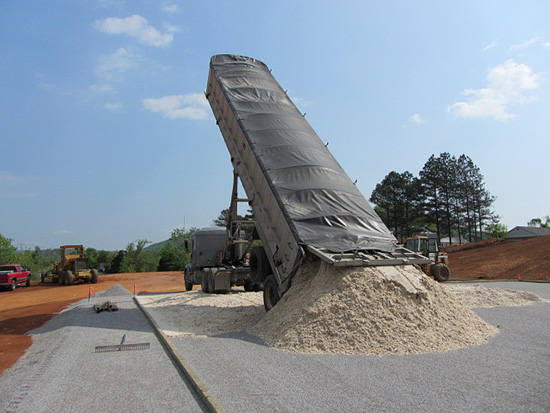
Outdoor Arenas For an outdoor arena, you can build a traditional base of compacted stone base which will provide very good stability when installed correctly. This base will not drain as quickly as other types of base, but it is the most traditional and cost effective option. You would be free to install any type of footing, from traditional to the more high performance blends, such as some of the dust free products available.
The next option for outdoor arenas is a free-draining base. This type of base will provide the very best in drainage for your arena. Free-draining bases use a clean stone so that the water drains through the base and not just through surface drainage, as with a traditional base. When using a free draining base different matting systems can be added which do increase cost, but also add value to the surface.
There are many different types of mats, which create a separation layer between stone and footing. You can also use heavy fabric as a separation layer which works very well for a better cost. To protect the separation layer on a free draining base, whether fabric or mats, a larger footing depth is needed.
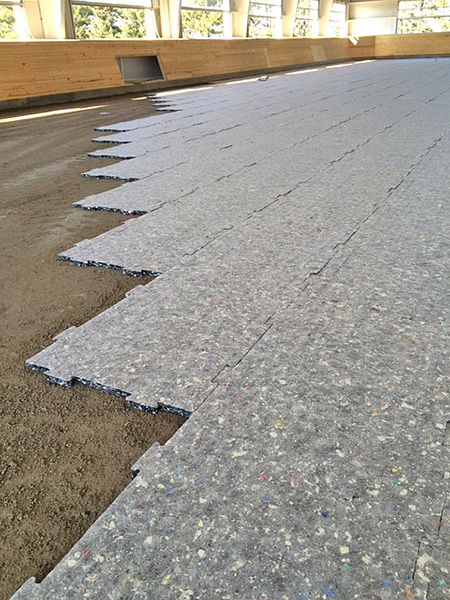
Indoor and Covered Arenas When building a base indoors or in a covered arena, you are best to stick with a traditional base. The proper materials and compaction rates are imperative to create the stability, as well as keep the base and footing from mixing.
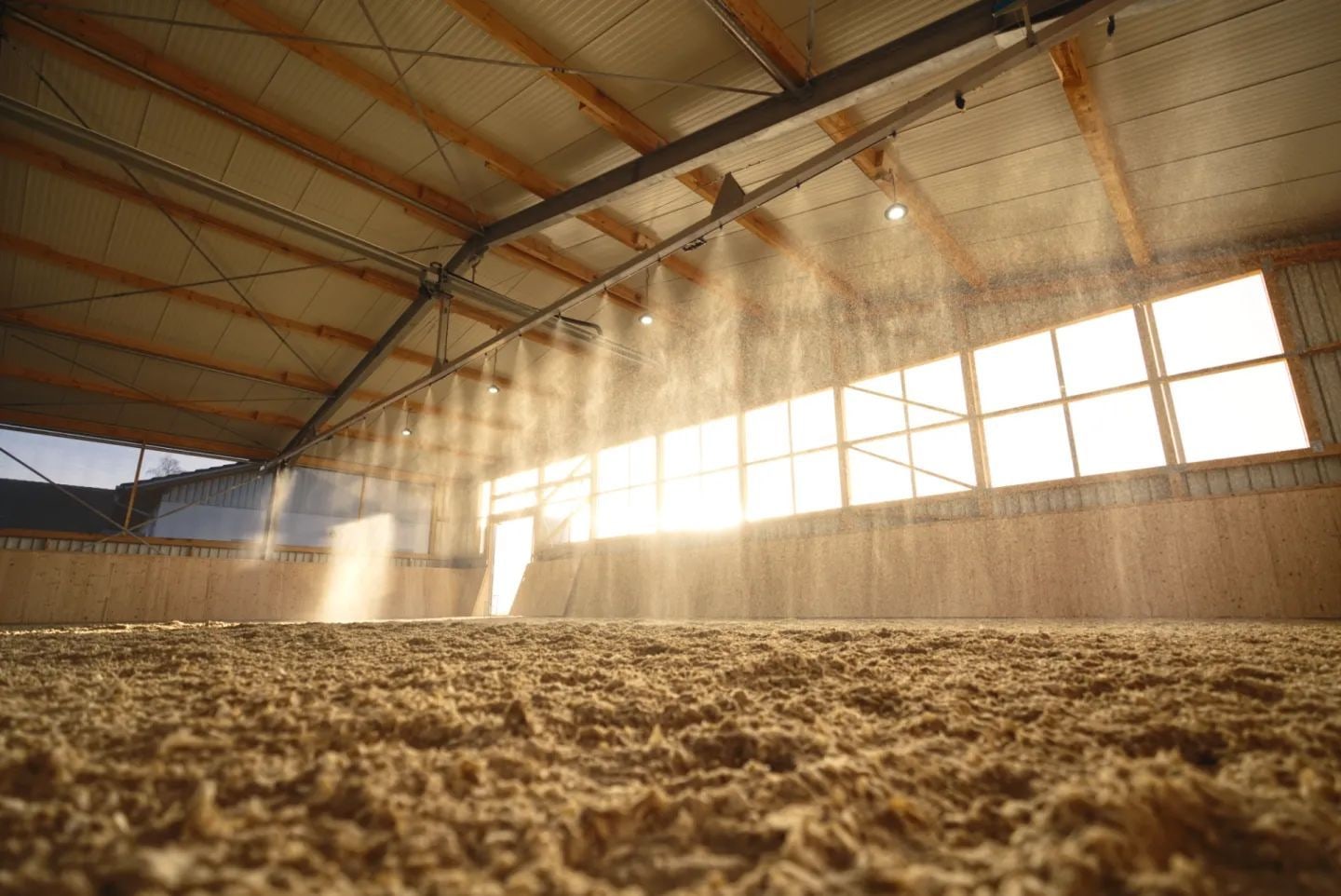
Another thing to consider, is that indoor and covered arenas are often more difficult to irrigate consistently, and water indoors often creates humidity and condensation. This is where we would very much recommend the dust free blends indoors. They reduce maintenance needs and costs, and eliminate the need to water your footing surface.
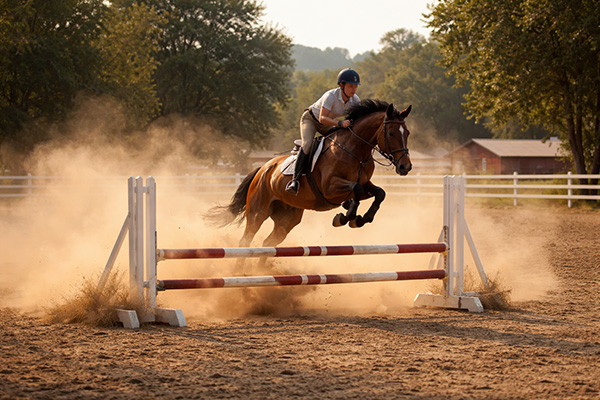
FootingFirst LLC has some of the very best blends in the industry. TravelRight is their premier dust-free blend, and is now available in both the US and Canada. Footingfirst provides 5 different varieties of dust-free blends depending on location, and performance & maintenance needs. These blends vary for different disciplines, and the higher performance blends are used widely in the hunter, jumper and dressage industries.
Please visit us at footingfirst.com for more information.