

What Do Horses Eat? The Complete Feeding Guide from 40-Year Horse Owners
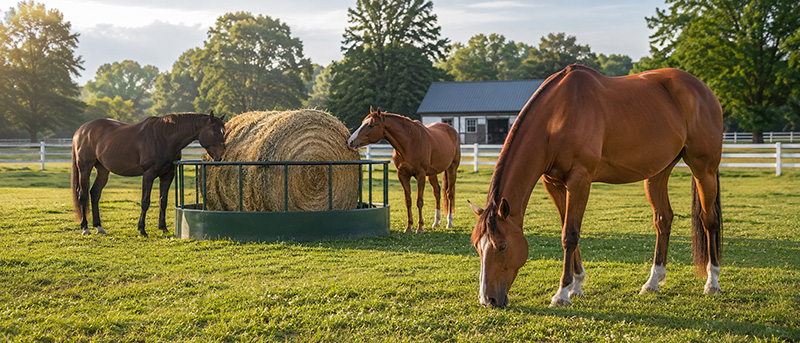
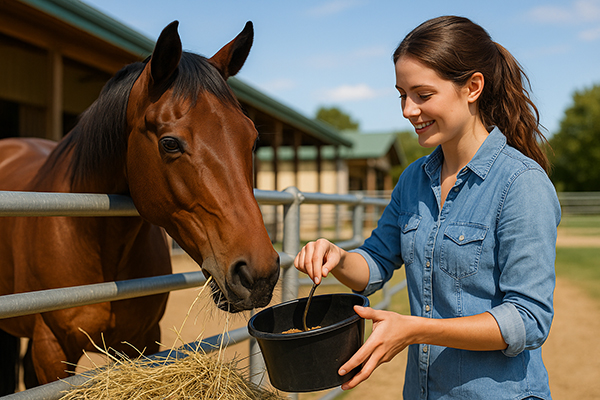
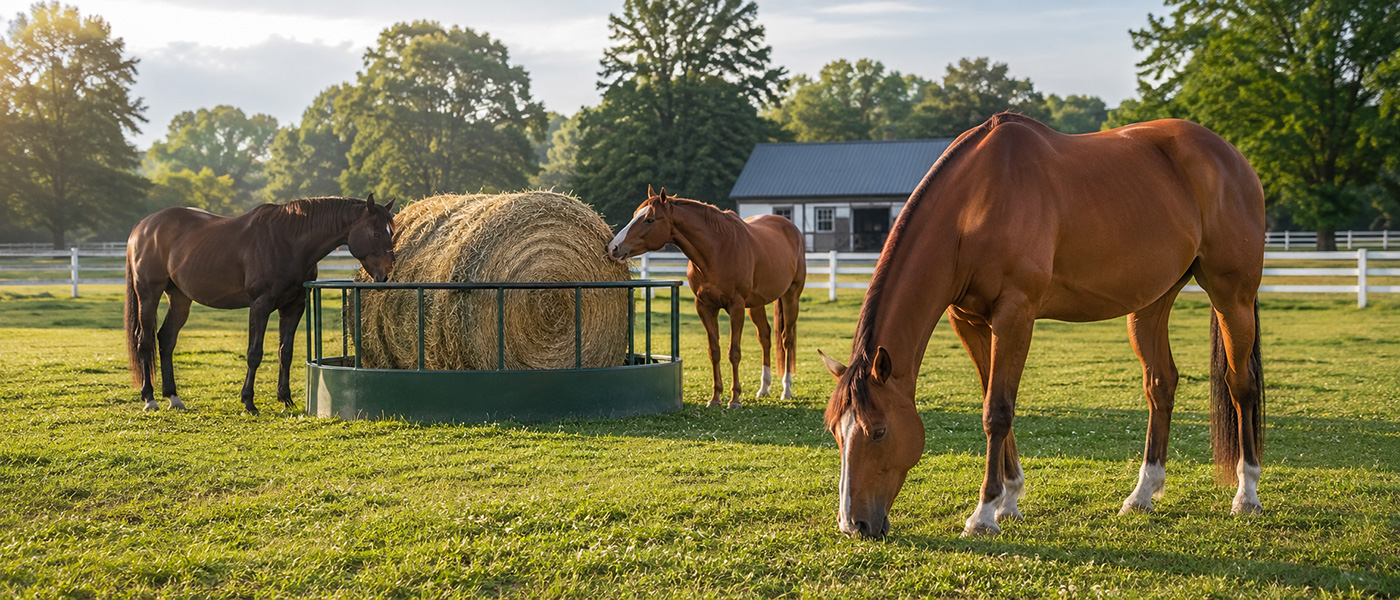
Horses eat forage — grass and hay — at roughly 1.5% to 2.5% of body weight every day, which works out to about 15 to 25 pounds for the average 1,000-pound horse. Add fresh clean water, free-choice salt, shelter from extreme weather, and a feeding program that changes slowly, and you have covered what most healthy adult horses actually require. Grain, pellets, concentrates, and supplements enter the story only when forage alone cannot do a specific job, and hay should be fed by weight rather than by flakes, since flakes vary with the bale, cutting, moisture level, and type of hay.
It's one of the most-asked horse questions on the internet, and after forty years of feeding horses through droughts, deep freezes, and one memorable hay shortage, we can give you the answer in one word:
Forage.
Grass and hay aren't just what horses eat — they're what horses are built around. Everything else on the feed room shelf is a supporting actor.
Here's the complete picture, in plain English.
The Short Answer
A horse eats approximately 1.5% to 2.5% of its body weight in forage every day.
For the average 1,000-pound horse, that's roughly 15 to 25 pounds of grass and hay daily.
Add:
- Fresh clean water
- Free-choice salt
- Shelter from extreme weather
- A feeding program that changes slowly
And you've covered what most healthy adult horses actually require.
Grain, pellets, concentrates, and supplements enter the story only when forage alone can't do a specific job.
Why Forage Comes First
A horse is a grazing machine.
In the wild, horses spend 14 to 17 hours each day moving and grazing almost continuously. Their digestive system was designed around small amounts of forage consumed over long periods of time.
The horse's stomach is surprisingly small — roughly the size of a football and capable of holding only 2 to 4 gallons. Even more important, the stomach produces acid around the clock whether food arrives or not.
That design has consequences.
Long periods without forage can allow stomach acid to irritate the stomach lining, which is one reason ulcers are so common in modern horses.
Small, frequent meals aren't a luxury.
They're biology.
This is why many horse owners use slow feeders. Stretching hay consumption over the course of the day may be some of the cheapest health insurance available.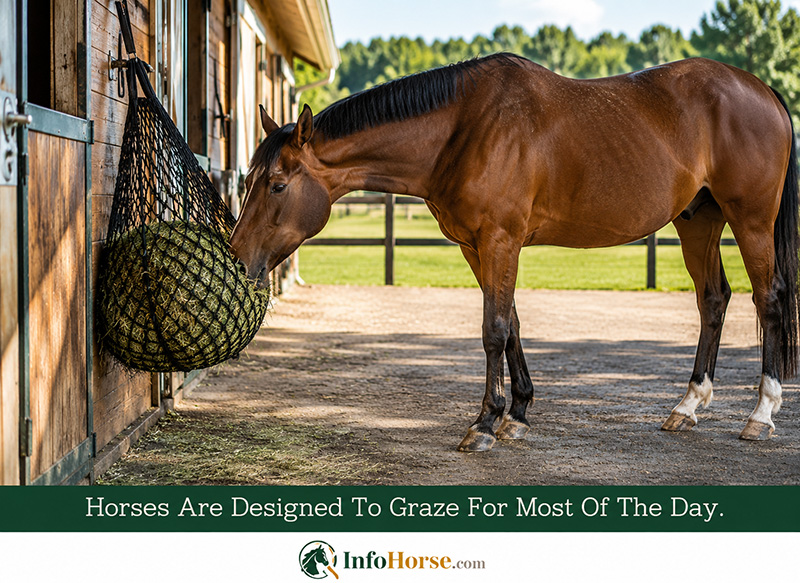
The 1.5% to 2.5% Rule
A simple formula:
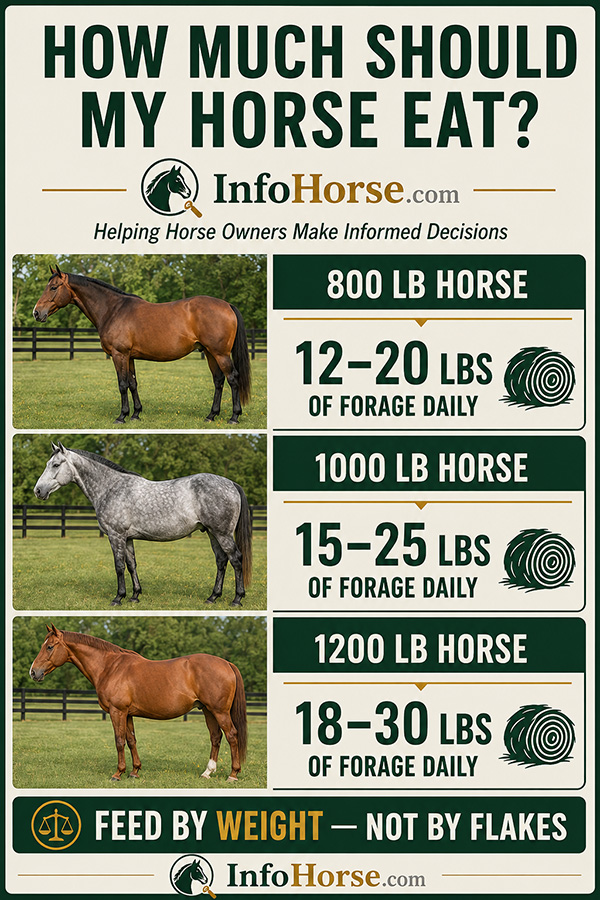
Body Weight × 0.015 to 0.025 = Pounds of Forage Per Day
Examples:
- 800-pound horse = 12 to 20 pounds
- 1,000-pound horse = 15 to 25 pounds
- 1,200-pound horse = 18 to 30 pounds
One important tip:
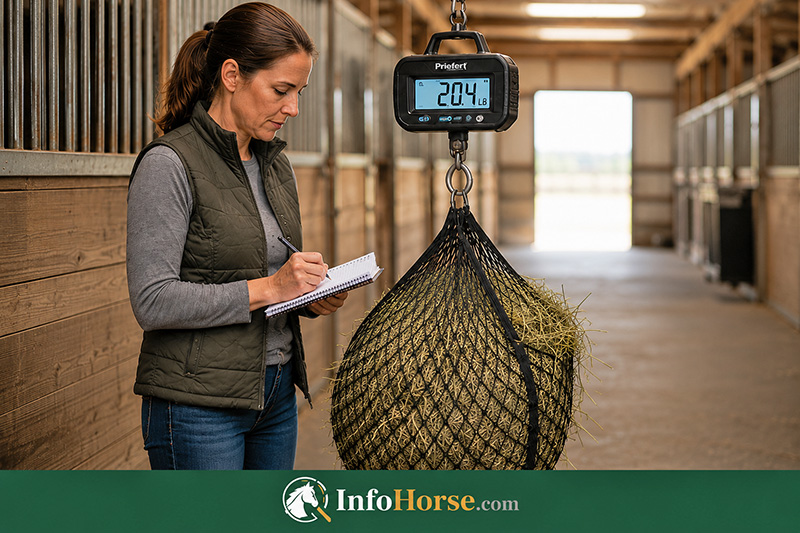
Feed by weight, not by flakes.
Hay flakes vary tremendously depending on the bale, cutting, moisture level, and type of hay. A simple hanging scale can eliminate the guesswork forever.
What Do Horses Eat in the Wild?
Wild horses survive primarily on grasses, weeds, shrubs, and other naturally available forage.
What they do not do is eat large grain meals twice a day.
The closer we can come to mimicking natural grazing behavior, the happier the horse's digestive system tends to be.
Modern horse ownership doesn't always allow constant grazing, but unlimited access to appropriate forage or slow-fed hay often comes much closer to nature than large concentrate meals fed morning and evening.
What Counts as Forage?
There are four major forage categories.
Pasture
Pasture is the original horse feed and remains one of the best sources of nutrition when properly managed.
Grass Hays
Grass hays form the foundation of most horse feeding programs, but not all grass hays are created equal. Protein, calorie, and sugar levels can vary significantly depending on the species, maturity at harvest, growing conditions, and storage methods.
Timothy Hay – A popular cool-season grass hay known for its balanced nutrition, good fiber content, and broad suitability for many horses.
Orchard Grass Hay – Soft, leafy, and highly palatable. Many horses readily consume orchard grass, making it a favorite for picky eaters.
Bermuda Hay – Common throughout the southern United States. Good-quality bermuda can be an excellent maintenance hay for many horses and is often readily available in warmer climates.
Brome Hay – A moderate-energy grass hay with good fiber content that works well for many adult horses.
Teff Hay – A warm-season, fine-stemmed grass forage that is often lower in sugar and starch than many traditional grass hays, making it popular for horses with metabolic concerns. However, nutrient levels can vary significantly, so hay analysis is always recommended.
Native Grass Hays – These hays may contain a mixture of naturally occurring grasses and can vary widely in nutritional value depending on the region and growing conditions.
Whenever possible, purchase hay from a reputable source that provides hay analysis information. Testing can reveal important details such as protein content, sugar levels, digestible energy, and mineral content. Two bales may look nearly identical while providing very different nutrition. For horses with metabolic issues, insulin resistance, laminitis history, or special dietary needs, hay testing can be one of the most valuable tools available.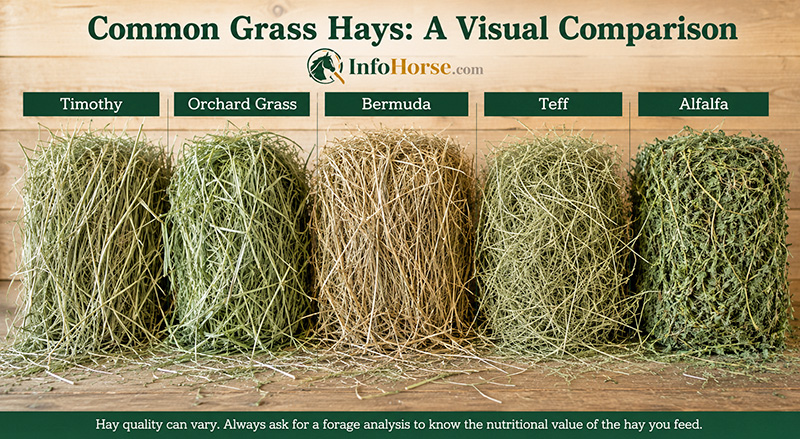
"After forty years of feeding horses, we've learned that you cannot judge hay by color alone. The best-looking bale in the barn may not be the best hay for your horse. " Bob Pruitt
Pelleted and Cubed Forage
Pellets and cubes can solve several common feeding problems:
- Consistent nutrition
- Reduced dust
- Easier storage
- Easier weighing
- Better chewability for senior horses
Quality matters tremendously.
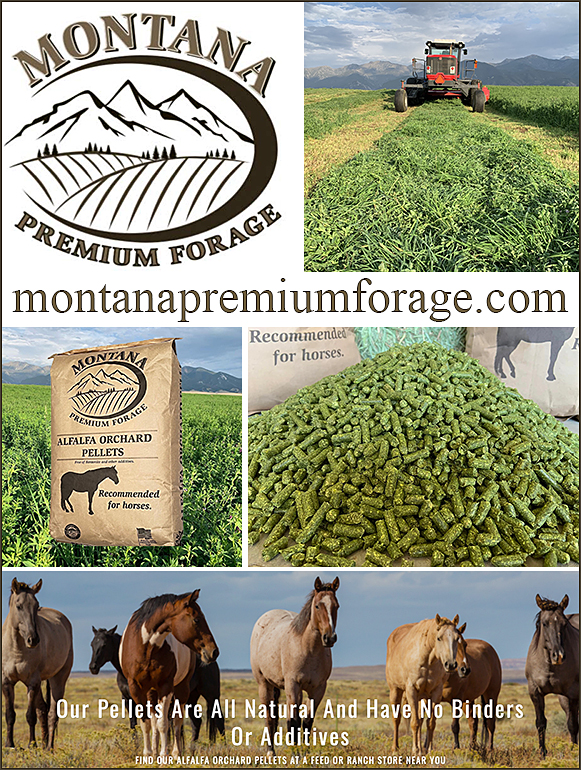
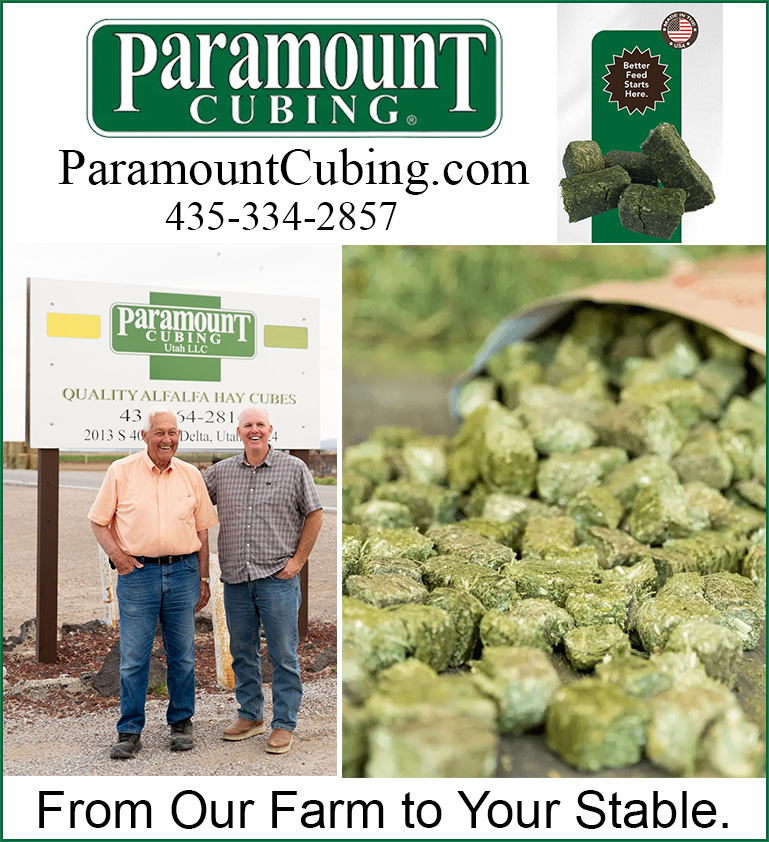
This is why we often point horse owners toward Montana Premium Forage. Their alfalfa and alfalfa/orchard grass pellets are grown in Montana and processed close to where they are produced, helping maintain consistency from batch to batch.
Can Horses Live on Grass Alone?
Some can.
Many easy keepers maintain excellent body condition on quality pasture alone.
Others require additional calories or nutrients.
Horses that often need more than pasture include:
- Growing foals
- Broodmares
- Performance horses
- Seniors
- Hard keepers
- Horses recovering from illness
The key isn't feeding more.
The key is feeding what the individual horse actually needs.
When Does a Horse Need More Than Hay?
When the job outgrows the forage.
Some examples include:
- Horses struggling to maintain weight
- Senior horses with worn teeth
- Performance horses in heavy work
- Pregnant and lactating mares
- Horses recovering from illness
At that point the question becomes:
How much nutrition can the horse actually absorb?
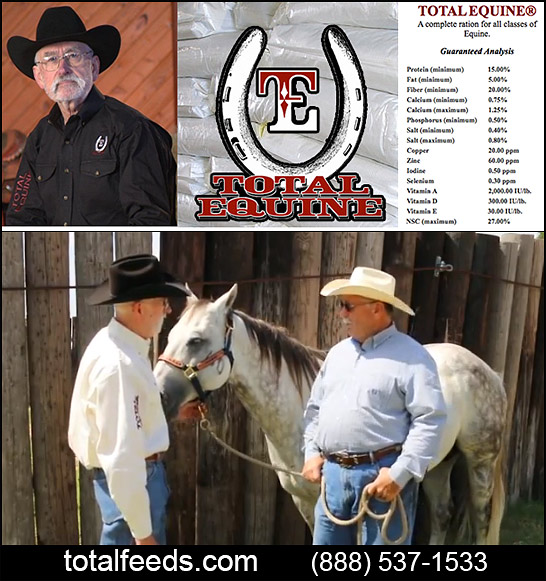
It's the question that helped inspire Total Equine® from Total Feeds, Inc.
Developed by Dr. R. Harry Anderson, a PhD Animal Scientist and lifelong professional nutritionist, Total Equine® is an extruded feed designed to improve digestibility and nutrient availability. Built on an alfalfa hay base, it is highly palatable and fed alongside quality roughage.
As Dr. Harry often asks:
What good are great ingredients if your horse can't absorb them?
What Do Senior Horses Eat?
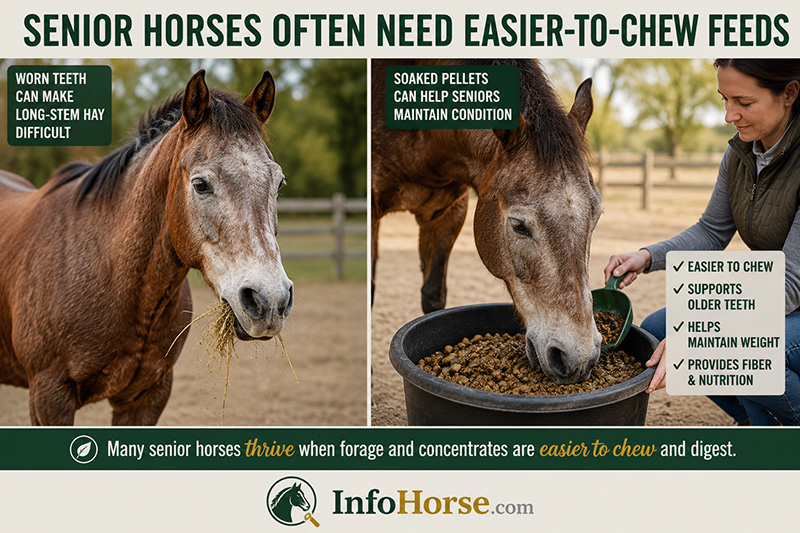
Senior horses often present special challenges.
Many older horses have difficulty chewing long-stem hay due to worn, missing, or damaged teeth.
When that happens, owners may need to substitute some or all of the forage with:
- Hay pellets
- Hay cubes
- Soaked forage products
- Complete senior feeds
The goal never changes:
Keep fiber moving through the digestive system while maintaining healthy body condition.
Many older horses thrive well into their twenties and thirties when feeding programs are adjusted to match their changing needs.
What Do Baby Horses Eat?
For the first months of life, foals receive most of their nutrition from their mother's milk.
As they grow, they begin nibbling forage and gradually learn to eat grass and hay.
Over time they transition from a milk-based diet to a forage-based diet much like an adult horse.
Good nutrition during this growth period plays an important role in healthy development.
What Do Horses Drink?
Water is the most important nutrient a horse consumes.
A horse can survive weeks without feed.
A horse cannot survive long without water.
Most horses drink between 5 and 10 gallons daily, but requirements rise dramatically during:
- Hot weather
- Heavy exercise
- Lactation
- Illness
Fresh, clean water should be available at all times.
In winter, water should remain unfrozen and accessible.
What Should Horses NOT Eat?
The short but important list:
Moldy Hay
When in doubt, throw it out.
Mold can contribute to respiratory disease, colic, and other health problems.
Lawn Clippings
Grass clippings can ferment rapidly and encourage dangerous gorging behavior.
Excess Sugar and Junk Food
A few treats are fine.
Buckets of treats are not.
Unknown Plants
Many toxic plants resemble harmless vegetation.
Never assume a plant is safe because a horse sampled it once.
Sudden Feed Changes
The sneakiest feeding danger isn't a feed at all.
It's speed.
The microbes in a horse's digestive tract adapt slowly.
Every feed change should occur gradually over 7 to 14 days.
Quick Answers to Common Horse Feeding Questions
Can horses eat apples?
Yes, in moderation.
Can horses eat carrots?
Yes. Most horses enjoy them.
Can horses eat bananas?
Yes. Many horses like them, peel and all.
Can horses eat bread?
Small amounts are unlikely to harm most horses, but it provides little nutritional value.
Can horses eat grass clippings?
No.
Can horses eat alfalfa?
Yes. Alfalfa can be an excellent forage for many horses but not for every horse so consult with your Veterinarian.
Can horses eat lawn grass?
Usually, for short periods probably yes, provided it is free from chemicals and toxic plants.
Can horses eat moldy hay?
Never.
The Biggest Feeding Mistake We See
The biggest feeding mistake we've seen in forty years isn't feeding too little.
It's feeding too much.
More horses today are overweight than underweight.
Many of the health challenges we see, including metabolic issues, insulin resistance, and laminitis risk begin with excess weight.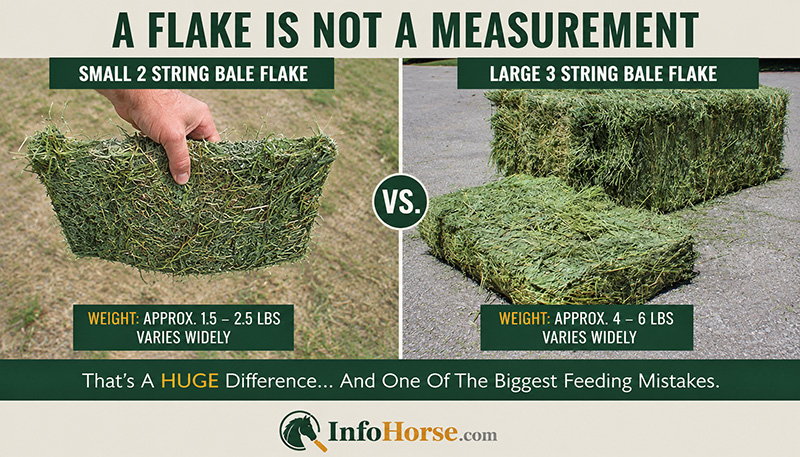
Horse owners tend to feed with their hearts.
Horses do better when we feed with a scale.
"Feed rooms fail in two directions: too fancy and too casual. The horses that thrive on our place have always eaten the same boring, beautiful menu — weighed hay, clean water, salt, and exactly as much concentrate as the job requires. Boring is a feeding program's highest compliment." Bob Pruitt, InfoHorse.com, horse owner for 40+ years
The Daily Horse Feeding Checklist
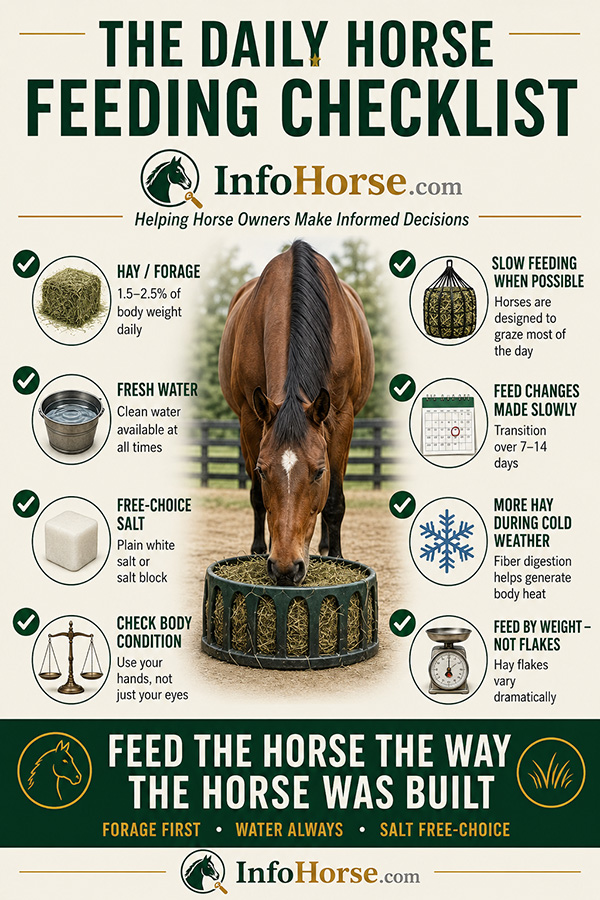
✓ Forage at 1.5%–2.5% of body weight
✓ Feed by weight, not flakes
✓ Fresh clean water available at all times
✓ Free-choice salt
✓ Meals spread throughout the day whenever possible
✓ More hay during cold weather
✓ Feed changes made gradually over 7–14 days
✓ Body condition checked monthly
After forty years of buying hay, feeding horses, and occasionally making our own mistakes, we've learned that the secret hasn't changed.
Forage first.
Water always.
Salt free-choice.
Concentrates when the job requires them.
Changes made slowly.
Feed the horse the way the horse was built, and the horse usually takes care of the rest.

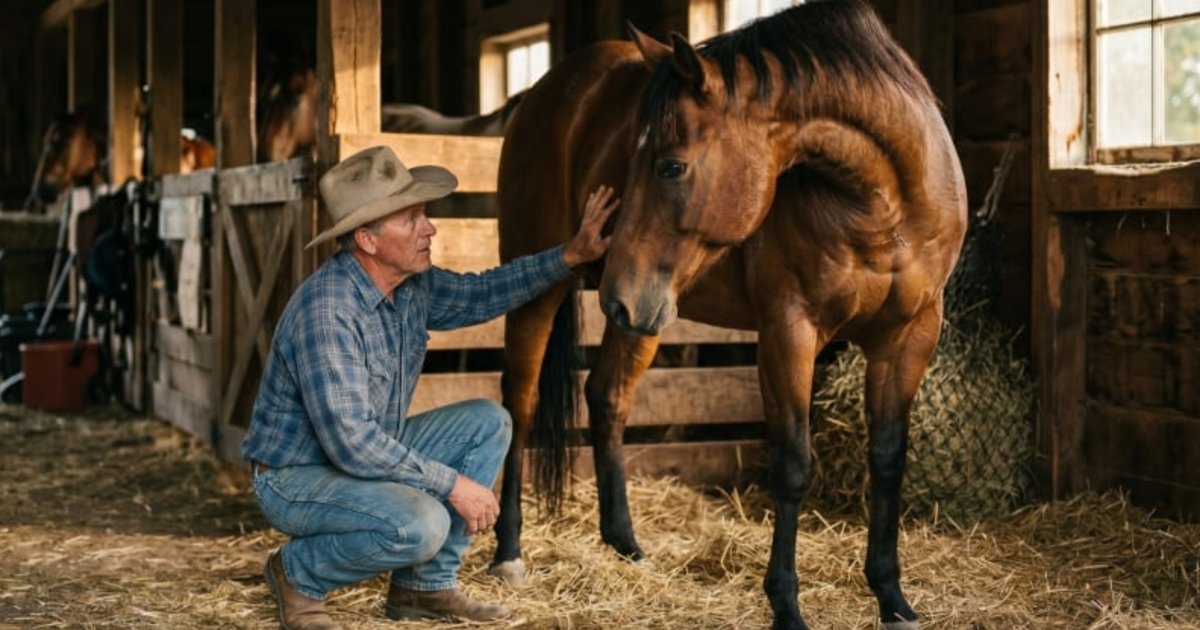
After forty years of horse ownership, we've learned that feeding success rarely comes from complicated programs. It comes from consistency. Good forage, clean water, free-choice salt, regular observation, and small adjustments when needed. Do those things well, and one day you may find yourself watching a horse you've cared for for decades carrying the next generation down the same barn aisle.