

The Art of Horsemanship With Richard Winters
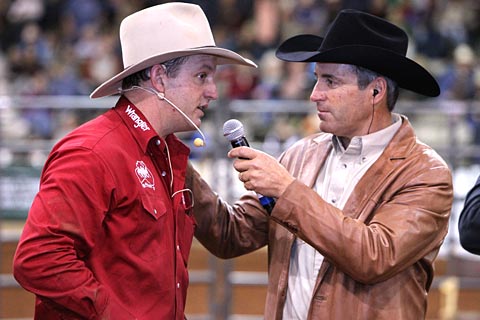
Road to the Horse, held in Murfreesboro, Tennessee, is an international colt starting competition in which three two-man teams—representing the United States, Canada, and Australia—are judged on their colt starting techniques over the course of three days. Though each horseman brings unique tools and methods, the same principles hold throughout: make the right thing easy and the wrong thing difficult, be as firm as necessary yet as gentle as possible, and reward the slightest try.
I’ve just returned from Road to the Horse in Murfreesboro, Tennessee.
This international colt starting competition featured three two-man teams being judged on their colt starting techniques over the course of three days.
This event featured an American, Canadian, and Australian team. As the horsemanship commentator and co-host, I looked forward to observing each horseman’s style and technique as they went through the colt starting process. I wasn’t disappointed. Although each contestant was working toward the same goal, they each took a different approach to meet their objective.
During the competition, I was reminded that horsemanship is truly an art, not a science. If it were a science, there would be one formula that would be calculated in each time, with a predictable outcome. Since horsemanship is an art, it becomes necessary that each horseman grant his peers the latitude to express his or her art form in a way that is best suited to the individual. As the old saying goes, “Just because it doesn’t come out of my stack, doesn’t mean it’s not smoke.”
Imagine walking into an art gallery and seeing a painting that you really admired. Now, as you walk into another room, you observe a sculpture that is not to your liking at all. That doesn’t mean that the sculpture isn’t art. It’s simply not your preference. It is certainly still art, and we should be open-minded enough to accept it as such. An aspiring artist may head off to school with an interested in water colors. Someone else might want to specialize in sculpturing. Yet, at the beginning both students will be taught the principals of art. As time goes on, students will branch out into our own specialties but the foundational principals will always remain the same.
This is what I observed time and again at Road to the Horse. Each horseman used unique tools and techniques in communicating with his colt, and articulated his method using his own unique vernacular. Yet the principals that each of these individuals employed were consistently the same. When presenting a new idea to their colt, they made the right thing easy and the wrong thing difficult. Each horseman was as firm as necessary, yet as gentle as possible and these equine artists rewarded the slightest try from their equine partner.
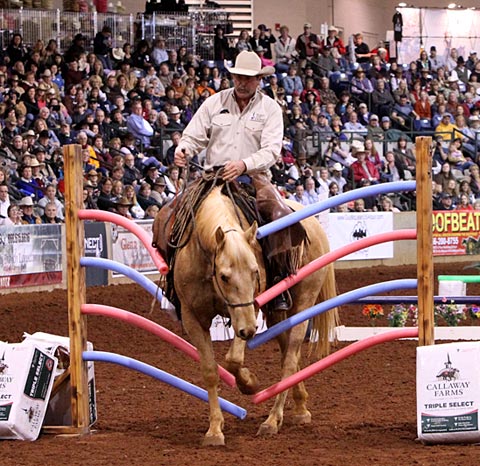
The Australians’ techniques stood out in contrast to those from the United States and Canada. They told the enthusiastic Road to the Horse audience, early on, that they would be expecting a lot from their colts during the first two rounds of competition. In contrast, it appeared that team Canada had made little progress in the first round, yet by the end of round two they were at just about the same place as the other two teams.
Some horsemen drove their colts with long lines before riding. Others elected to simply get on after playing a series of yielding games from the ground. The Australians were masters with their stock whips, while the United States and Canadian teams were handier with their lariat ropes. One competitor spent a tremendous amount of time desensitizing his horse with a big green ball. Others opted to use a plastic tarp during the “sacking out” process.
The audience had the opportunity to observe myriad different styles, yet the same principals of horsemanship rang true time and time again.
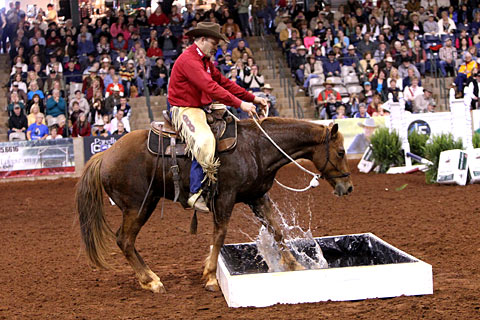
I am predominantly a western performance horse trainer. Yet I would be eager to learn and implement techniques from a world class dressage rider. Just because I ride with chinks doesn’t mean that the person who rides in breeches is any less of a horseman. I normally do not use a running martingale. However, I know some great horsemen that use them on almost every young horse they ride. Whether you use a hand tied halter or a traditional wide-web type halter is really inconsequential. What matters is how well you communicate to your horse and the feel, timing, and balance that you exemplify with the tools you use.
I learned something from all six of the Road to the Horse contestants. I am probably not interested in adopting every one of their methods as my own. However, I can appreciate the style and talent that each participant brought to this competition. Whether this horsemanship comes from “down under,” from our Canadian friends to the north, or right here in the USA, this universal fraternity is open to anyone, from anywhere, who is willing to climb aboard and begin the journey.
For more information about Richard Winters Horsemanship please go to wintersranch.com.