

Horseback Riding in the Water is Just Another Day at the Beach
With Richard Winters
The key to a successful beach ride is preparation: start with ground work on the sand so your horse can acclimate to the roaring ocean, approaching waves, and strange smells, then warm up with a long trot down the beach before asking him to get his feet wet. Letting an apprehensive horse follow a brave, confident companion into the water builds confidence, and backing a fearful horse toward the small waves works well—if he spooks, he will almost certainly move forward, which makes it much easier for the rider to stay balanced and in control. Once in the water, keep your horse’s feet moving and give him somewhere to go, because an idle horse standing knee-deep may decide to lie down.
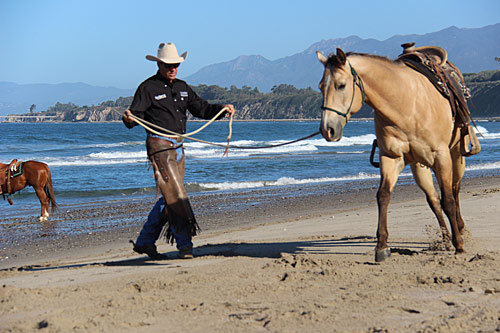
This summer we conducted our Ultimate Horse Courses I and II right here at our home in Ojai California. On the second week I thought it would be fun, and possibly even challenging, to take a field trip to the beach. Now for many of you, riding at the beach is no big deal. Yet for a lot of riders and their mounts it’s a huge deal! The roaring of the ocean, relentless approaching waves, along with a strange smell in the air is a lot for many horses to take in. That amount of stimuli is more than enough to set any prey animal, whose origin is from the Great Plains, ill at ease. However, our fifteen plus riders did a great job and we all had a lot of fun.
Upon arriving at our destination, unloading the horses and saddling up, we led our equine partners down to the beach. We spent some time doing ground work which allowed our horses to get acclimated to their strange new surroundings and to get in tune with us mentally. After checking cinches, bridling, and mounting we began to evaluate which horses were the brave beach combers and which ones would need some extra help to overcome their fear of the ocean.
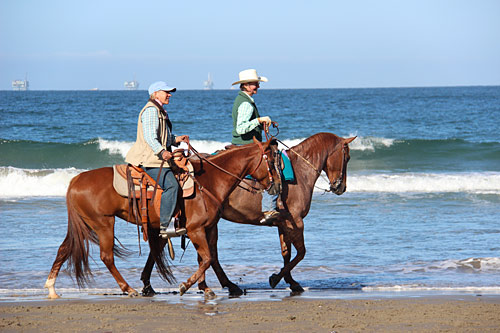
Before encouraging our horses to get their feet wet, we went on a long trot down the beach to further warm up and prepare our horses for what was to follow. We then allowed the apprehensive horses to follow the brave confident horses close to and into the water. Having a “babysitter” proved to be a useful confidence booster for the horses who didn’t want to get their feet wet. All of the preparation and techniques implemented were similar to what we would incorporate in any new situation in which a horse would need strong support and leadership.
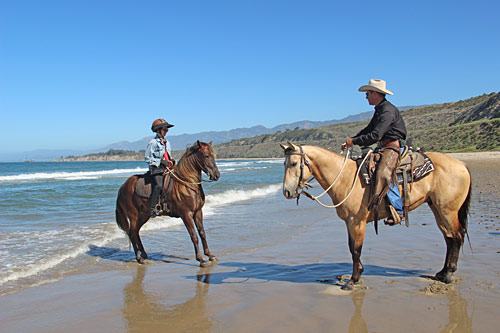
One useful technique was to back the apprehensive horses toward the water and let the small waves come at them from behind. (Having an equine buddy along-side was helpful at this point.) If the horse became frightened and had to move there was a 95% probability that he was going to move forward. This predictability made it much easier for our riders to stay balanced in the saddle and be able to control their horse.
When riding a scared horse directly into the waves, they often panic as the water moves towards them and around their feet. Their instinct is to whirl and run to dry land. This can be more than some riders can handle, thus making them less then effective leaders. Facing away from the waves was a good starting point for many of our horse and rider teams.
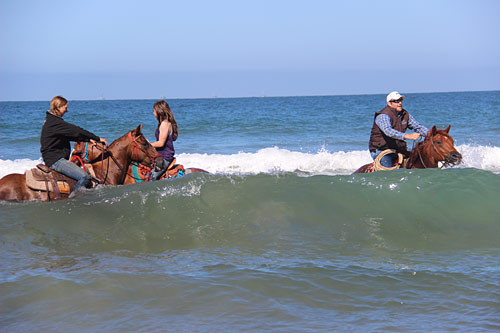
Once a horse was in the water, it was important for them to keep their feet moving. Directing the horse’s energy and giving them a place to go helped keep a lot of horses out of trouble. One horse, in an idle moment, with water up past his knees, decided to lie down. This is not that uncommon. Our rider handled the situation well. She stepped off immediately and held on to the reins, clucking and encouraging the horse to get back up.
Two boots full of water, wet jeans, and a sea salted saddle were the only negatives to that little adventure. Looking back in hindsight, perhaps the rider could have felt the signs of her horse trying to lie down. At that instant, a lot of rider energy (i.e. cluck, kick, spank) might have changed the horse’s mind and moved him forward. Of course, hindsight is always 20/20.
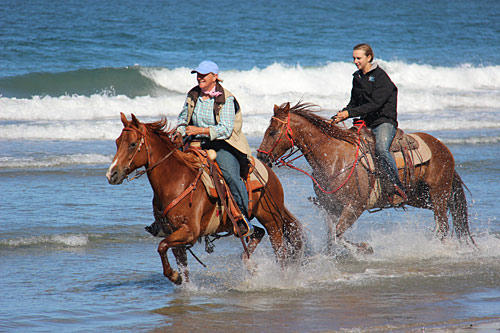
This is the first time I had ever taken a large group of riders and inexperienced horses to the beach. I was very pleased with the progress of each team. One beach ride does not cure the timid horse of all his fears. However, we did want it to be a positive experience that would prepare horses for their next beach trip. Mission accomplished!
Each rider had to step up to the plate to be the leader that their horse needed them to be. Most of these horses couldn’t be there for us. We needed to be there for them. Each horse made improvements because we had a plan and our riders were good leaders. That’s what good horsemanship is all about!
For more information about Richard Winters Horsemanship please go to wintersranch.com.