

Executing the Canter Departure
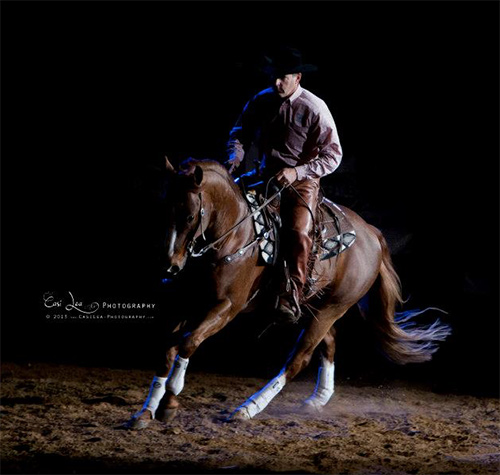
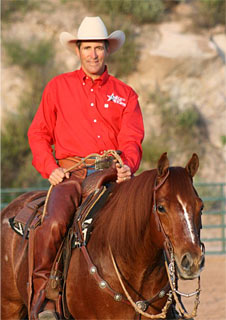
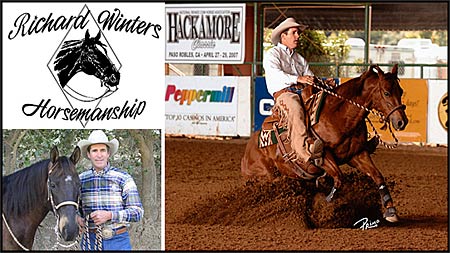
The term "Canter Departure" refers to the movement of a horse stepping into the canter or lope, with collection, without any trotting steps in between. With Richard Winters Horsemanship
A canter departure is the movement of a horse stepping into the canter or lope, with collection, without any trotting steps in between. It can be executed from a standstill or started from the walk, and the prerequisite is a collected frame—the horse’s back picked up and hind end engaged—created by holding with your hands and driving with your legs. Consistency is what makes the cue work: ask the same way every time, and reward a correct depart by loosening the reins and letting the horse lope on a loose rein.
This maneuver can be executed from the standstill and it is also very acceptable to start it from the walk. Reining, versatility, trail and ranch pleasure all call for transitions involving a canter departure. Regardless of your discipline, this is a maneuver that everyone who is seeking refinement with his or her equine partner should work toward implementing.
When training a young green horse it is normal for the colt to trot when picking up momentum and then eventually move on into the lope. However, as a horse develops, we should seek more precision and refinement to develop this maneuver that we call the canter departure. Understanding and working on the canter departure will also help us become more aware of where our horse's feet are and thus will help us bring more refinement and precision to their movement.
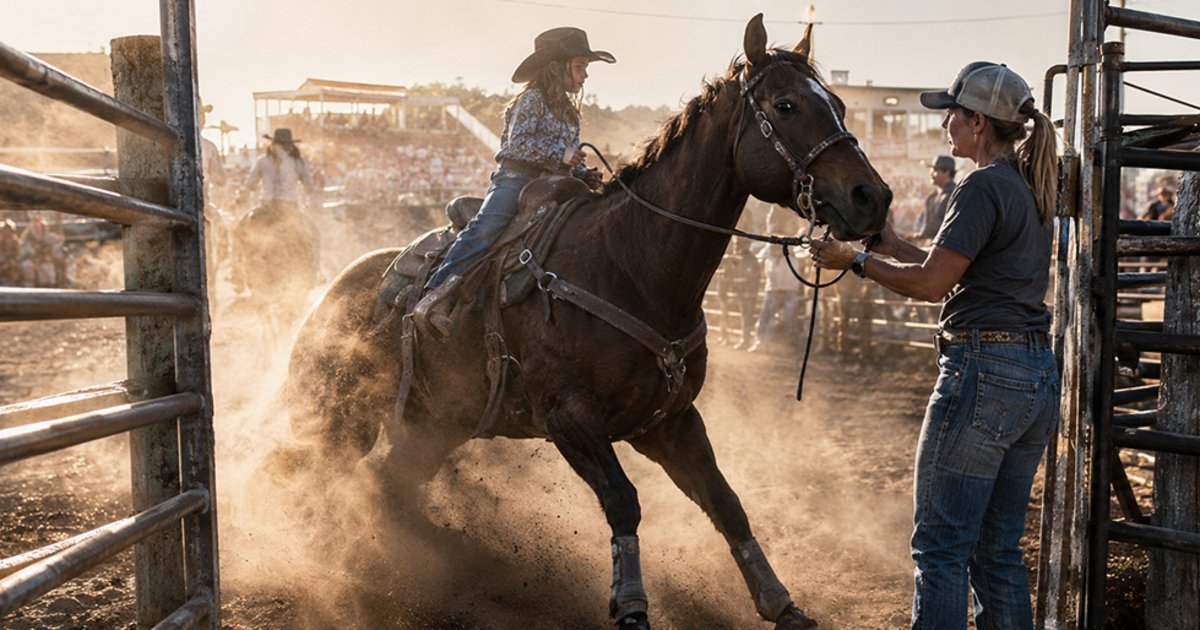
I was recently teaching a clinic and we were working on picking up our left and right lead. One young lady, in particular, was doing a good job with her horse and I could tell that they had come to the clinic well prepared. As I asked her to lope off in a right-hand circle she began to trot and after a few strides started her loop to the right. At that moment I thought to myself, "She can do a better job than that." There was no reason for her to stay in kindergarten when her horse was capable of a sixth grade maneuver.
"Break down to the walk and bridle your horse up with a soft feel and collection." I requested. "Now, cue your horse to step forward into the bridle and ask for the lope." This time her horse stepped up into the lope with only one or two trotting steps. As she raised her standards and asked for more precision, her horse rose to the occasion and performed well.
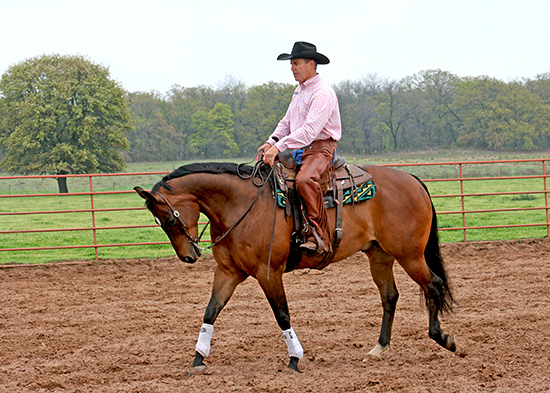
A pre-requisite to executing a proper canter departure is the ability to frame your horse in the proper posture, with collection. For a horse to step up into the lope, without any trotting steps, they need to have their back picked up and their hind-end engaged. This is accomplished through collection. Picking up the reins and asking the horse to bend at the pole while driving them forward with your legs creates this athletic frame.
Collection begins at a walk and continues on through the stop and back up. You need to make sure that you can pick up a "soft feel" and keep your horse balanced in your hands as you transition from a walk, then to a stop and back up, and right up into the walk again. Remember, collection is holding with your hands and driving with your legs. Vertical flexion with impulsion equals collection.
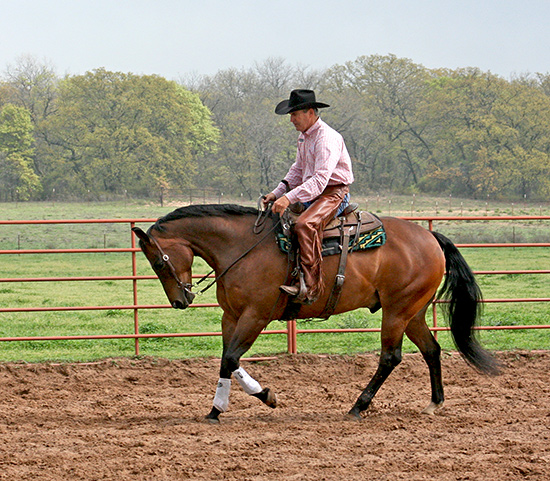
When asking for the canter departure, the consistency of your cues is very important. The verbal cue that you use along with your legs and body need to be the same every time. For me, that means clucking two times as I slightly lift with my inside rein and use my outside leg back and in. If your cues vary slightly from mine, that's okay. The main thing is to keep it simple and ask the same way every time.
At first, you will run into some common problems and confusion with your horse.
- When you ask for the canter departure your horse might start trotting instead of immediately loping off.
- Even though you start with collection and your horse's nose is on the vertical, when you ask for the lope your horse might shove his nose forward and be bracey in your hands. At this point, many riders want to stop and back their horse up. I might do that on occasion. However, the following is what I would recommend most of the time.
If either of the preceding things happen, immediately bring your horse back down to the walk and soften their face in your hands as you continue to push them forward in the walking gait. Once they are again collected, and in the proper frame at the walk, ask for the canter departure. A couple trotting steps at first might be acceptable and should be rewarded as your horse is trying to figure out what you're asking. As you continue training, you will continue to ask for more precision and expect this from your horse. If your horse canter departs in an acceptable manner then you can reward by loosening the reins and allow them to lope around on a loose rein.
Remember, you are the quality control officer. Your horse will not perform with any more precision than what you ask for, consistently. Just like the young lady in my clinic, raising your standards and asking for a little more will motivate your horse to perform at a higher level. Collection helps with the canter departure and working on the canter departure will enhance your collection. It's all about good horsemanship. Oh, by the way, it's springtime. Let's get out and ride!
Richard Winters Horsemanship WintersRanch.com