

Colt Starting Part Two, One Step at a Time
by Richard Winters Horsemanship Colt Starting Part One Colt Starting Part Three
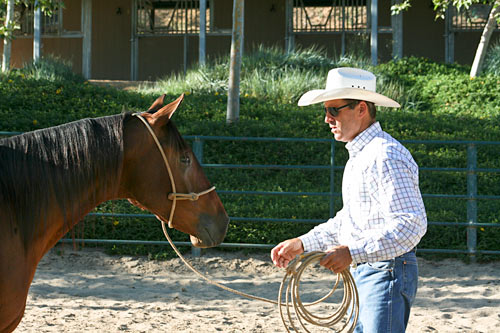
Starting a two- or three-year-old colt begins with four ground steps: getting his attention through pressure and release in the round pen to establish leadership, directing his feet on the end of a lead rope, desensitizing his body with rhythmic rubbing and rope work on both sides, and preparing him for saddling by rubbing the saddle pad all over before setting the saddle and smoothly snugging the cinches. Richard Winters notes this preparation may take thirty minutes with one colt and days with another—colt starting is not a speed event, and each step builds the colt toward his first ride one step at a time.
I recently walked by a building site which had a picture posted of the projected edifice. As I observed the large mounds of dirt, ditches, culverts, and pipelines, I couldn’t imagine how this chaotic scene would one day resemble the Architects picture. Yet, experience tells me that it will all come together as envisioned. One step at a time!
I’ve felt the same way when I’ve stepped into the round pen with a new two or three year old colt to start. How will this thousand pounds of skittish, spooky, and wild horse power ever develop into a gentle, willing, and compliant equine partner? Now that I’ve been through this transformation hundreds, if not thousands, of times, I know the answer. One step at a time!
Step one: I need to get their attention. Pressure and Release; I’ll move my colt around the round pen at the trot and lope in both directions. When it’s my idea, I’ll release the pressure and see if the colt will stop and look at me. This is where I establish leadership.
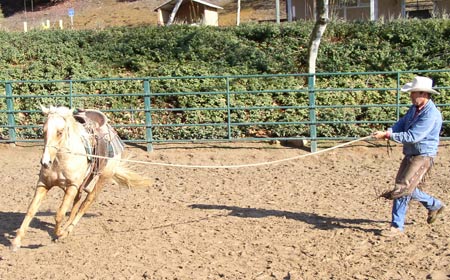
Step two: Dancing Partners; Can I direct his feet on the end of a lead rope? Can I send him left and right in a twenty foot circle ? Will he back away when I wiggle the lead? Can I disengage his hind quarters with his inside foot crossing over his outside foot? I need to control his feet. I must be able to direct his movement while handling him on the ground.
Step three: Desensitize; All of my body movement and all of my equipment can easily be seen as a threat to my colt. I need to desensitize him to these things. That means putting my hands all over my colt’s body. I’ll begin to rub with rhythm. This rhythm is critical . The consistency and rhythm we bring in our body language is vital in helping the colt get comfortable and accepting. I’ll swing the end of my lead rope over his back a number of times.
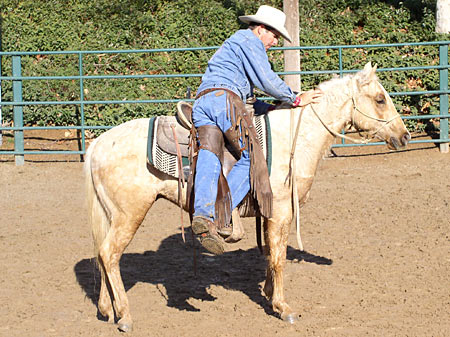
I’m careful not to let the end spank him on the other side and I’ll do it all with rhythm. Now my body. Can I hop up on both sides of my colt? I’ll lay over my colts back and continue rubbing. What if he starts to move away? I’ll simply tip his nose to me and disengage his hindquarters. Now I’ll start again. No, this exercise is not for the inexperienced couch potato!
If you’re going to be a colt starter you’d better be mentally and physically up to the challenge.
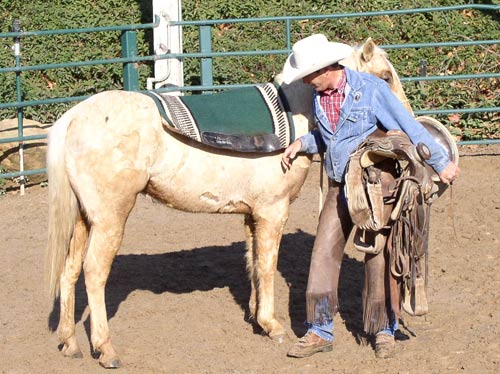
Step four: Saddling; How can I prepare my colt for this experience? I will often place the lead rope around my colt’s girth, snug it up with my hand, and ask the colt to move his feet. These are little things that will help my colt grasp the “big picture.” Now I’ll rub the saddle pad all over his body as I have previously executed with my hands, rope, and body. Again, everything should be administered on both sides.
Next, I’ll set the saddle on his back. This is where you need to have feel, timing, and balance. A colt might spook and your saddle can end up on the ground pretty quick. Now you have a leery colt who is convinced that he shouldn’t have that “dead cow” strapped to his back. I smoothly snug up my cinches. Most of my colts will hump up and buck a little (or a lot) when first saddled. That’s O.K. A puppy would do the same thing if you tied a ribbon to his tail.
If the saddle or ribbon stays on, they’ll soon get comfortable and ignore it.
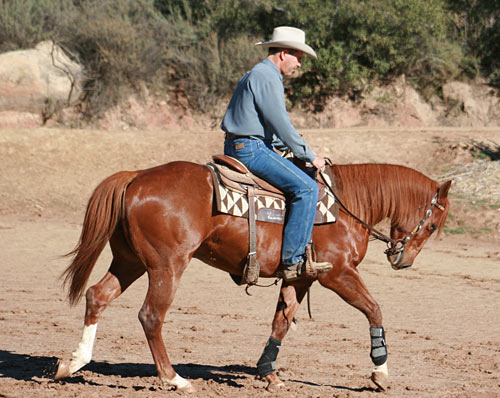
Now this article is not intended to be a comprehensive “how to” manual for you to follow. I’ve simply described the steps (in very general and abbreviated terms) I take in preparing my colts for their first ride. Sometimes I’ll accomplish all of this in thirty minutes. With other colts it might take days. This is not a speed event. Like the old horseman said, “Take the time it takes and it will take less time!” It’s a lot for them to digest and we’ve a long way to go. Yet, we’ll get there, “One step at a time!” Colt Starting Part 3, Mounting Up and Riding Off For more information about Richard Winters Horsemanship please go to wintersranch.com.