

Control Your Horses Movement - Connecting Down to the Feet
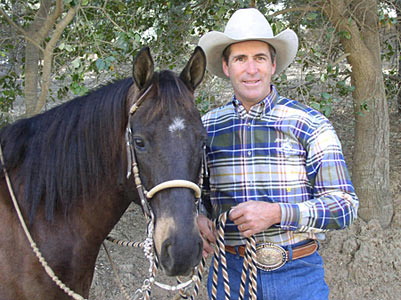
When I can control the feet, I ultimately have control of the entire horse. By Richard Winters Performance Horsemanship
Controlling your horse’s movement comes down to controlling the feet: when you can direct each foot with a single rein, your leg, and lateral bending, you control the whole horse. Trainer Richard Winters builds that connection by quitting the habit of pulling on both reins — which teaches a horse to run through pressure — and instead using lateral flexion and disengaging of the hindquarters to control forward momentum.
She’ll just stop going forward, rear, whirl away, and run off with me. It’s like she tunes out and I can’t control her. This is the description of the beautiful 17.1 Warmblood mare that was brought to me recently for training. The owners were right! After a couple days of riding in the arena, I rode the mare out behind our stable area and she acted exactly as described. These were the symptoms -- The problem was that I didn’t have a connection to her feet.
We put a halter on our horse’s head and a bit in its mouth but ultimately what we need is control of their feet. When I lift on a single rein there must be a response in my horse’s feet to follow that direction. Here are a few practical things I’ve been implementing to help this mare think down to her feet.
Quit pulling on both reins at the same time: Dressage is meant to be performed with contact. (i.e. Horse is on the bit.) However, if I’m pulling on both reins simultaneously, for control, I’ll create a horse that will simply run through pressure.
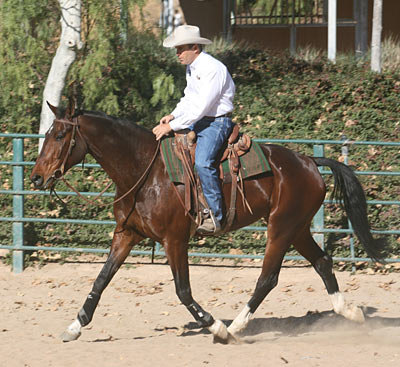
Loose Rein - I want this mare to balance herself on a loose rein.
Lateral bending and hind quarter control: I am getting this mare soft and supple between her withers and her poll by asking for lateral flexion. Then I’m going to apply my inside leg on the same side and ask her hind quarters to move over. If she is dull to my leg I’ll tap her on the rump, on the same side with my hand, rein, or whip. I want to feel her inside hind leg step over her outside hind leg as she steps over. This is called disengaging the hindquarters. When she runs off with her rider, her hind end is engaged. If I can readily disengage her hind quarters I can then control her forward momentum.
Roll-backs on the fence: Although she is not a western reining horse, I’m still going to ask her to get her feet organized and make a turn on the fence with some impulsion. This all relates to her thinking down to her feet. The turn doesn’t have to be pretty. She simply needs to take the responsibility to follow the direction of the rein and turn. The fence is a great aid in helping her redirect her movement without excessive pulling by the rider.
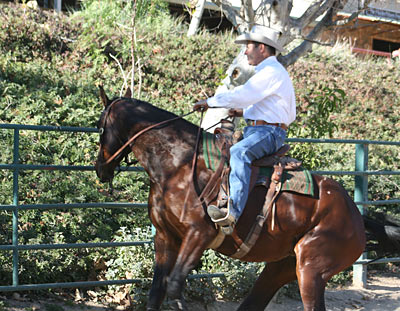
Roll-Back - A roll-back causes her to thank down to her feet.
Small figure eight turns: Sometimes the large unresponsive horse will trick you into thinking they need forty acres to turn around. It doesn’t have to be that way, even if they are 17.1 hands and 1,500 pounds! Using a couple of barrels, poles, or cones as frames of reference are very helpful in this exercise. Remember, its one rein at a time in concert with my inside leg. In other words, when I turn around the barrel to the left, I use my left leg as well. I will then switch to my other hand and leg in the middle of the figure eight to change directions.
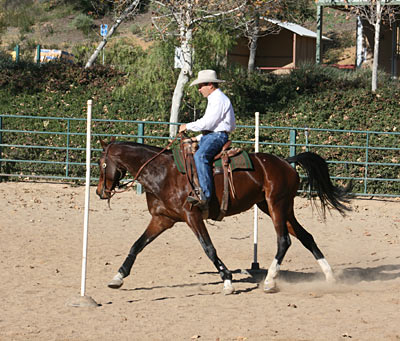
Figure Eight - This Mare needs to learn to follow her feet in tight circles.
Always go back the way you left: If my horse whirls to the left, I’m going to take her back to the right. She must realize that there is no open door in the way she left. If at all possible, I will never let her turn in a full circle. She must realize that there is no release in that direction. She must go back the way she left. When I redirect her back on course, my inside leg is very important.
This particular mare would continue to run off even when her nose was bent in the opposite direction. Now that she is understanding that my inside leg can control her hindquarters, I’m able to disengage her and refocus in the direction I wanted to go. This allows me to make the connection down to her feet.
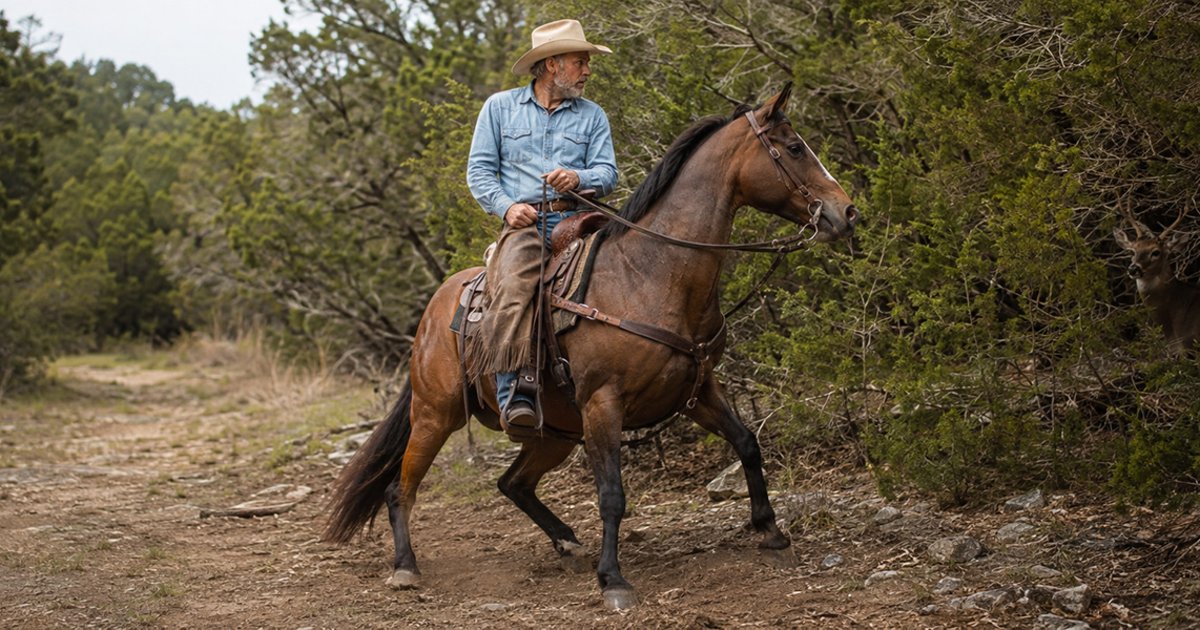
Trail riding: Uneven terrain is a great incentive to help a horse think down to their feet. This mare has spent the majority of her life moving in nicely groomed arenas or very benign bridle paths. A steep incline or decent with uneven ground is helping her make the connection to her feet.
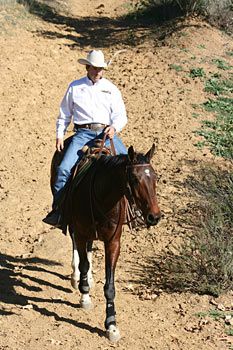
Trail - The trail is a great place to help this mare be aware of her feet. She has now been in training for about a month. I haven’t cured or solved her every problem. We are however making progress and can nip some of these negative behaviors in the bud. Each of the afore mentioned points are foundation training techniques that every horse and rider should be comfortable performing.
When I can control the feet, I ultimately have control of the entire horse.
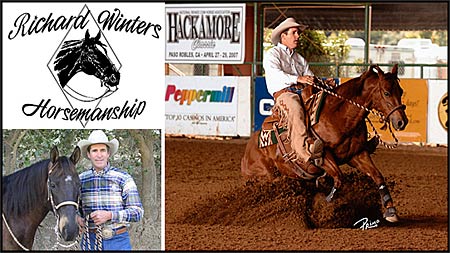
For more information about Richard Winters Horsemanship please go to wintersranch.com.