

Design a Beautiful and Functional Equine Facility
Article written by Karen Elizabeth Baril
A successful horse facility begins with a master plan—it’s far less expensive to make mistakes on paper than in the middle of the project—and with hiring an equine architect and builder who are both horse experienced. Site the barn on high ground with good drainage to avoid mud, prioritize ventilation and natural light, install fire sprinklers, and store hay in a separate building at least 100 feet from the barn. For fencing, keep turnout paddocks close to the barn, make every gate easy to operate with one hand, install a 16-foot-wide vehicle access gate in every pasture, and choose galvanized steel gates over aluminum, which isn’t strong enough to stand up to horse traffic.
Equine facility design can be compared to designing a cross-country course. You start with a little bit of real estate, plan your obstacles, and then invite horses and riders to come and try things out. While building your cross-country course, you’ll have to balance your desire for pretty jumps like stone walls, banks, and water crossings with your budget, safety, and functionality.
There’s so much to consider that you probably wouldn’t think of designing your course without expert help. Designing an equine facility is no different. If you’ve ever slogged through mud to turn horses out, tried to back up a trailer in a too narrow driveway, or even had to struggle with an unruly horse at a gate that just doesn’t function as it should, you already know what doesn’t work.
Here are a few tips to keep in mind as you plan your equine facility: Create a Master Plan - Creating a master plan is critical to the success of any project. For most farm owners, saving money is going to be part of the equation. A master plan will help you do just that. It’s much less expensive to make mistakes on paper than it is when you’re in the middle of the project.
We recommend hiring an equine architect to help you design your facility. He or she can help you incorporate most of the features you want while keeping in mind your property’s unique challenges like terrain, footing, and even zoning. Be sure to hire both an architect and builder who are horse experienced. Many architects can create a pretty picture, but if they don’t understand horses, it can lead to problems down the road.
An experienced equine architect and builder will work together in partnership with you to make your design dreams a reality. They’ll help you save money, engineer the project from start to finish, and troubleshoot when problems arise. The end result should be a beautiful facility that offers comfortable housing for your horses, safety for both horses and humans, and allows you to enjoy your passion.
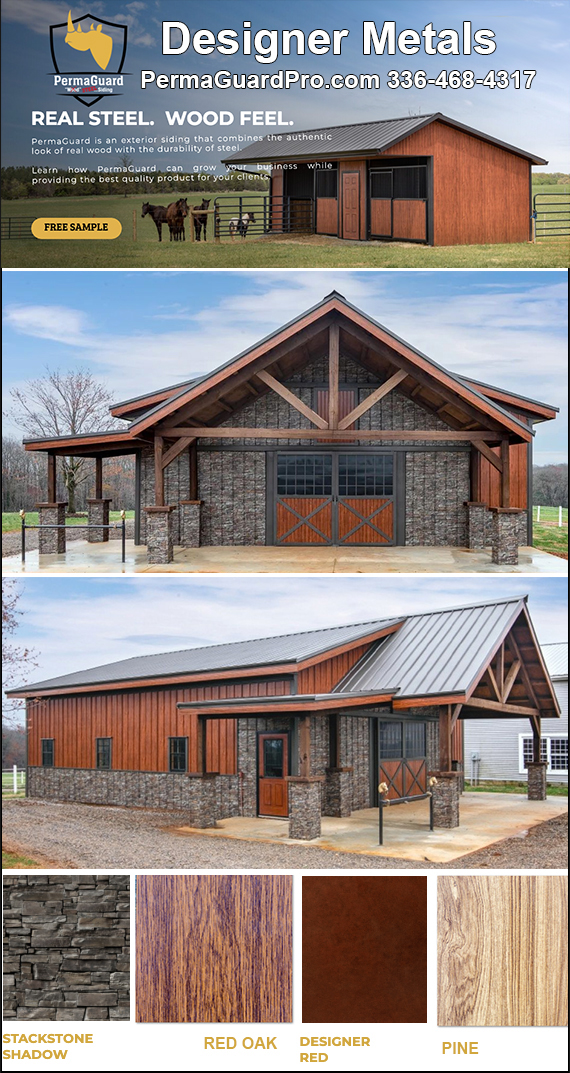
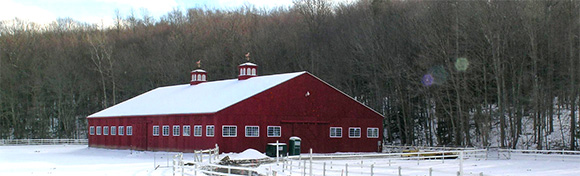
The Barn Generally speaking, the barn should be situated on high ground. Because the barn usually has a fairly large footprint, you want to find a spot that already has good drainage to avoid mud.
The design of the barn will vary from region to region. Depending on where you live, your builder should pay close attention to snow loads and where that snow will slide when it starts to melt off the roof. You don’t want a sudden snow slide to land on a horse and handler as they’re exiting the barn. In a hot climate, you’ll incorporate a more open design and lots of windows. Keep in mind that no matter what style barn you choose, ventilation and natural light are keys.
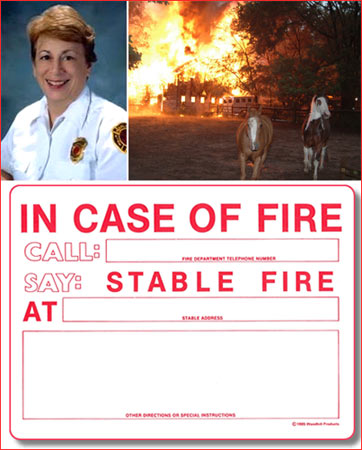
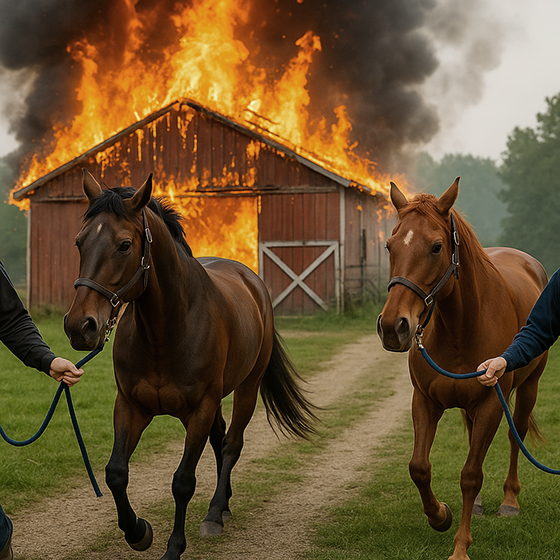
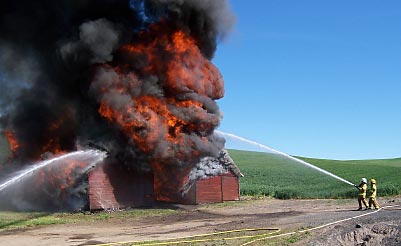
Fire safety is important as well. I encourage owners to install fire sprinklers in every barn. They’re relatively inexpensive to install as the building is created. Also, avoid barns with lofts for storage. Hay should be stored in a separate building at least 100-feet away from the barn.
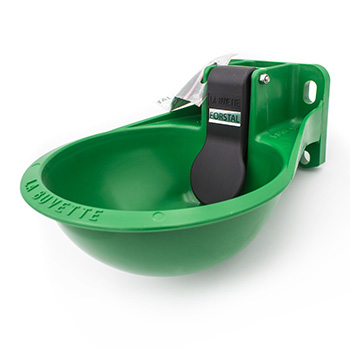
Consider also, installing extra spigots throughout the barn aisle for easy water fill-ups or better yet, automatic waterers for every stall.
Fencing and Gates
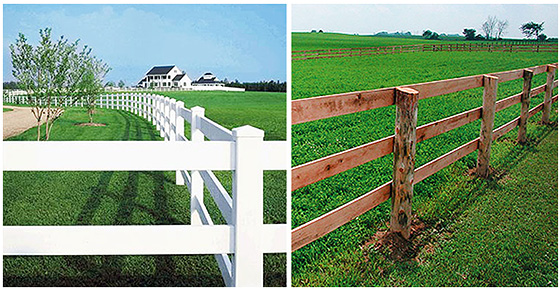
Fencing and gates planning is complicated and could fill an article of its own, but here are a few key things to remember Obviously, you’ll use the safest and most durable materials, but a good fencing design will maximize efficiency and safety.
Consider keeping turnout paddocks close to the barn. Connecting pastures sometimes works well for moving large groups of horses from one area to another. Make sure all gates are designed for horses and are easy to operate single-handed. All gates should be at least wide enough for horse and human to pass through safely. Install at least one vehicle access gate in every pasture and paddock. A vehicle access gate should measure 16-feet wide.
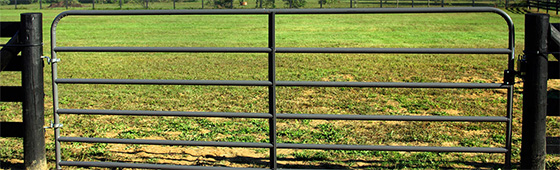
All gates should have smooth welding that won’t snag a delicate nose. Gates, like fencing should present both a physical and psychological barrier to all horses in the herd. Just say no to aluminum gates, which are simply not strong enough to stand up to the rigors of horse traffic. A galvanized steel gate is strong enough for the job and will resist corrosion, especially for those farms located in damp or humid climates. Galvanized steel gates that are then dipped in a thick coat of corrosion-resistant zinc after fabrication for the ultimate in weather protection.
Two-way locking latches, gate wheels, and gate anchors make operating your gate a breeze even with a horse in hand. Finally, when it comes to facility design, never compromise on safety.