
Helping Horse Owners Make Informed Decisions
Installing Horse Stall Mats

Installing Horse Stall Mats

By Tonia Frenzel · Barns

Working on your barn and want a practical read on Installing Horse Stall Mats?

Installing Rubber Stall Mats For Your Horse Stalls?

What You Need to Know About Stall Preparation
Humane Manufacturing article

by Tonia Frenzel

If you have made the decision to use Rubber Stall Mats in your horse stalls, then you've made a good choice. Rubber Stall Mats reduce bedding costs, save you time spent mucking your stalls, and ensure that your horses are safe and comfortable. The mats can be placed over concrete, asphalt, wood, or any level well-compacted surface. If you do not have concrete, asphalt, or wood, then the sub-surface preparation is the most important factor in having a safe, low maintenance, trouble-free stall.

Placing the mats over sand can cause problems; sand can shift under the mats, causing low spots that can create a trip hazard; or the horse will find those low spots and pull the mats up. An alternative to concrete, asphalt, or wood is crushed fines. Most common types are limestone or granite fines. These are easy to work with, compact well, provide good drainage, and stand up well to freeze/thaw conditions. Below are some excellent tips on how to prepare a stall using crushed granite fines.
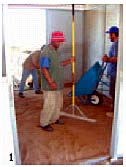
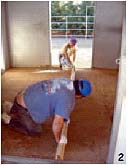
installing fines
The first thing you need to do is clean the existing stall surface of any old bedding. The fines you use should not exceed 1/8" in size. Fines should be installed to a depth of 4 to 5 inches, which may require excavating some of the existing material to maintain current stall elevations.
screed level
Once you fill the stall base, use a 3/4" board (or whatever the mat thickness is) to ensure you have the correct level for the stall.

Next you need to level and tamp the fines.

Use water to soak the material aiding in the compaction process. This will create a solid subsurface that will not shift under the mats and will also provide good drainage.
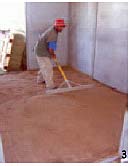
leveling fines

Now that the subsurface is level and compacted, let it dry and you are ready to install the mats. As stat
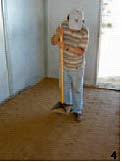
tamping fines

ed in our previous article, you can go with straight edge or interlocking mats, but if you do not have concrete or asphalt, straight edge mats can shift and the horse will dig holes.

You will then have to pick up the mats to fill holes.
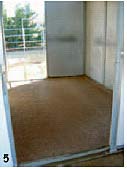
let ground dry

Interlocking mats are the best choice when working with limestone or granite fines as your subsurface.
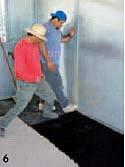
installing mats
The last photo shows how to place the interlocking mats in the stall. Start at one corner of the stall and fit pieces together like a puzzle, once the interlock is started, you can walk over them to fit in place. Because rubber can expand and contract, we recommend you leave 1/4" to 1/2" between the edge of the mat and the stall wall. When all the mats are interlocked together, it acts as a solid floor that will not shift, and interlocking seams will not separate.

Once you've installed the mats, add a small amount of bedding and your horse can enter its new home. You will spend less time mucking the stall and more time enjoying your horse.

Humane Manufacturing, LLC, writer of the above article has made quality products since 1907 and has over 30 years of mat making experience. Creators of Loktuff interlocking flooring, we provide matting solutions for Stalls, Aisle Ways, Wash Bays, Walker Floors, Trailer Floors, Foaling Stalls and more!

Key Article Takeaways
  • Per Tonia Frenzel: rubber mats over concrete, asphalt, or wood—or compacted crushed fines.
  • Limestone or granite fines (≤1/8 inch) compact well and drain even through freeze/thaw.
  • Sand sub-base creates trip hazards as it shifts and develops low spots.
  • Install fines 4–5 inches deep; excavate existing material if needed to maintain elevation.
  • Use a 3/4" board to ensure level surface before laying mats.
Questions readers commonly ask:
What's the right sub-base for stall mats?

Per Tonia Frenzel: concrete, asphalt, or wood are ideal. Compacted crushed limestone or granite fines (≤1/8") are the affordable alternative—they drain well, compact firmly, and stand up to freeze/thaw cycles. Sand is the wrong choice because it shifts and creates low spots.

How deep should crushed fines go?

Per Tonia Frenzel: 4–5 inches deep, fully compacted, level. Excavate existing material if needed to maintain stall elevation. Skipping depth or compaction creates uneven surfaces under the mats that develop trip hazards over time.

Why is level surface so important?

Per Tonia Frenzel: uneven sub-base causes mats to shift, buckle, or develop low spots. Horses find low spots and pull mats up, exposing the sub-base. A 3/4" board across the prepared surface should sit flat without rocking before mats go down.

Can I install mats myself?

Per Tonia Frenzel: most owners can—rubber mats are heavy but installation is straightforward once the sub-base is right. The sub-base preparation is where DIY most often goes wrong. Hire help for excavation and grading; lay the mats yourself if you're handy.

How often do mats need replacement?

Per Tonia Frenzel: 10–20+ years for quality mats over proper sub-base. Cheap mats or poor sub-base preparation can shorten that to 3–5 years. The sub-base investment pays off across the entire mat life cycle.

Related Products & Services

Stall Systems By System Equine
InfoHorse Advertiser
Stall Systems By System Equine
Stall Systems By System Equine: System Equine With over 37 years of experience, System Equine has become trusted name in the equine industry.
Built Better: The Fixed-Knot Difference
InfoHorse Advertiser
Built Better: The Fixed-Knot Difference
StaTite50 — The 50-Year Fence by San Antonio Steel uses proven fixed-knot construction and is guaranteed for 50 years. Nothing better on the market today.
RigidPly Rafters, Inc.
InfoHorse Advertiser
RigidPly Rafters, Inc.
RigidPly Rafters, Inc. — img align="TOP" border="0" hspace="0" src="..
Ann Pruitt
Contact Ann Pruitt
InfoHorse.com