

How to Build a Horse Arena
Article from Footing First
Building a horse arena starts with hiring a good arena builder—typically an excavator that specializes in arenas—and choosing the right location. A gentle slope is often ideal because it creates a cut-and-fill scenario that keeps the arena higher than the surrounding ground, letting water drain to the low side. From there, a competent builder can recommend the best base and footing for your needs based on whether the arena is indoor, covered, or outdoor, how many horses will use it, and the primary riding discipline.
When beginning the arena construction process, the first thing one should do is find a good arena builder. Typically, this would be an excavator that specializes in arenas. Next, it is important to choose a good location for the arena. A slope is often desirable as this creates a cut and fill scenario, and will help keep the arena high, in turn creating a low side where water can drain easily.
Often, people like to look at a field and suggest a flat area. However, by the time the top soil has been removed a flat area will often require fill to raise the arena back up to the proper level. This becomes more expensive, as the arena should always be higher than the surrounding ground, which will encourage water to move out of the arena as water will always find the lowest point. Once a contractor and location have been finalized, the journey begins!
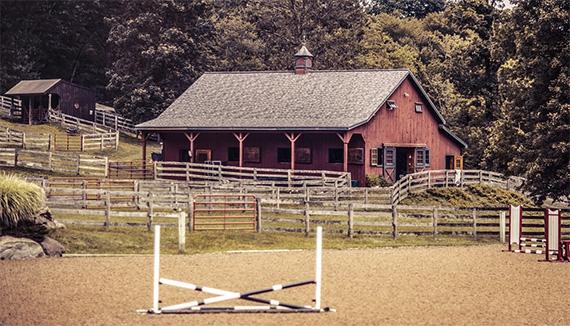
There are many different ways to build an arena, and the end result will depend on budget and expectations. Below are several questions that should be answered prior to construction:
1 Is this an indoor, covered or outdoor arena
Once these questions have been answered, a competent arena builder should be able to advise about the best base (or subsurface) and surface (or footing) specific to your needs.
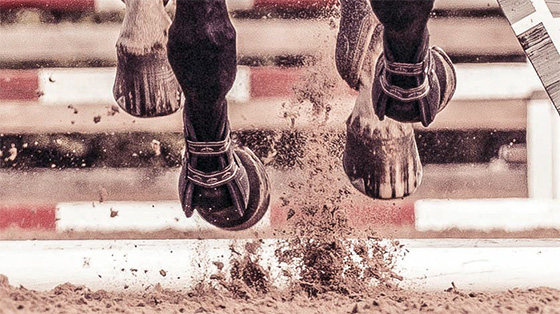
For an outdoor arena, a traditional base of compacted stone will provide a very good subsurface when installed correctly. This base will not drain as quickly as other types of base but will provide a very good foundation that will last for many years. Any type
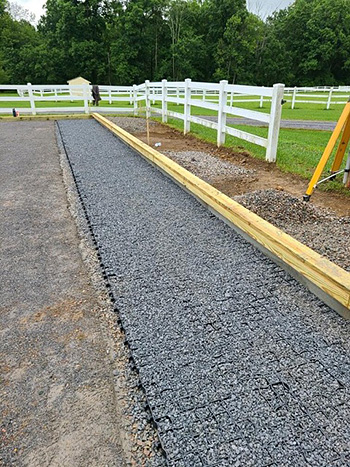
of footing can be installed on top of a compacted stone base, from traditional sand to more high-performance blends such as the dust-free products available.
A free-draining base is a more user-friendly option than compacted stone, and this type of base provides the very best drainage for an arena. When using a free-draining base, mats can be added to create more cushion. This will also create more cost, but they do add significant value to the surface. There are many different types of mats available, but all of them form a separation layer between the subsurface and the footing.
Heavy fabric may also be used as a separation layer, and it works very well at a fraction of the cost of mats. Any surface installed on top of mats or fabric should be installed at 5 to 6 inches loose depth. This is to ensure that footfalls do not come into contact with the fabric or mats, which can cause damage.
Indoor and covered arenas rarely require a free-draining base. A traditional base would be used in these instances unless blowing rain or snow may be a problem in a covered arena. In addition to a compacted stone base, dust-free footing is the most functional option for an indoor or covered arena. Footings that require water can be challenging indoors, because indoor irrigation often creates humidity and condensation, which can become problematic over time.
FootingFirst, LLC has some of the very best blends in the industry: TravelBright, TravelRight, Travelite and All-Right footing. Each of these blends creates an excellent surface specific to a facility’s
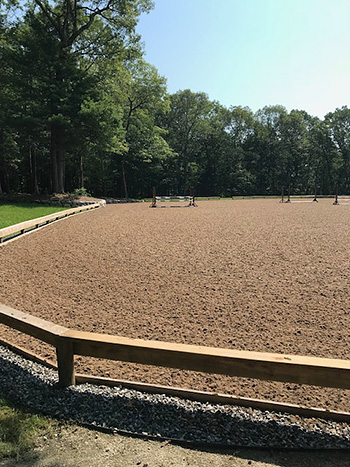
needs, and should be chosen based on riding discipline. The high-performance blends, TravelBright and TravelRight, are often preferred by hunters, jumpers, and dressage riders. These are our best-selling products and are now available country-wide. Additionally, Travelite and All-Right have been created for a more versatile blend. Travelite is a lovely footing which has more sheer or movement, so is used at many top facilities where there are several different levels and disciplines of horse and rider. All-Right is most often used for western performance horses, and will work for all disciplines, even reining.
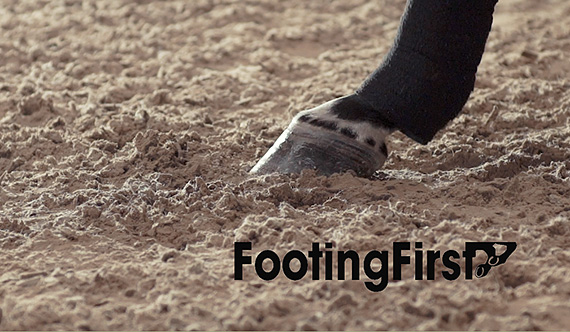
FootingFirst also has amazing water-dependent options. The very successful SRS blend is a combination of sand and fiber. Additionally, we offer EconoPlus, which is our most cost-effective blend. We are always happy to update an existing arena, as well as to find creative solutions tailored to any budget. Please visit us at for more information on our state-of-the-art, proprietary blends of arena surfaces. footingfirst.com