

See our directory of Horse Footing, Arena Footing, Horse Flooring Systems Companies!
Affordable Horse Arena footing
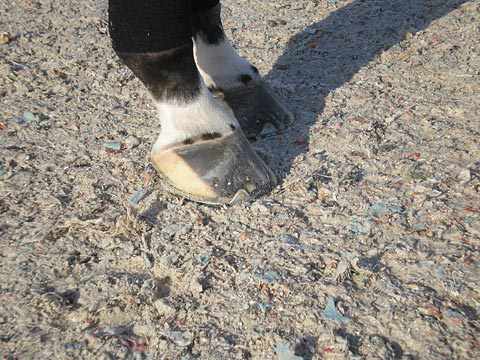
by Footing First, Official Manufacturer, Supplier, and Installer of the Arena Footing for The National Horse Show in NY!
Affordable arena footing starts with the right sand—a quality silica sand that is extremely hard and therefore extremely durable—topped with a fiber additive that improves stability and moisture retention, which means less water for the arena. Fiber is fairly inexpensive, blends with the sand to create a matrix similar to roots in turf, and can rejuvenate an old arena by adding stability and cushion without adding depth. Grade matters, though: sand that’s too fine rides firm and unforgiving, while sand that’s too coarse leaves the footing deep and loose, so a good footing consultant helps get the blend right the first time.
Affordable footing can be achieved. The main ingredient is quality sand which everyone is recognizing as Silica sand this is fabulous sand that is extremely hard and therefore extremely durable. With the correct grade of sand you will already be ahead. Then you can add a fiber there are many types of quality fiber on the market today and this fiber will help with stability and moisture retention in your arena, this means less water.
Good quality sand is only found in certain area’s throughout America. If the sand purchased is to fine then the arena will also become very firm, this will result in a unforgiving surface and may cause injury. However a firm arena is easily amended and can be done so for little cost. If you purchase a sand that is too coarse then the fiber will not be able to work at its full potential as the sand particle will be to large and heavy for the fiber to hold on to. This will create a deep and loose arena which no one will be happy with. When the sand is to coarse this is the most difficult to fix as you need to bring something to the arena that is going to bind the footing together.
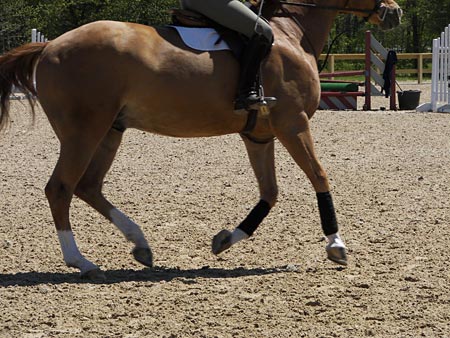
Good quality sand and fiber can be achieved with the help of a good consultant in the footing world. The top horse shows are all changing to this type of footing. Sand and fiber arenas do not have to be Firm/ hard as some on the market depending on the type of fiber used and how much fiber will determine the firmness of your arena as will the type of sand as mentioned above.
Fiber can be added to most arenas it is fairly inexpensive again depending on which type. Fiber can be installed fairly easily with some good information. If you have an old arena, fiber will help rejuvenate that arena and you will get some more time out of the footing before you need to replace it. Fiber creates great stability and good cushion with out adding depth which is one of its best attributes.
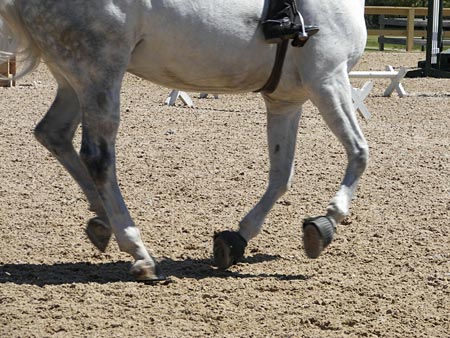
Arena Owners usually keep adding sand to an arena, adding depth making it more difficult to maintain the arena and increases the chance for injury to our horse. Because fiber blends with the sand and creates a matrix within the sand similar to roots in turf, the sand is strengthened, the hoof will stay on the surface of the footing more consistently and this will create a much better riding arena.
FootingFirst,LLC has a variety of fiber offering many different applications. Some fiber providing more cushion and is better for an older arena, to the well known GGT fiber that is an excellent all round fiber. Creating wonderful stability and can improve most arenas.
FootingFirst has also created an Econo blend of silica sand and fiber this blend has been used at many facilities and again by staying with a good quality sand can keep the footing better. There are many ways to improve an arena but once the sand is pulveriased and has to be removed it is a large expensive. If the owner is advised well and good silica sand is available close by it is always best to try to purchase this. Not all silica sands are correct and you should seek some guidance.

How To Find The Best Arena Footing
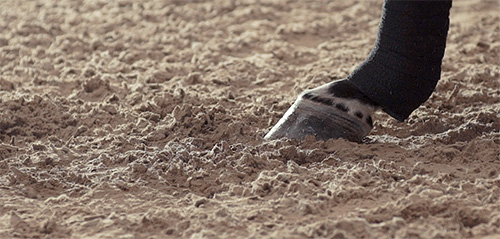
Article from FootingFirst
The best arena footing is the one that functions well for its intended purpose—value matters more than the cheapest price. The two main types are dust-free and water-dependent; both are sand-based, and the sand must be the correct shape and size before additives such as fiber for traction, rubber for cushion, or wax and polymers for dust control are blended in. For indoor arenas, many facility owners choose dust-free footing because watering consistently indoors is extremely difficult and can raise humidity and cause stains, mold, and corrosion.
Arena surfaces come in many different types & price ranges. Of course, affordable footing is something for which every person strives, but value is the more ? pertinent point. A footing that has good value is one that functions well, though it may not necessarily be the one that is cheapest. There is no value in a cheap footing if it does not function correctly for its intended purpose. Here, education is key. A reputable footing company will help the customer design a base and footing that suites there needs within a budget that’s attainable to them.
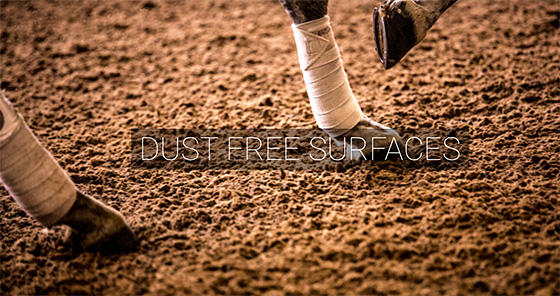
The two main types of footing are dust-free and water-dependent. When considering footing for an indoor arena, water -dependent footing can seem as though it is a cost-effective alternative to dust-free footing. However, it is extremely difficult to water consistently indoors, and many areas in the US experience freezing temperatures, which can create issues when watering. For these reasons, many savvy facility owners have chosen dust-free footing over the last decade.
Although it is often more expensive than water-dependent footing, dust-free footing is well worth the investment due to its functionality and the reduced day-to-day maintenance that is required for good performance. Watering indoor arenas can raise humidity, cause stains, mold, & corrosion.
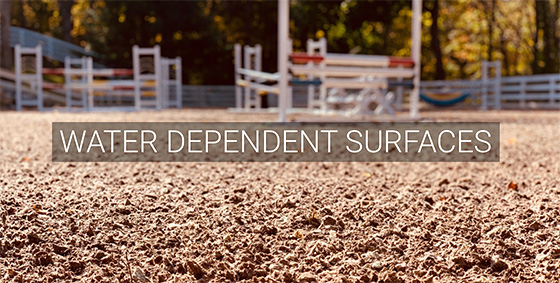
Water use is not ecofriendly.
Water-dependent and dust-free footings are both sand based, and can be created in many different ways. There are many different types of sand that can be used, but it is extremely important that the sand is the correct shape and size, as sand is the base of a good footing. Once a correct sand is sourced, it can be blended with many different types of additives based on its intended use (i.e.
fiber for traction and stability, rubber for movement and cushion, wax or polymers for low-dust or no-dust effects, etc.). However, “additive” is the key word. Many companies sell additives labeled as footing, when in fact they contain no sand (which must be purchased separately), so it’s necessary to be careful with wording when purchasing. Additives are a wonderful addition to sand, but knowing how much to add, what to add, and how much water might be required in a water-dependent version is imperative. The right additives in the wrong sand won’t create good footing.
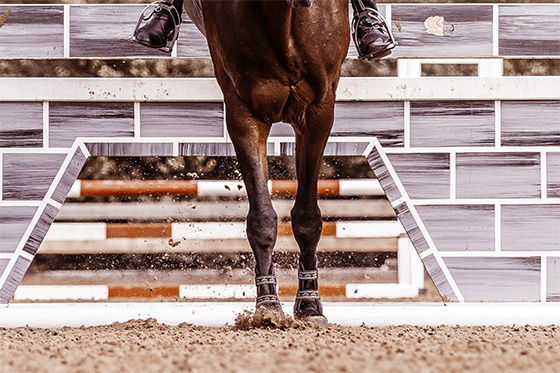
Enter data driven surfaces. Although something that will surely become
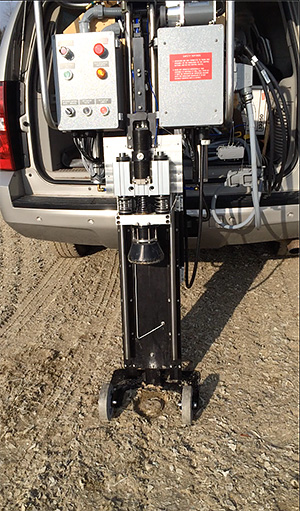
more advanced in the future, the scientific research of footing and the data it produces are already being utilized in the development of new riding surfaces. At FootingFirst, we have been working diligently to test and investigate our own footing blends. FootingFirst has been involved with several universities that have been testing footing since 2011, and has invested in a large hoof-drop machine that creates information about each blend, allowing us to create a plethora of knowledge about our own surfaces.
We measure multiple attributes of each surface, and analyze the data with the goal of creating a standard within the industry. This will be extremely helpful for the industry as a whole, as it will allow the comparison and improvement of all types of surfaces.
Specifically, for a surface that isn’t performing as expected, FootingFirst will be able to analyze it to find whether it is lacking traction, torque, or cushioning. These findings can then be used to implement an additive to enhance results.
When surfaces can be measured, it will be an advantage for all in the equestrian sport. Riders will know what to expect at each show venue, and have the ability to pick and choose what horses they will campaign at each. This will also help farriers and vets in their preparation of the horses for competition. When there is enough information that surfaces can be fine-tuned, we can help the sport and create a safer and more effective surface for the horse.
This information will support the use of multiple types of riding surfaces (much like tennis, which utilizes both hard courts and clay courts), while promoting a shift in the correct direction for the welfare of the animal and the overall enhancement of the sport.
About Footing First

Footing First is our newest and most exciting venture in the horse footing business After years of hands-on experience, we were determined to create a superior dust-free footing product... hours of research later, we have done just that. Our Superior Riding Surface blends address issues that, in the past, have been problematic:
' It is NOT temperature-sensitive ' It provides tremendous stability ' Allows adequate movement ' It is a consistently forgiving surface ' Offers a dust free riding environment
Don't Your Horses Deserve The Best?
Call Footing First Today! Discover why we are so passionate about the arenas we build. Discover why your horse will thank you after working on a FootingFirst™ surface. Discover why a professional like McLain Ward believes his FootingFirst™ surface is the best he's ridden on... in the world. Quality footing is important for the comfort and health of your horse. Don’t wait call today and tell us about your horses!