

How To Keep Horses Cool In the Heat
Article by Kevin Docker at Klene Pipe Structures
To keep a horse cool in hot weather, provide shade during peak heat hours—ideally natural tree cover or a well-ventilated shelter—and ensure constant access to fresh, cool water. On especially hot days, hose the horse down with cool water, offer electrolytes, and move exercise to early mornings or late evenings when temperatures are lower. Watch for signs of overheating such as excessive sweating, rapid breathing, muscle weakness, or lethargy, and protect light-colored horses from sunburn with equine-safe sunscreen or UV fly masks.
As temperatures soar during the upcoming spring and summer months, it’s vital for horse owners to take extra precautions to help their horses stay cool and comfortable. Horses are naturally sensitive to heat, and prolonged exposure to high temperatures can lead to serious health risks, including dehydration, heat exhaustion, and even life-threatening heat stroke. Recognizing the signs of overheating—such as excessive sweating, rapid breathing, muscle weakness, or lethargy—is key to preventing these conditions.
Light-colored horses, particularly grays and paints with pink skin, are also more prone to sunburn. Sensitive areas like the muzzle, around the eyes, and under the saddle can easily become irritated and painful if not protected. Applying equine-safe sunscreen or using fly masks with UV protection can help shield these vulnerable spots.
Proper shade is essential during peak heat hours, ideally through natural tree cover or well-ventilated shelters. Ensuring constant access to fresh, cool water is equally important, as horses can lose significant fluids through sweating. On especially hot days, consider hosing your horse down with cool water, offering electrolytes, and adjusting exercise schedules to early mornings or late evenings when temperatures are lower.
Here are some points to consider:
2 Preventing Sunburn: Horses with lighter skin or white markings are particularly susceptible to sunburn
3 Reducing Stress: Constant exposure to sunlight can be stressful for horses
4 Protecting Eyes: Prolonged exposure to bright sunlight can be uncomfortable for horses and might lead to eye strain or conditions like photophobia
5 Energy Conservation: By avoiding the need to constantly sweat to cool down, horses can conserve energy, which is important in hot climates or for horses that are working or competing
6 Hydration: In shaded areas, horses are less likely to lose as much water through sweating, which helps in maintaining hydration levels, especially when water sources might not be readily available or if they're not drinking enough
Here at Klene Pipe Structures we understand that helping
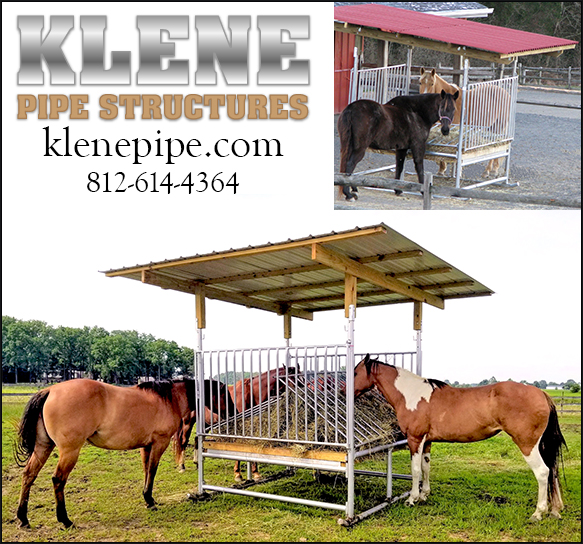
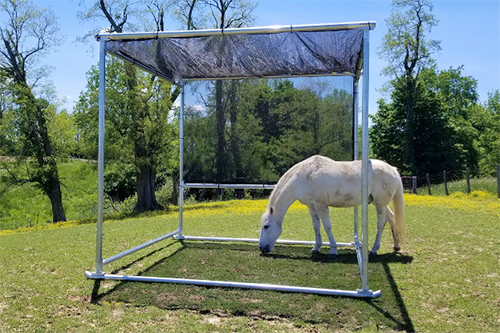
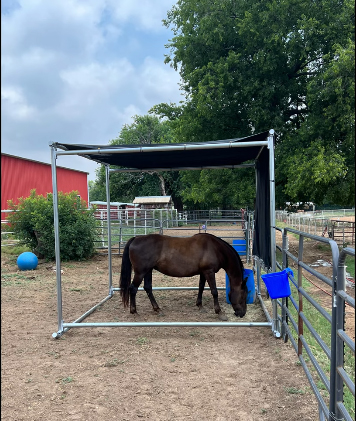
horses beat the heat isn’t just about comfort—it’s a matter of health and safety! By taking proactive steps, horse owners can prevent heat-related issues and ensure their horses thrive even in the hottest months… In preparation for the heat, we offer a portable shade kit that will take care of your needs for decades. The 10' x 10' x 9' heavy duty galvanized steel frame is solid enough to withstand any abuse and won't blow over in high winds (barring a tornado).
The kit comes with an 86% UV blocking shade tarp, made of super strong monofilament. It is mold and mildew resistant and also fade, crack and rot resistant. It also comes with the tarp bungee ball connectors. All products are proudly made in the USA! $1995 delivered anywhere in the US (excluding Alaska and Hawaii).
Kevin Dockery Klene Pipe Structures 812-614-4364