

Safe Hoof Soaking Techniques for Chronic Hoof Infections
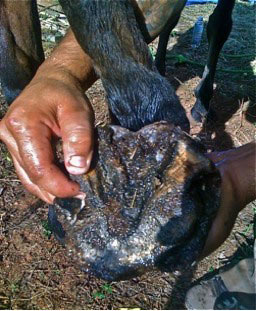
By Ray Tricca, SBS Equine Products Soaking the hoof can be an effective way of treating against chronic infections, but there can be serious consequences if done carelessly.
Soaking can be an effective way to treat chronic hoof infections, but done carelessly it can wash away the hoof’s natural protective coating, weaken the hoof structure, and damage healthy tissue. The safe approach follows a few firm rules: pick and wash the hoof first, use a one-piece boot made specifically for soaking, use only commercial preparations recommended for hoof soaking—never household products—and limit contact time to 30 minutes, no more than twice a day. Stopping the moment the hoof becomes soft and punchy, or using a controlled soak in which only a fiber pad inside the boot is saturated, protects the hoof from irreversible damage.
Experts have recommended some simple rules that can help you avoid a hoof soaking disaster.
Reasons Why Soaking Can Be Dangerous Soaking the hoof in any liquid for an extended period of time can wash away the natural protective coating provided through transpiration. In time soaking can weaken the entire hoof structure and damage healthy hoof tissue. Since many commercial preparations and harsh household products may work well on hard surfaces by burning pathogens to death, they can also seriously harm to new hoof tissue. Keep in mind that a healthy hoof will grow out an astonishing rate of 3/8” a month. Damaged cells will no grow out like healthy tissue. Damage can be long term or chronic.
A Conservative Approach to Soaking
Most infections in the hoof are difficult to treat because they are hard to reach. There are many nooks and crannies for pathogens to hide, and you cannot easily detect their presence behind the hoof wall. Another issue is that the infection may be a particularly aggressive form of fungus or anaerobic and aerobic bacteria, or any combination of them. How do you kill the broad spectrum of pathogens by soaking them without harming sensitive hoof tissue?
How often and how long a time period is it safe to soak? How much soak is required to be effective? How do you prevent waste or spilling of the soak? To find out answers to these questions we asked the researchers who have worked on these issues.
In the last decade there was a world wide epidemic called white-line disease. Two companies collaborated to develop a new delivery system for treating the disease and other hoof infections. They recognized that soaking the hoof could be a simple and effective way of treating the hoof against infections, if done correctly. They recognized too, that there may be serious consequences if the soaking was done incorrectly. Several months later both companies developed products that would work in harmony with the other’s . Even after ten years, both products are still being used together as a successful treatment option.
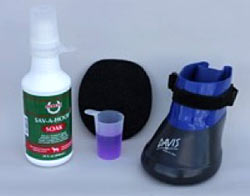
Another breakthrough component was the development by SBS and Davis of a fiber matrix pad which is included inside the boot. The pad is washable and reusable. It’s purpose is to hold the Soak in place. The pad reduces evaporation and helps to prevent the liquid from sloshing around and spilling out. The fibers also wick the key ingredients to the affected areas of the feet. This reduces the danger of over soaking because only the pad needs to be saturated with the Soak, not the entire hoof.
A few years ago SBS came up with a non-liquid soaking material called Sav-A-Hoof Med-i-sole. It is a gel. When the pad is saturated with the gel, it makes the chances of over soaking almost impossible. (The product is not to be confused with Sav-A-Hoof Gel, which is a concentrated gel product made for voids and cracks.)
Simple Rules that Prevent Problems Hoof Soaking is a simple concept for treating deeply rooted infections, yet a risky one. This method is recommended only when other less invasive methods have been tried first. We must never forget that soaking has the potential to cause irreversible cell damage to the hoof if done incorrectly.
Hoof soaking is not an exact science because every situation is different. We asked the experts to share their best recommendations on hoof soaking with us. The rules selected are designed primarily to keep us from getting into trouble and give us the best chance of success.
It is amazing the hear so may horror stories about horse owners who have inadvertently damaged the feet by over soaking, not realizing that safer options may exist. It appears that controlled soaking may the answer. There are several companies that make soaking products. We are just focusing our attention on the two with over ten years of experience with soaking.
Researchers at SBS Equine Products have developed a unique product called Sav-A-Hoof Soak. The product contains a powerful fungicide as well as broad spectrum bactericide that is very effective and long lasting. This longer contact time allows for a more conservative method of treatment. Another company, Davis Manufacturing, were successful at molding the Davis Horse Boot. The product is a one piece, high top, medical boot that was engineered specifically for soaking the hoof, not as a riding boot.
Rule 1.
Clear Debris From Voids
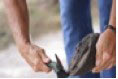
Use a hoof pick and brush before washing the hoof to clear trapped debris from voids. This helps to open up blocked passageways for the Soak to work better.
Rule 2.
Wash Hoof Before Soaking
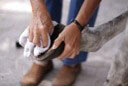
Thoroughly wash off hard surface dirt with soapy water before each soaking session. This will help prevent contamination of the soaking material.
Rule 3.
Use Boots Made for Soaking Soaking boots are injection molded in one piece construction, and produced in many sizes. They are made of a flexible plastic to make it easier to slip on or off the hoof. The resin used to make the boots should be compatible with the chemicals used to treat the hoof. Form fitting soaking boots require much less volume of Soak than would a bucket. This is a good thing. Look for boots with a closure top that is well above the hairline. This helps prevent the liquid contents from spilling out.
Rule 4.
Use Commercial Soaking Preparation Use only commercially products that are specifically recommended for hoof soaking. Read the labels to make sure the ingredients are not harmful to hoof tissue. They should also be effective against both fungus and bacteria. Never use household products for soaking. They can cause irreversible damage the hoof. Products that bind to hoof protein work best.
Rule 5.
Limit Soaking Time Limit soaking contact time to 30 minutes, and no more than twice a day. Stop soaking if the hoof becomes soft and punchy. A longer contact time may be permitted when doing a controlled soak; that is, if the boot has a soaking pad inside with just a few ounces of Soak in it.
For more information concerning this article contact: Ray Tricca, SBS Equine Products, 3888 Mannix Dr, Unit 303 , Naples, FL 34114 ph. 239-354-3361 [email protected] sbsequine.com