

Introducing Our Horse to Cattle Work Performance Horsemanship with Richard Winters
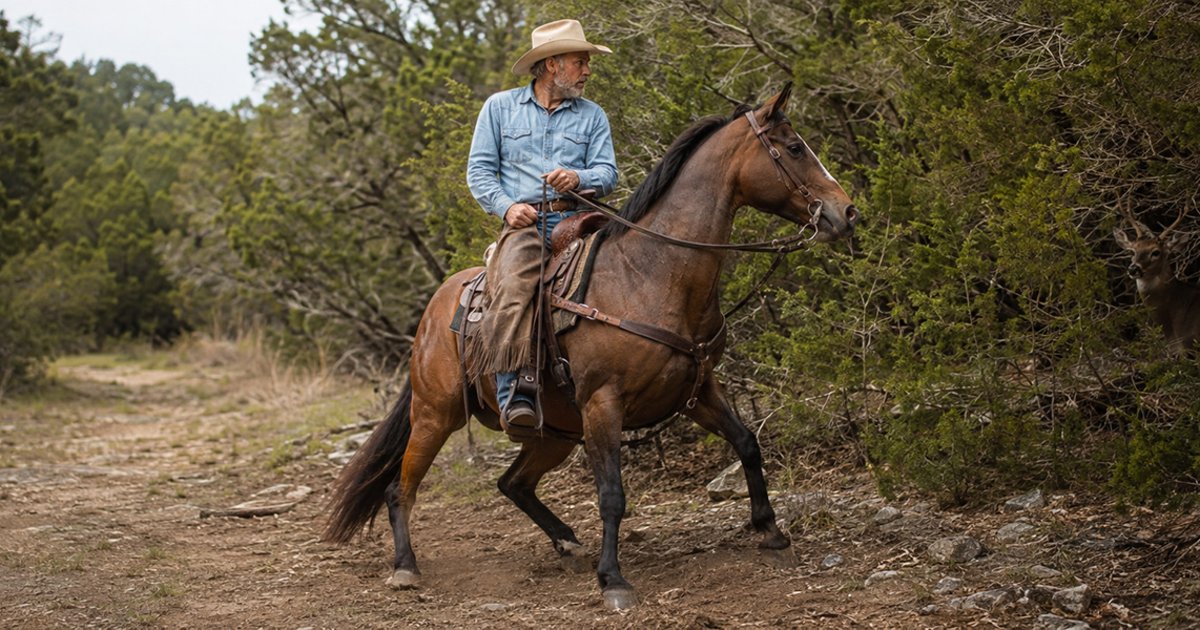
The best way to introduce a horse to cattle work is a game of follow-the-leader—one horse, one cow, and one pen. Ride directly behind the cow wherever it goes, matching its speed and changes of direction while keeping the reins as loose as possible so the horse takes responsibility for tracking. Horses are natural followers, and the moment a green horse realizes the cow yields away from him is a big confidence booster—you don’t need a purebred cow horse to teach this.
Whether it is in competition, practical ranch work, or strictly for pleasure, cow work can be an exciting activity for you and your horse. What is your horse’s attitude toward cows? Is your horse scared, curious, uninterested or somewhere in between? This article will outline how I like to introduce my horses to cattle and begin to create an interest in their minds about the work.
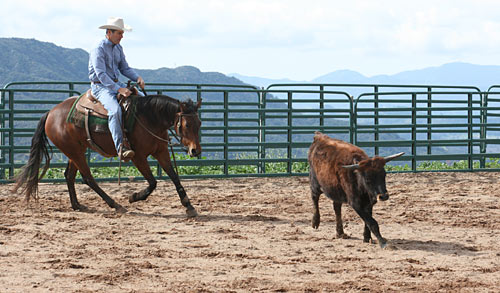
Follow-the-leader: One horse, one cow, and one pen is a great way to start. Horses are natural followers. You don’t have to have a pure bred cow horse to teach this concept. I’ve watched Thoroughbreds, Arabians, Warmbloods, and generic grade horses show interest and expression as they began to play follow-the-leader with a single cow.
The idea is to simply follow directly behind the cow wherever it goes. If the cow speeds up, slows down, or changes directions, I want my horse to do the same. I will direct my horse as much as necessary but I’ll try to do as little as possible. The heavier I hang onto the reins, the less my horse will be able to “hook” onto and become interested in the cow. In these early lessons I’m not concerned with driving the cow in any specific direction. I am simply directing my horse along the same track the cow is on.
This game of follow-the-leader will capitalize on your horse’s natural curiosity and increase his confidence. Attempting to step up into a herd is very intimidating if your horse is unsure or scared of cattle. Yet, in this exercise, when your horse realizes the cow is yielding away from him, it’s a big confidence booster.
You need to be careful that you don’t overrun the cow. However, you need to ride up close enough so that your horse is engaged with the cow and begins to realize that his job is to follow. If the cow trots off, you should encourage your horse to catch up. If the cow travels faster you can accelerate into a lope and follow right in behind.
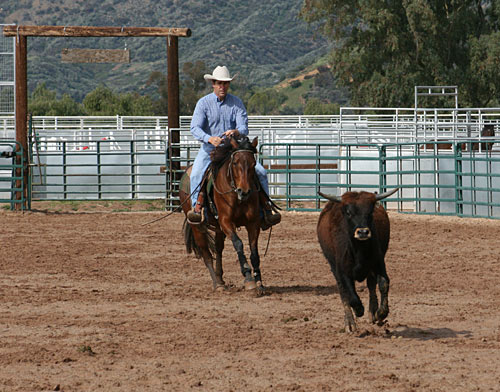
Depending on your horse’s temperament, this activity might get him excited. Having your horse properly prepared before the cattle working session is extremely important. That means you will trot and lope your horse as much as necessary during a warm up period. You want a horse that is physically and mentally warmed up and prepared before you start this extra curricular activity.
Some horses will get over zealous and attempt to lunge at, bite, or strike a cow while following. You need to feel what’s going on and nip this in the bud. If you feel your horse get too aggressive, take hold of the reins and check him back. You might even need to stop him firmly, take a step back, and then proceed again.
As your horse follows the cow around the arena, try to guide him as little as possible. Keep your reins loose and allow your horse to take responsibility for following. If your horse wanders off track, simply re-direct him back to the cow and then loosen your reins.
Teaching your horse to track a cow has many direct and fringe benefits. If your goal is to have a competitive or practical cow working horse this is the first step. This game also gets you and your horse traveling free at different speeds in all gaits. Teaching your horse to speed up and then slow down while following the cow will help him get comfortable with speed without falling apart emotionally.
After I have introduced this game to my horse and he is showing some interest, I’ll add periodic stops. I will look for an opportunity when the cow and my horse are on a straight line, I’ll sit down and say “whoa” and back my horse up a step. I don’t want to discourage my horse from following. However, I need him to know that we can and will stop any time I choose. After I stop and back up, I’ll sit for as long as I feel is necessary. Then I’ll trot or lope right back to the cow and track it some more. Stopping when the cow and horse are straight is important if I expect my horse to stop well. If my horse is bent or crooked it will be difficult to stop with any kind of correctness.
You don’t have any cows? You can play this same game with a friend on horseback. Except for acclimating your horse to a cow many of the benefits are the same. Regardless of your goals, this experience can make you a better rider and your horse a better ride!
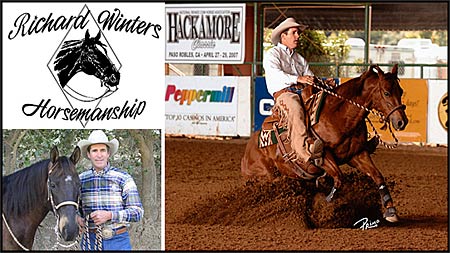
For more information about Richard Winters Horsemanship please go to wintersranch.com.