

Perfecting The Circle Horse Training
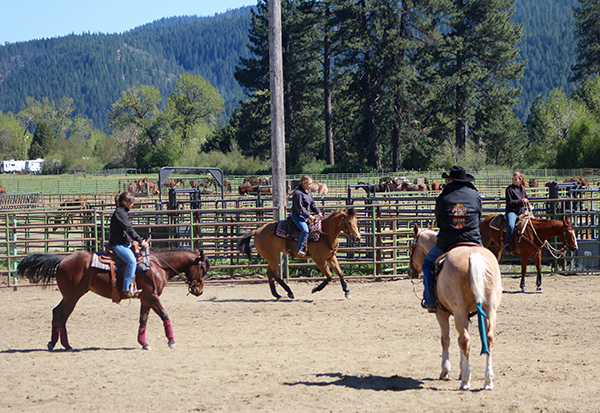
You can improve the shape and balance of a loping circle by straightening out the arc and loping a series of straight lines. With Richard Winters Horsemanship
This last winter I was asked to help coach the Equestrian class at Feather River College in Quincy, California. This particular class of 20+ riders have been working all year starting and training three-year-old colts that will be sold at the Feather River College annual sale in May. This is a great program and a wonderful opportunity for young people to get hands-on experience in the "Real World" of horsemanship. In my last session with these fine students, the reoccurring question was, "How do I lope a more balanced circle without my horse dropping his shoulder?"
Here are a few of my ideas:
Squares and Diamonds
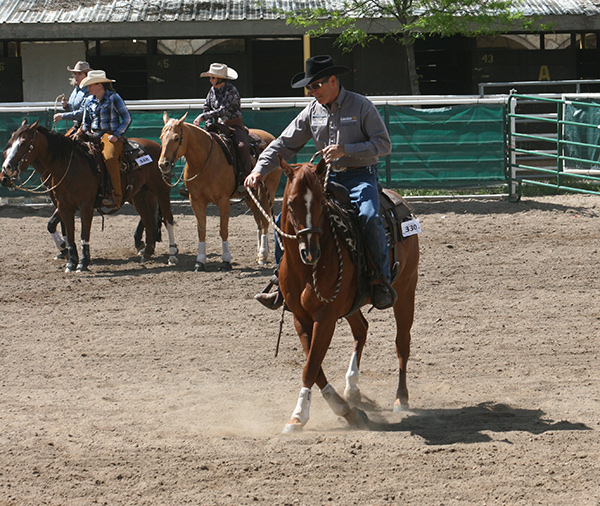
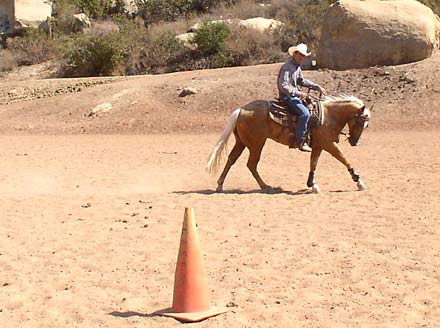
You can improve the shape and balance of a loping circle by straightening out the arc and loping a series of straight lines. You can change your circle into a square by loping four straight-lines and making 90' turns on the end of each line. You can vary this exercise by changing your lines into the shape of a diamond. This will cause you and your horse to make 45' turns at the end of each line. Both of these configurations will help your horse align his body and stand up straight as you lope around the circumference of your circle.
When loping squares and diamonds, I will often allow my horse to travel on a loose rein while on the straight-line. Then when I make the 90'or 45' turn I will pick up the reins and collect my horse until I am straight on the new line. This teaches my horse to travel balanced, with his shoulders up while making the slight turn.
Don't Protect Your Horse
Continually using your reins and legs, to keep your horse on a perfect circle, will often cause a horse to become over dependent on your micromanaging aids. You can test how well your horse is taking responsibility to lope the correct circle by beginning to lope the circle on the loose rein. If you feel your horse begin to drop his shoulder to the inside, immediately stop your horse and turn firmly all the way around in the opposite direction in one fluid motion.
Then lope off again in the original direction. By allowing your horse to make a mistake and then correcting him, you will show him that dropping his shoulder and leaning into the turn only has negative ramifications. This exercise will help your horse take responsibility for a correct circle and motivate him to stay more balanced.
Lope Off Straight
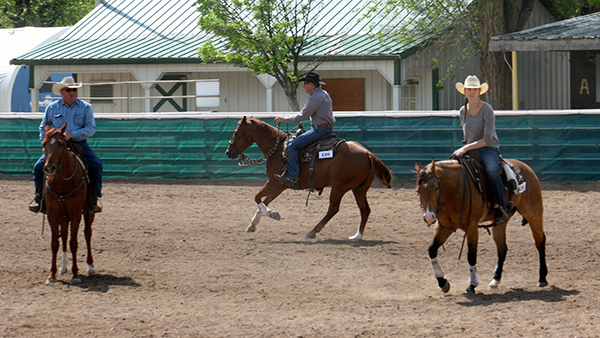
When helping a young horse learn how to pick up the correct lead, starting on an arc, or circle, can often be helpful. However, continuing this method over and over can cause a horse to lean into the turn and drop their shoulder when loping off. Your horse will begin to anticipate and determine that loping on a certain lead always means to travel in that particular direction. This is not the habit you want your horse to form. That's why it is helpful to begin helping your horse learn how to lope off on a straight line. It's important to break that cycle of drifting off in the direction of the lead that you are trying to pick up.
Try starting at one end of the arena and pick up a lead, on a straight line. Lope all the way down to the other end, stopping at the opposite fence. Sit for a few moments, then turn around and ride back again. This will begin to show your horse that loping does not always mean circling. Straight lines are very valuable in helping a horse learn good posture and help keep his shoulders picked up.
Horses are creatures of habit; bad habits always seem easier to develop than the good habits. A first-rate coach will continually monitor an athletes posture and position, to establish good muscle memory. You're the coach and these exercises will go a long way in helping your horse be the best athlete possible!
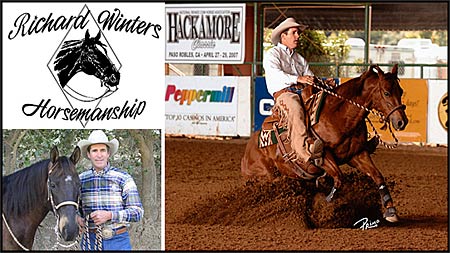
For over 30 years Richard has dedicated himself to honing his horsemanship skills and to passing this knowledge on to others. His vast experience includes starting literally hundreds of horses that have gone on to almost every equine discipline imaginable. Richard's credentials extend from the rodeo arena and high desert ranches of the west to being a highly sought after trainer, horsemanship clinician and expo presenter.
Richard Winters’ horsemanship journey has earned him Colt Starting and Horse Showing Championship titles. Obtaining his goal of a World Championship in the National Reined Cow Horse Association became a reality. He is an AA rated judge. Another of Richard’s horsemanship goals was realized with his Road to the Horse Colt Starting Championship win! There is no question to Winters’ qualifications as Horseman’s Host, returning to Road to the Horse as a commentator, for the 5th consecutive year,
International travels include Canada, Australia, Mexico, Sweden and Poland where he earned the European International Colt Starting Championship Title. Richard is a "Masterful Communicator" with horses and humans alike!
Richard Winters Horsemanship WintersRanch.com