

Round Penning, Starting a Horse
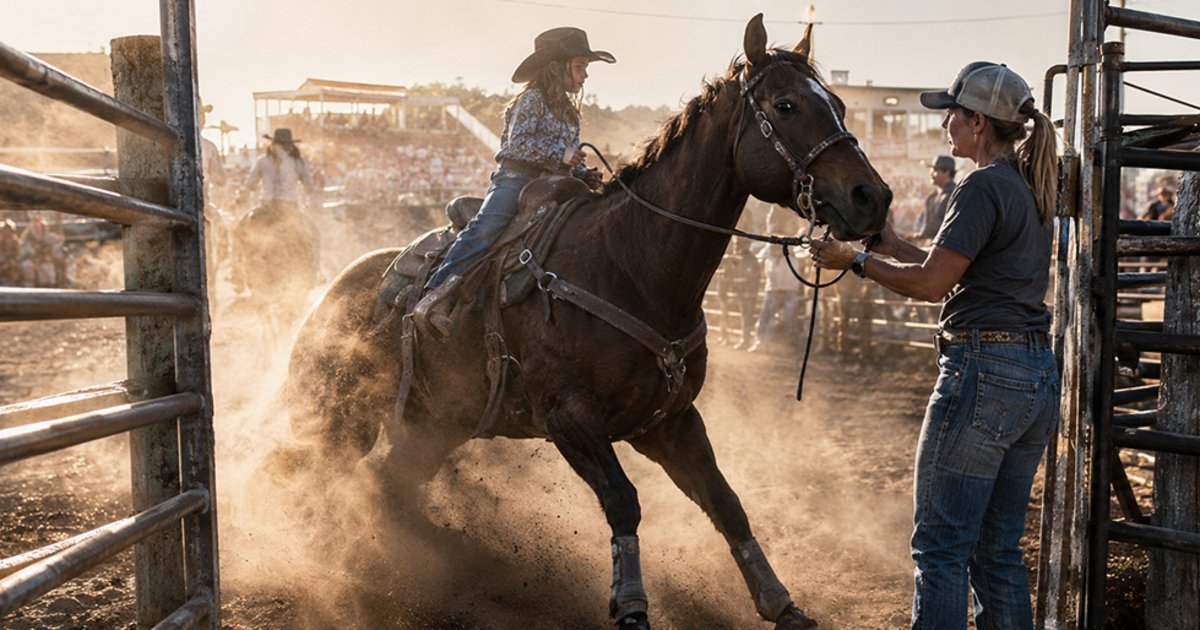
Starting a colt in the round pen works by gaining control of the horse’s movement—and through it, the horse’s mind—without ever getting on until the horse is absolutely ready. Ask the horse to move with a kissing sound, backing it up if needed by tossing a lariat, whip, or lead rope toward the hindquarters; pressure toward the back end tells the horse to move forward, while pressure toward the front tells it to stop, slow, or change direction. Work first for consistent movement in each direction, then teach specific changes of direction such as inside turns, and put leg protection on the horse in case it bumps the panels.
Starting a horse is a lot like building a house.
If you don’t have a good foundation, the house will collapse. by Nathan Coffman
Starting a horse is a lot like building a house. If you don’t have a good foundation, the house will collapse. So how do we put a foundation on a horse, where do we start? That is where the round pen comes in. The round pen is a great tool that we can use to gain control of the horse and it’s movements. By doing this we are gaining control of the horse’s thoughts as well. When we can get control of the horse’s mind, that goes a long way in getting that horse safer for us to be riding.
With the round pen, we are able to do all this with out getting on the horse until he is absolutely ready. In the case that we have a horse that is hard to catch, if we can somehow get them to the round pen, it gives us a means to be able to work with them and get them to where we can catch and handle them. One thing I like to think about is that the strongest lead rope we will ever have on the horse is right between his ears.
What that means is that if we can get that horse’s focus to where he is really locked in on us and wants to be with us, then the rest of the training will go a whole lot easier. With all that being said, let’s get started.
One thing I like to have when I’m working with a horse in the round pen is a lariat rope. This gives me something to help motivate the horse to move if he doesn’t respond right away to my verbal cues. Of course, you can use anything that you feel will work with your horse, and possibly is easier for yourself to use. It only needs to be something that the horse will respond to on a consistent basis.
This could be a lounge whip, dressage whip, or a lead rope. If you use a lead rope, just make sure you are not throwing the end with the snap at the horse. I also recommend that you put some sort of leg protection on the horse when working in the round pen. At some point, the horse will most likely bump the panels, and we want to do what we can to avoid injury to the horse.
When I ask the horse to move initially, I like to give the kissing sound to ask them to move. If they don’t respond to that, I will throw one end of the lariat rope in the direction of the horses hindquarters. Remember any pressure put towards the back end of the horse, tells the horse to move forward, and any pressure put towards the front tells him to stop, slow, or change direction.
I don’t care in which direction the horse moves to start with. Once the horse is moving, the first thing we are going to look for, is that he is moving consistently in that direction. Meaning that I don’t want him to be changing direction on his own. For some horses, this will mean just a couple of trips around the round pen, and for others it may take a couple dozen trips around. You will know when the horse understands this by his body language.
I promise it doesn’t take a rocket scientist to recognize it. Once you’ve got that direction, step towards your side in the direction to cut him off. Don’t worry about being specific at this point, just do what you can to get him to make some sort of change of direction. Do the same thing with him going the opposite direction, making sure that he is not trying to change direction on his own.
Now that you have the horse moving in both directions consistently, we are ready to start asking for specific changes of direction. In this case, we are going to work on inside turns. With him moving in the direction you started with initially, step slightly to the side and slightly to the back, making sure to cross your trailing foot in front of your leading foot. You are trying to cut the horse off, but at the same time, give him room to turn in towards you.
It may take several times of asking before the horse gets the right answer. If the horse turns to the outside, quickly move to the opposite direction to cut the horse off and get him going back in the direction he started. The longer the horse goes the wrong direction, the longer it will take him to figure out the correct answer.
If he is really struggling getting the correct answer, when you are asking for the inside turn, allow the horse to move past you and continue on out to the panel of the round pen. The horse should then make the turn almost directly across from you. Once you have gotten one inside turn, continue to practice that turn until the horse has them consistently. While working with the horse moving in the initial direction, I don’t worry about how I get them to reverse back to that initial direction. After the horse has that direction, switch and repeat those steps in the other direction. This gives us the first few steps of the round pen process.