

Thinline Saddle Pads, No More Sore Backs
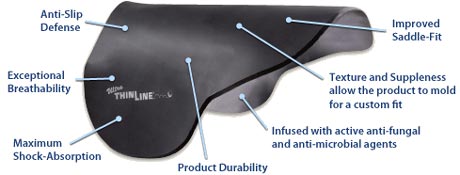
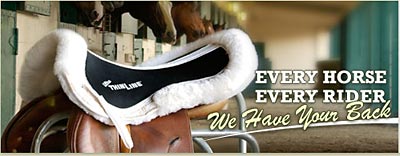
ThinLine guarantees riders using this pad will ride the gaits better with much less bounce!
ThinLine saddle pads are deliberately thin, and rather than squishing up and down they disperse shock, pressure, and heat laterally across the pad instead of down onto the horse’s back and up onto the rider’s—so there is very little bounce, no yaw, and no pitch. The pads don’t slip, they work with custom saddles because they don’t alter saddle fit, and they are recommended and sold by vets, chiropractors, massage therapists, and saddlers; many riders report that horses with sore backs often go immediately back to work with just the addition of one of these pads.
They’re light, moldable, breathable, and durable—commonly lasting more than a decade—and ThinLine offers a full refund if you don’t see a positive difference.
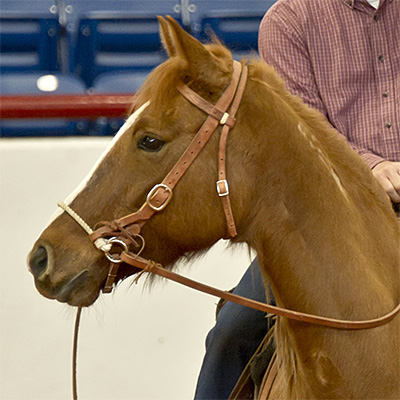
Ears slightly pinned, tail-swishing, head tossing. These are signals that the horse is uncomfortable. He is not mean; there are no mean horses. But sometimes when horses are in pain or in fear they give these little signals showing they are unhappy.
Without correction of the reason for such behaviors, these signals can progress to more dangerous behaviors, such as bucking and bolting, which do appear mean.
Good trainers and horse whisperers understand this is how horses show they are unhappy. The trainer’s task is to discover why this is the case and to correct the problem. Medical issues are sometimes discovered to be the problem and so a vet or other specialist is called. But more often, one of two things is wrong: the tack is causing issues or the rider is not sitting well. If either is the problem, the medical specialist is not likely to be useful or will have to be summoned repeatedly.
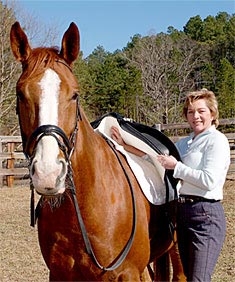
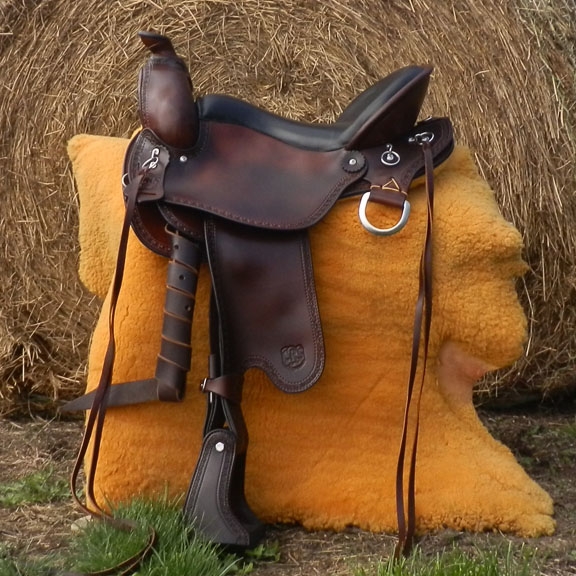
Perhaps the largest complaint associated with such issues is back soreness, both the back of the horse and the back of the rider. The equine back is sore because the saddle bounces around, and the rider’s back is sore because the rider bounces around. This is a concern for all riding styles. Consider western saddles, which have such large panels and thick padding that it difficult for the saddle to sit evenly and comfortably.
Even with a custom made or other well-fitting saddle, the seat can be less than perfect and missing the rhythm on the horse's back does not provide a fun experience for either party. For just this reason, many professionals who ride several horses a day experience back pain, many in the “over 40” riding crowd, and it has been estimated that some 60% of the riding population experiences back pain at some time.
And if your back hurts after a trail ride or work session, imagine how your equine friend feels!
Because of this problem, many people try to increase both horse and rider comfort by adding more and more padding. However, this increases the amount of saddle movement and bounce. Further, since thick padding compresses more, when your seat lowers into the padding the saddle squishes more, and as you lighten your seat on the next step the padding becomes uncompressed, throwing you into the air! Bouncy-bouncy is not what you want. Horse and rider both need less movement for happy backs. For decades, people have thought more padding is better, but this did not help “the princess and the pea” and it does not help here. We need to find a better way, and there is one.
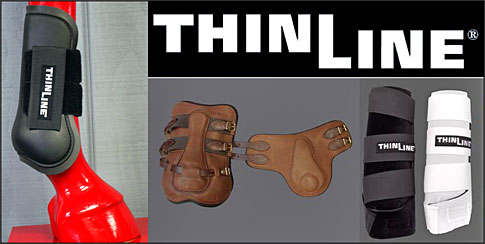
More and more professionals who service the health of our horses -vets, chiropractors, massage therapists, saddlers- recommend and sell ThinLine Saddle pads. These pads are increasingly chosen by the highest-level riders, by Olympic massage therapists, by Olympic level (FEI) vets, by chiropractors and by pleasure riders. These pads work differently than anything else available. They are thin, the thickest one made is '”, and so there is very little bounce, no yaw and no pitch.
Moreover, rather than squish up and down, they disperse shock, pressure and heat laterally, across the pad, rather than down onto the animal’s back and up onto the rider’s back. The pads also do not slip so the saddle stays snug against the horse.
This works so well that spinal surgeons endorse the pad for injured riders (see “The Riders Pain Free Back” by Dr. Jim Warson). They feel better with it. Without bouncing, without moving about, without added confusing signals to the horse’s back, the horse also feels better. The only product known to do these things is a ThinLine saddle pad.
It is also the only product written about and recommended in Veterinary Text books for Equine chiropractic and massage therapy “The Illustrated Guide to Equine Chiropractic, by Equalign”
ThinLine guarantees riders using this pad will ride the gaits better (much less bounce!). Also, saddles will fit better (ThinLine transfers pressure to where the saddle might not be touching the horses back, and distributes pressure away from where it touches the horses back too much). Indeed, many riders report that horses with sore backs often go immediately back to work with just the addition of a ThinLine pad.
ThinLine works in most situations. It works with custom saddles because it does not alter the fit of the saddle. Alternatively, you can you purchase ThinLine shim products to alter saddle fit if that is needed. Riders with sore backs and many riders with severe back problems (pins, rods, bulging discs) often can ride in ThinLine when no other pad is effective. Importantly, cost aside, there are no known drawbacks to ThinLine. They are light, moldable, breathable and durable, commonly lasting for more than a decade.
You can make your riding better by purchasing a pad and you can make your horse happier by purchasing a pad. The cost is less than a massage therapist visit, or a vet call, or a riding lesson to improve your seat and your horse’s attitude. The promise is many years of happier trails and better competition. Indeed, if you do not see a positive difference, ThinLine will give you a full refund. Get Happy - Get ThinLine. Order today at ThinlineGlobal.com
Contact: Our Friendly Staff 105-6 Hood St Durham, North Carolina 27701 Phone: 888-401-9101 Website: ThinlineGlobal.com