ⓘ
The Solution Section (FAQ)
Who is Tangent Materials and what do they make?
Tangent Materials has been a U.S. manufacturer of recycled plastic lumber since 2003. The company holds a patented "Woodgrain" Technology for the visual finish of their HDPE products, and has scaled to more than 60 production lines and over 500 employees across more than a million square feet of production and warehousing. Their core focus is plastic lumber for outdoor furniture and reinforced lumber for premium horse fencing — the Ranch-Rail Fence line is their flagship equine product. The HDPE feedstock comes from post-consumer and post-industrial recycled sources, so the fence is a working circular-materials story rather than a virgin-plastic product.
What is HDPE plastic lumber, and why use it for horse fencing?
HDPE stands for High-Density Polyethylene. It's a strong, durable building material that can replace traditional wood for fencing, arenas, stall walls, trailer floors, and countless other wood-replacement applications. For horse fencing specifically, HDPE solves the major maintenance problems that wood and PVC introduce: HDPE doesn't rot, doesn't splinter, doesn't crack, doesn't chip, doesn't peel, and doesn't need painting, staining, or waterproofing — ever. It also won't shatter like PVC under impact, which matters when a horse kicks or bolts into the rail. Per Tangent, the material has enough give to absorb impact safely while still holding the rail line tight.
What's the difference between solid and hollow HDPE rail?
This is Tangent's central technical-differentiation point. Most HDPE and PVC fence manufacturers extrude hollow posts and rails — cheaper to produce, lighter to ship, but structurally weaker and more vulnerable to impact damage. Tangent's Ranch-Rail uses solid posts and rails, which is what makes the line genuinely "horse tough." Per Tangent, the solid construction combined with the HDPE material's recoverable deflection (it bends under impact, then returns to shape) makes Ranch-Rail "the safest fence for horses on the market today." If you're shopping HDPE fencing, ask the question explicitly: solid or hollow? The answer shapes both the buying argument and the long-term durability.
What maintenance does Ranch-Rail need over its life?
None of the maintenance wood and painted vinyl require. Per Tangent: no painting, staining, or waterproofing — ever. The fence won't rot, splinter, crack, chip, or peel. It doesn't attract bugs or insects. It performs in extreme heat and extreme cold. The only routine care: just hose it down when it gets dirty. The one honest caveat the company surfaces: the color will dull slightly over many years, but per Tangent, the original color can be brought back with heat. Compared to wood (re-paint every 3–5 years, replace cracked boards) or hollow vinyl (annual inspection for cracking and impact damage), the maintenance time-cost difference is the dominant factor in the lifetime-cost case.
How does Ranch-Rail install — is it harder than wood?
Per Tangent, installation is very similar to wood. Posts can be driven (no concrete required for typical installs). The rails attach to the posts the way wooden rails do. Anyone comfortable installing a traditional 3-rail or 4-rail wood fence can install Ranch-Rail without learning a new technique. The handling difference: HDPE is heavier per linear foot than the equivalent wood section because it's solid, not hollow — that's the trade-off that produces the durability. Tangent's team is happy to walk you through installation specifics for your terrain — call 800-721-9037 with project details and they'll advise.
Why does sustainability matter for fencing, specifically?
Two reasons. First, the material itself: Tangent's HDPE feedstock is sourced from post-consumer and post-industrial recycled plastic. Each linear foot of Ranch-Rail represents diverted recycled material that would otherwise have ended in landfill or incineration. Second, lifetime: a fence that lasts decades without replacement reduces the total material footprint of the property over its hold period vs. wood that gets replaced every 15–25 years. The combination — recycled feedstock + multi-decade service life — is what makes Ranch-Rail meaningfully different from "green-marketed" virgin-plastic competitors. Made in USA, which keeps the supply-chain shorter still.
What does Ranch-Rail look like — is it obvious it's plastic?
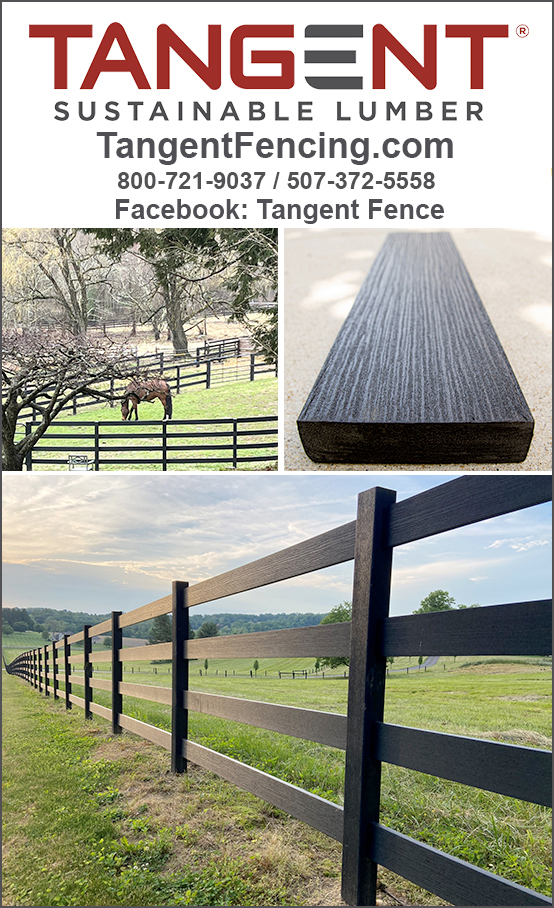
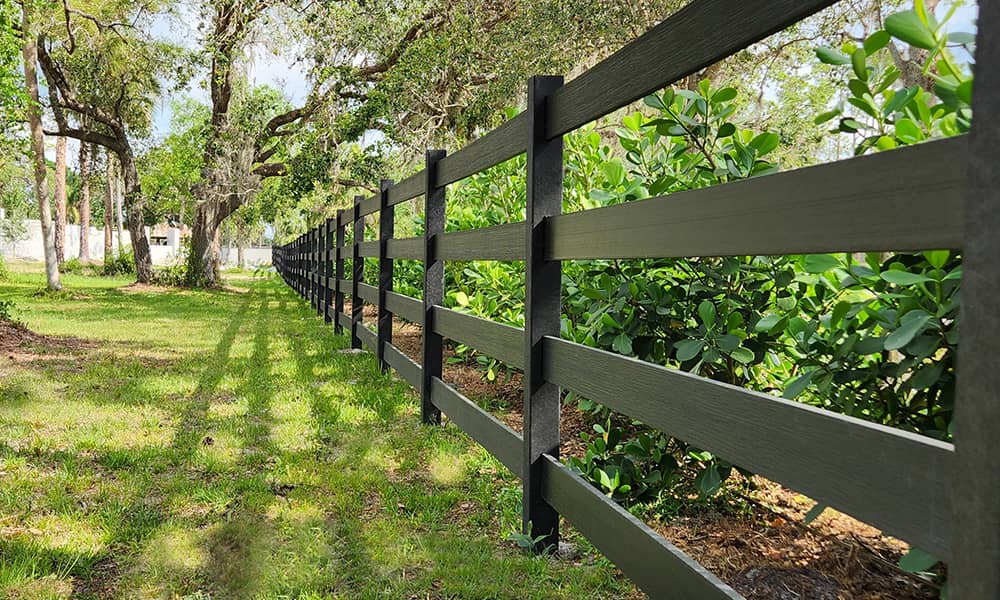
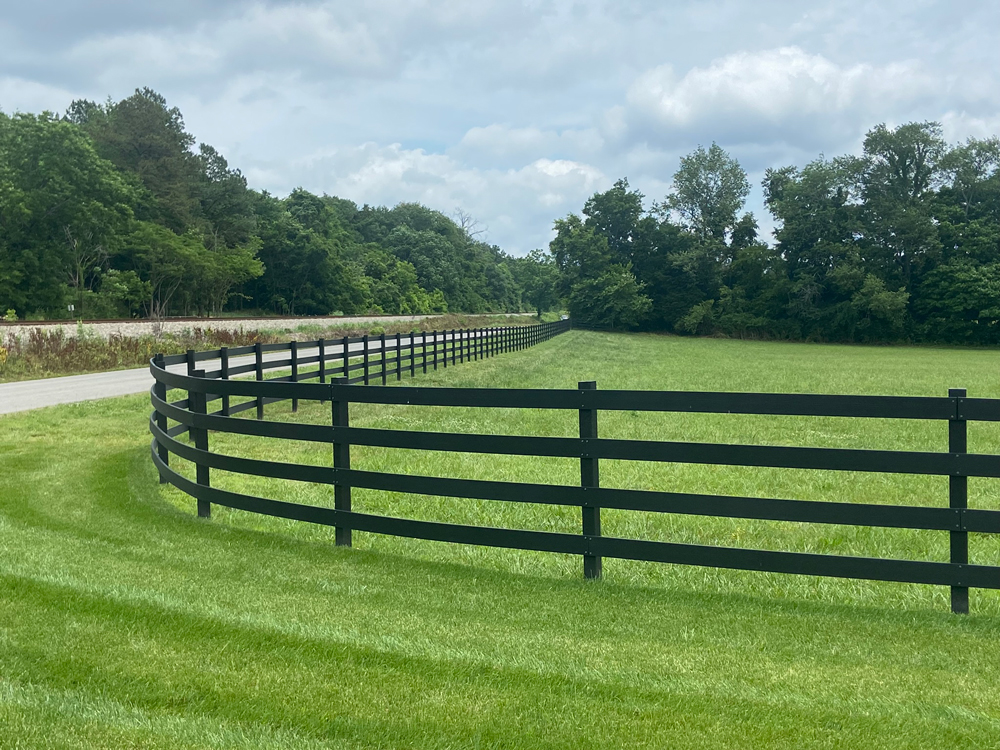
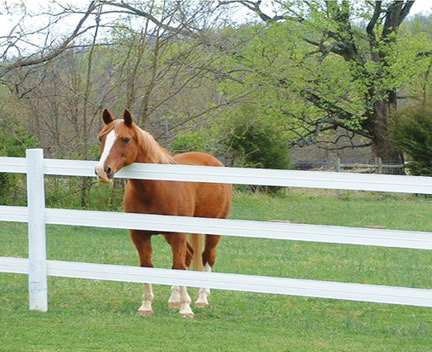
Per Tangent, no. The patented "Woodgrain" Technology gives Ranch-Rail a textured finish that reads as wood at conversation distance and from the road. The product comes in colors that don't look like plastic — Tangent's framing for the line. The visual delivers the look of a freshly painted, perfectly maintained wooden ranch fence without the painting cycle, the rot, or the splinter risk for hands and horses. For property owners who want the iconic post-and-rail aesthetic without the perpetual maintenance cost, that's the buying argument.
How do I get a quote and order?
Call 800-721-9037 or email [email protected] with your property details — total linear footage, gate count, rail-count preference, and delivery address. Tangent will scope the order, confirm color and rail-count selection, and quote shipping. Web: tangentmaterials.com/horse-fencing. Pricing is subject to change due to economic factors and resin-market conditions; confirm current pricing with Tangent directly when scoping a project. Made in USA, shipped nationwide.
What is Ranch-Rail Fence made of?
Ranch-Rail Fence is made of solid high-density polyethylene (HDPE), a tough, weatherproof plastic. Unlike many vinyl fences that use hollow extrusions, Tangent uses solid boards that hold up to years of impact from horses and the elements. The HDPE will not crack, chip, peel, or rot.
Who makes Ranch-Rail Fence?
Ranch-Rail Fence is manufactured by Tangent Materials, a U.S. company that has been a recognized leader in the recycled and HDPE plastic lumber industry since 2003. Tangent calls itself one of the largest and most advanced manufacturers of fabrication materials in North America. The same HDPE technology is used across their marine, agricultural, and equine product lines.
Is HDPE fencing safe for horses?
Yes. Tangent's HDPE contains no arsenic and no chlorides, so it will not contaminate water or soil. It does not splinter the way wood can, and it is impervious to the acids found in animal waste. For cribbing horses, the solid HDPE resists the chewing and leaning damage that destroys wooden rails.
Will Ranch-Rail Fence rot or rust?
No. Because it is made from HDPE rather than wood or metal, Ranch-Rail Fence does not rot, rust, or corrode. It is resistant to moisture and corrosive materials, which is why the same material is trusted in marine and dock applications. This is what makes it a true low-maintenance, long-lasting solution.
Does Ranch-Rail Fence need painting or staining?
No. The boards carry a UV-protected, color-stable finish, so there is no painting, staining, or waterproofing required. This eliminates the recurring refinishing schedule and cost that comes with wood fencing. You install it once and maintain it with little more than an occasional rinse.
What colors does Ranch-Rail Fence come in?
The standard colors are classic white and black. Other colors are available upon request, so the fence can be matched to a barn or property. Tangent's HDPE materials are color-fast, meaning the color runs through the board rather than sitting on the surface.
What fence styles or profiles are available?
Ranch-Rail Fence is offered in ranch rail and split rail profiles. Tangent's broader fencing systems also include TANGENT® Lexington and TANGENT® Wellington for equine, post-and-rail, and privacy applications. The team can help you select the right profile for paddocks, corrals, or property lines.
How does Ranch-Rail Fence handle cold weather?
It is engineered to withstand extreme cold and all-weather conditions without becoming brittle. Many lower-grade plastics crack in deep freezes, but Tangent's HDPE is formulated to stay durable through the seasons. That makes it suitable for northern climates with hard winters.
Is Ranch-Rail Fence environmentally friendly?
Yes. Tangent built its business on recycled and HDPE plastic lumber, and the company has worked in that industry since 2003. The horse fencing is described as environmentally friendly, and because the HDPE contains no arsenic or chlorides, it does not leach contaminants into water or soil. It also lasts far longer than wood, reducing replacement waste.
How is Ranch-Rail Fence different from vinyl fencing?
Most vinyl fences use hollow rails that can shatter or bow under impact, while Ranch-Rail Fence uses solid HDPE boards. The solid construction is far better at absorbing the abuse horses deliver by leaning, chewing, and pushing. It gives the clean look of vinyl with significantly more durability.
Does cribbing damage Ranch-Rail Fence?
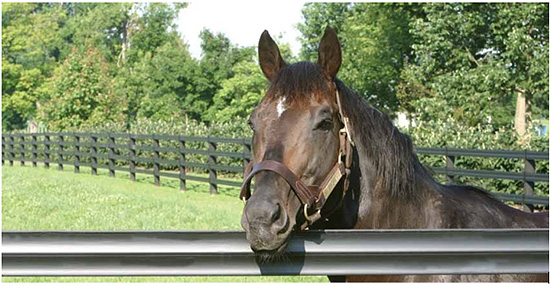
Cribbing horses do far less damage to Ranch-Rail Fence than to wood. The solid HDPE is described as resistant to cribbing horses and does not splinter when chewed. This protects both the fence and the horse from the hazards of broken or splintered wood.
How long does Ranch-Rail Fence last?
Tangent positions the fence as a long-lasting, durable alternative to wood that can withstand years of abuse from the elements and your horses. Because HDPE does not rot, splinter, or break down under UV exposure, it is designed to outlast traditional wood fencing by a wide margin. This long lifespan is central to its lower lifetime cost.
Where is Ranch-Rail Fence made?
Ranch-Rail Fence is USA-made by Tangent Materials. Tangent manufactures its HDPE and recycled plastic lumber in North America and describes itself as one of the largest and most advanced fabrication-material manufacturers on the continent. Domestic manufacturing supports consistent quality control.
How do I get a quote for Ranch-Rail Fence?
You can request a quote by calling Tangent Materials at 1-630-264-1110 or by using the Request a Quote form at tangentmaterials.com/contact/. The team can help you choose a profile and color and provide installation guidelines. They work with both small private projects and large equine operations.
What is the phone number for Tangent Materials?
Tangent Materials can be reached at 1-630-264-1110. You can also reach the company through the contact form at tangentmaterials.com/contact/. Either route connects you to help with product selection, pricing, and installation questions.
Is Ranch-Rail Fence good for large equine operations?
Yes. Tangent serves agricultural and equine markets and offers systems designed for corrals and large-animal containment as well as smaller paddocks. The TANGENT® Lexington and TANGENT® Wellington systems extend the line for different equine and post-and-rail needs. The low-maintenance, long-life construction is especially valuable across the many runs of a large facility.
Does Ranch-Rail Fence resist sun fading?
Yes. The boards use a UV-protected, color-stable finish, and Tangent describes its fencing materials as color-fast. That means the fence holds its white or black appearance under sustained sun exposure rather than fading or chalking like painted wood. It keeps a fresh, finished look with minimal upkeep.