

Teaching Our Horses A Better Back Up
To teach a horse to back up willingly, start on the ground with a hand-tied rope halter: stand at the horse’s left side, make a fist around the base of the halter with your thumb down, and squeeze while working your hand side to side—not bumping or pulling back—until the horse untracks his feet and takes a step backward, then soften your hand so he finds the release. Backing does not come naturally to most horses, so this groundwork teaches him to yield to pressure and follow a feel before you ever ask for the maneuver from the saddle.
Horses in the wild move in almost every direction and configuration imaginable. However, backing up, is probably the least common thing that they do on their own.
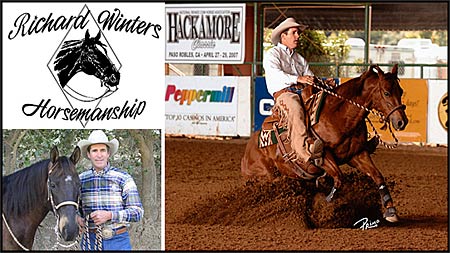
With Richard Winters Horsemanship
I'm not saying never. Nor am I saying that they can't back up. I'm simply saying that the vast majority of their movement has forward momentum. Going in reverse is not as natural and comfortable for a horse as going forward. Yet for most of us, having a horse that will back up readily and freely is very important for almost every riding discipline.
I recently began to contemplate this concept after visiting with a National Reined Cow Horse Association Hall of Fame rider, Don Murphy, who has over 50 years of performance horse experience. In relation to starting colts, he stated that he teaches every colt to back up proficiently on the ground before the first ride. Then when mounted, teaching the back up becomes an easy transition because the colts have a frame of reference and are comfortable yielding to the pressure and moving in reverse.
I have talked with people on numerous occasions who have told me about a trailer-loading situation were a horse loaded fine but then would not back out. I always ask if they had taken the time previously to teach their horse to back freely and willingly on the ground. Needless to say, once inside the trailer, it is not the optimum time to begin the initial backing up training. Although there are many techniques and cues that can be used to teach the back up from the ground, the following description is one of my favorites and important that my horses clearly understand.
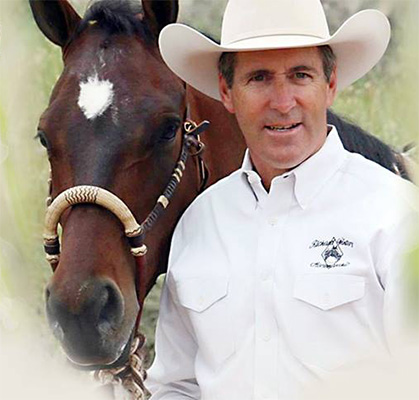
I am going to teach this particular exercise with a hand-tied rope halter rather than a wide web halter. This will help me communicate more clearly and keep my horse from leaning and bracing against me. With my horse wearing a halter and lead rope, I will stand along the left side of my horse. I am now going to make a fist around the base of the halter with my thumb down and little finger up.
I will begin to squeeze firmly with my fist and work my hand back and forth, side to side. Note that I am not bumping or pulling back towards his tail. I am working my hand with a lateral motion, side to side. Now all of the slack is out of the noseband of the halter and I'm asking my horse to follow a feel.
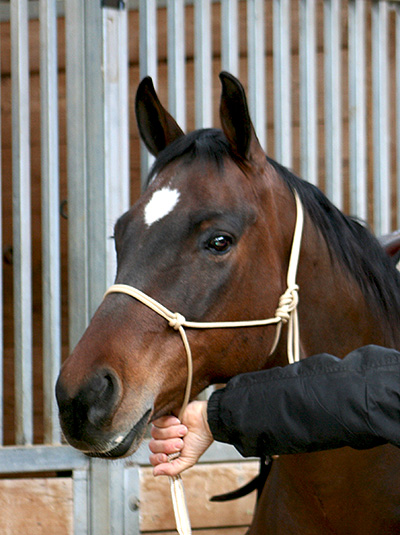
Positioning my left hand around the base of the halter. A horse's first reaction might be to resist and raise their head. I will continue to work the halter back-and-forth until they untrack their feet and take a step backwards. I will then soften my hand and let my horse find the release. As my horse begins to understand, I can ask for more rhythmic steps in a row. As my horse backs up freely, my hand gets very soft and gently moves back and forth to continue the back up. If my horse gets stiff and bracy, my hand will firm up and I will make it more uncomfortable to resist.
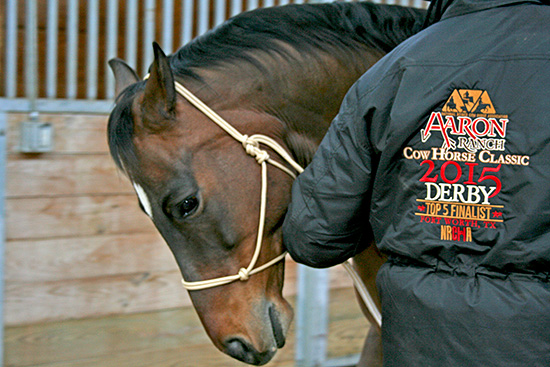
This horse is learning to follow a feel and break at the pole. This technique that I will describe teaches a horse to yield to, rather than resist against, pressure. It allows us to be firm as necessary yet gentle as possible. We are then also able to reward the slightest try. It also teaches a horse to follow our feel. These are things we want a horse to understand in every maneuver.
This is a great exercise for horse handlers to begin to develop feel and timing. You can almost see the light bulb go on for your horse as he realizes what you are asking and how he can step to find the reward of release from pressure. The better your horse backs up, the better he will feel and perform in many areas. I don't recall anyone ever telling me about a horse that stopped extremely well yet backed up poorly. Every great stopping horse I ever saw, also backed up with great proficiency.
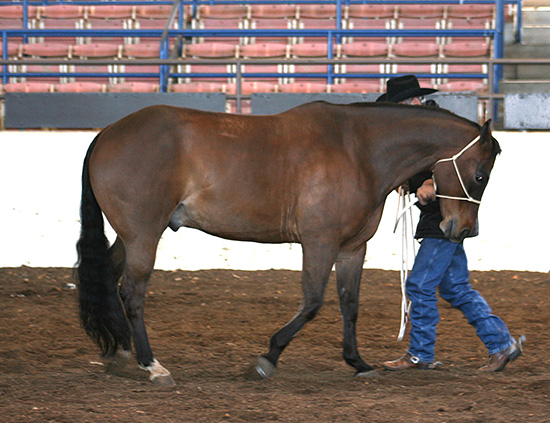
Yielding backward with vertical flexion. An additional benefit to this exercise is the ability to teach your horse to soften his face and break at the poll. When asked correctly, consistently, and with feel your horse will begin to make small gestures to bring his nose down and in toward your hand. Although the primary objective is for your horse to move his feet in reverse, don't miss out on the softness you can establish in his face as he yields backwards. Now you can develop a pretty maneuver with your horse moving backwards freely and breaking at the poll with vertical flexion.
I am not suggesting that this particular exercise, or any other groundwork, will take the place of practicing the maneuvers when mounted. It will however create a learning bridge and make the mental and physical transition easier for your horse. Backing up does not come very natural for most horses. However, every horse can improve and many can even excel in the back up maneuver.
Richard Winters Horsemanship WintersRanch.com