

Getting The Proper Bend In Your Horse's Body
With Richard Winters Horsemanship As you continue to advance in your horsemanship, the posture, shape and frame of your horse’s body becomes more and more important.
Proper bend is the arc a horse’s body makes from nose to tail—much like a train traveling a circular track—and the simplest check is to look down at your horse’s eyes: on a circle to the left, you should see the corner of the left eye, while seeing the right eye means the horse is out of alignment and counter bent. Subtle inside-leg pressure helps the horse’s body arc and bend around that leg, with the outside leg supporting the turn. One helpful exercise is to build an octagon on the ground from eight poles approximately five feet long, about twelve feet across, then walk a circle inside it—and later walk and trot slightly larger circles around its outside.
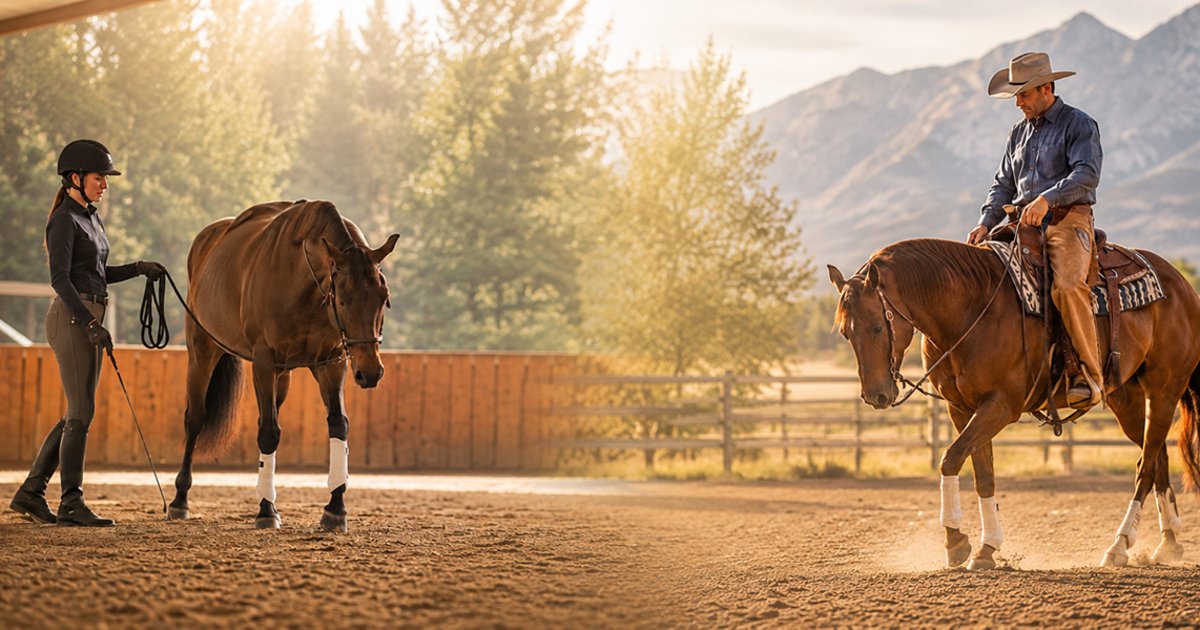
In this article I want to discuss the idea of the proper bend in your horse’s body when executing maneuvers. The Reining horse needs the proper bend when loping circles or spinning. The English Dressage horse masters the proper bend when executing leg yield and half passes. And most recently, after showing in a Cowboy Dressage class, I realized how important the proper bend would be when riding the 10 and 20-meter circles.
Good horsemanship is all about correctness and form of movement. When I speak about bend in your horse’s body I am referring to the arc that your horse’s body makes from his nose to his tail. Much like a train on a track. Think about his nose being the engine and his tail being the caboose. If it is a circular track, the horse’s body flows in a perfect bend or arc around the circle in which he is traveling.
The best way to get started in thinking about the proper bend in your horse is looking down at your horse’s eyes. What eye can you see when you are moving in a circle to the left? You should be able to see the corner of your horse’s left eye. If you cannot see either eye, then you can assume that your horse is traveling relatively straight. This would be the proper posture when executing straight lines. If you can see your horse’s right eye, (when traveling to the left) you know your horse is out of alignment and counter bent.
When striving to achieve the proper bend in your horse’s body, you should also consider how valuable your inside leg can be. If I am moving in a 10-meter circle to the left at the walk or trot, I will use some subtle inside, or left leg to help my horse’s body arc and bend around that leg. I will also use my out my outside leg to support the turn. I certainly do not want to have such a heavy inside leg that I push my horse off and away from the circle. However, your inside, or "post" leg, as some riders call it, will help tremendously in achieving the proper bend.
Here is a great exercise to help you and your horse begin to work on and refine the proper bend; using the box from the Cowboy Dressage court is a great reference. This "box" is actually an octagon. Using eight poles approximately five feet long, you can build an octagon on the ground. The width of your octagon should be approximately twelve feet across.
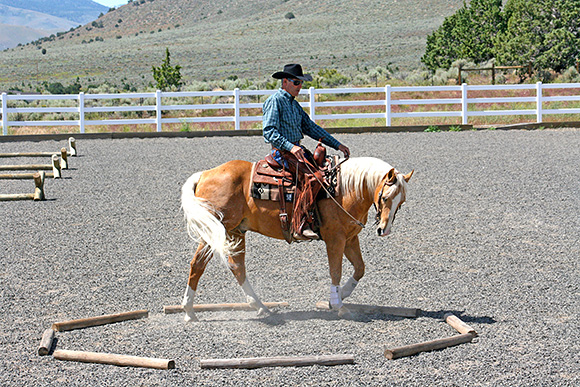
Ride your horse into the "box" and "walk” in a circle. Now you and your horse have a frame of reference. As you use your inside leg to help establish bend, you can walk around in a circle and the poles will help keep you from drifting too far out. You should continually be able to see your horses inside eye as you step around in the circle. The “octagon box” is now helping you and your horse make a symmetrical circle and give you a clear picture of what the circle and bend should look like.
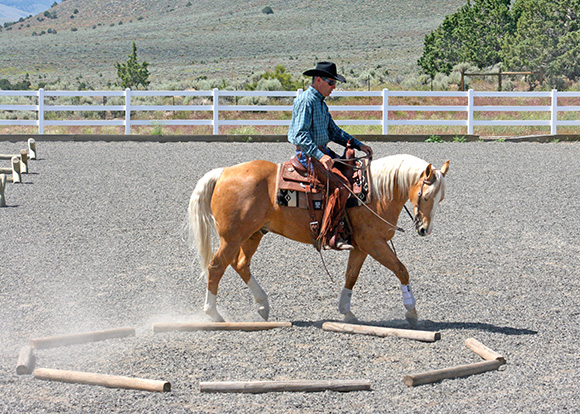
Now, you can step outside the "box" and do the same thing. Your circle is slightly larger as you travel around on the outside of the poles. This exercise will help you maintain a proper circle and bend as the ground poles keep your horse from dropping his shoulder and falling to the inside. Since your circle is now larger, while traveling on the outside of the box, you can also begin practicing the proper bend at the trot as well.
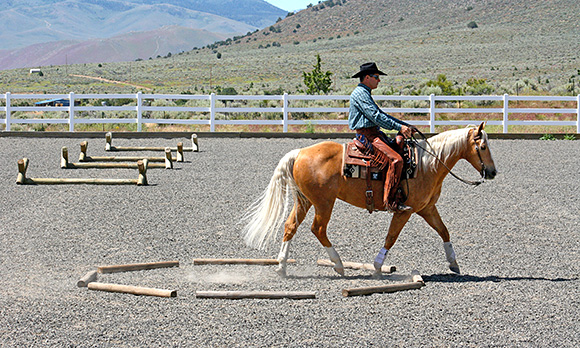
Since you have taken the time to lay out this octagon box, you can take advantage of this new obstacle by walking and trotting your horse over the poles. This can only help you with your horse. It will also be important preparation should you decide to try your hand at Cowboy Dressage.
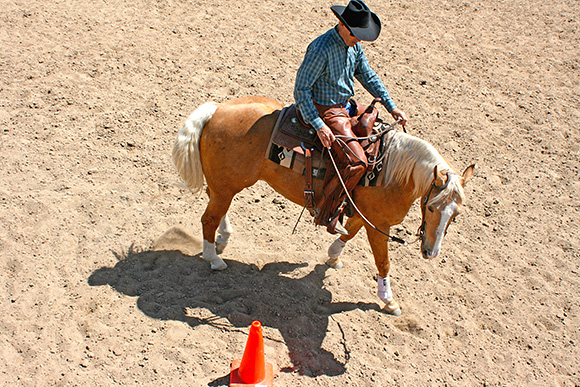
Working on the proper bend and arc can be done almost anywhere and at any time. Having a frame of reference like a cone, bucket, bush or even a rock can allow you to work on the bending circle. Now you can begin to walk and trot around this object trying to keep the same distance from the object throughout the entire circle. Remember to keep your horse’s inside eye in sight and use your inside leg to help bend your horse around the object.
A pocketknife does not stay sharp on its own. It will have a tendency to get dull over time. You have to methodically take the time to keep the blade sharp. Your horse is the same way. When left to their own devices, they can begin to become stiff and bracey. Have a plan to instill and maintain the proper bend with good posture and you will keep your horse on the cutting edge.
Richard Winters Horsemanship WintersRanch.com