The Horse in American Life: A 250-Year Thank You
A tribute from InfoHorse.com for America’s 250th Birthday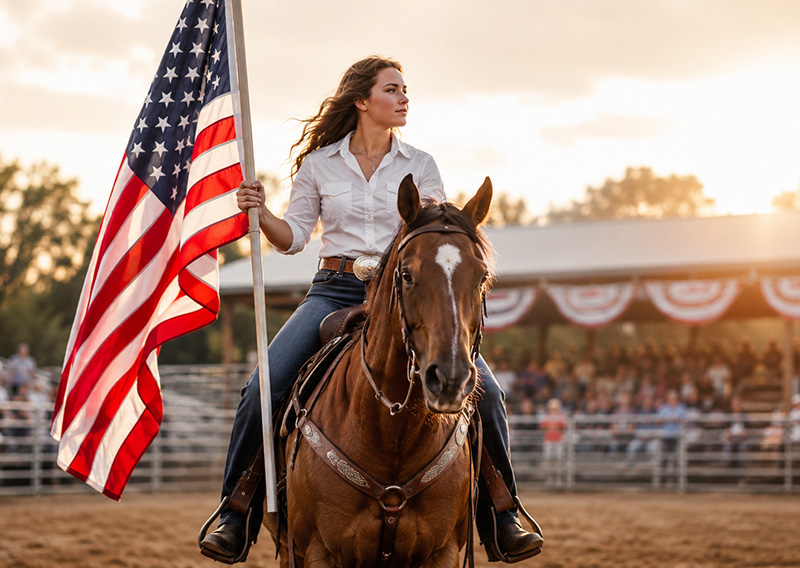
By Bob Pruitt · July 4, 2026
On July 4, 2026, America celebrates 250 years since the signing of the Declaration of Independence.
There will be flags flying, fireworks overhead, parades in small towns, music in city parks, and families gathered together to remember what this country means to them. And here at InfoHorse.com, we want to celebrate America too.
But we want to do it by thanking one of the quietest, strongest, most faithful partners this country has ever had.
The horse.
Because if you take the horse out of American history, the story does not read the same.
Most of us know the feeling of seeing something wonderful alone.
Maybe you visit a place you have never been before. Maybe the view opens up in front of you, or something happens that is thrilling, beautiful, or unforgettable, but the experience feels a little empty because no one was there to share it with you.
That is one of the things a horse changes.
When you ride into a new place, or cross a field, or follow a trail you have never seen before, you are not alone. You are sharing that moment with a thinking, feeling creature. Your horse may not understand the view the same way you do, but he is there in it with you. He feels the ground change. He hears what you hear. He senses your excitement, your hesitation, your confidence, and sometimes your fear.
America has experienced history together with our horses.
American history was made together with our horses and that history is still being written.
And when you look back across American history. try to imagine Paul Revere without a horse - a man running down the road in the dark, waving his message over his head. It almost becomes comedy.
But put him on a horse, and suddenly it becomes history!
That is what horses have done for us.
They were not just carrying people from one place to another. They were there with us. They shared the danger, the distance, the weather, the work, the fear, and the hope. They witnessed our history with us.
America did not travel alone.
The horse was there.
The horse did not sign the Declaration of Independence. The horse did not write the Constitution. The horse did not stand at a podium or give speeches or ask to be remembered.
But the horse was there.
The horse carried the messengers. The horse carried the soldiers. The horse pulled the wagons, the plows, the cannons, the milk carts, the fire wagons, the church buggies, the stagecoaches, the freight loads, and the families who were trying to build something better than what they had left behind.
For much of America’s history, the horse was not a hobby. The horse was not a luxury. The horse was how life moved.
And on this 250th birthday of our country, I believe we owe the horse a thank-you.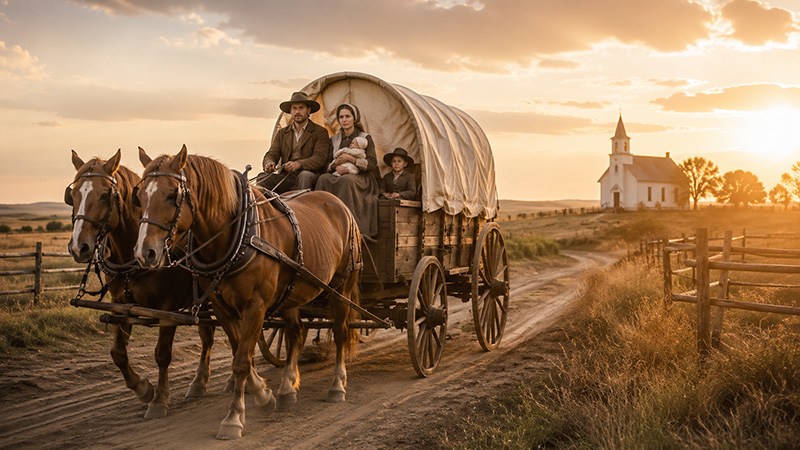
Not just a historical thank-you. A personal one.
Because the horse did more than help build America. The horse helped shape the kind of people Americans became.
Patient people. Practical people. Hardworking people. People who understood that you cannot force a good partnership. You have to earn it.
A horse will teach you that.
Long before there was an America, there were horses on this continent. Then they disappeared from North America for thousands of years, until Spanish horses came back and changed the future of the land forever.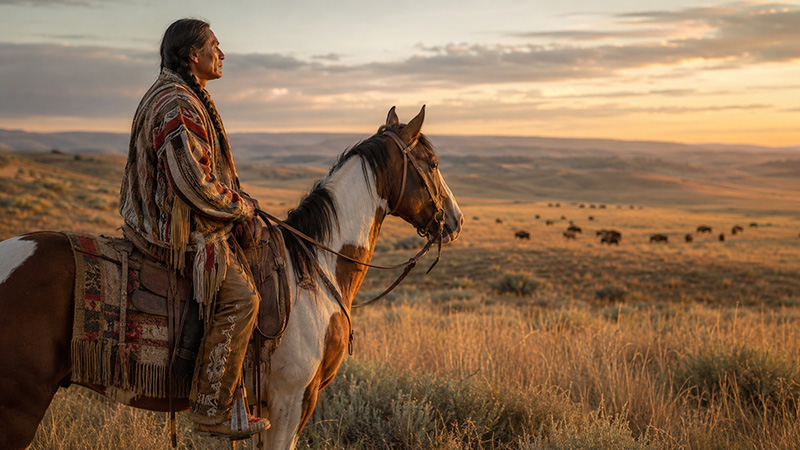
Those horses spread through tribes, ranches, settlements, farms, and frontier trails. They became part of Native American life, Spanish ranching, colonial farms, cavalry units, stage lines, cattle drives, and nearly every piece of work that moved this country forward.
By the time America became a nation, the horse was already woven into everyday life.
When the Revolution came, America rode.
Generals rode. Soldiers rode. Scouts rode. Messengers rode through the night carrying words that could not wait until morning. Supplies moved by horse and mule. Cannons moved because teams pulled them. A young country trying to become free depended on animals who had no idea what liberty meant, but gave their strength anyway.
That is one of the humbling things about the horse.
They served causes they did not choose. They carried burdens they did not understand. They went where we pointed them and did the work we asked of them, often with more courage and honesty than the people holding the reins.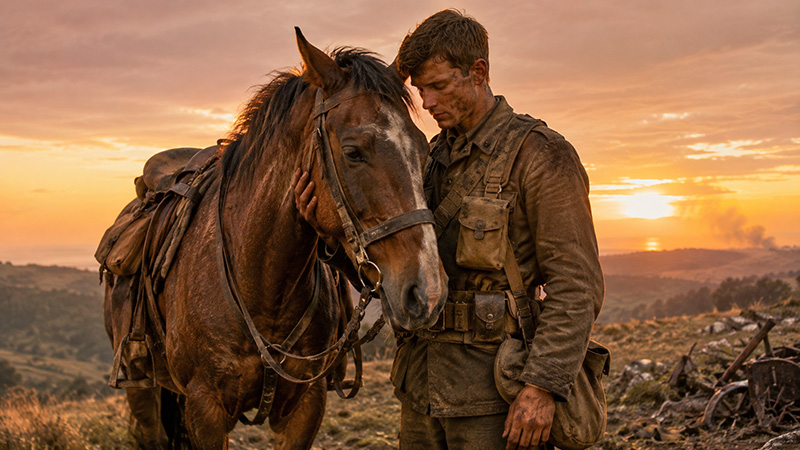
And when the war was over, the work did not stop.
A new country had to be fed, and horses helped feed it.
Fields had to be broken, and horses leaned into the collar.
Families needed to get to church on Sunday, and horses carried them there.
Doctors needed to reach the sick. Children needed to get to school. Goods had to move from farm to town and town to market. Firefighters had to get to burning homes. Mail had to cross distances that looked impossible on a map.
The horse was there.
In the 1800s, America grew at the pace of hoofbeats.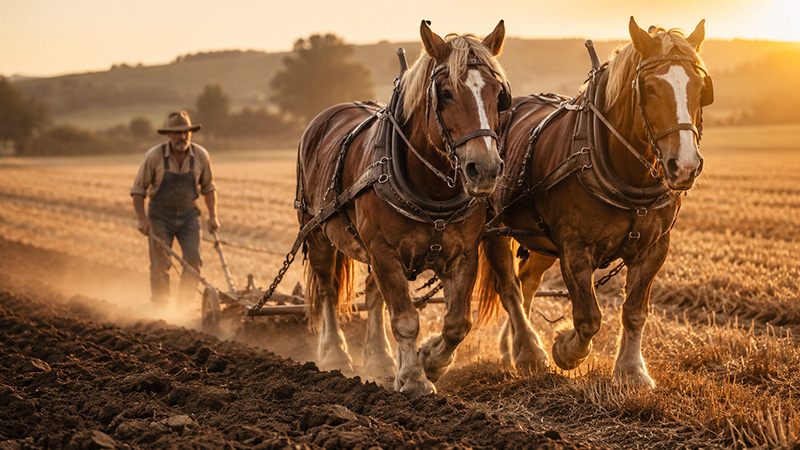
The farmer behind a plow. The family in a wagon. The stagecoach on a rough road. The Pony Express rider changing horses and riding on. The cowboy gathering cattle in country too big to walk. The cavalry horse standing under a soldier far from home.
That picture of America — the one we still carry in our minds — is almost always a horse and a human being doing a job together.
And that is an important word: together.
A man on foot is one thing. A horse loose in a pasture is another. But put them together with trust between them, and something different happens.
They become more than two separate creatures.
They become a team.
That is what horses gave America. Not just transportation. Not just power. Not just labor.
They gave us partnership.
They gave us the ability to go farther than our own legs could carry us. They let us pull more than our own backs could bear. They helped us cross rivers, climb hills, move cattle, plant crops, deliver babies, bury loved ones, fight wars, and come home again.
They were in the happy parts of life too.
The horse that carried a bride to her new home. The pony that taught a child courage. The team that brought the family to church. The good saddle horse a man trusted more than most people. The mare that knew the way home in the dark. The old gelding that had done his job so long nobody remembered when he first came to the place.
Those horses were not famous. Most did not have names written down anywhere.
But families remembered them.
And that matters.
Because America was not only built by famous men. It was built by families, farms, barns, fences, fields, wagons, trails, small towns, church roads, and ordinary animals doing extraordinary work one day at a time.
Then came the machine age.
The automobile came. The tractor came. The truck came. The tank came. The combine came. One by one, machines took over the jobs the horse had carried for centuries.
Machines did not get tired. They did not need hay. They did not colic. They did not founder. They did not need water in the winter or shade in the summer. They did not require patience, training, kindness, or understanding.
They just ran.
And in a very short time, the working horse was pushed out of the center of American life.
That is the part of the story that always gets me.
For generations, the horse had been essential. Then almost overnight, by the cold accounting of progress, the horse became unnecessary.
But here is the beautiful part.
We kept them.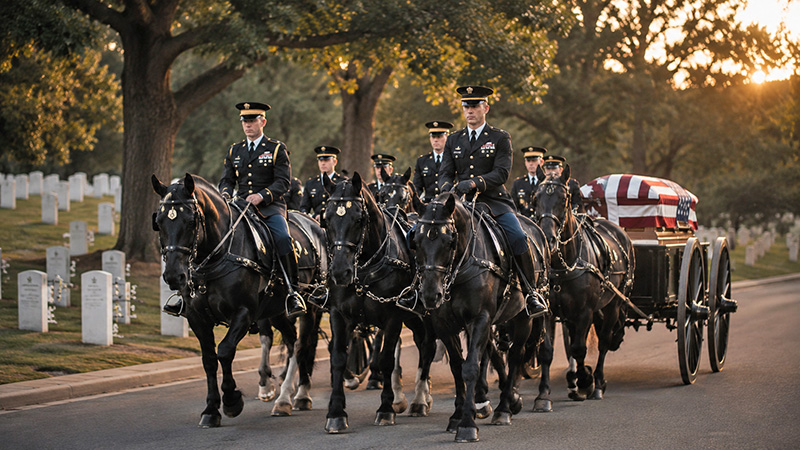
When we no longer needed the horse to survive, we chose the horse anyway.
That may be the greatest tribute of all.
Today, most of us do not need a horse to get to town. We do not need a horse to plow the garden. We do not need a horse to pull the fire wagon or carry the mail or take the family to church.
And still, we build barns.
We buy hay.
We pay farriers.
We call veterinarians.
We worry over feed, fencing, water, footing, turnout, saddles, supplements, teeth, feet, rain rot, weight, soundness, and whether that horse looks “just a little off” today.
Nobody does that because it is easy.
We do it because the horse still gives us something the machine never could.
A machine can take you somewhere.
A horse shares the trip with you.
That is the difference!
When you ride a horse, you are not just operating equipment. You are with another living soul. A thinking, feeling creature with opinions, fears, habits, memories, and heart.
You may be the one holding the reins, but you are not alone out there.
You are asking. The horse is answering. Sometimes the answer is yes. Sometimes it is no. Sometimes the horse is braver than you are, and sometimes you have to be brave enough for both of you.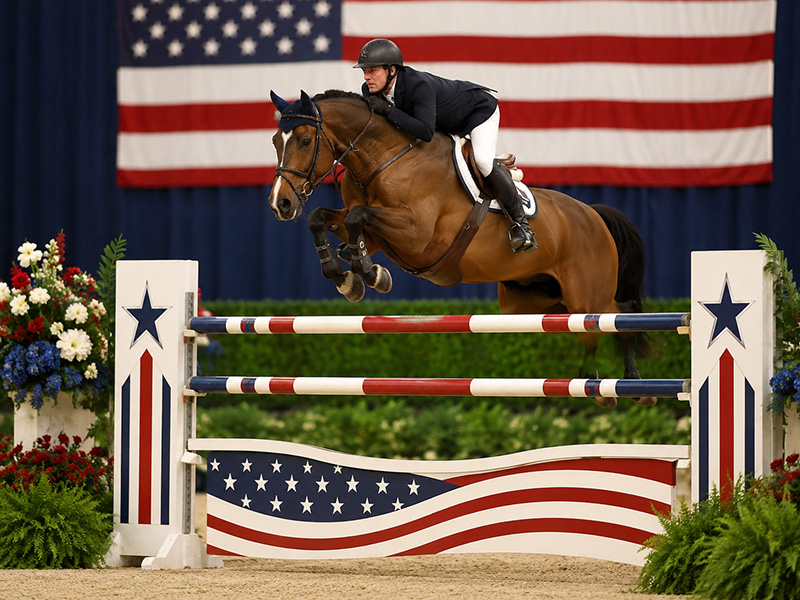
That is why horses still matter.
They make us pay attention.
They make us slow down.
They make us honest.
You cannot fool a horse for very long. You cannot build trust with one by pretending. A horse knows the difference between a person who is present and a person who is just standing there.
That is why a good horse can change a child.
That is why a horse can help a veteran breathe again.
That is why a rider can be having the worst day of her life, walk into a barn, put a hand on a warm neck, and feel something inside her settle down.
That is why an old horse in a pasture can still be teaching long after his riding days are over.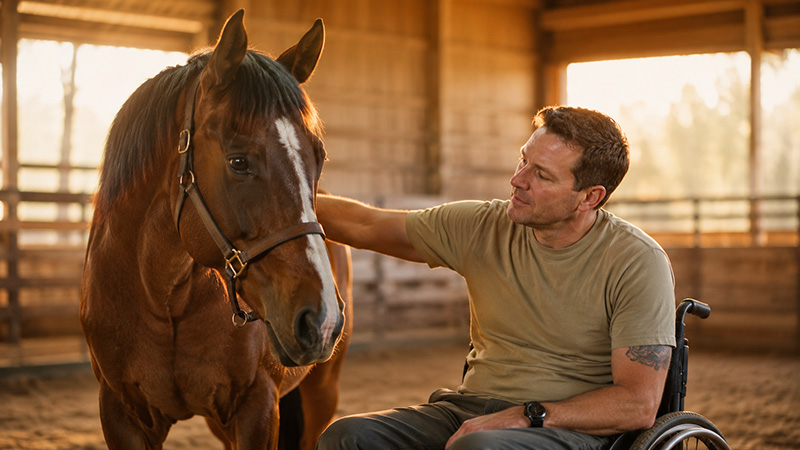
The job changed, but the partnership did not.
The same qualities that mattered 250 years ago still matter today.
Patience.
Respect.
Trust.
Feel.
Responsibility.
You cannot separate those words from horses. Not if you have lived with them. Not if you have fed them in bad weather, waited on a vet, stood in a barn aisle at midnight, or watched a child learn confidence from a thousand-pound animal who decided to be kind.
And maybe that is why the horse still belongs in America’s story.
Because America has always been at its best when freedom came with responsibility.
A horse is freedom. Anyone who has ever loped across an open field knows that.
But a horse is also responsibility. The gate has to be latched. The water has to be checked. The feet have to be trimmed. The feed has to be right. The old ones have to be cared for after they can no longer do the work.
The horse teaches us that love is not just a feeling.
Love is showing up.
Every day.
In the heat. In the cold. When it is convenient. When it is not.
That is a lesson worth carrying into the next 250 years.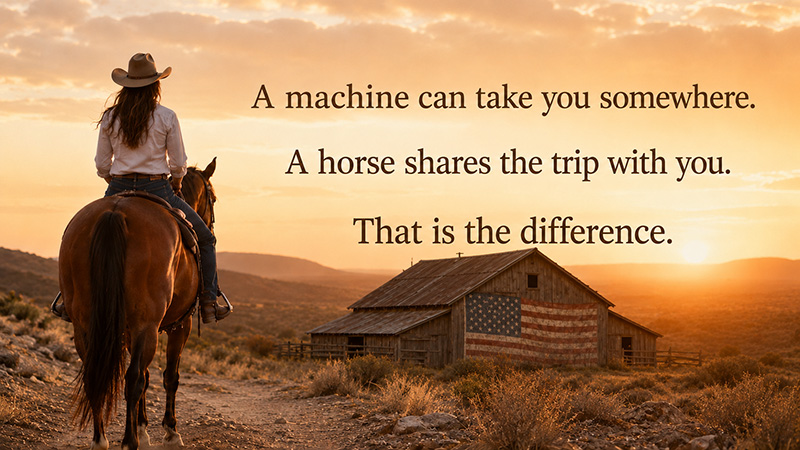
At InfoHorse.com, Ann and I have spent a large part of our lives around horses and horse people. We have seen the horse business change. We have seen products come and go, barns built and barns torn down, young riders grow up, old horses pass on, and new horses come into families and change everything.
But one thing has not changed.
The horse still draws good people to the barn.
Still teaches humility.
Still gives children confidence.
Still gives adults peace.
Still asks us to be better caretakers than we were yesterday.
That is why this tribute matters to us.
America is turning 250 years old, and we believe the horse deserves a place in that celebration.
Not as a decoration.
Not as a nostalgic picture from the past.
But as a living partner who is still here.
Still carrying us in ways that are harder to measure but just as real.
Maybe the horse is no longer pulling the plow that feeds the country.
Maybe the horse is no longer carrying the mail across the wilderness.
Maybe the horse is no longer the engine of American life.
But the horse is still helping us remember something important about ourselves.
That strength should be gentle.
That freedom should come with duty.
That trust must be earned.
That a partnership with an animal is not ownership alone — it is stewardship.
So on America’s 250th birthday, we say thank you.
Thank you to the horses that carried soldiers and messengers.
Thank you to the horses and mules that pulled plows through hard ground.
Thank you to the teams that moved families west, carried children to church, hauled freight, fought fires, and worked until the day was done.
Thank you to the racehorses that stirred crowds, the ranch horses that gathered cattle, the lesson horses that built confidence, the therapy horses that healed quiet wounds, and the old pasture horses that still deserve our respect.
Thank you for your strength.
Thank you for your patience.
Thank you for staying with us.
And thank you for reminding us that progress should never make us forget gratitude.
Happy 250th birthday, America.
And to the horse who helped carry her here — we see you. We thank you.
And at InfoHorse.com, we will keep doing our part to help the people who love you take better care of you.
Because after everything the horse has done for us, that is the least we can do.
BP
About the Author
Bob Pruitt co-founded InfoHorse.com with his wife, Ann, and has spent more than 50 years as a hands-on horse owner. For Bob and Ann, horses are not just part of history — they are part of family, responsibility, faith, work, and everyday life. InfoHorse.com was built to help horse owners make informed decisions and better care for the animals that have given people so much.