You can choose from ordinary lumberyard boards (known as #2 SPF), southern yellow pine, or hardwood.
2x6 boards (typically 5.5” wide) should be the smallest size used to maintain adequate strength.
Equine vets say the maximum safe bar gap is 2'”.
The stalls we constructed 3 years ago still look new today.
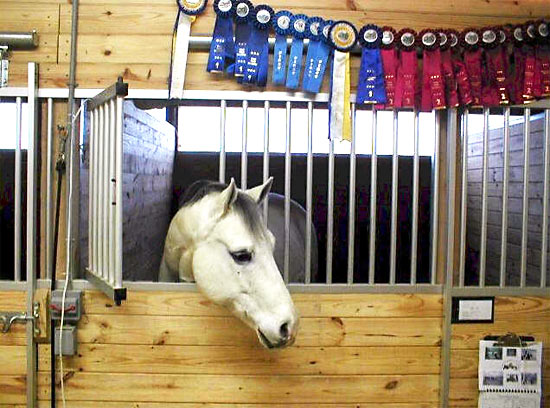
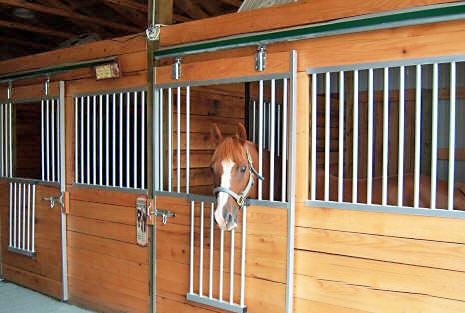
ARC stalls are heavy-weight aluminum construction with 2.62” bar gaps.
Horse Stall: an Enclosure for a Horse
The definition is simple, but choosing the best materials for your stalls requires planning and research. Article from ARC Integrated Systems, Jeff Covel for arcstall.com
Choosing stall materials comes down to the wood, the hardware, and the metal. Boards should be no smaller than 2x6 for adequate strength—hardwood is the strongest choice, southern yellow pine is stronger than SPF, and ordinary lumberyard SPF remains the most widely used because it’s readily available, moderate in price, and strong enough for most installations. For the framework, steel is the stronger metal but eventually rusts no matter what it’s coated with, while aluminum stays new-looking indefinitely as long as the wall thickness and alloy are heavy enough—and keep bar gaps narrow, because an adult hoof can fit between bars spaced too far apart.
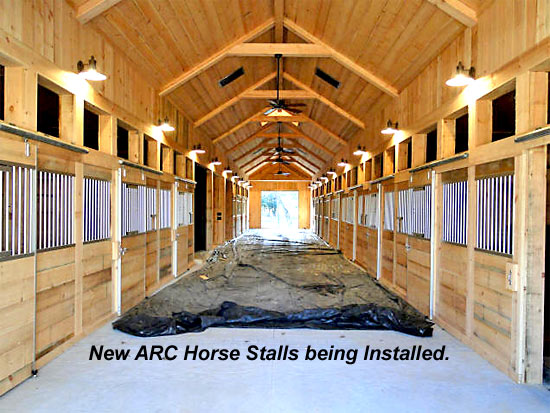
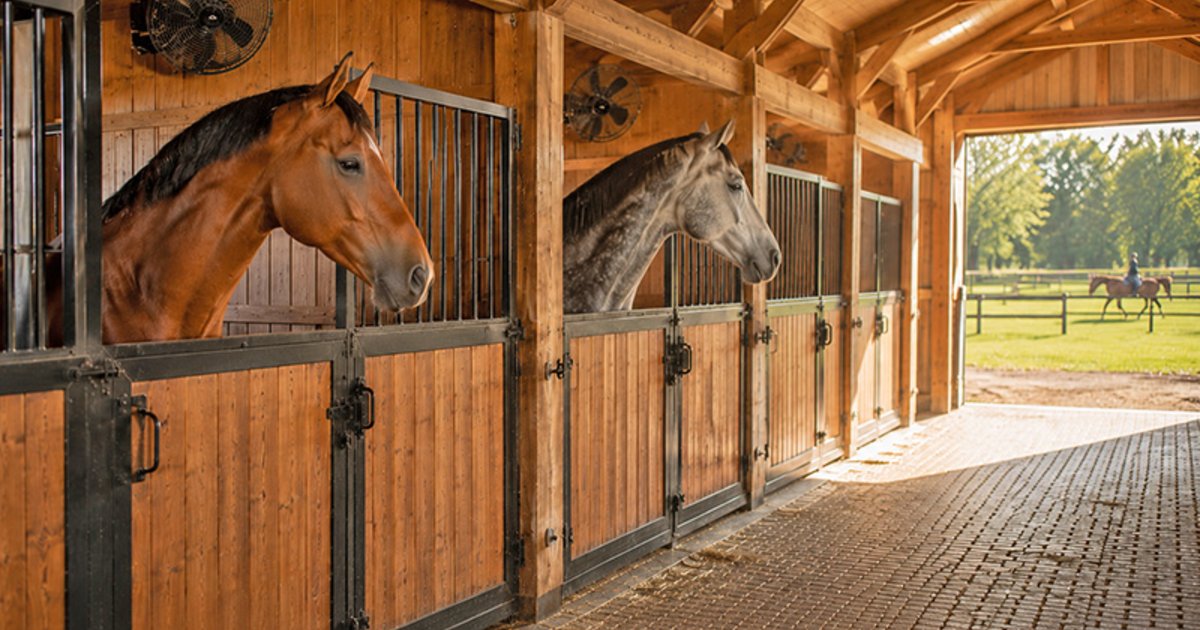
Let's start with the wood. You can choose from ordinary lumberyard boards (known as #2 SPF), southern yellow pine, or hardwood. 2x6 boards (typically 5.5” wide) should be the smallest size used to maintain adequate strength. Hardwood is the strongest choice with 2 caveats: be sure it's adequately dried or you'll get shrinkage and open gaps between the boards – a sure invitation for cribbing, and if your stall hardware is made to accept standard lumber, be sure the hardwood is cut to 1.5” thick.
Southern yellow pine is stronger than SPF, but lumberyard SPF remains the most widely used because it's readily available, moderate in price, and is strong enough for most installations. The final decision is whether to use tongue & groove boards. T&G does a great job of locking the boards together, but there are 2 extra costs to using it: The wood is considerably more expensive, and the T&G system makes the boards a little narrower, so you need more boards in the installation. If you don't want to opt for the more costly T&G you can “tie” your boards together with bracing – wood or metal, or you can use several fastening methods between the boards.
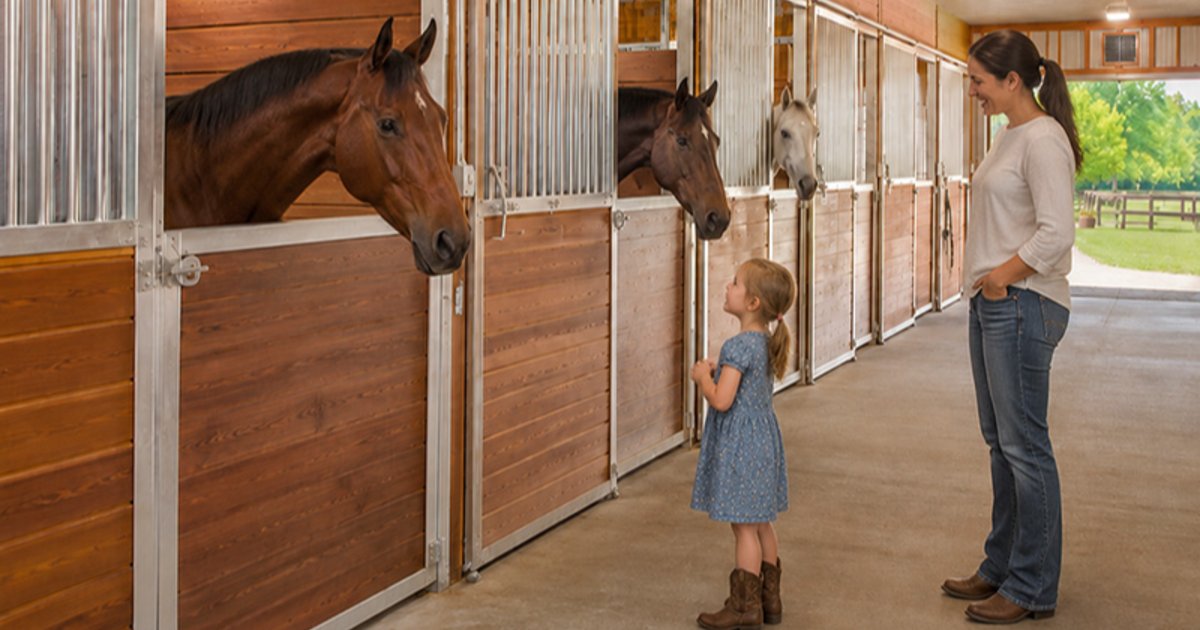
If you have stalls in a row, you have to decide if you want solid wood between the stalls or grills like those on the stall fronts. Solid wood is strong, private and less expensive. Grilled separation walls allow for socialization and enhanced airflow. Some innovative stall designers are now using combination walls – part grilled and part solid.
The solid section can offer privacy, especially when feeding, and the grilled section can offer opportunities for socialization and air flow.
Next choose your stall hardware. The most basic decision is the gap between bars. Equine vets say the maximum safe bar gap is 2'”. An adult hoof can fit between larger gaps. The next decision is construction: welded together frames or metal framework that is pre-drilled and assembles on site. Welded frames are a little easier to assemble, but they are more expensive both to make and to ship. Stall systems that you assemble have the advantage of being very easy to modify if the barn posts are not in standard locations.
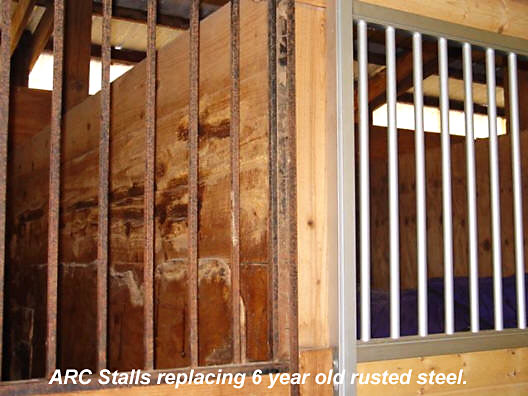
Finally choose between steel and aluminum. Steel is a stronger metal, but no matter what it’s coated with, it eventually rusts. Aluminum stays new looking indefinitely, but you must be sure that aluminum stalls are heavy enough to withstand the normal stresses associated with stall use. (Ask your supplier about wall thickness and alloy.)
Here’s ARC Stall feedback from Dr. Rhonda Herr, DVM, a vet in Harrisonburg VA about her own barn: As you know, I did a lot of research before deciding on your stall products. I have seen many horse injuries over the years caused by unsafe environmental conditions. I even had one of my own horses get a back leg hung up between the bars of a stall we had constructed from another company.
I did not think there was any way a horse could get a hoof between those bars, but that mare did, and it ended her career. The spacing of the bars in your stall grills was a major deciding factor in my decision to buy ARC stalls. The stalls we constructed 3 years ago still look new today. The finish does not rust or dull or start to look old. We are building more stalls in a new barn and would never consider using anything but ARC stalls!
Thank you for making a product that is safe, functional and beautiful.
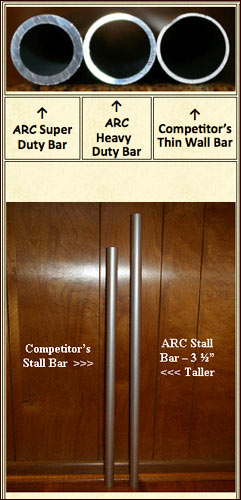
ARC stalls are heavy-weight aluminum construction with 2.62” bar gaps. (3” to 4” gaps are common in some stalls, so be careful.) The ARC system meets all requirements for strength, longevity, and flexibility. ARC stalls offer a choice between heavy-duty 1” bars with a .074 wall and super-duty bars with a .125 wall. Compared these to competitor’s .050 bar and the quality is obvious. You can see the thicker aluminum by looking at an end view of the bars. What you can’t see is the aluminum alloy. ARC bars use a harder alloy that blends small amounts of tungsten and magnesium with the aluminum. This special alloy blend creates an aluminum extrusion that remains rust free but is significantly harder than more common aluminum blends. The tracks and door sides are also much heavier construction than competing aluminum products. Add the spring-back safety latch and the moderate price point, and the ARC system may well be the best stall value in America.
Sponsored Content — Contact information provided by the sponsor
💬Questions Readers Commonly Ask (FAQ)
What should I do when planning new horse stalls?
Per Jeff Covel (ARC Integrated Systems): three sequential decisions cover the practical build.
Wood. Choose between #2 SPF lumberyard boards, southern yellow pine, or hardwood. 2x6 boards (typically 5.5" wide) should be the smallest size used to maintain adequate strength.
Wall configuration. Decide between solid wood walls, grilled separation walls, or combination walls (grilled top, solid bottom for feeding privacy).
Hardware. Pick maximum bar gap (vets say 2" maximum), welded vs. on-site-assembled frames, and steel vs. aluminum metal.
Per the article: the goal is to balance strength, longevity, flexibility for non-standard barn-post locations, and safety. Hardwood is strongest but must be adequately dried (wet hardwood shrinks and opens cribbing-invitation gaps). Confirm dimensions and load specs with your stall supplier before committing — barn-post layouts vary, and on-site-assembled systems modify more easily than welded ones.
Which type of wood should I choose for my horse stalls?
Per Jeff Covel: three options with clear tradeoffs.
Hardwood — strongest. Two caveats: must be adequately dried (wet wood shrinks, opens gaps, invites cribbing), and must be cut to 1.5" thick if your stall hardware is made for standard lumber.
Southern yellow pine — stronger than SPF, moderate cost. A solid middle option.
#2 SPF (lumberyard standard) — most widely used because it's readily available, moderate in price, and strong enough for most installations.
Per the article: 2x6 boards (5.5" wide) are the minimum size for adequate strength. Tongue-and-groove (T&G) boards add an option layer — T&G locks boards together better than plain edges, but it's considerably more expensive and the system makes boards narrower (so you need more of them). If you skip T&G, tie boards together with wood or metal bracing or use fastening between boards. Match wood choice to your horse's behavior (cribbers benefit from harder woods) and your barn's moisture and ventilation conditions.
Should the walls between stalls be solid or have grills?
Per Jeff Covel: three configurations with distinct horse-management consequences.
Solid wood — strong, private, less expensive. Good for horses that fight, food-aggressive horses, or quarantine situations.
Grilled separation walls — allow socialization between stalled horses and enhance airflow. Good for stable groups that get along and for warm-climate barns where ventilation matters.
Combination walls — innovative designers are now using part-grilled, part-solid walls. The solid section offers privacy especially when feeding (reduces aggression at the feed bin), and the grilled section offers socialization opportunities and air flow.
Per Klene Pipe Structures (a current InfoHorse advertiser): purpose-built stall structures that include shade-kit and configurable wall options can simplify the build for owners who want a manufacturer-engineered solution rather than custom carpentry.
What's the safe maximum bar gap for stall grills?
Per Jeff Covel: equine vets say the maximum safe bar gap is 2". The article cites this as the deciding factor for many buyers and includes a testimonial from Dr. Rhonda Herr, DVM (Harrisonburg VA) describing how one of her own horses got a back leg hung up between bars in a stall constructed by another company — the mare's career ended.
Per the article: 3" to 4" bar gaps are common in some stalls — be careful. An adult hoof can fit between larger gaps, and a horse panicking with a leg trapped can suffer permanent injury or worse. The article notes ARC stalls specifically use 2.62" bar gaps as their published spec. Verify the bar gap with the supplier before purchase, not after installation; check it again at delivery to confirm what arrives matches what was specified. Wider gaps cost less but create real risk every day a horse is in the stall.
Should I get steel or aluminum stall hardware?
Per Jeff Covel: both work, with the tradeoff being initial corrosion resistance versus base material strength.
Steel — stronger metal at equivalent thickness. The drawback: no matter what it's coated with, steel eventually rusts. Replacement and refinishing become recurring costs over the life of the barn.
Aluminum — stays new-looking indefinitely, no rust to manage. The catch: you must verify the aluminum is heavy enough to withstand normal stall stresses. Ask your supplier about wall thickness and alloy.
Per the article: aluminum bar wall thickness is the spec to check. ARC notes their products use 1" bars with .074 wall (heavy-duty) or .125 wall (super-duty), versus competitor .050 walls. The article points out that bar alloy also matters — harder alloys blending small amounts of tungsten and magnesium with the aluminum produce extrusions significantly harder than common aluminum blends. Compare the wall thickness, alloy specification, and frame thickness across suppliers before deciding on price alone.
📋
Recommended Products
Curated picks from across InfoHorse.com — most relevant first