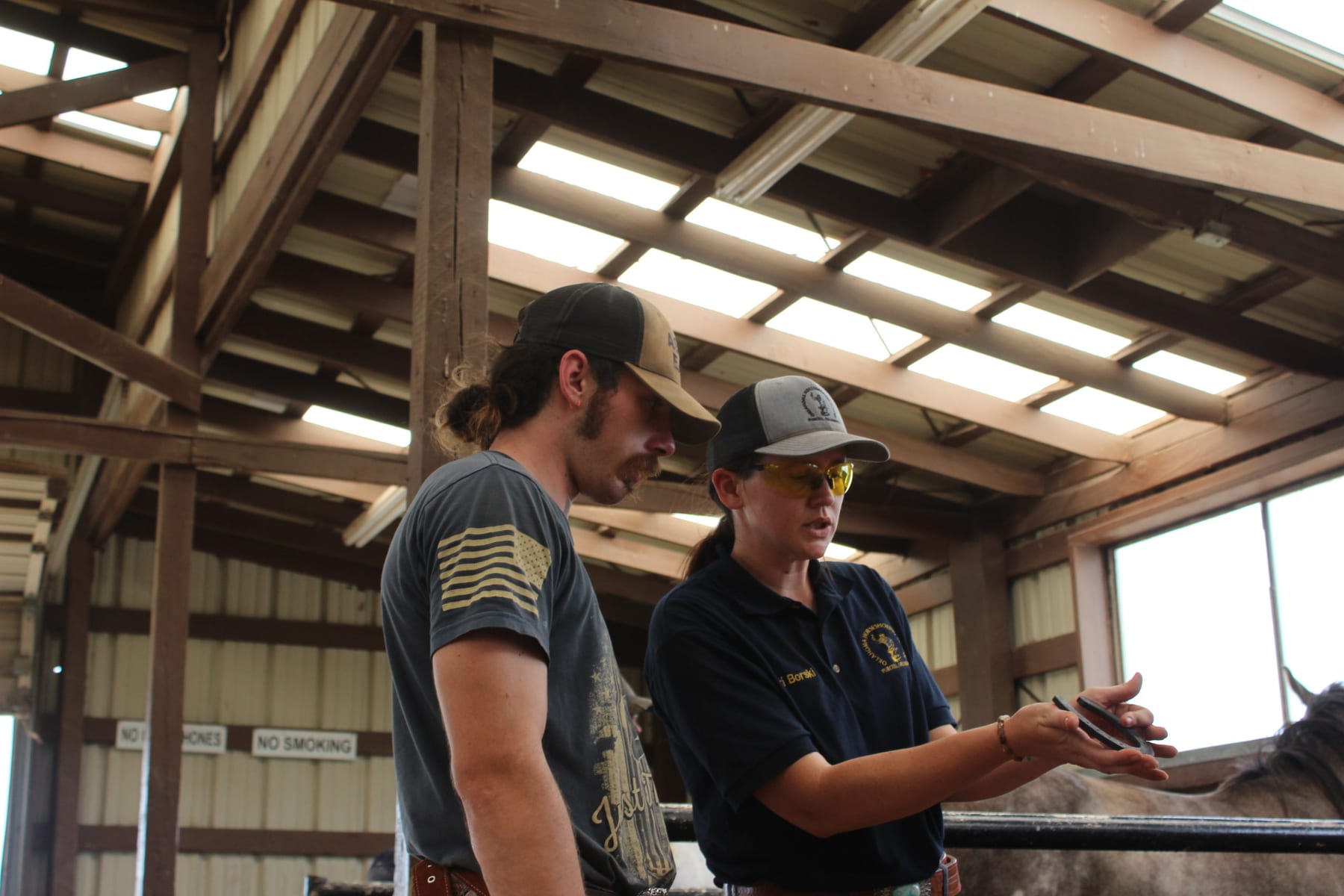
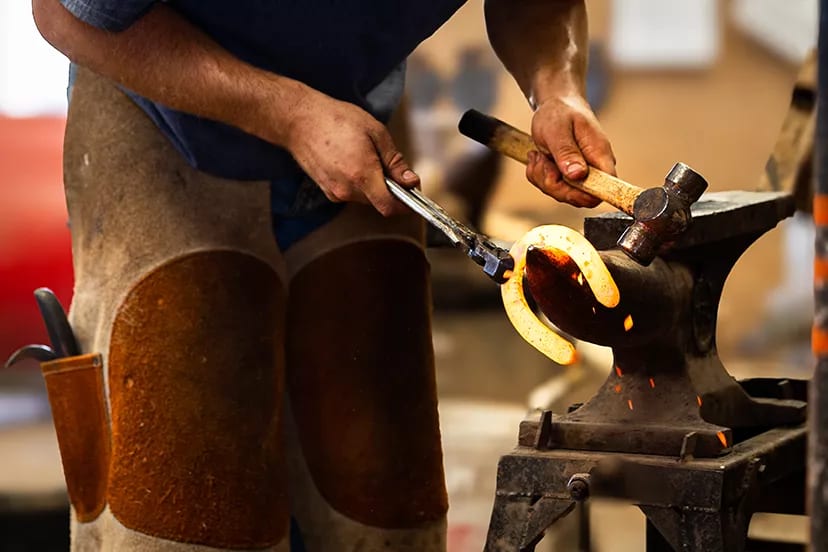

There are some things you simply cannot learn from a book, a computer screen, or even by standing back and watching somebody else do the work. Horseshoeing is one of them. You can study equine anatomy and learn the names of every structure in the hoof. You can watch someone explain balance, angles, forging and shoe placement. All of that education matters, but sooner or later you have to pick up the tools, learn how hot steel moves, evaluate an actual hoof attached to an actual horse, and get underneath that horse and do the work.
That hands-on philosophy is at the heart of Oklahoma Horseshoeing School. Founded in the summer of 1973 by Dr. Jacob "Jack" Roth, D.V.M., the school has spent more than five decades teaching students the craft of horseshoeing and preparing people for the realities of working with horses professionally — drawing students from every corner of the United States and from as far away as Alaska, Australia and Bermuda.
What impressed us most when we learned about the school was how quickly students become involved in the actual work. This is not a program designed around spending most of the day sitting at a desk. Students learn the science behind the hoof, but they also spend a tremendous amount of time in the forge and barn developing skills that can only come through practice.
Oklahoma Horseshoeing School is built around a very simple idea: the best way to learn horseshoeing is to shoe horses.
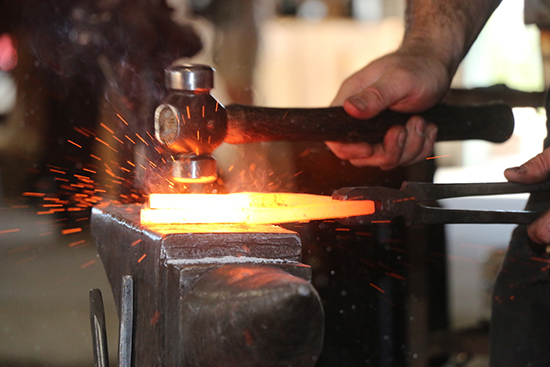
Every Monday is devoted to the forge. Students work on developing their blacksmithing skills while becoming comfortable with the forge, hammer and anvil. They learn how metal moves, how to shape it and how to develop the control needed to make and modify horseshoes properly.
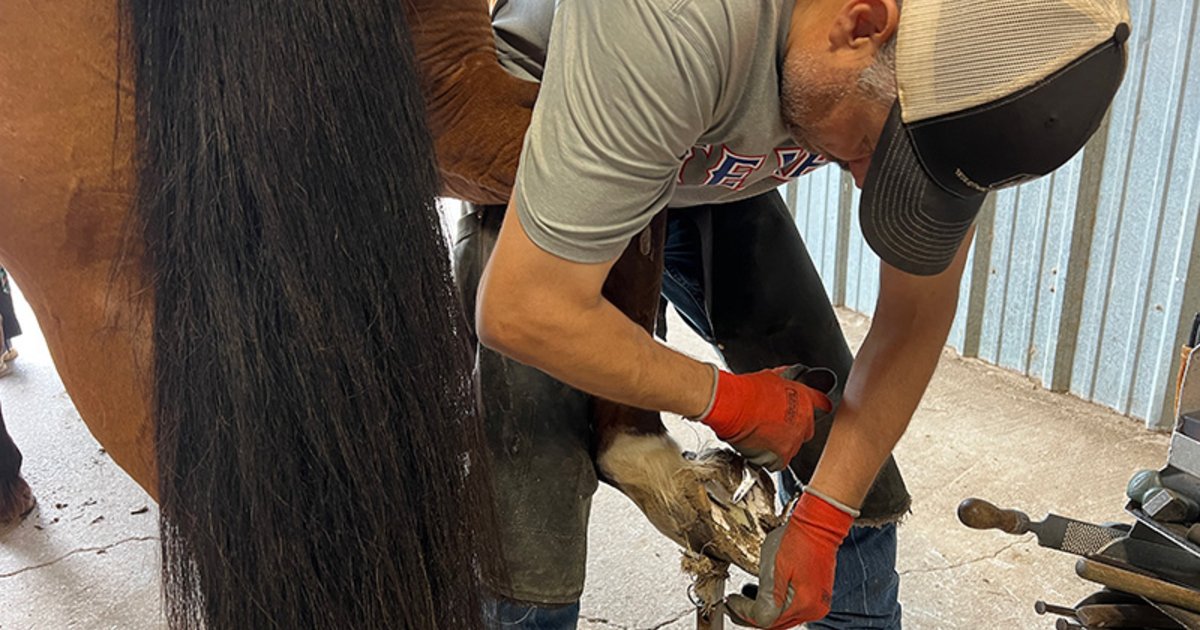
Tuesday through Friday, students work on live horses. That is an important distinction. Learning on a model hoof certainly has its place, but a model doesn't shift its weight, have a conformational problem, pull its foot away or present you with a hoof that isn't quite like the one you worked on yesterday.
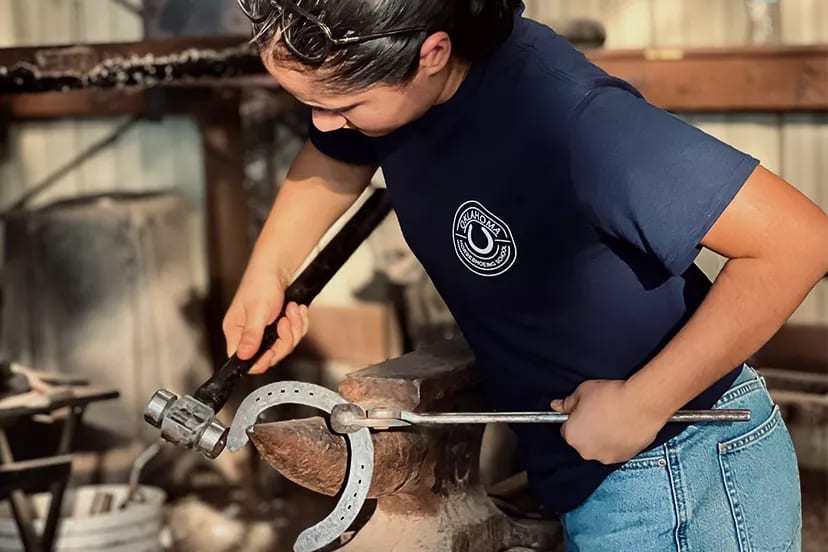
Different horses have different feet, different builds, different temperaments and different needs. Working with those differences helps students begin developing the judgment that eventually separates somebody who simply knows how to nail on a shoe from someone who is learning to become a knowledgeable farrier.
When weather or scheduling prevents normal horse work, the learning doesn't stop. The school uses activities such as student competitions and dissection days to keep students actively learning and better understanding the structures they will be working with throughout their careers.
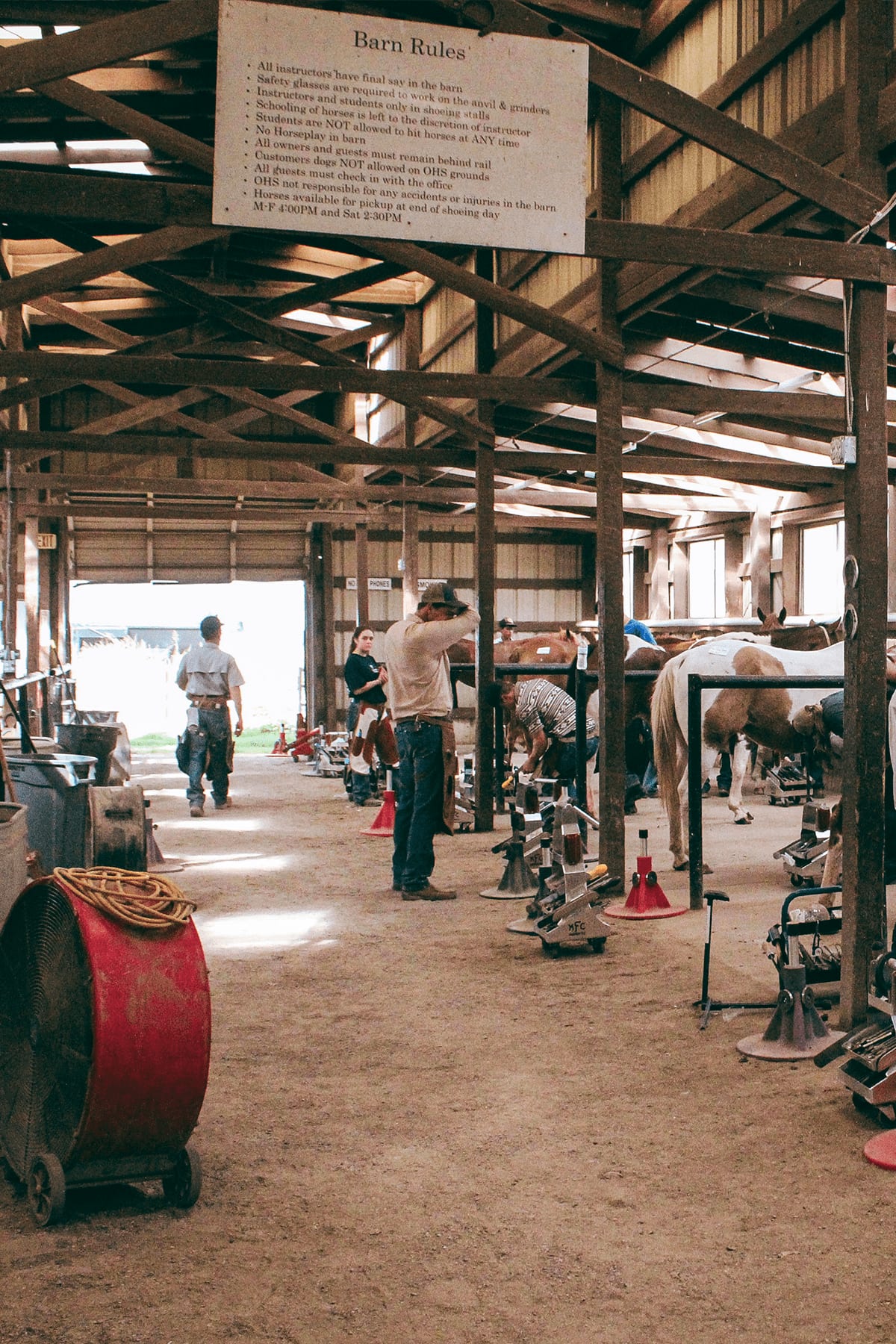
Oklahoma Horseshoeing School is designed to teach students from the ground up, so previous horseshoeing experience is not required. That makes the school interesting to several very different kinds of students. Some arrive because they already know they want to become professional farriers. Others are horse owners who simply want a better understanding of hoof care and would like to become more involved in caring for their own horses. Still others may be considering a career change and are exploring whether farrier work could become a profession they genuinely enjoy.
Students study subjects including equine anatomy, hoof structures, bones and joints, tendons and ligaments, hoof angles, trimming and balancing, hot shoeing, forging, shoe modification, conformation, hoof pathology, limb deviations and gait faults. As students advance, they also learn to make horseshoes from steel and begin understanding how different horses and different hoof problems can require different approaches.
That combination of classroom knowledge and practical application is important because good horseshoeing isn't just about making a foot look pretty. What happens at the bottom of the horse affects the entire horse.
The 2-Week Basic Course — Horse Owners Learn to Trim and Shoe Their Own Horses
For horse owners who want to become more knowledgeable and self-sufficient, Oklahoma Horseshoeing School offers a 2-Week Basic Horseshoeing Course. The current program contains approximately 80 hours of instruction and introduces students to basic equine anatomy, trimming, shoeing, hot shoeing and forging techniques. It can provide a horse owner with a far greater understanding of what their farrier is doing and why, and for some students it provides the foundation to begin performing hoof care on their own horses.
We especially appreciate the school's honesty about what two weeks of training can and cannot accomplish. Oklahoma Horseshoeing School does not present the two-week course as adequate preparation for somebody planning to immediately become a full-time professional farrier. Horseshoeing is too complex for that. The two-week program can provide an excellent introduction, particularly for the serious horse owner or someone exploring the profession, but students wanting to make farrier work their career should consider the school's longer programs.
Oklahoma Horseshoeing School offers an 8-Week Professional Horseshoeing Course for students who want considerably more intensive preparation for the trade. The program includes approximately 320 curriculum hours and expands well beyond the basic mechanics of trimming a foot and fitting a shoe. Students continue developing their anatomy, trimming and horseshoeing skills while studying hoof pathologies, conformation, gait faults, limb deviations and the different shoeing considerations individual horses can present.
Forge work becomes increasingly important as students progress from modifying factory-made shoes into making shoes from raw steel. Students are evaluated regularly so that they know where they are improving and where they still need additional work.
That evaluation matters. Horseshoeing shouldn't be a profession where simply showing up for a certain number of weeks automatically means you have mastered the skills. Students are expected to demonstrate competency and meet the school's academic and practical standards.
For someone seriously asking, “Where can I learn to become a professional farrier?”, this is the level at which Oklahoma Horseshoeing School begins providing the more extensive foundation necessary to pursue the trade professionally.
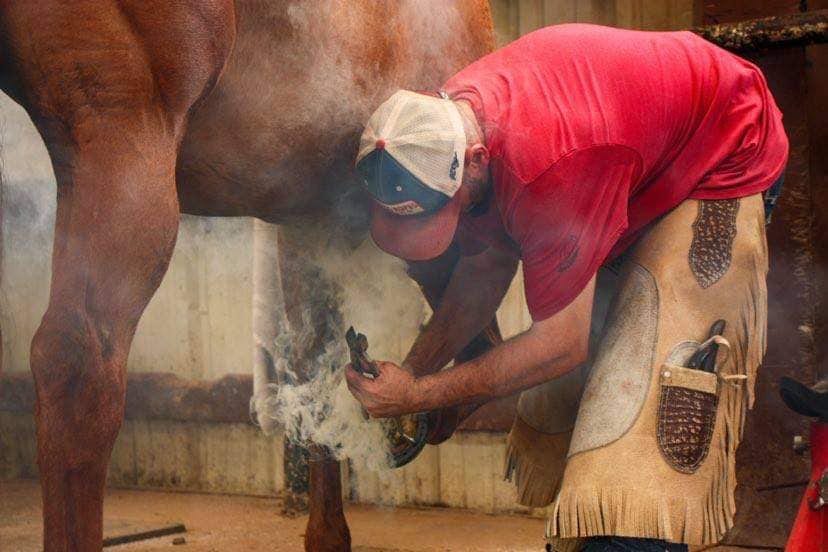
For students wanting the school's most comprehensive training program, Oklahoma Horseshoeing School offers a 12-Week Advanced Horseshoeing Course, encompassing approximately 480 hours of curriculum. Students spend the first portion of the course building and strengthening the essential skills required of a farrier. As they progress, the work becomes more demanding, with increased attention to craftsmanship, speed, efficiency and forging.
The advanced program also provides exposure to fundamental therapeutic shoeing techniques when appropriate horses are available. Students continue studying hoof pathology, limb deviations and gait abnormalities while learning increasingly advanced forging skills and specialized shoe designs.
What we like about this progression is that the objective isn't simply to teach someone how to put four shoes on a horse. Students are being encouraged to look at the horse, look at the foot and begin understanding why they are making each decision. That is where education begins turning into horsemanship.
One of the most interesting benefits at Oklahoma Horseshoeing School is that the shoeing barn is available to students 24 hours a day, seven days a week — with steel and propane provided for forging practice and assignments. This gives motivated students something extremely valuable: time. Anyone who has ever tried to learn a complicated physical skill understands that you don't always “get it” the first time. Sometimes you need to do it again. And again. Then perhaps one more time until your hands finally begin doing what your brain has been telling them to do.
Hannah Normand, 2-Week Basic Horseshoeing Course graduateIf you want to get the most out of this course and learn to shoe horses, this school provides you with the avenues to do so and if you work hard you will be successful!
This place has inspired me in so many ways with lots of great people. Couldn't ask for more!
There is a tremendous difference between leaving class thinking, “I didn't quite get that,” and being able to walk back into the barn and practice until you begin to understand it. For the hardworking student, that 24-hour access can be a significant advantage.
A hands-on trade requires hands-on instructors. At Oklahoma Horseshoeing School, students learn from experienced farriers, including instructors who have earned their Certified Farrier (CF) and Certified Journeyman Farrier (CJF) credentials through the American Farrier's Association. Just as importantly, student testimonials repeatedly mention instructors who are patient, involved and genuinely interested in seeing students improve.
Lilianna Behrens, Oklahoma Horseshoeing School studentThe instructors truly have your best interest at heart. They welcomed questions without making you feel behind or embarrassed about your work. This school isn't for someone afraid of hard work.
That isn't a criticism. It may be one of the strongest endorsements a professional trade school can receive. Becoming good at horseshoeing requires physical work, repetition, attention to detail and a willingness to make mistakes, accept correction and try again. There is no shortcut around that.
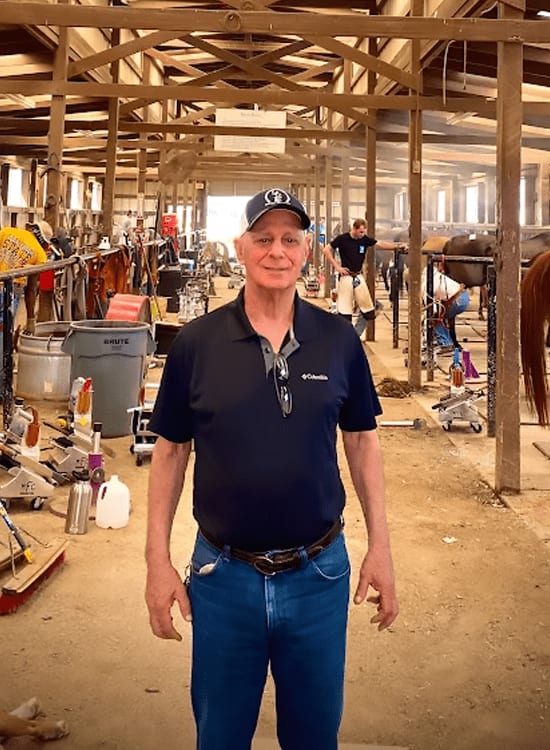
Very quickly. Student Daniel Essenmacher described learning essential anatomy in the classroom while learning through actual work in the barn. During his experience, students were forging on the first day and working underneath horses with instructor supervision by the second.
That doesn't mean students are simply turned loose with a horse and a set of tools. Instructor guidance is a critical part of the process. It does mean students begin connecting classroom knowledge with real horses very early in their education. Daniel described the instructors as knowledgeable and patient and said the students themselves were supportive of one another. He felt the environment allowed him to concentrate on learning the art of horseshoeing. That's important because the people around you can make a tremendous difference when you're learning something difficult.
Housing is free — and meals come with it. On-campus housing is available at no additional charge to enrolled students who remain in good standing, with separate dormitory accommodations for men and women, and complimentary meals are part of student life at the school. Students are not required to live on campus, but think about what that means for someone traveling from another state, another part of Oklahoma or halfway across the world to attend farrier school. Housing can easily become one of the largest additional costs of vocational education. Having a free on-campus option can make attending a specialized school much more realistic.
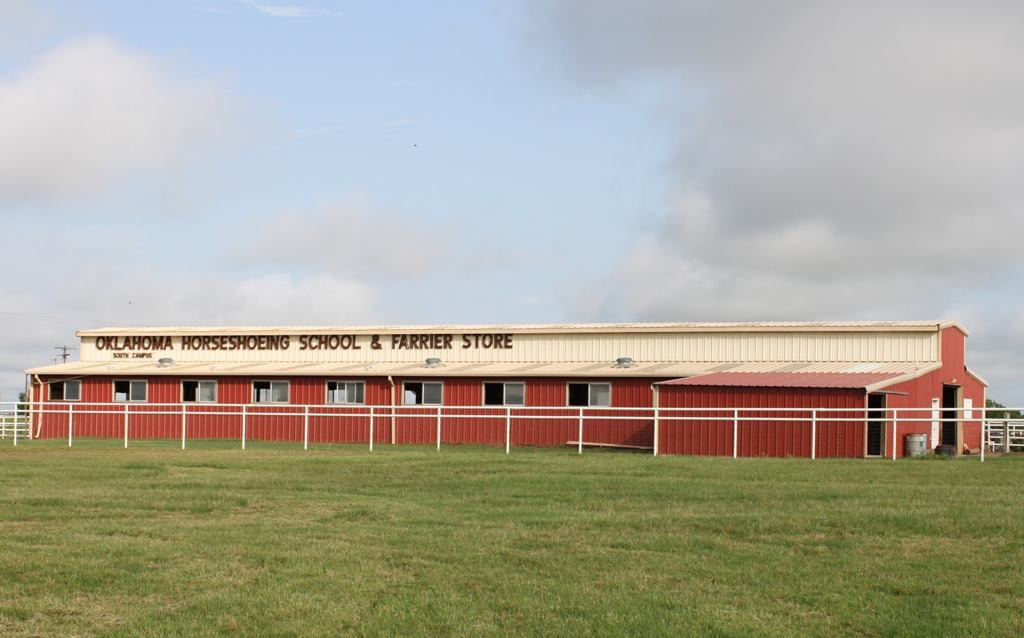
Oklahoma Horseshoeing School is associated with Purcell Farrier Supply, and students and graduates receive a lifetime 10% discount on purchases from the store. That has some real-world value. Professional farriers continually use rasps, horseshoes and other supplies, and even good tools eventually need to be replaced. A discount at an established farrier supply business can continue helping graduates long after their schooling has ended.
Perhaps equally important are the industry relationships students begin developing while attending the school. Building a successful farrier career isn't only about graduating. It is about entering an industry, continuing to learn, developing professional relationships and earning the trust of horse owners one horse at a time.
Oklahoma Horseshoeing School offers one-week Continuing Education programs for graduates of OHS as well as graduates from other horseshoeing schools. These programs can be tailored to areas where a farrier wants additional instruction or can be used to help prepare for certification testing.
We like that philosophy because graduation should never be considered the end of a farrier's education. Horses keep teaching you. Different feet keep challenging you. And the really good horsemen and farriers we've known throughout the years never seem to believe they have learned everything there is to know.
The school's student testimonials tell much of the story. Hannah Normand attended the 2-Week Basic Horseshoeing Course because she wanted to become a more independent and involved horse owner. She said she learned something new every day and particularly appreciated having multiple instructors with different strengths, perspectives and opinions.
Those comments have a common thread. The opportunity is there. The instruction is there. The horses are there. The forge is there. But ultimately, the student has to bring something too: the desire to learn and the willingness to work.
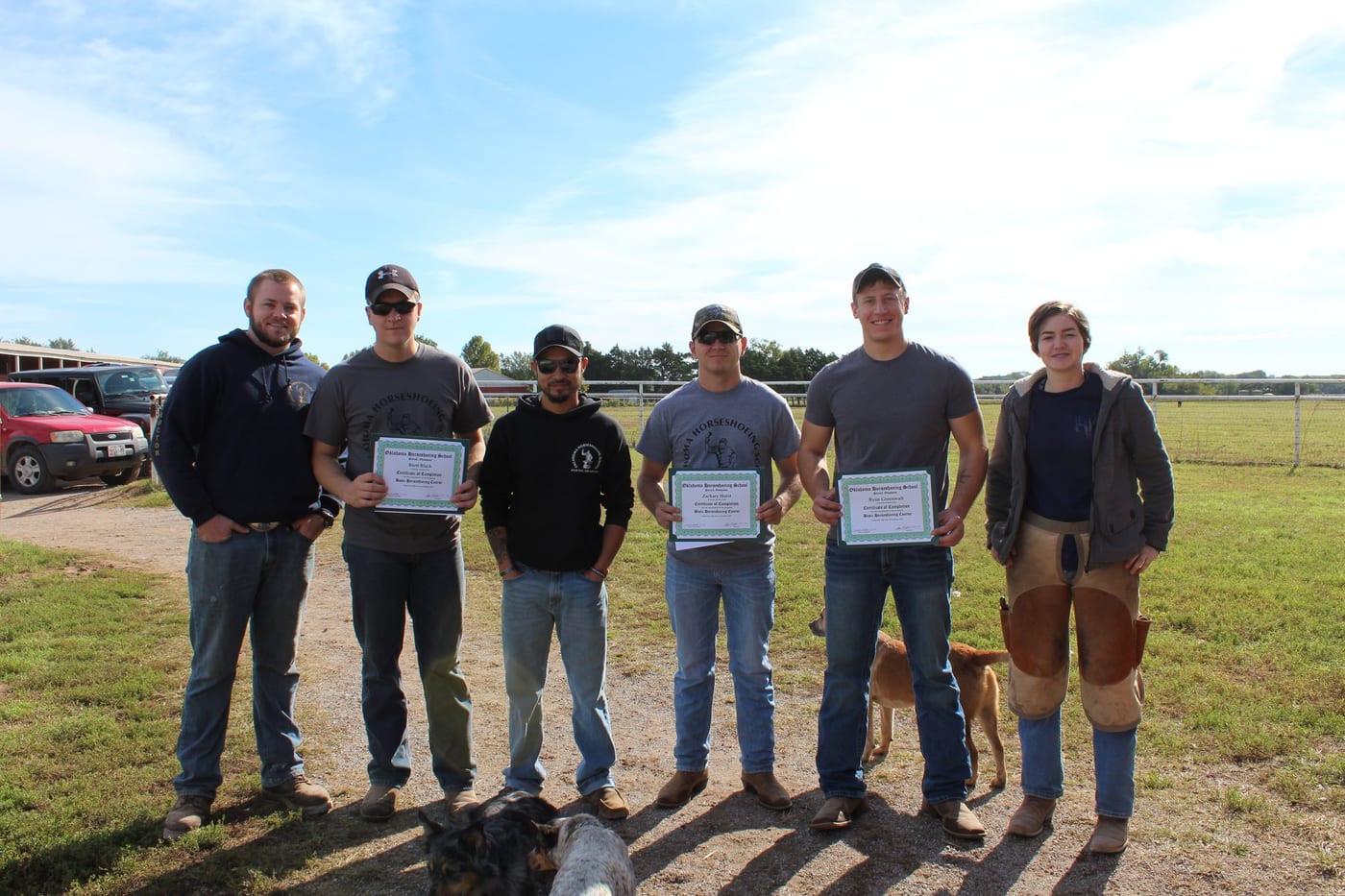
For the right person, farrier work can become much more than simply a job. It is a skilled trade built around horses, horsemanship and craftsmanship. You work with your hands. You solve problems. You develop relationships with horse owners, veterinarians, trainers and other equine professionals. Most importantly, the quality of your work can directly affect the comfort, soundness and performance of the horses entrusted to your care.
That is a tremendous responsibility. It is also one of the reasons proper education matters. Someone can buy a truck, a pair of nippers and a box of rasps. That doesn't make them a farrier. Knowledge takes time. Skill takes practice. Good judgment takes experience. A school can give you the foundation. What you build on that foundation during the years that follow is ultimately up to you.
Outstanding — the school works hard to be the best in the industry! For someone who wants hands-on farrier training, extensive work with live horses, regular forge practice, experienced instructors and several levels of horseshoeing education, Oklahoma Horseshoeing School deserves serious consideration.
The school has been teaching horseshoeing since 1973, and its approach remains surprisingly straightforward: teach students the science, teach them the craft, put the tools in their hands and let them learn by doing. We also appreciate that the school doesn't pretend becoming a good farrier is easy. It isn't. You will work hard. You will get dirty. Something you thought was simple may suddenly become frustrating.
You will probably discover muscles you didn't know you had. You'll make mistakes, your instructors will correct them and you'll try again — and the school will be there every step of the way. And one day you may look down at a properly trimmed foot or a shoe you shaped yourself and realize: I know how to do this.
The school is licensed by the Oklahoma Board of Private Vocational Schools. Course information, tuition and schedules can change, so prospective students should always verify current information with Oklahoma Horseshoeing School before enrolling.
Making the decision to train with Oklahoma Horseshoeing School is a decision to build your foundation the right way — in the forge, in the barn and under real horses. Pick up the phone and give the school a call, and they'll help you every step of the way.
Oklahoma Horseshoeing School is a hands-on farrier school in Purcell, Oklahoma, founded in the summer of 1973 by Dr. Jacob "Jack" Roth, D.V.M. Students learn equine anatomy, hoof care, trimming, forging and horseshoeing through classroom education combined with daily practical work — Mondays at the forge, Tuesday through Friday on live horses. The school is licensed by the Oklahoma Board of Private Vocational Schools and has trained students from across the United States and around the world.
Becoming a farrier starts with education: learning equine anatomy, hoof structures, trimming, balancing, forging and shoe fitting — then building skill through supervised repetition on live horses. At Oklahoma Horseshoeing School, students are in the forge on day one and under horses with instructor supervision almost immediately. From there, most new farriers build competency through a professional course (8 or 12 weeks), then develop a clientele or apprentice with an established farrier. No prior experience is required to start.
It depends on your goal. The 2-Week Basic Course (about 80 hours) suits horse owners who want to understand hoof care or begin trimming and shoeing their own horses. The 8-Week Professional Course (about 320 hours) is intensive preparation for the trade — anatomy, hoof pathologies, conformation, gait faults and making shoes from raw steel. The 12-Week Advanced Course (about 480 hours) is the school’s most comprehensive program, adding craftsmanship, speed, advanced forging, specialized shoe designs and exposure to fundamental therapeutic shoeing.
As published by Oklahoma Horseshoeing School: the 2-Week Basic Horseshoeing Course is $2,500, the 8-Week Professional Horseshoeing Course is $8,700, and the 12-Week Advanced Horseshoeing Course is $11,300. Free on-campus housing and complimentary meals significantly reduce the true cost of attending compared to schools where room and board are extra. Tuition and schedules can change — always verify current pricing with the school before enrolling. Financial counseling is available to help students explore assistance options.
No. Oklahoma Horseshoeing School teaches students from the ground up. Classes include future professional farriers, horse owners who want better hoof-care knowledge, and people exploring a career change into the trade. What matters is not experience — it is the willingness to work hard, accept correction and practice until your hands learn the craft.
Almost immediately. Students report forging on the first day and working underneath horses with instructor supervision by the second. Tuesday through Friday are live-horse days at the school — different feet, different builds, different temperaments — because a model hoof never shifts its weight or pulls its foot away. That real-horse judgment is what separates someone who can nail on a shoe from a knowledgeable farrier.
The shoeing barn is open to students 24 hours a day, seven days a week, with steel and propane provided for forging practice and assignments. Motivated students can go back after class and repeat a skill until it clicks — one of the most valuable advantages the school offers.
Yes. On-campus housing is free for enrolled students in good standing, with separate dormitories for men and women, and complimentary meals are provided — the dormitories also include kitchen facilities for evenings and weekends. Living on campus is optional, but for students traveling from out of state or overseas it removes one of the biggest costs of vocational education.
Students learn from experienced working farriers, including instructors certified by the American Farrier’s Association as Certified Farriers (CF) and Certified Journeyman Farriers (CJF). Student testimonials consistently describe instructors who are patient, involved and genuinely invested in seeing students improve — and who welcome questions without making anyone feel behind.
All students and graduates receive a lifetime 10% discount at Purcell Farrier Supply, the on-site farrier store — a benefit that keeps paying off across a career of rasps, shoes and tools. Graduates also leave with industry relationships, and the school offers one-week Continuing Education programs for its own graduates and graduates of other schools, including preparation for certification testing.
For the right person, yes — farrier work is a skilled, in-demand trade built around horses, craftsmanship and problem-solving. You work with your hands, set your own path and build lasting relationships with horse owners, veterinarians and trainers. The quality of your work directly affects the comfort and soundness of every horse you shoe, which is why proper education matters: knowledge takes time, skill takes practice, and good judgment takes experience.
Yes. Oklahoma Horseshoeing School is licensed by the Oklahoma Board of Private Vocational Schools. Course information, tuition and schedules can change, so prospective students should verify current details with the school at 1-405-288-6085 before enrolling.
Explore more from the InfoHorse.com directory
Explore expert guides on topics related to your business
By Bob Pruitt
By Brittany Ross
By Ann Pruitt
By Doug Butler
By Doug Butler Ph
By Doug Butler