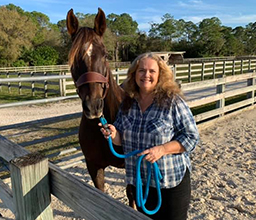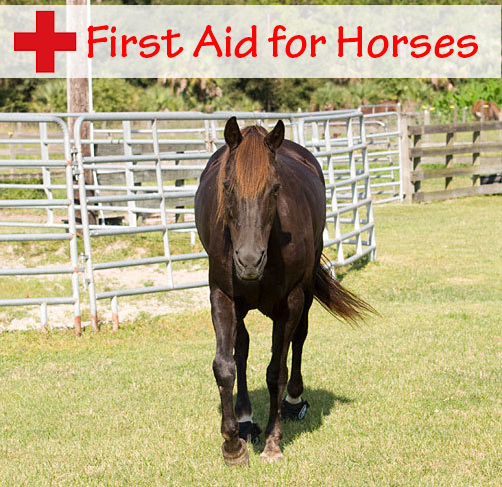


teaches horse owners the emergency first-aid skills to act with confidence in the minutes before a veterinarian arrives. Their veterinarian-designed, hands-on courses are taught by certified instructors across the United States, covering everything from taking vital signs and recognizing colic to managing lacerations, choke, shock, and hoof emergencies. Courses are open to everyone, and you can find a class near you or take the theory portion online, then enroll by phone or through their website.

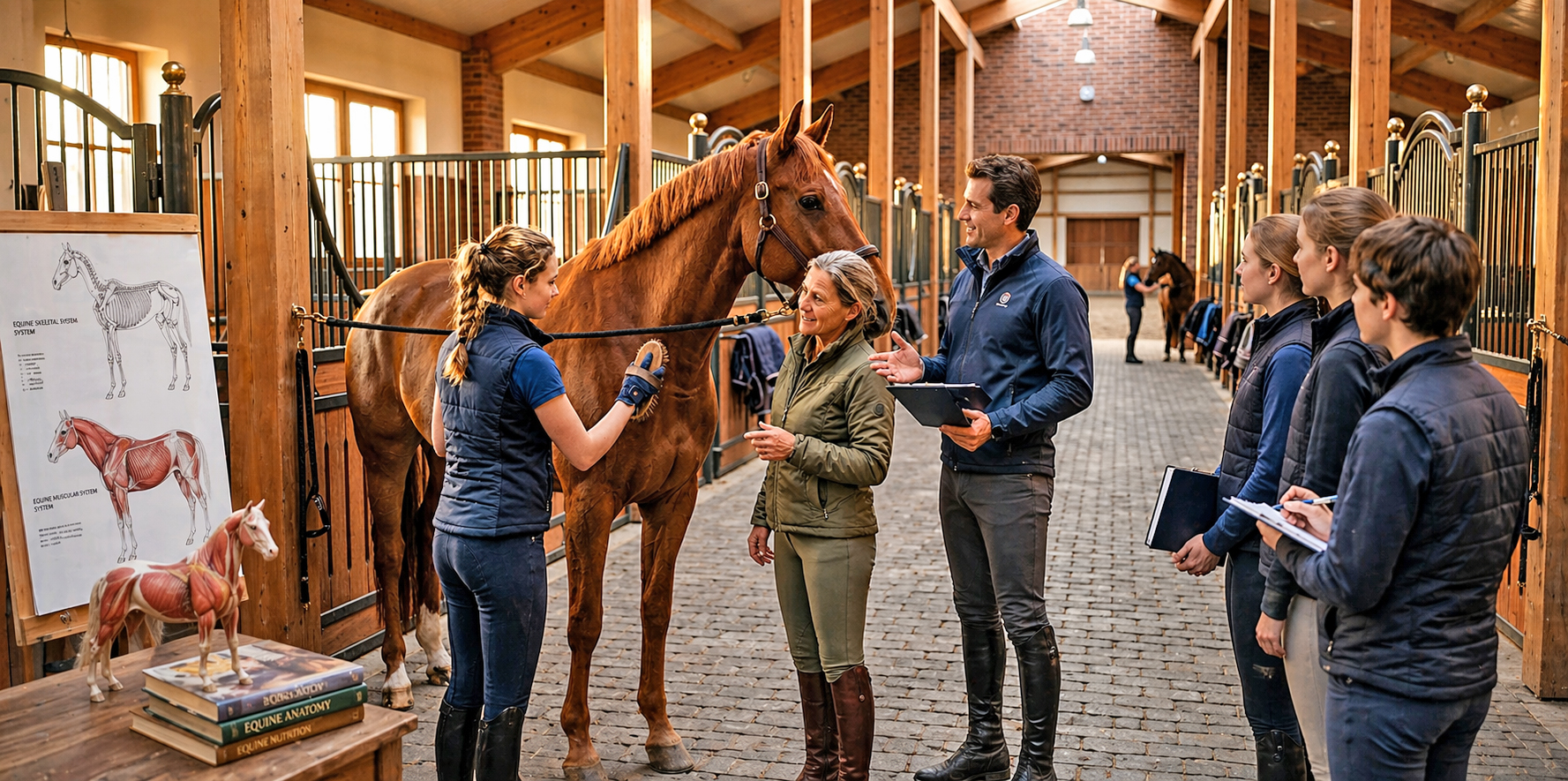
Equi-First Aid USA runs a full curriculum of equine health and emergency-response training. The flagship Equine Health and Emergency First Aid course is veterinarian-designed and monitored, teaching you what your vet needs to know when you call, how to condition a horse to accept treatment, how to take proper vital signs, and how to respond to lacerations, punctures, colic, choke, collapse, casting, shock, and hoof issues. Every full-day course includes a certificate and a comprehensive manual.
Beyond the core class, they offer Advanced Equine Emergency First Aid, Advanced Wilderness Emergency First Aid, a Mare and Foal course, Disaster Planning and Emergency Preparedness, Safe Trailering Practices, and Livestock Handling and Safety for First Responders. Shorter half-day options and a kid-friendly "I Can Help!" course round out the lineup, and continuing-education credits are recognized by organizations including Eagala and Equestrian Canada.

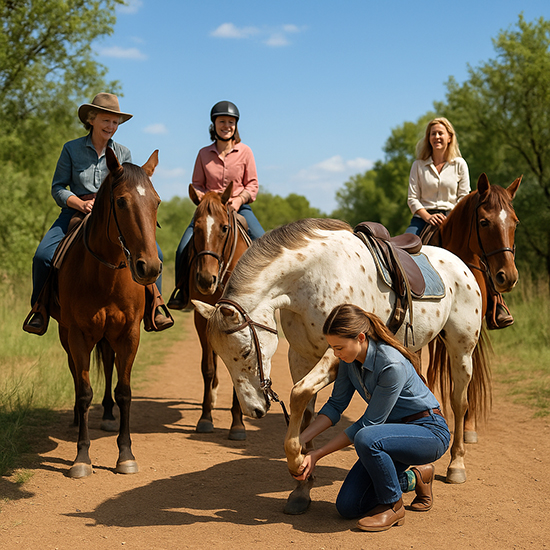
The courses are built for everyday horse owners, boarders, trail and backcountry riders, barn staff, 4-H and youth riders, and equine facilities that want their teams prepared. "We welcome everyone into our classrooms," the company says, and the lessons scale from a five-to-nine-year-old's first lesson in helping a horse up to first responders who handle loose livestock at accident scenes.
For barns and event venues, the Certified Safe Program lets a facility host the core courses and earn an EFA-USA Certified Safe Barn certificate, signaling to boarders, guests, and event participants that staff have real first-aid training. The training is meant to be used alongside your veterinarian's care, never to replace it.
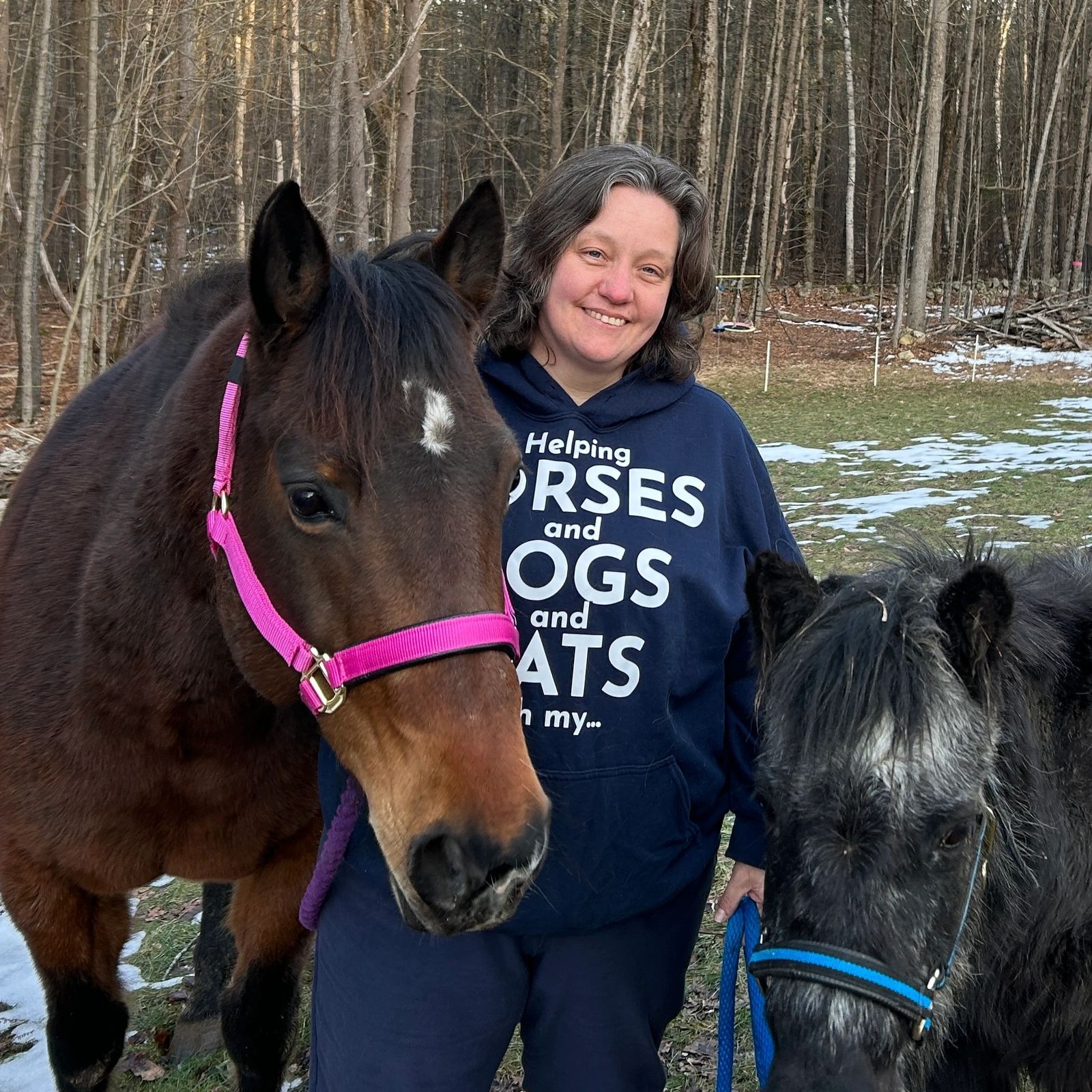
Classes are listed by state and online on the Equi-First Aid USA website, so you can find an in-person course near you or join the theory portion live over Zoom. Full-day courses are priced at $169 and include the certificate and manual; half-day classes run from $69 to $99, the Essentials in Emergency Preparedness and On the Road to Safe Hauling sessions are $70, and the online theory course is $84.50.
To register, browse the calendar and course listings on their site or reach out by phone during business hours, Monday through Saturday 9am to 6pm and Sunday 10am to 5pm. Barns interested in hosting a class or pursuing Certified Safe status can contact the team to schedule. A Ready Barn Refill service is also available through their website to restock your first-aid supplies.
Per Kentucky Horseshoeing School: Mitch Taylor is a Certified Journeyman Farrier in the American Farrier's Association (AFA) and directs all instruction at KHS. Per the school: "Recognized throughout the farrier industry as a top clinician and educator."
Mitch's farrier-community credentials:
Per Kentucky Horseshoeing School: YES on both counts.
Accreditation: KHS is Nationally Accredited by the ACCSC (Accrediting Commission of Career Schools and Colleges). Per the school: ACCSC is committed to ensuring the integrity of educational programs as a means of serving the public interest and public accountability.
Federal Financial Aid programs available:
Per the school: applicants in need should apply for financial assistance at the same time they apply for admission. The Financial Aid Administrator assists with completing and submitting forms. "Please remember that loans must be repaid and should not be considered entitlements." A wide variety of scholarship opportunities is also available with different criteria.
Per Kentucky Horseshoeing School: the custom-designed 23,000 square foot facility includes:
Work areas equipped with:
Per the school: beginning and advanced forging classes / continuing education clinics are held in separate shops for further efficiency and ease of learning.
Per Kentucky Horseshoeing School: new modular housing options on the Richmond campus with options for both male and female students. A senior staff member resides on the KHS campus to supervise residential students.
Meals:
A lounge with TV, VCR, and a library of educational videos is available for student use.
Per Kentucky Horseshoeing School:
Per Kentucky Horseshoeing School, instruction is well-rounded with skills acquired through:
Curriculum emphasizes mastery of fundamental skills + balanced shoeing. Topics covered:
Per the school: shop and forge area, along with the video library, are open seven days a week — students are encouraged to further their skills on their own time.
Per Kentucky Horseshoeing School: located in the midst of Kentucky's fabled Bluegrass Region — the "horse capital of the world" — with more thoroughbred farms concentrated than anywhere in the world. Students get the opportunity to work on a variety of horse types and breeds, and may meet noted veterinarians, farriers, and equine experts who visit as guest lecturers.
Less than an hour's drive away:
Per Kentucky Horseshoeing School: KHS has been operating since 1973. Per the school posture: "Our small classes, high standards, and attention to detail has no equal. Since 1973, these are the elements that combine to make Kentucky Horseshoeing School the best choice for your farrier education."
To apply or learn more: (859) 575-4063, email [email protected]. Address: 3612 Lexington Road, Richmond, Kentucky 40475. Pricing varies by program length and financial aid eligibility; pricing as quoted is subject to change due to economic factors — confirm current tuition, dates, and financial-aid eligibility with KHS directly when applying.
About this listing: Product and service details on this page, including any results described, are provided by Equi-First Aid USA. InfoHorse.com verifies the business behind every listing — for decisions about your horse's health, talk with your veterinarian.
Explore more from the InfoHorse.com directory
Explore expert guides on topics related to your business
By Bob Pruitt
By Bob Pruitt
By Ann Pruitt
By Bob Pruitt
By InfoHorse Editorial Team
By Bob Pruitt